


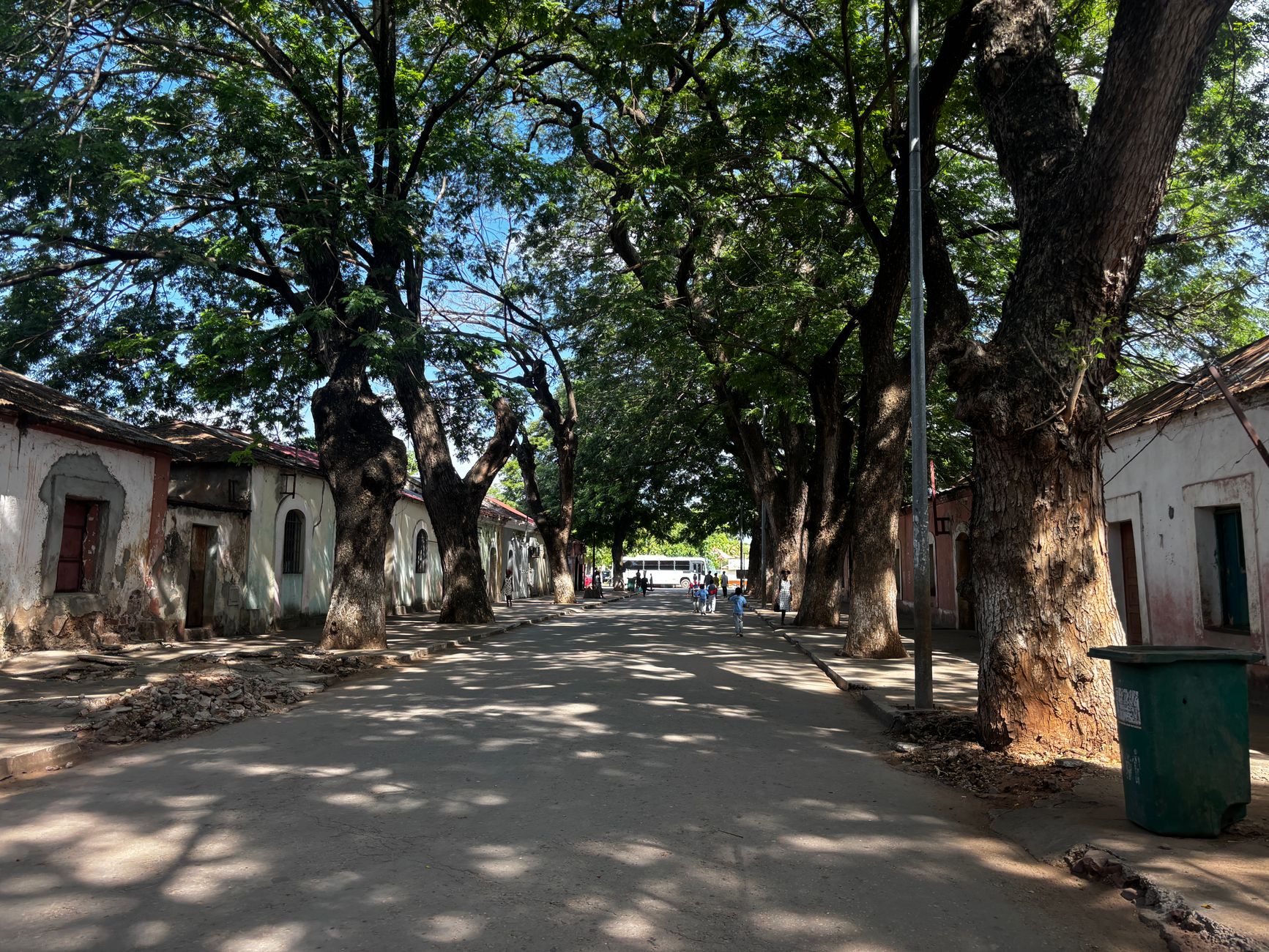
Bagamoyo sits 75 kilometres north of Dar es Salaam, roughly a two-hour drive along the coast. The town is known for its nineteenth-century ivory and slave trade history, crumbling German boma, and active dhow harbour. Bagamoyo is worth visiting if you want to inspect 13th-century coral ruins at Kaole and watch fishermen haul kingfish onto the sand. Look elsewhere if you want polished resort strips, paved boulevards, or late-night cocktail clubs.
Last updated 11 Nov 2026
Build a Bagamoyo itinerary.
Choose up to 4 threads that pull you in. Your plan arrives organised around them.
The Bed
Where to stay in Bagamoyo
Which part of town to book, and what each one costs you in walking, noise or quiet.
The Comparison
Bagamoyo, or somewhere near it
The places you are realistically choosing between, and the honest case for each.
The Local Record
Where to read more about Bagamoyo
The blogs, boards, guides and operators worth bookmarking.
What to do in Bagamoyo Pwani Tanzania
Bagamoyo unfolds quietly along sandy tracks and tidal flats. Days run to the rhythm of the tides and the morning fish auctions on the beach. Travellers who prefer slow strolls among coral-rag ruins, German-era administrative brickwork, and open-air art studios will find it unhurried, though anyone needing tarmac roads and sleek amenities will find it rough around the edges.
24 hours in Bagamoyo Pwani Tanzania
Spend morning hours exploring the 13th-century pillar tombs at Kaole Ruins before heading to India Street. Order charcoal-grilled red snapper at a beachside shanda for lunch, then spend the late afternoon around the Old German Boma as fishermen beach their wooden dhows. Select 1 Day above to see it.
2 days in Bagamoyo Pwani Tanzania
Dedicate your second morning to the Catholic Mission museum and Livingstone Tower on Mango Tree Drive. Afterwards, take an afternoon boat ride into the Ruvu River delta mangroves to watch herons and kingfishers, finishing with spicy mishkaki skewers near the central market. Choose 2 Days to expand the plan.
3 days in Bagamoyo Pwani Tanzania
A third day allows an early drive north to Saadani National Park, the rare sanctuary where game tracks cross straight onto sandy Indian Ocean beaches. Return for coconut-braised octopus and cold spiced tea under the shade trees near the harbour.
Bagamoyo Pwani Tanzania itineraries by interest
Local Seafood in Bagamoyo Pwani Tanzania
Watch dhows unload kingfish, prawns, and red snapper at the fish market, then eat them charcoal-grilled with coconut rice at simple beachside bandas.
Maritime History in Bagamoyo Pwani Tanzania
Walk the German Boma on Customs Road and visit the 1897 Old Fort, where caravans ended before cargo shifted across the Zanzibar Channel.
Sacred Architecture in Bagamoyo Pwani Tanzania
Explore the 13th-century coral rag mosques and pillar tombs at Kaole Ruins, three miles south, plus Tanzania’s oldest Catholic church from 1868.
Craft Traditions in Bagamoyo Pwani Tanzania
Meet sculptors and painters at TaSUBa, the national arts college on Kaole Road, producing wood carvings, batiks, and Makonde-style figures.
Street Food in Bagamoyo Pwani Tanzania
Graze along Ocean Road for mishkaki beef skewers, cassava fried in hot oil, and freshly cracked green coconuts served cold by the roadside.
Coastal Walks in Bagamoyo Pwani Tanzania
Stroll the hard-packed tidal flats past boatbuilders repairing wooden dhows with hand tools and tree resin between the Old Custom House and the jetty.
Markets & Produce in Bagamoyo Pwani Tanzania
Wander the central market off Uhuru Street for sacks of cloves, dried octopus, sun-cured salt crystals, and small sweet yellow bananas.
Colonial Heritage in Bagamoyo Pwani Tanzania
Follow India Street to trace 19th-century carved Swahili doors, German administrative offices, and the Old Post Office's weathered facade.
Day Trips in Bagamoyo Pwani Tanzania
Head fifty miles north into Saadani National Park, where elephants, lions, and giraffes roam savannah grasslands right down to the Indian Ocean.
Cultural Centres in Bagamoyo Pwani Tanzania
Stop at the Caravan Serai museum to view trade route maps, shackles, and photographs documenting the brutal 19th-century ivory paths inland.
Boat Excursions in Bagamoyo Pwani Tanzania
Hire a wooden dhow out to Mwambakuni sandbank at low tide for clear water swimming, shallow snorkelling, and a picnic of fresh fruit.
Wildlife Watching in Bagamoyo Pwani Tanzania
Take a flat-bottomed boat tour through Ruvu River delta mangroves to spot kingfishers, yellow-billed storks, and sleeping hippos.