Burford.
.jpg)


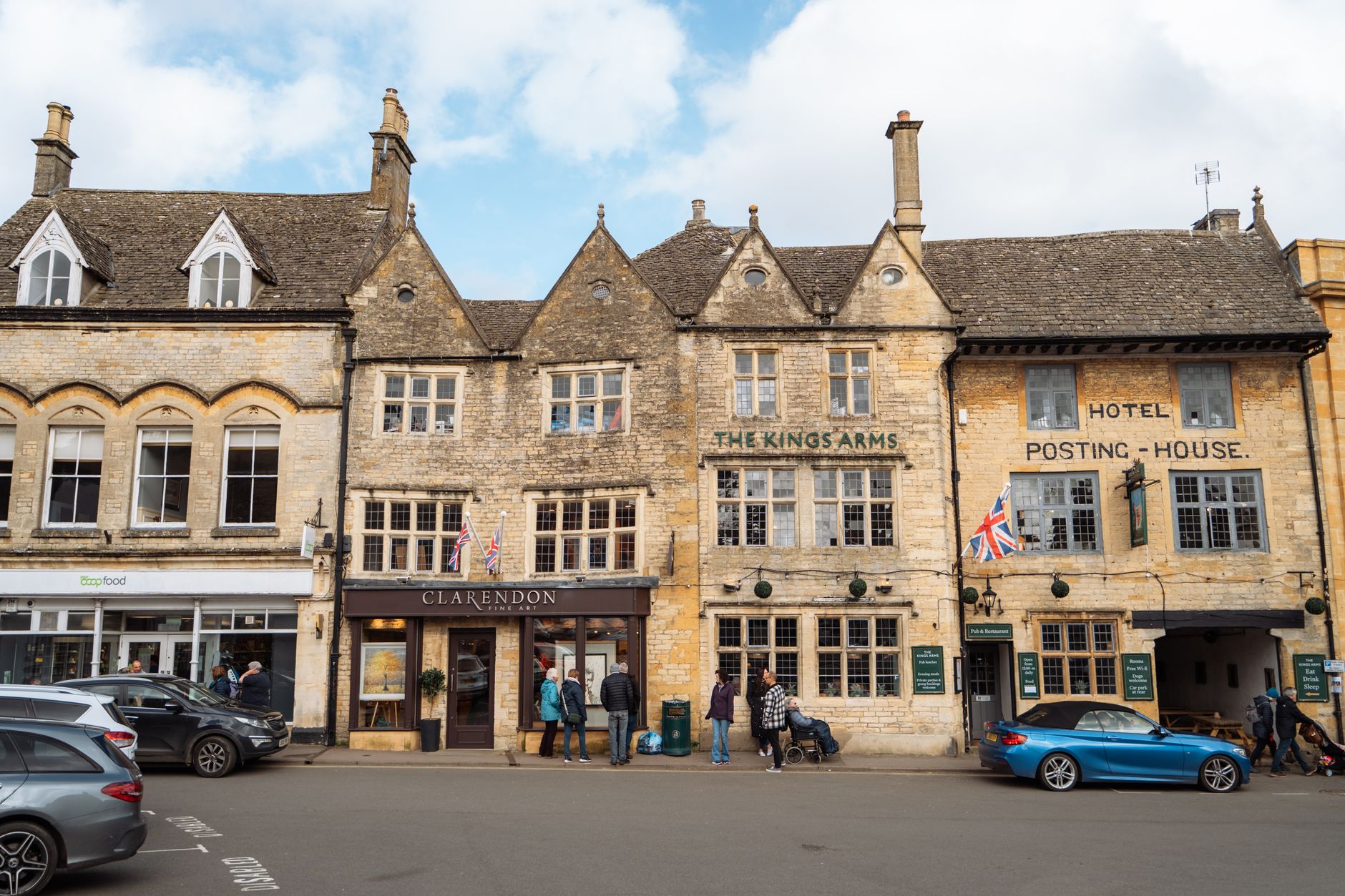


Sitting twenty miles west of Oxford along the A40, Burford is reached in forty minutes by car or via buses from Charlbury station. The town is defined by its steep medieval High Street descending to the three-arched bridge over the River Windrush, lined with seventeenth-century coaching inns and limestone weaver cottages. St John the Baptist church preserves Leveller graffiti from the Civil War. Burford is worth visiting if you want to walk historic Cotswold stone streets, explore centuries of English vernacular building, and drink cask ale by an open fireplace. Look elsewhere if you want late-night bars and clubs, flat walking terrain, direct rail access, or extensive indoor attractions for rainy days.
Last updated 11 Sept 2026
Build a Burford itinerary.
Choose up to 4 threads that pull you in. Your plan arrives organised around them.
The Bed
Where to stay in Burford
Which part of town to book, and what each one costs you in walking, noise or quiet.
The Comparison
Burford, or somewhere near it
The places you are realistically choosing between, and the honest case for each.
The Local Record
Where to read more about Burford
The blogs, boards, guides and operators worth bookmarking.
What to do in Burford Oxfordshire United Kingdom
Burford sits along a single dramatic incline, where golden oolitic limestone facades line the High Street all the way down to the Windrush bridge. The daily pace is unhurried, revolving around mornings browsing antique shops and church grounds, afternoons walking Sheep Street and Witney Street, and evenings around quiet hearths. It suits travellers who appreciate preserved English townscapes, walking footwear, and unhurried pub lunches.
24 hours in Burford Oxfordshire United Kingdom
Start at the top of the High Street and walk down to the fifteenth-century church of St John the Baptist. Have a pint of bitter and roast beef at The Lamb Inn for lunch. Spend the afternoon exploring the side lanes of Sheep Street, then finish with a slow evening meal along the lower riverbank near the ancient bridge. Select 1 Day above to see it.
2 days in Burford Oxfordshire United Kingdom
Use your second day to head into the Windrush Valley. Walk three miles westward through sheep pastures to the isolated chapel of St Oswald at Widford, resting on Roman mosaics. Return to Burford for a game pie and a glass of cider at The Highway Inn before ducking into the local antique vaults. Choose 2 Days to expand the plan.
3 days in Burford Oxfordshire United Kingdom
A third day allows an unhurried morning at the Burford Garden Company before driving twenty minutes east along the A40 to the romantic riverside ruins of Minster Lovell Hall. End with a relaxed farm-to-table dinner featuring local trout or smoked pork loin out in the rolling countryside.
Burford Oxfordshire United Kingdom itineraries by interest
Historic Pubs in Burford Oxfordshire United Kingdom
Drink hand-pulled Hook Norton bitter beside massive inglenook fireplaces at The Lamb Inn or The Highway Inn on the High Street.
Sacred Architecture in Burford Oxfordshire United Kingdom
Inspect fifteenth-century merchant tombs and 1649 Civil War prisoner inscriptions inside the church of St John the Baptist.
Antiques & Auctions in Burford Oxfordshire United Kingdom
Rummage through centuries-old brass, oak furniture, and silver plate at the Burford Antiques Centre and independent vintage showrooms.
Local Produce in Burford Oxfordshire United Kingdom
Sample Oxford Blue cheese, crusty sour loaves, and dry-cured bacon at Mrs Bumbled's and local butcher Upton Smokery down the lane.
River Walks in Burford Oxfordshire United Kingdom
Follow quiet field paths along the weeping willows of the River Windrush towards the ruins of Minster Lovell Hall.
Craft Traditions in Burford Oxfordshire United Kingdom
Examine dry-stone walling, hand-hewn Cotswold limestone tiles, and traditional timber framing visible across Sheep Street.
Classic Baking in Burford Oxfordshire United Kingdom
Order warm fruit scones, clotted cream, and loose-leaf tea inside the stone-flagged tea rooms of the Burford Bakehouse.
Gardens & Nurseries in Burford Oxfordshire United Kingdom
Wander extensive walled herb borders and heirloom vegetable plots at the nearby Burford Garden Company.
Military History in Burford Oxfordshire United Kingdom
Trace the execution site of three mutinous Leveller soldiers on the lead font and churchyard wall from the English Civil War.
Countryside Hiking in Burford Oxfordshire United Kingdom
Hike circular bridleways across the Windrush Valley rolling pastures toward the isolated hamlet of Widford and its tiny chapel.
Fine Dining in Burford Oxfordshire United Kingdom
Taste local venison loin, wood-pigeon tart, and English sparkling wine in dining rooms set inside timbered sixteenth-century manors.
Day Trips in Burford Oxfordshire United Kingdom
Drive fifteen minutes across open downs to the Roman villa at North Leigh or the intact medieval manor house of Cogges.