

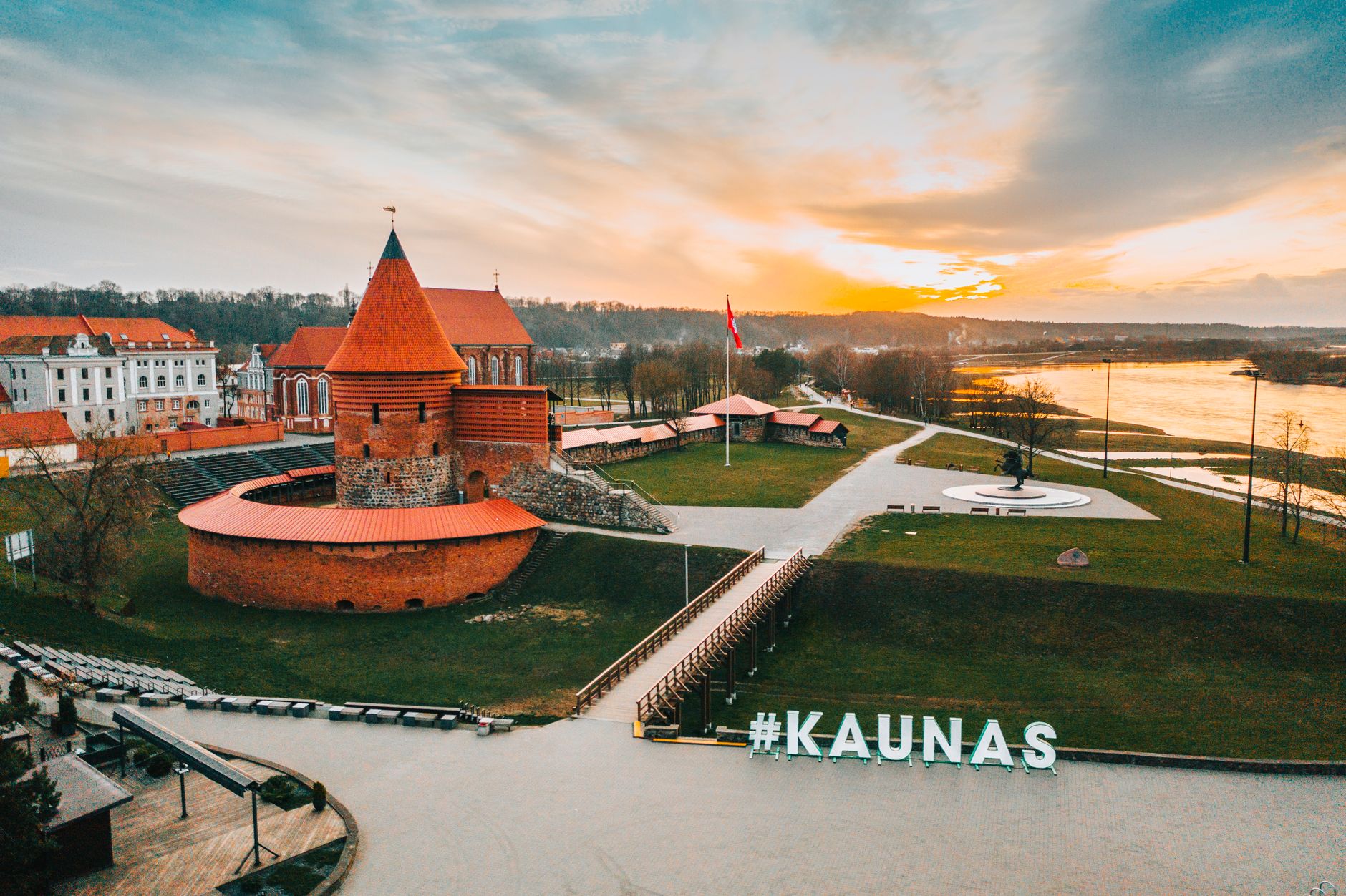


Kaunas sits ninety minutes west of Vilnius by direct train, stationed at the meeting point of the Nemunas and Neris rivers. The city is defined by its 1920s interwar modernist architecture, built when it served as the nation's temporary capital, and its pedestrianised central boulevard, Laisvės alėja. You will find a compact medieval core beside expansive brick fortifications and quiet riverfront paths. Kaunas is worth visiting if you want to explore dense interwar design and eat honest Lithuanian comfort food. Look elsewhere if you want sprawling late-night club circuits, blockbuster international art museums, or high-end luxury shopping.
Last updated 9 Sept 2026
Build a Kaunas itinerary.
Choose up to 4 threads that pull you in. Your plan arrives organised around them.
The Bed
Where to stay in Kaunas
Which part of town to book, and what each one costs you in walking, noise or quiet.
The Comparison
Kaunas, or somewhere near it
The places you are realistically choosing between, and the honest case for each.
The Local Record
Where to read more about Kaunas
The blogs, boards, guides and operators worth bookmarking.
What to do in Kaunas Kaunas Lithuania
Life in Kaunas centres on a long, tree-lined axis stretching from the interwar New Town along Laisvės alėja straight into the cobbled Old Town and Kaunas Castle. The town balances unpretentious neighbourhood canteens with serious architectural heritage. It suits travellers who enjoy walkable, uncrowded streets, twentieth-century design, and hearty Baltic comfort food served without fuss.
24 hours in Kaunas Kaunas Lithuania
Start with morning curd doughnuts at Spurginė, then walk past interwar facades to the Čiurlionis Art Museum. In the afternoon, head down Vilniaus gatvė into the Old Town to see Kaunas Castle and the river confluence. Finish with pork cepelinai and dark draft beer at a cellar tavern. Select 1 Day above to see it.
2 days in Kaunas Kaunas Lithuania
Ride the 1930s Žaliakalnis funicular uphill to inspect the monumental Christ's Resurrection Basilica and quiet residential modernism. Spend the afternoon outside the centre at the Italian baroque Pažaislis Monastery, dining later on smoked trout or beet soup near the lagoon. Choose 2 Days to expand the plan.
3 days in Kaunas Kaunas Lithuania
Devote day three to the sombre outdoor memorial and museum at the Ninth Fort on the northern ridge. Afterward, take a short bus to Rumšiškės to walk among preserved wooden windmills and village homesteads before returning for evening cider in the Yard Gallery.
Kaunas Kaunas Lithuania itineraries by interest
Modernist Architecture in Kaunas Kaunas Lithuania
Track 1930s functionalist facades, curved glass, and art deco stairwells along Vytauto and Donelaičio streets from the temporary capital era.
Traditional Taverns in Kaunas Kaunas Lithuania
Order potato cepelinai stuffed with pork, cold pink šaltibarščiai soup, and fried dark rye kepta duona rubbed with raw garlic at Bernelių Užeiga.
Sacred Architecture in Kaunas Kaunas Lithuania
Visit the 17th-century baroque Pažaislis Monastery on the lagoon, and inspect the red-brick gothic arches of Vytautas the Great Church.
Military History in Kaunas Kaunas Lithuania
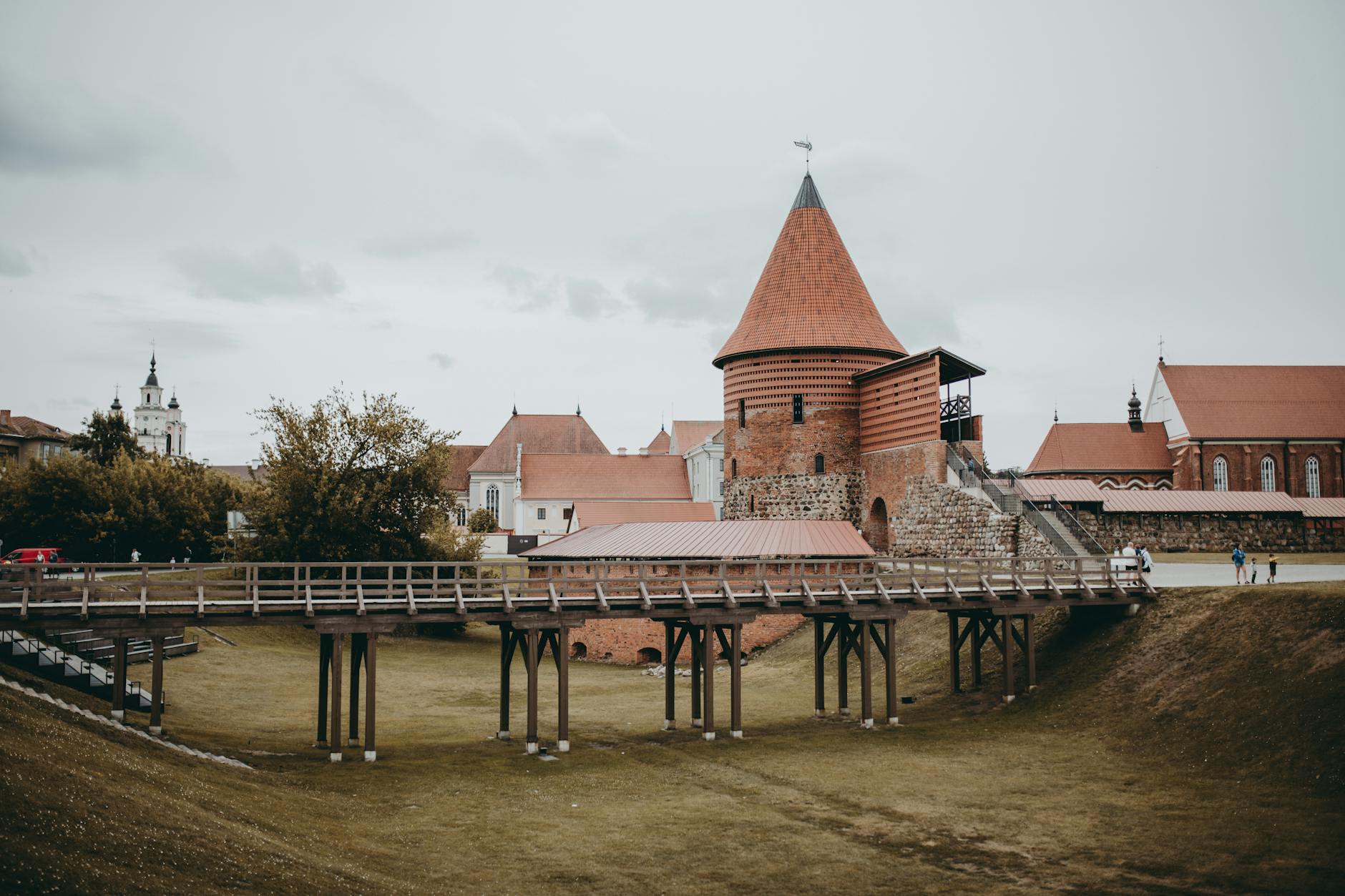
Tour the 14th-century brick Kaunas Castle at the river fork and walk the underground artillery tunnels of the sprawling Ninth Fort complex.
Fine Arts in Kaunas Kaunas Lithuania
Examine the symbolist canvases and musical compositions of M.K. Čiurlionis at his dedicated museum, alongside folk wood carvings.
Classic Cafes in Kaunas Kaunas Lithuania
Take a counter stool at Spurginė on Laisvės alėja for hot curd doughnuts and yeast spurgos fried in oil the same way since the late 1970s.
Street Art in Kaunas Kaunas Lithuania
Hunt massive contemporary murals across the Old Town and explore the open-air Yard Gallery courtyard installations curated by Vytenis Jakas.
Historic Funiculars in Kaunas Kaunas Lithuania
Ride the rattling Žaliakalnis or Aleksotas cable funiculars from the 1930s up the steep hillsides for wide views over the red-tiled roofs.
Riverside Walks in Kaunas Kaunas Lithuania
Follow paved paths along the confluence of the Nemunas and Neris rivers through Santaka Park down to the former barge wharves.
Local Markets in Kaunas Kaunas Lithuania
Browse pickled mushrooms, smoked pig ears, cured ham, and raw honey inside the brick halls of the century-old Stotis Market near the rail hub.
Quirky Museums in Kaunas Kaunas Lithuania
Inspect hundreds of wooden, ceramic, and metal effigies collected across the globe inside the offbeat three-storey Devil's Museum.
Day Trips in Kaunas Kaunas Lithuania
Catch a local bus east to the forested open-air ethnographic museum at Rumšiškės to explore reconstructed 18th-century timber farmsteads.