Ohrid.


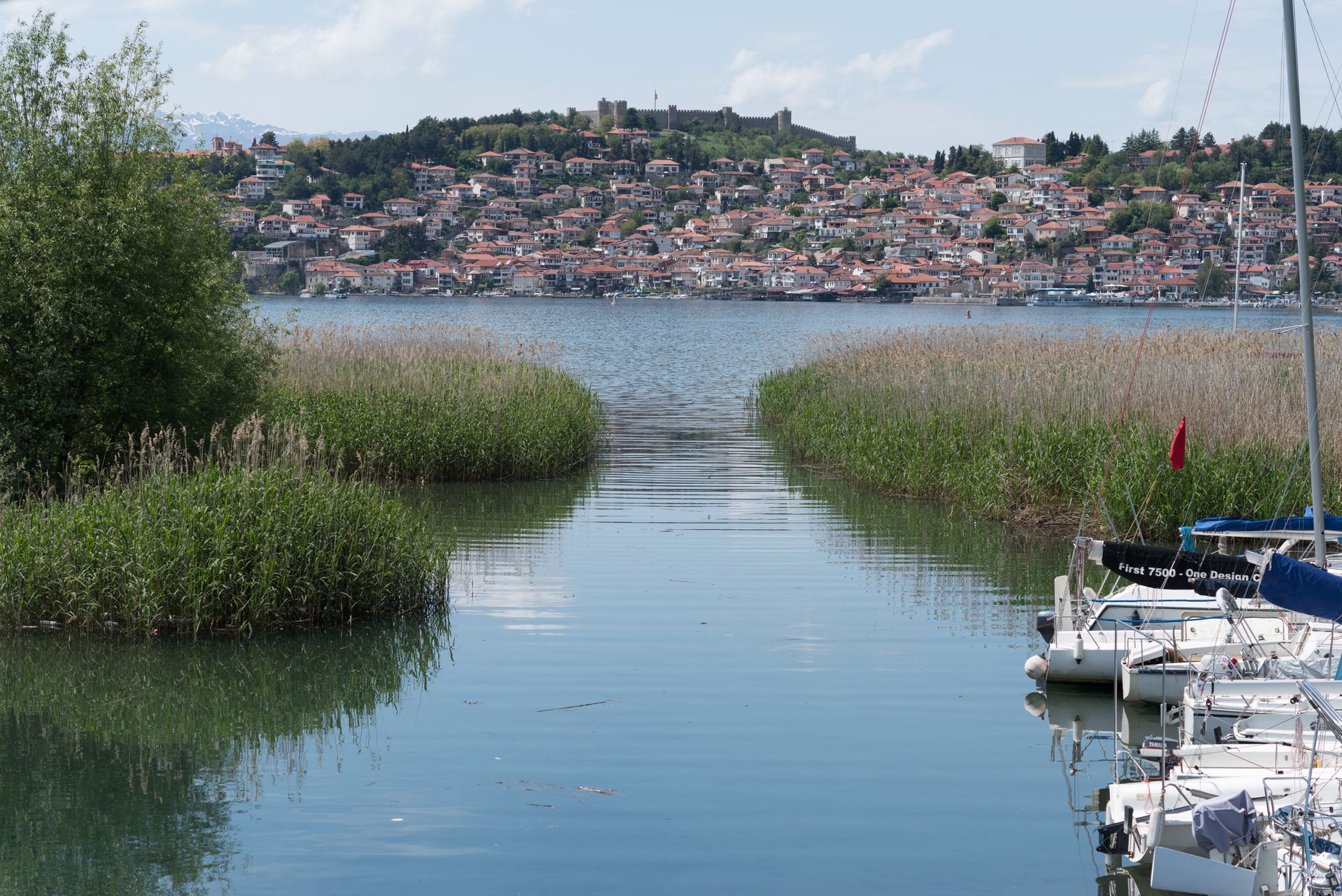


Ohrid sits 170 kilometres southwest of Skopje, reached in three hours by bus through the western mountains. The town is defined by its massive ancient lake, one of the deepest in Europe, and dozens of medieval stone churches perched on rocky bluffs above the water. Cobbled lanes climb steeply from the harbour up to Samuel's Fortress and an intact Roman amphitheatre. Ohrid is worth visiting if you want to eat baked gjomleze by the water, explore Byzantine frescoes on foot, and swim off limestone cliffs. Look elsewhere if you want broad sandy beaches, flat walking routes, direct rail access, or high-end luxury resorts.
Last updated 9 Sept 2026
Build a Ohrid itinerary.
Choose up to 4 threads that pull you in. Your plan arrives organised around them.
The Bed
Where to stay in Ohrid
Which part of town to book, and what each one costs you in walking, noise or quiet.
The Comparison
Ohrid, or somewhere near it
The places you are realistically choosing between, and the honest case for each.
The Local Record
Where to read more about Ohrid
The blogs, boards, guides and operators worth bookmarking.
What to do in Ohrid Lake Ohrid North Macedonia
Ohrid rises abruptly from the water, stacking Ottoman timber houses, stone walls, and shaded terraces up a steep limestone ridge. The town moves at a pedestrian pace, oriented entirely toward the lake. Days naturally drift between swimming off rocky platforms, inspecting eleventh-century icons, and lingering over carafes of local wine. It rewards curious walkers who don't mind steep cobbled inclines and prefer quiet history to frantic sightseeing.
24 hours in Ohrid Lake Ohrid North Macedonia
Start early at the Roman amphitheatre before climbing to Samuel’s Fortress. Walk the pine ridge down to St. John at Kaneo, eat grilled carp or trout right on the shore, and spend the afternoon swimming off the boardwalk at Potpesh. Finish with shopska salad and rakija on Car Samoil. Select 1 Day above to see it.
2 days in Ohrid Lake Ohrid North Macedonia
Spend day two along the southern coastline. Take the lake ferry down to the monastery at Sveti Naum, exploring the cold spring-fed lagoon by small wooden rowboat. On the return, stop at the Bay of Bones and dine on layered gjomleze pastry and baked beans in Trpejca village. Choose 2 Days to expand the plan.
3 days in Ohrid Lake Ohrid North Macedonia
A third day opens up the heights of Galičica National Park for panoramic high-ridge walks between two lakes. Head north in the afternoon to the stone village of Vevčani to walk the rushing water channels and settle in for a long, unhurried lunch of slow-cooked wild game.
Ohrid Lake Ohrid North Macedonia itineraries by interest
Sacred Architecture in Ohrid Lake Ohrid North Macedonia
Seek out 11th-century frescoes at St. Sophia and walk the cliff edge to St. John at Kaneo before the tour boats dock at ten.
Lake Swimming in Ohrid Lake Ohrid North Macedonia
Drop down stone steps below Kaneo or head south to Gradiste beach for cold, deep, crystal-clear water over smooth white limestone pebbles.
Freshwater Fish in Ohrid Lake Ohrid North Macedonia
Order endemic pastrmka or belvica trout simply grilled with lemon, parsley, and garlic at no-nonsense lakeside taverns in Kaneo settlement.
Baking Traditions in Ohrid Lake Ohrid North Macedonia
Watch bakers pour batter for slow-cooked gjomleze, baked layer by layer under a glowing metal sač lid over wood embers in village kitchens.
Ancient Ruins in Ohrid Lake Ohrid North Macedonia
Climb through the Hellenistic theatre above the Old Town and trace the defensive walls of Tsar Samuel’s tenth-century hilltop fortress.
Market Stalls in Ohrid Lake Ohrid North Macedonia
Pick through seasonal peppers, sheep cheese, dried herbs, and jars of sweet fig slatko at the central Stara Čaršija morning market.
Mountain Hiking in Ohrid Lake Ohrid North Macedonia
Take marked trails up Galičica National Park to gaze down across both Lake Ohrid and Lake Prespa simultaneously from high limestone crests.
Craft Traditions in Ohrid Lake Ohrid North Macedonia
Visit workshop studios on Car Samoil to see Ohrid pearls layered by hand from emulsion made of local plasica fish scales.
Monastery Day Trips in Ohrid Lake Ohrid North Macedonia
Board the morning ferry south to Sveti Naum to hear the legendary heartbeat of Saint Naum and row through cold freshwater springs.
Wine & Spirits in Ohrid Lake Ohrid North Macedonia
Sip dense, dark Vranec reds alongside dry domestic grape rakija poured into chilled glassware at rustic konoba cellars.
Village Life in Ohrid Lake Ohrid North Macedonia
Drive half an hour north into Vevčani to wander wooden footbridges above cascading karst springs and eat slow-simmered tavče gravče.
Archaeology in Ohrid Lake Ohrid North Macedonia
Wander the reconstructed Bronze Age stilt houses over turquoise water at the Bay of Bones settlement on the road south to Gradishte.