Port Isaac.
_Longfellow_to_Isaac_Appleton_Jewett,_6_July_1840_(1149c848-388e-41f1-a072-dacb378e096f).jpg)

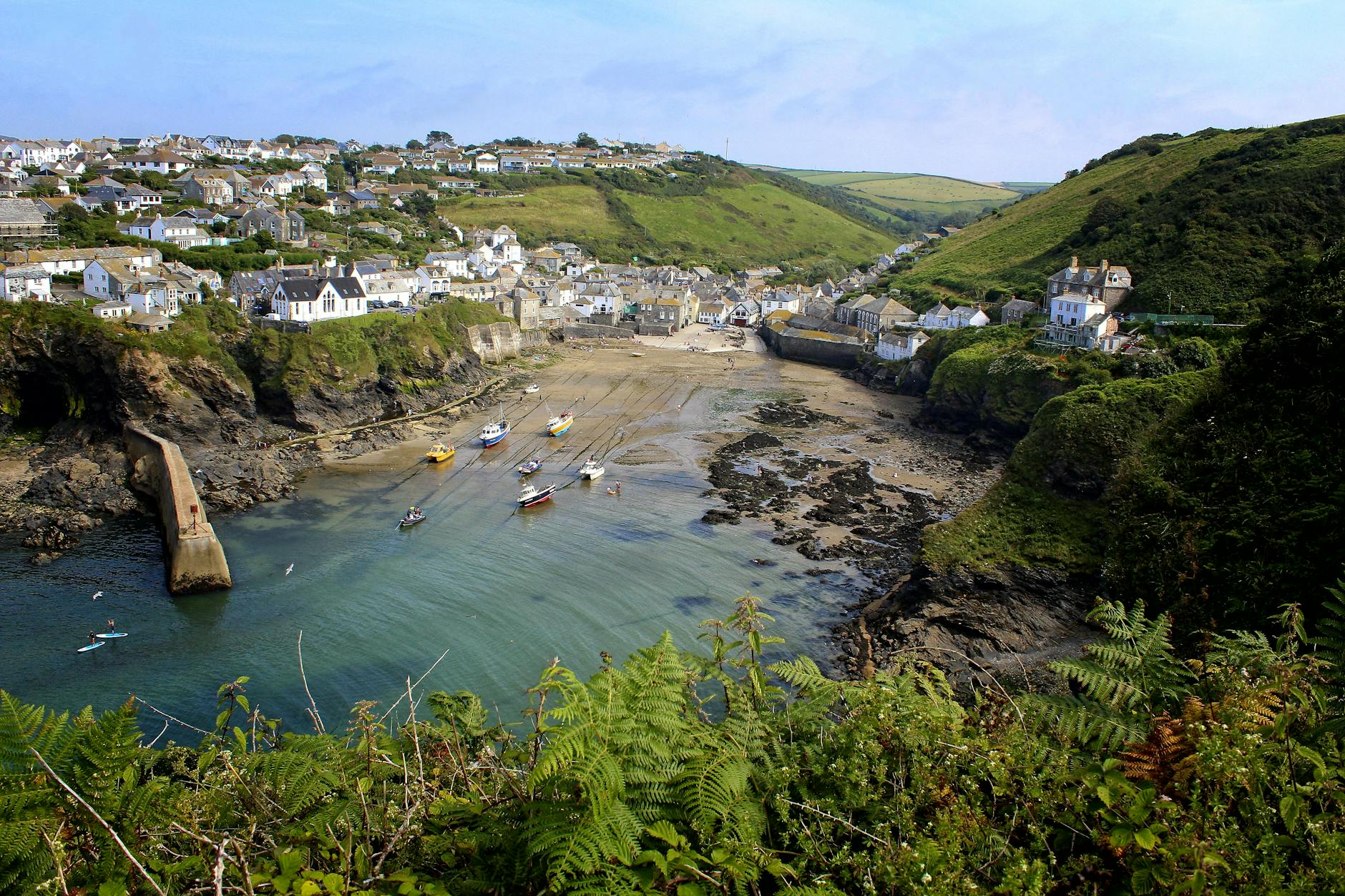


Your calves register the gradient before your eyes take in the slate roofs. The road funnels sharply down a tight ravine to a tidal slipway where wooden potters still land brown crab and lobster twice a day. Eighteenth-century whitewashed cottages press close against alleys barely wide enough for two people carrying groceries. The swell breaks hard against the twin breakwaters, and the local fleet works around the tide rather than any timetable. Port Isaac is worth visiting if you want day-boat shellfish straight off the winch and cliff paths that test your footing. Look elsewhere if you need flat, step-free walking, broad sandy beaches, indoor wet-weather attractions, or parking anywhere near the harbour.
Last updated 6 Sept 2026
Build a Port Isaac itinerary.
Choose up to 4 threads that pull you in. Your plan arrives organised around them.
The Bed
Where to stay in Port Isaac
Which part of town to book, and what each one costs you in walking, noise or quiet.
The Comparison
Port Isaac, or somewhere near it
The places you are realistically choosing between, and the honest case for each.
The Local Record
Where to read more about Port Isaac
The blogs, boards, guides and operators worth bookmarking.
What to do in Port Isaac Cornwall United Kingdom
Everything in Port Isaac gravitates to the harbour bed, where the daily catch dictates the rhythm of the village. The steep climb keeps vehicle traffic up at the top car parks, leaving Fore Street and the tight lanes below entirely to pedestrians. It suits anyone eager for rugged coastal hikes, unpretentious pints of bitter, and serious fish cookery without the manicured seaside gloss.
24 hours in Port Isaac Cornwall United Kingdom
Leave your car at the top of the hill by 9:00 to dodge the descent traffic. Grab a warm pasty on Church Hill, spend the midday walking the dramatic headland out toward Lobber Point, and book dinner weeks ahead at Outlaw's Fish Kitchen right against the harbour wall. Select 1 Day above to see it.
2 days in Port Isaac Cornwall United Kingdom
A second morning lets you hike two miles west along the roller-coaster coastal path to Port Quin, an uninhabited natural inlet. Reward your legs back in Port Isaac with a pint on the terrace at the Golden Lion before a quiet dinner of dressed crab at Port Gaverne. Choose 2 Days to expand the plan.
3 days in Port Isaac Cornwall United Kingdom
With three days, venture south to the Camel Trail for flat cycling along the estuary, or head north to explore the dramatic slate history at Delabole Quarry and the headland at Tintagel. You get time to align your dinner with the tides rather than rushing.
Port Isaac Cornwall United Kingdom itineraries by interest
Local Seafood in Port Isaac Cornwall United Kingdom
Brown crab, day-boat lobster, and native oysters picked from local pots and served at Outlaw's Fish Kitchen on the harbour.
Coastal Walks in Port Isaac Cornwall United Kingdom
South West Coast Path stretches over high clifftops toward Tintagel to the north and Port Quin's quiet inlet to the south.
Maritime Heritage in Port Isaac Cornwall United Kingdom
A 14th-century fishing harbour built on pilchard seining, slate exports, and steep slipway winch traditions that endure today.
Traditional Pubs in Port Isaac Cornwall United Kingdom
The Golden Lion pours Cornish ales over slate floors, with fireside tables and harbour views from the 18th-century snug.
Local Bakeries in Port Isaac Cornwall United Kingdom
Proper shortcrust Cornish pasties crimped along the side, saffron buns, and buttered scones from village bakeries on Fore Street.
Village Architecture in Port Isaac Cornwall United Kingdom
Narrow pedestrian alleys called drangs, Delabole slate roofs, and granite fisher cottages packed tightly down the ravine.
Sea Foraging in Port Isaac Cornwall United Kingdom
Low-tide foraging on the rocky foreshore for dulse, sea beet, and mussels clinging to the tidal platforms below the headland.
Boat Trips in Port Isaac Cornwall United Kingdom
Local angling charters and wooden working boats departing the harbour slipway for mackerel drift-fishing along the headlands.
Beach Combing in Port Isaac Cornwall United Kingdom
Exploring the rock pools exposed at low tide in the harbour basin and around nearby sheltered coves like Port Gaverne.
Vocal Traditions in Port Isaac Cornwall United Kingdom
Fisherman's Friends shanty singers performing traditional sea songs on the harbour beach on selected summer Friday evenings.
Fine Dining in Port Isaac Cornwall United Kingdom
Multi-course tasting menus focused entirely on small-boat Cornish catches at Outlaw's New Road dining room overlooking the bay.
Day Trips in Port Isaac Cornwall United Kingdom
Short drives to the medieval ruins of Tintagel Castle, the sandy surf at Polzeath, or the sheltered waters of the Camel Estuary.