Riga.


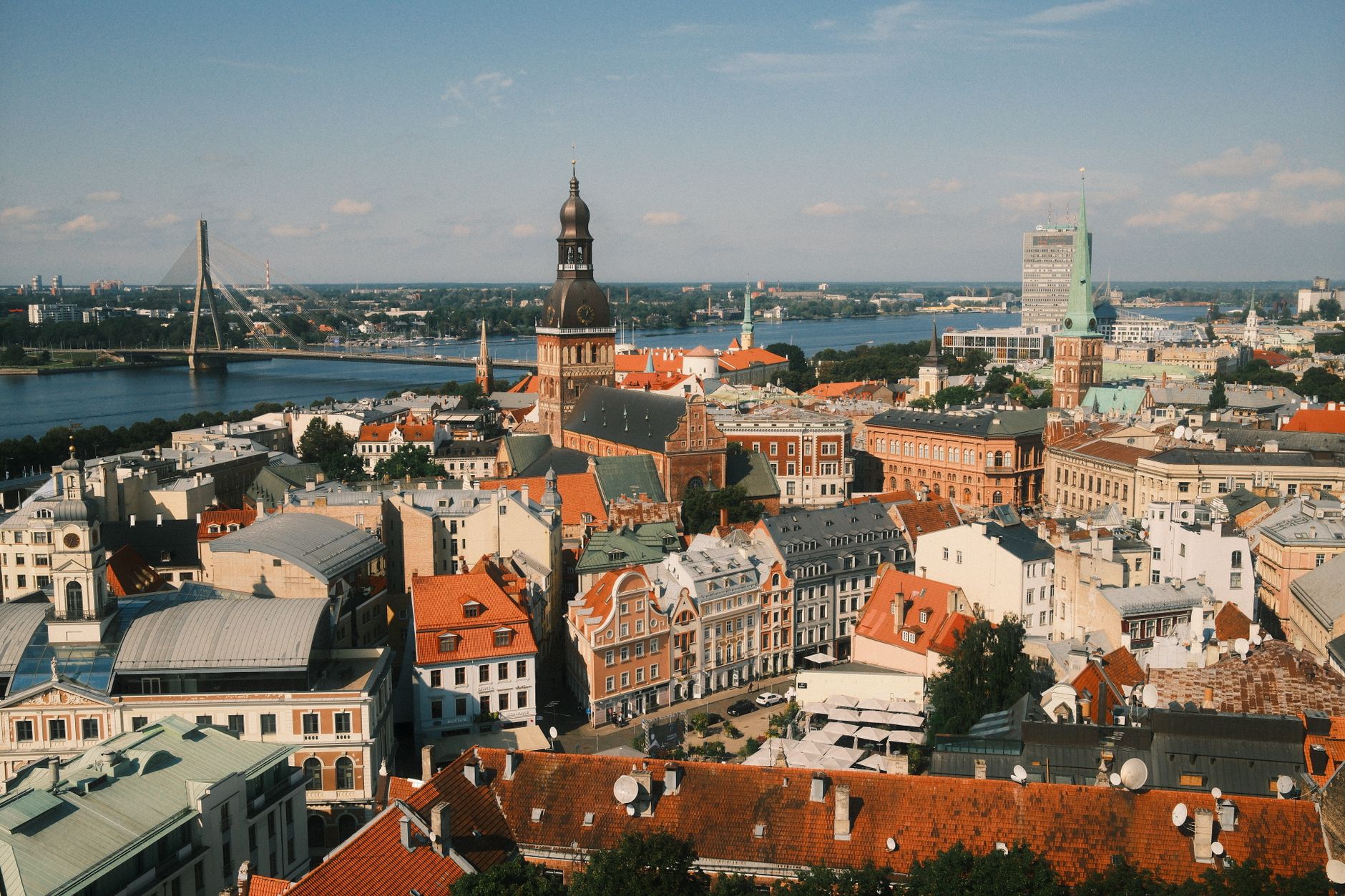


Riga sits along the Daugava River near the Gulf of Riga, twenty minutes from its international airport on municipal bus 22. Latvia's capital is built on Hanseatic brick Gothic, dense Art Nouveau boulevards, and working-class market stalls operating out of five former German Zeppelin hangars. You come for dark rye bread, hot-smoked fish, and brisk Baltic air. Riga is worth visiting if you want northern Europe's richest collection of early twentieth-century facades paired with working market halls and hearty Baltic comfort food. Look elsewhere if you want warm-water beach resorts, dramatic mountain landscapes, or blockbuster international art museums.
Last updated 9 Sept 2026
Build a Riga itinerary.
Choose up to 4 threads that pull you in. Your plan arrives organised around them.
The Bed
Where to stay in Riga
Which part of town to book, and what each one costs you in walking, noise or quiet.
The Comparison
Riga, or somewhere near it
The places you are realistically choosing between, and the honest case for each.
The Local Record
Where to read more about Riga
The blogs, boards, guides and operators worth bookmarking.
What to do in Riga Baltic Coast Latvia
Riga balances medieval cobbles with turn-of-the-century civic swagger. The compact Vecriga old town and the Quiet Centre's Art Nouveau district sit either side of the leafy Pilsetas kanals. Days start among market trade in the Zeppelin pavilions and end over cold draught beer in vaulted cellars. It suits independent walkers, architecture buffs, and anyone curious about Baltic culinary traditions without inflated Western European prices.
24 hours in Riga Baltic Coast Latvia
Start with morning coffee and piragi pastries in the Quiet Centre, inspect Alberta iela's ornate facades, then head south to the Central Market for smoked mackerel. Spend the afternoon crossing the Dome Square cobbles and finish with roast pork and draft ale in a brick cellar along Peldu iela. Everything is an easy twenty-minute walk. Select 1 Day above to see it.
2 days in Riga Baltic Coast Latvia
Cross the Daugava River into the Kalnciema Quarter to explore wooden manor houses and independent bakeries. In the afternoon, explore the 1905 red-brick warehouses of the Spikeri quarter and take in the grim, essential history at the KGB Corner House, before dining on venison stew and rye garlic croutons near Saint Gertrude Church. Choose 2 Days to expand the plan.
3 days in Riga Baltic Coast Latvia
Take the suburban train thirty minutes west to Jurmala for coastal pine forests and seaside walks, or head one hour east to Sigulda for the wooded trails of Gauja National Park. Back in Riga, slow down at the lakeside Ethnographic Open-Air Museum, where timber farmsteads sit quietly under tall Baltic pines.
Riga Baltic Coast Latvia itineraries by interest
Markets & Produce in Riga Baltic Coast Latvia
Wander the five 1930s Zeppelin hangars at Centraltirgus for warm rye bread, cured bacon, pickled garlic, and dill-heavy sauerkraut.
Art Nouveau in Riga Baltic Coast Latvia
Walk Alberta iela and Elizabetes iela to inspect Mikhail Eisenstein's 1900s stone gargoyles, screaming sphinxes, and floral ironwork.
Local Seafood in Riga Baltic Coast Latvia
Eat hot-smoked sprats, butter-fried river lampreys, and Baltic herring served straight from brine barrels with boiled potatoes.
Sacred Architecture in Riga Baltic Coast Latvia
Climb Saint Peter's steeple for river views and visit Riga Cathedral to hear its four-thousand-pipe 1884 organ in the Gothic nave.
Soviet Heritage in Riga Baltic Coast Latvia
Tour the Corner House on Brivibas iela and inspect the Academy of Sciences tower, nicknamed Stalin's birthday cake, for gritty history.
Day Trips in Riga Baltic Coast Latvia
Board the suburban train at Central Station for the thirty-minute run to Jurmala's white sand beaches and nineteenth-century wooden dacha villas.
Distilling Traditions in Riga Baltic Coast Latvia
Sip herbal Riga Black Balsam, brewed with 24 botanicals since 1752, neat at Old Town taverns or poured warm over blackcurrant juice.
Craft Traditions in Riga Baltic Coast Latvia
Search Old Town cellars and the Open-Air Museum for hand-loomed linen, carved oak beer tankards, and polished Baltic amber necklaces.
Wooden Architecture in Riga Baltic Coast Latvia
Cross the Daugava to Pardaugava and the Kalnciema Quarter for restored eighteenth-century clapboard houses and Saturday farmers markets.
Castle Ruins in Riga Baltic Coast Latvia
Ride the regional train an hour east to Sigulda to hike the Gauja Valley between medieval brick crusader bastions and Turaida Castle.
Comfort Food in Riga Baltic Coast Latvia
Order grey peas with fried speck lardons, beetroot soup with sour cream, and crispy pork schnitzel at basement taverns like Folkklubs Ala.
Contemporary Art in Riga Baltic Coast Latvia
Explore the brick warehouses of Andrejsala port and Kim? Contemporary Art Centre along the industrial banks of the Daugava River.