Samarkand.


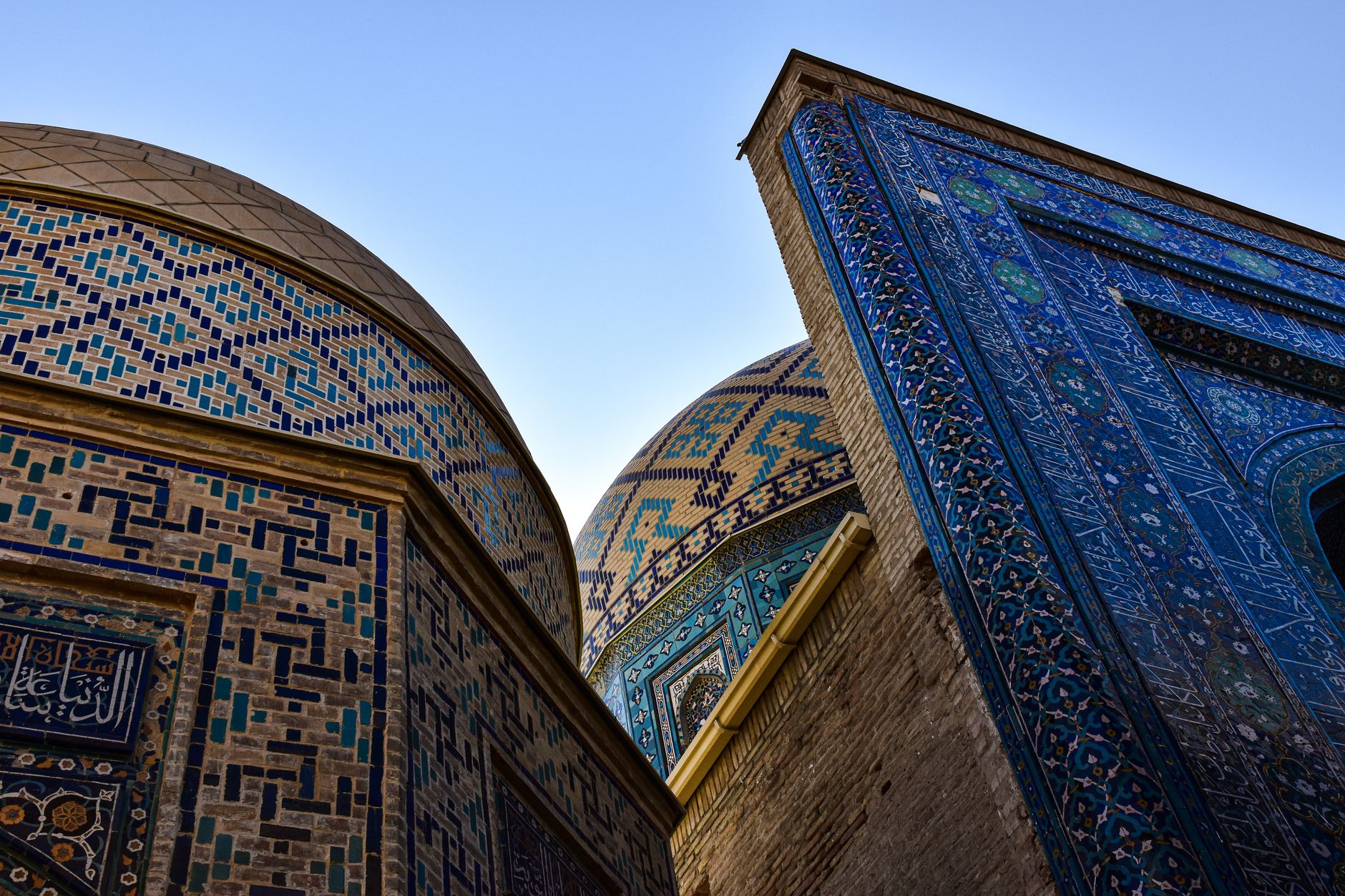

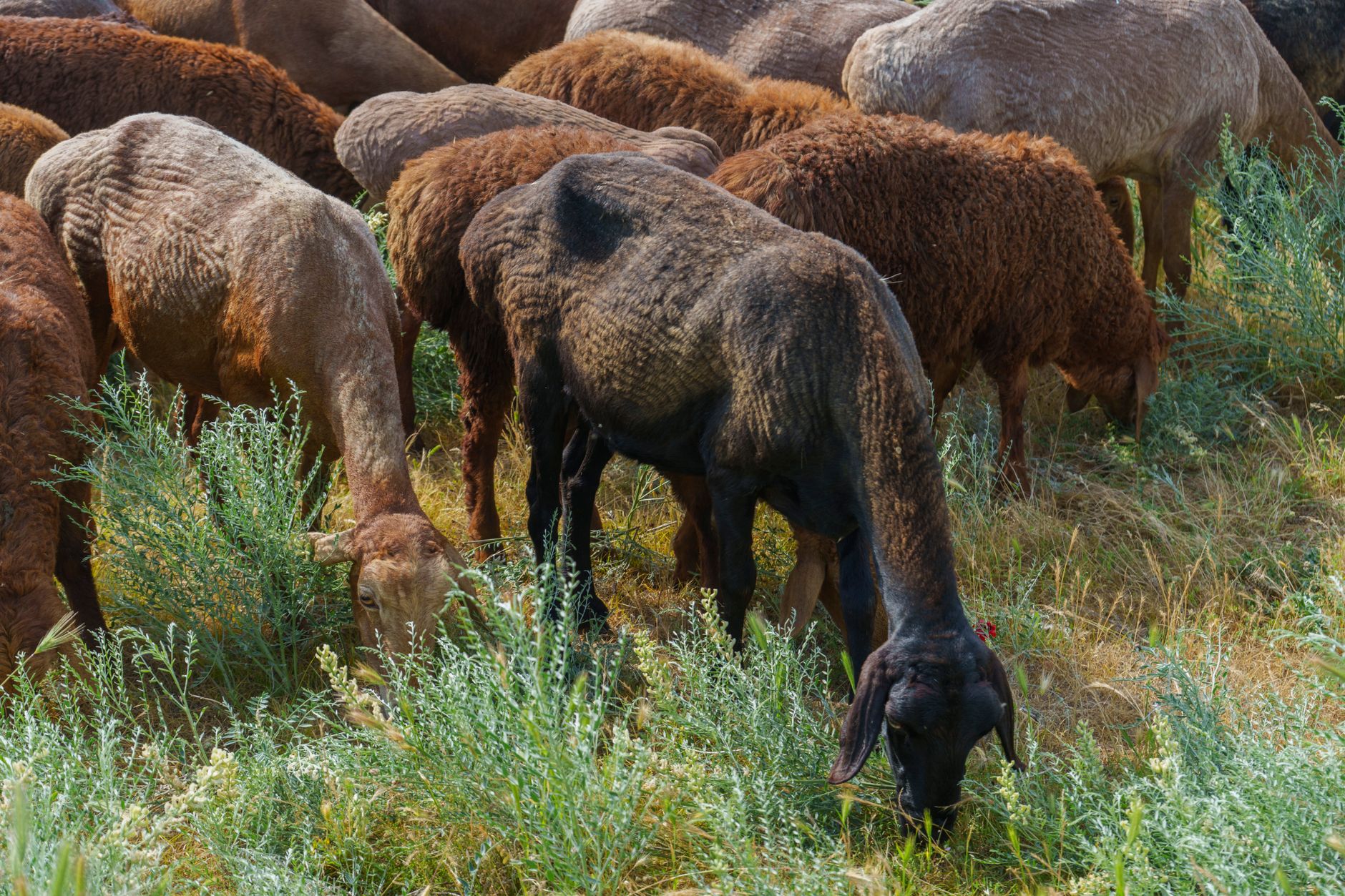
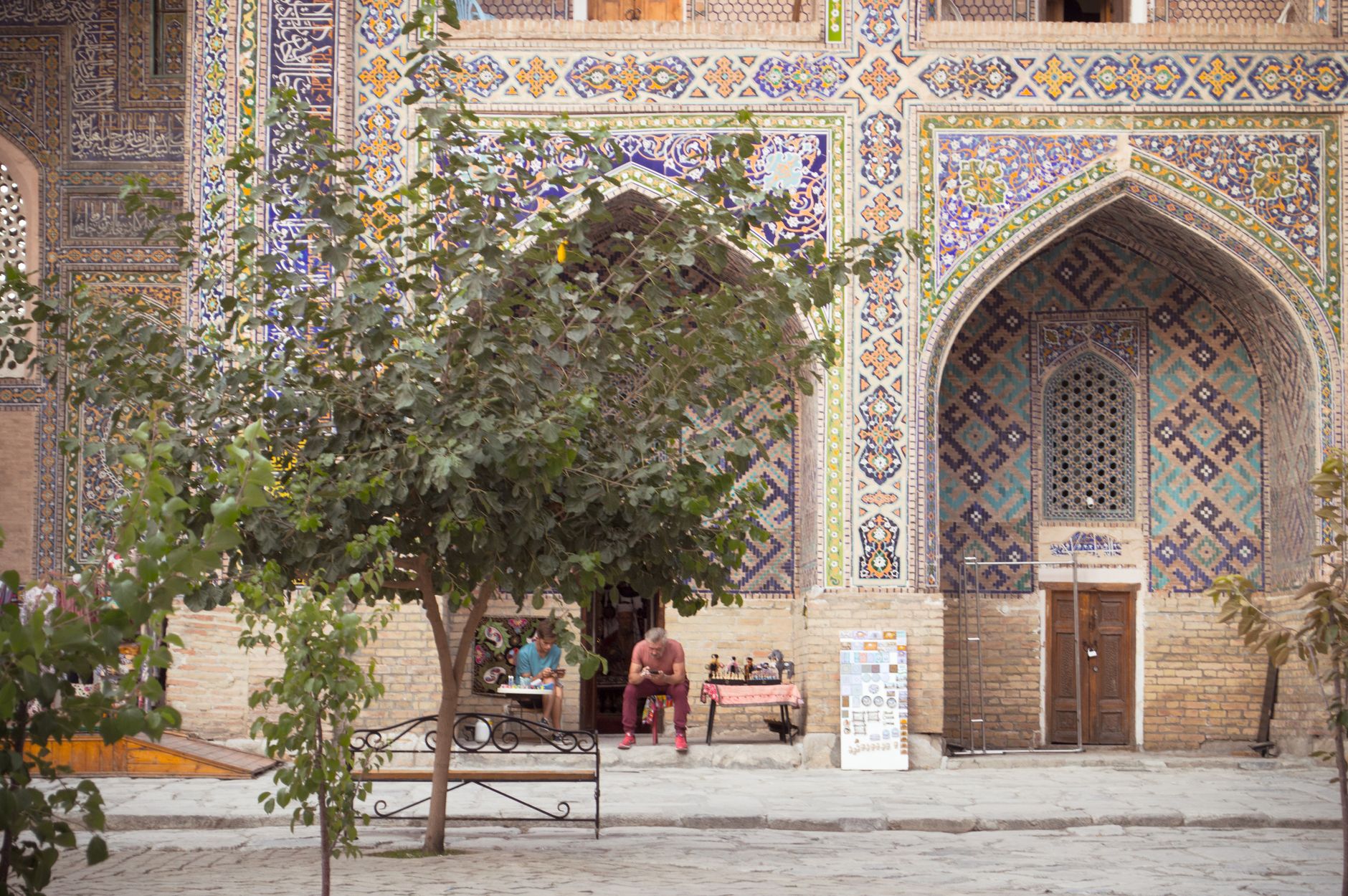
Samarkand sits 300 kilometres southwest of Tashkent, reachable in just over two hours via the Afrosiyob high-speed train. The city is defined by monumental fourteenth-century Timurid architecture and sprawling open-air bazars where bakeries turn out glazed round loaves by the thousand. Streets branch outward from the blue-tiled central monuments toward leafy Russian-era avenues. Samarkand is worth visiting if you want to stand before monumental Islamic tilework and eat spiced lamb plov ladled straight from massive iron cauldrons. Look elsewhere if you want lively late-night bars, diverse international dining, or a compact historic core where every major sight is within an easy walk.
Last updated 9 Sept 2026
Build a Samarkand itinerary.
Choose up to 4 threads that pull you in. Your plan arrives organised around them.
The Bed
Where to stay in Samarkand
Which part of town to book, and what each one costs you in walking, noise or quiet.
The Comparison
Samarkand, or somewhere near it
The places you are realistically choosing between, and the honest case for each.
The Local Record
Where to read more about Samarkand
The blogs, boards, guides and operators worth bookmarking.
What to do in Samarkand Silk Road Uzbekistan
The city divides cleanly into the medieval Silk Road core and the tree-shaded nineteenth-century Russian sector to the west. Daily life pulls toward the bazaar and the monuments in the cool mornings, retreats indoors during midday heat, and returns to illuminated public squares at dusk. It suits travellers who appreciate grand historical scale, slow lunches eaten from shared platters, and walking between monumental courtyards on foot.
24 hours in Samarkand Silk Road Uzbekistan
Start at 8:00 AM at the Registan before tour crowds arrive, then walk five minutes along the pedestrian boulevard to the Bibi-Khanym mosque. By noon, sit at Osh Markazi for an early plate of plov before the pot runs dry. Spend the late afternoon walking the blue corridor of Shah-i Zinda, returning to the Registan at night to see the tiles lit up under floodlights. Select 1 Day above to see it.
2 days in Samarkand Silk Road Uzbekistan
A second day lets you wander the unpaved alleys of the Jewish Mahalla and inspect seventh-century Sogdian frescoes at the Afrasiyab Museum. For lunch, order mutton shashlik and warm flatbread along Dagbitskaya Street. Spend your afternoon at Ulugh Beg’s ancient observatory, followed by a glass of local dry red wine in the Russian quarter on Universitetskiy Boulevard. Choose 2 Days to expand the plan.
3 days in Samarkand Silk Road Uzbekistan
Three days unlocks an unhurried morning along the Siabcha stream at the Konigil paper mill, watching waterwheels power mulberry-bark pulp mills. In the afternoon, hire a driver for the scenic winding drive across the Takhta-Karacha Pass into Shahrisabz, stopping along the mountain crest for tandir kabob roasted with mountain juniper branches.
Samarkand Silk Road Uzbekistan itineraries by interest
Sacred Architecture in Samarkand Silk Road Uzbekistan
Trace fourteenth-century cobalt mosaic work across the Registan, the towering dome of Bibi-Khanym, and the blue-tiled tombs of Shah-i Zinda.
Local Markets in Samarkand Silk Road Uzbekistan
Wander the covered stalls of Siab Bazaar for warm non bread stamped with central patterns, roasted apricot kernels, and dried halva.
Regional Cooking in Samarkand Silk Road Uzbekistan
Order midday Samarkand-style plov layered with yellow carrots, beef, chickpeas, and quail eggs, served alongside sliced pickled radish.
Craft Traditions in Samarkand Silk Road Uzbekistan
Watch artisans pull mulberry-bark sheets at the Konigil paper mill or weave hand-knotted silk carpets using vegetable dyes at the Samarkand workshop.
Astronomy & History in Samarkand Silk Road Uzbekistan
Stand inside the curved stone trench of Ulugh Beg's fifteenth-century meridian arc and explore relics from ancient Sogdian settlement at Afrasiyab.
Street Food in Samarkand Silk Road Uzbekistan
Grab flaky, tandoor-baked somsa stuffed with spiced minced mutton and onions, or charred skewers of shashlik grilled over charcoal embers.
Historic Quarters in Samarkand Silk Road Uzbekistan
Walk the quiet residential alleys of the old Jewish Mahalla, where carved wooden doors open into shaded courtyards away from the main boulevards.
Bread & Baking in Samarkand Silk Road Uzbekistan
Watch bakers slap heavy discs of obi non against scorching clay tandoor walls, turning out glossy, golden loaves stamped with floral patterns.
Wine & Viticulture in Samarkand Silk Road Uzbekistan
Sample sweet dessert wines and local cognacs at the Khovrenko Winery, established in the nineteenth century near the central Russian quarter.
Archaeological Sites in Samarkand Silk Road Uzbekistan
Walk the grassy rolling mounds of Afrasiyab to see seventh-century Sogdian wall murals showing diplomatic processions and royal hunts.
Day Trips in Samarkand Silk Road Uzbekistan
Drive ninety minutes south across the Takhta-Karacha Pass to Shahrisabz to see the hulking brick remains of Timur’s Ak-Saray Palace gateway.
Tea Culture in Samarkand Silk Road Uzbekistan
Sit cross-legged on a tapchan platform in a local chaikhana, sipping green kok-choy from ceramic piala bowls paired with lemon slices and sugar.