Baden-Baden.



Baden-Baden sits forty minutes south of Karlsruhe by regional train along the edge of the Black Forest, known for its mineral thermal springs and nineteenth-century resort architecture. Baden-Baden is worth visiting if you want to soak in historic Roman-Irish baths, walk grand parklands, and drink dry Riesling in nearby vineyard villages. Look elsewhere if you want late-night clubbing, gritty street culture, or a budget backpacker scene.
Last updated 29 Sept 2026
Build a Baden-Baden itinerary.
Choose up to 4 threads that pull you in. Your plan arrives organised around them.
We'll craft a 4-lens plan for Baden-Baden, one collapsible strand per lens.
Day Trips
Drive the Schwarzwaldhochstraße up to Lake Mummelsee, or take the regional train south into the dense pine forests around Forbach and Gernsbach.
Day Trips
Drive the Schwarzwaldhochstraße up to Lake Mummelsee, or take the regional train south into the dense pine forests around Forbach and Gernsbach.
Baden Pinot Noir and Maultaschen
Weinstube Baldreit
Grab a wooden table in the fifteenth-century courtyard. Order a glass of dry Baden Spätburgunder alongside house-made Swabian Maultaschen in broth for around 22 euros.
Editor TipBaden is Germany's warmest wine region, where pinot varieties have thrived for centuries on volcanic and limestone hillsides, paired here with honest, slow-cooked tavern staples. Cash only, no reservations. Arrive right at opening to claim a seat under the wisteria without negotiating the queue.
Thermal Baths
Soak in the nude seventeen-step circuit at Friedrichsbad from 1877 or swim through the modern outdoor thermal pools at Caracalla Spa.
Thermal Baths
Soak in the nude seventeen-step circuit at Friedrichsbad from 1877 or swim through the modern outdoor thermal pools at Caracalla Spa.
Tasting Historic Thermal Springs
Trinkhalle Baden-Baden
Walk the 90-metre Corinthian colonnade and draw warm thermal water from the interior tap. Access is free and takes thirty leisurely minutes.
Editor TipBuilt between 1839 and 1842 by Heinrich Hübsch, this pump room anchored the daily social prescription for nineteenth-century European aristocrats taking the cure. The water is hot, salty, and strongly mineral. Take a small sip before committing to a full tumbler.
Seventeen-Stage Roman-Irish Bathing Ritual
Friedrichsbad
Buy the three-hour standard pass at the desk, stow your phone, and follow the sequential numbered stations across dry air, steam, and cold plunges.
Editor TipOpened in 1877 over ancient Roman bath ruins, this Neo-Renaissance palace codified mineral hydrotherapy under ornate frescoed domes and majolica tiles. Nudity is mandatory and strictly routine. Shed the embarrassment at the locker; everyone is looking at the ceilings anyway.
Moorish Bathhouse Immersion
Palais Thermal Bad Wildbad
Drive forty minutes east on the B294 into the Enz valley. Day passes start at thirty euros at the desk; rent a robe on site for five euros and allow two hours.
Editor TipBuilt for King Wilhelm I in 1847, this palace houses ten restorative thermal pools fed by local mineral springs, framed by restored Moorish archways and marble loggias. The upper pool floor is strictly textile-free in traditional German fashion. Leave modesty in the locker.
Bathing Under Moorish Domes
Palais Thermal
Take the S6 line to Bad Wildbad. Buy a four-hour pass at reception for twenty-four euros, grab a locker key, and allow three slow hours for the pools.
Editor TipBuilt for King Wilhelm I in 1847, this royal bathhouse revived Roman-Irish soaking rituals wrapped inside ornate Moorish arches and stained glass. The upper pools are strictly textile-free; bring two large towels and leave your modesty at the locker door.
Forest Hiking
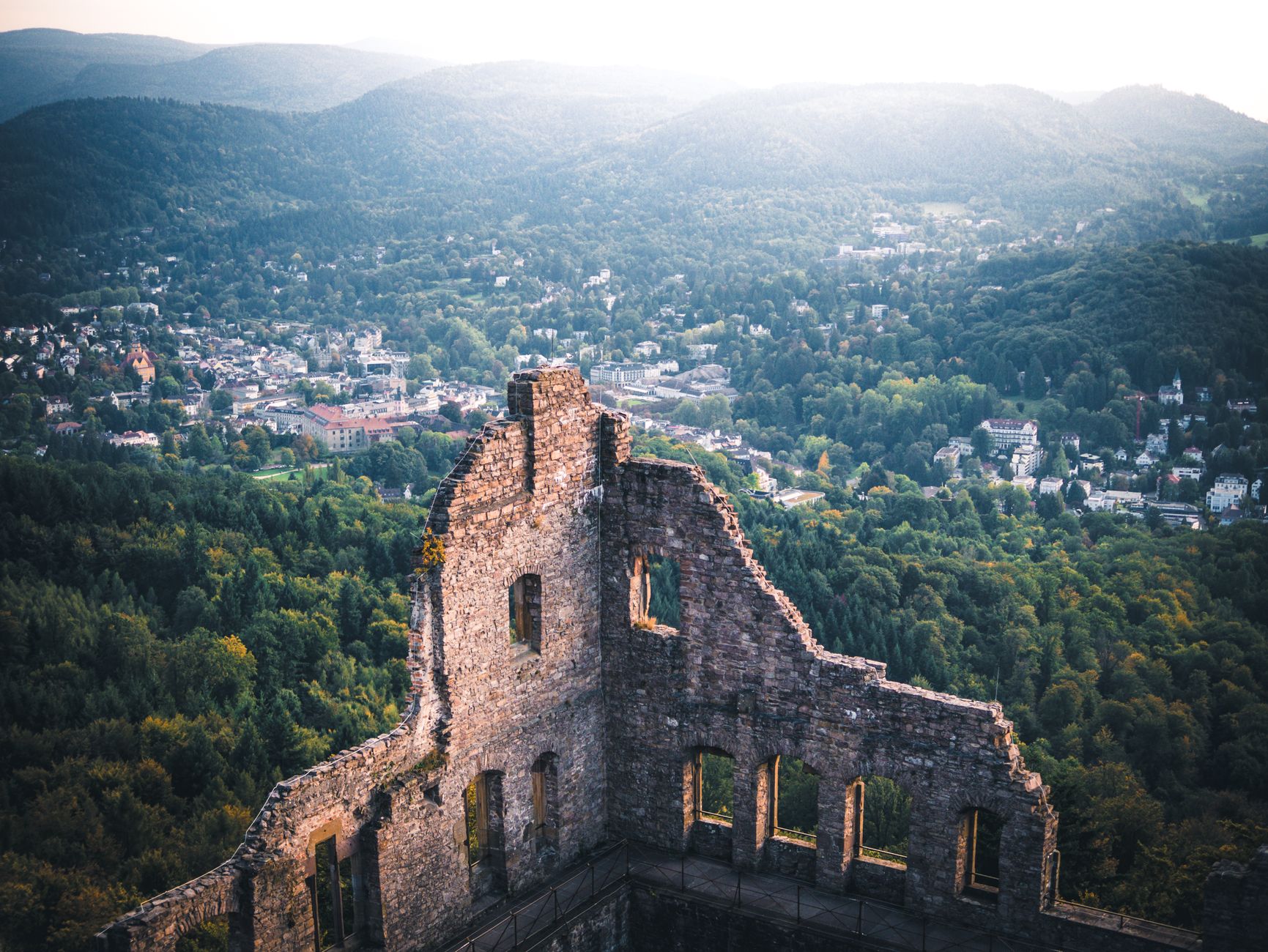
Climb the Battert rock formations or hike the Panoramaweg trail along the Black Forest ridges above the ruined battlements of Hohenbaden Castle.
Forest Hiking
Climb the Battert rock formations or hike the Panoramaweg trail along the Black Forest ridges above the ruined battlements of Hohenbaden Castle.
Crisp Laugengebäck and Coffee
Café König
Walk in early before the silver teapots crowd the front room. Grab a fresh Laugenbrezel or plum tart at the counter with dark filter coffee for under ten euros.
Editor TipThis nineteenth-century patisserie supplied nobility and visiting authors, maintaining traditional Badisch pastry craftsmanship right beside the Black Forest foothills. Head straight through to the rear courtyard garden if the weather holds; it stays whisper-quiet until ten.
Exploring Brahms' Summer Studio
Brahmshaus
Pay five euros at the door to climb up to the preserved attic rooms. Plan for forty-five quiet minutes studying his piano and handwritten notations.
Editor TipJohannes Brahms summered in quiet Lichtental between 1865 and 1874, finding the forest serenity necessary to draft his First Symphony and German Requiem. Walk here via the shaded Lichtentaler Allee path rather than taking the bus; the oak-lined stream route is half the charm.
Climbing the Battert Crags
Altes Schloss Hohenbaden
Park at the lower lot by 08:30 to beat the tour vans. Entry to the 12th-century ruins is free, and the marked trail loops the Battert rock face in ninety minutes.
Editor TipMargraves of Baden governed from these sandstone ramparts until a 15th-century fire forced them into the valley, leaving sheer towers that hikers and peregrine falcons now share. Wear shoes with proper tread. The damp forest granite will humiliate leather-soled city shoes.
Granite Riesling and Forest Game
Schloss Neuweier
Reserve a terrace table a week ahead. Order the roasted venison with hand-scraped Spätzle and a glass of dry Mauerberg Riesling from the estate vines.
Editor TipFortified in the twelfth century, this moated manor overlooks steep stone terraces where the Baden sun hits granite soil, ripening razor-sharp Riesling. Arrive twenty minutes early to walk the vineyard perimeter before the kitchen gets busy.
Note from the Editor
“Get to the colonnade before the tour groups finish breakfast. Mid-morning at the baths is quiet, civilised, and gives you space to breathe.”
The Bed
Where to stay in Baden-Baden
Which part of town to book, and what each one costs you in walking, noise or quiet.
The Comparison
Baden-Baden, or somewhere near it
The places you are realistically choosing between, and the honest case for each.
The Local Record
Where to read more about Baden-Baden
The blogs, boards, guides and operators worth bookmarking.
What to do in Baden-Baden Baden-Württemberg Germany
Baden-Baden follows the narrow valley of the river Oos, framed by wooded Black Forest hills. Days here divide cleanly between the warm mineral waters of the bathhouses and long walks under the mature chestnuts of Lichtentaler Allee. It is an unhurried, comfortable town that suits travellers who appreciate nineteenth-century grandeur, uncrowded gallery rooms, and leisurely afternoon café culture over fast-paced sightseeing.
24 hours in Baden-Baden Baden-Württemberg Germany
Start early at the Friedrichsbad for the Roman-Irish bathing circuit. Walk past the Trinkhalle colonnade to lunch on Maultaschen in the Altstadt, then spend the afternoon among the galleries on Lichtentaler Allee. Finish with an evening drink at the Kurhaus before dinner on Gernsbacher Straße. Select 1 Day above to see it.
2 days in Baden-Baden Baden-Württemberg Germany
Spend your second morning hiking past the crags of Battert to the ruins of Altes Schloss Hohenbaden for valley views. In the afternoon, take a short bus ride south to the Rebland district to sample local Riesling and roast venison at a wine tavern in Neuweier. Choose 2 Days to expand the plan.
3 days in Baden-Baden Baden-Württemberg Germany
A third day allows an excursion up the Schwarzwaldhochstraße into the higher Black Forest peaks, or a slow morning visiting the Cistercian Kloster Lichtenthal followed by an evening opera performance at the Festspielhaus.
Baden-Baden Baden-Württemberg Germany itineraries by interest
Thermal Baths in Baden-Baden Baden-Württemberg Germany
Soak in the nude seventeen-step circuit at Friedrichsbad from 1877 or swim through the modern outdoor thermal pools at Caracalla Spa.
Modern Art in Baden-Baden Baden-Württemberg Germany
Visit Museum Frieder Burda, designed by Richard Meier, alongside the Staatliche Kunsthalle on Lichtentaler Allee for twentieth-century works.
Wine & Vineyards in Baden-Baden Baden-Württemberg Germany
Head south to the Rebland district in Neuweier and Varnhalt to taste crisp, dry Riesling and Spätburgunder at steep terraced wine estates.
Regional Dining in Baden-Baden Baden-Württemberg Germany
Eat Baden specialities like hand-scraped Spätzle, Maultaschen in broth, and venison with lingonberries at traditional taverns along Steinstraße.
Forest Hiking in Baden-Baden Baden-Württemberg Germany
Climb the Battert rock formations or hike the Panoramaweg trail along the Black Forest ridges above the ruined battlements of Hohenbaden Castle.
Historic Architecture in Baden-Baden Baden-Württemberg Germany
Inspect the Corinthian columns of the Kurhaus, the 1824 Trinkhalle frescoes, and neo-Baroque villas bordering the Oos river promenade.
Historic Gardens in Baden-Baden Baden-Württemberg Germany
Walk the two-kilometre Lichtentaler Allee arboretum, planted with centuries-old oaks, azaleas, and the rose gardens of the Gönneranlage.
Classical Music in Baden-Baden Baden-Württemberg Germany
Book evening concerts or opera productions at the Festspielhaus, Germany's largest classical concert hall built into a neo-Renaissance station.
Old Town Walks in Baden-Baden Baden-Württemberg Germany
Navigate the steep alleys of the historic Altstadt, climbing past the Stiftskirche and the Marktplatz to the terrace of the Neues Schloss.
Historic Gaming in Baden-Baden Baden-Württemberg Germany
Tour the chandeliered, nineteenth-century French-style salons of the Casino Baden-Baden inside the Kurhaus for roulette and blackjack.
Sacred Architecture in Baden-Baden Baden-Württemberg Germany
Step into the Russian Church with its gilded onion dome on Lichtentaler Straße, or visit the fourteenth-century Cistercian abbey at Lichtenthal.
Day Trips in Baden-Baden Baden-Württemberg Germany
Drive the Schwarzwaldhochstraße up to Lake Mummelsee, or take the regional train south into the dense pine forests around Forbach and Gernsbach.