


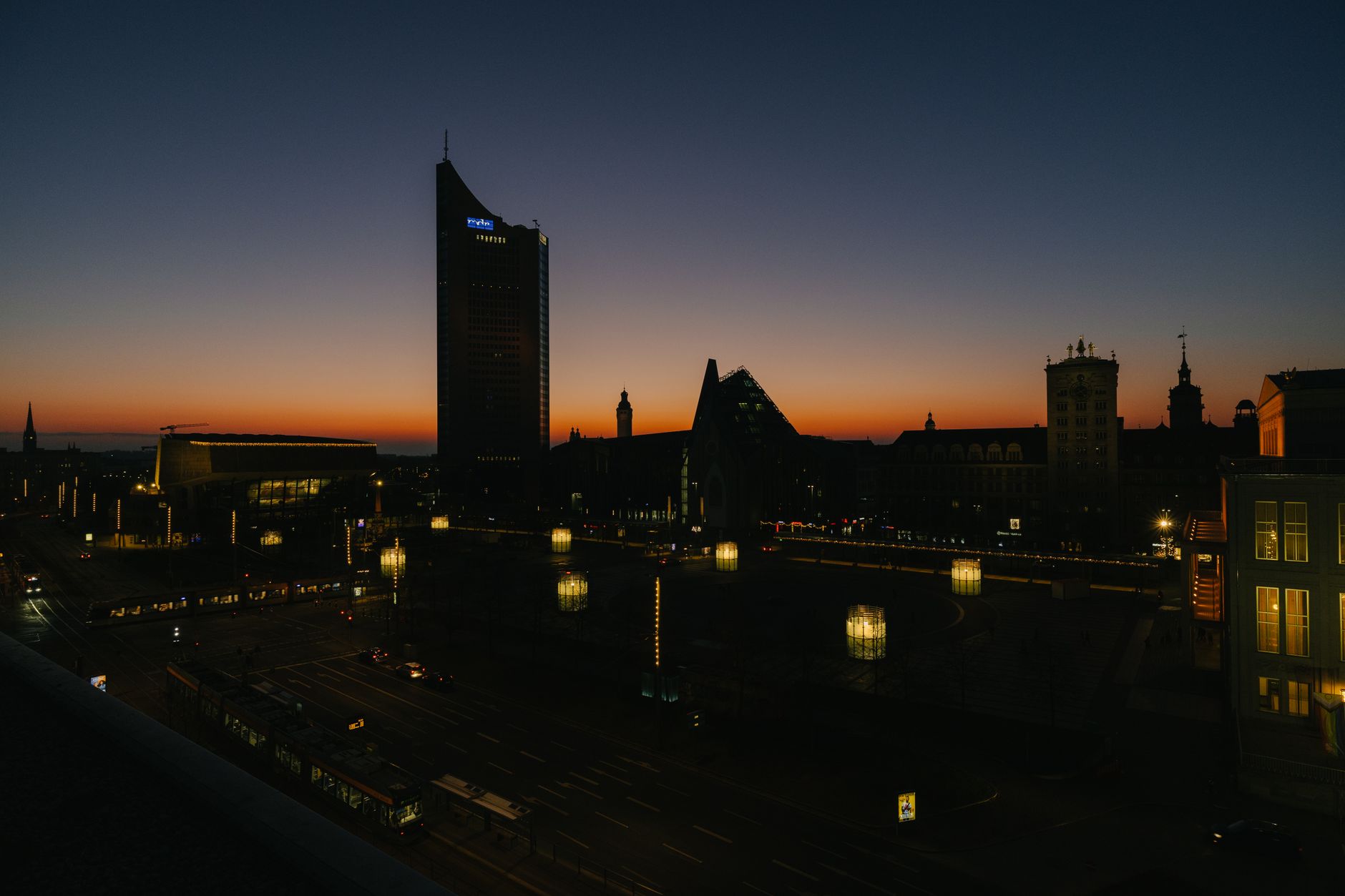


Leipzig sits seventy-five minutes south of Berlin by high-speed ICE train, anchoring Saxony with a rich trade-fair history and deep classical music heritage. The compact centre packs five centuries of covered arcades, while western industrial districts now house artist studios in former cotton mills. You come for Bach and stay for the repurposed brick. Leipzig is worth visiting if you want major musical history paired with independent galleries in vast former factories. Look elsewhere if you want dramatic natural landscapes, quaint half-timbered medieval streets, or opulent royal palaces.
Last updated 9 Sept 2026
Build a Leipzig itinerary.
Choose up to 4 threads that pull you in. Your plan arrives organised around them.
The Bed
Where to stay in Leipzig
Which part of town to book, and what each one costs you in walking, noise or quiet.
The Comparison
Leipzig, or somewhere near it
The places you are realistically choosing between, and the honest case for each.
The Local Record
Where to read more about Leipzig
The blogs, boards, guides and operators worth bookmarking.
What to do in Leipzig Saxony Germany
Leipzig runs on two distinct gears. By day, it is an orderly Saxon city of Renaissance passages, Bach choral services at Thomaskirche, and well-behaved coffee houses. By afternoon, the energy shifts west to Plagwitz and south down Karl-Liebknecht-Straße, where defunct cotton mills and canal basins buzz with studios, corner pubs, and easygoing neighbourhood life. It suits travellers who like cultural weight without museum fatigue.
24 hours in Leipzig Saxony Germany
Start at the Markt and walk the Mädlerpassage before visiting Bach's tomb inside Thomaskirche. Grab a Leipziger Lerche pastry nearby, then take tram 14 west to the Spinnerei art galleries in Plagwitz. End with sour Gose and hearty roast pork in the leafy garden at Gosenschenke Ohne Bedenken. Select 1 Day above to see it.
2 days in Leipzig Saxony Germany
Day two belongs to 1989 history and southern street life. Inspect the Stasi files at the Runde Ecke memorial, then head south down Karl-Liebknecht-Straße in Südvorstadt for flat whites and independent bookshops. In the afternoon, rent a canoe on the Karl-Heine-Kanal to drift past converted brick warehouses. Choose 2 Days to expand the plan.
3 days in Leipzig Saxony Germany
A third day lets you tackle the immense Völkerschlachtdenkmal monument on the southern edge before heading out to the Neuseenland. Take the S-Bahn out to Lake Cospuden to rent a bicycle along the shoreline, stopping for smoked fish rolls where open-cast coal pits were turned into fresh water.
Leipzig Saxony Germany itineraries by interest
Classical Music in Leipzig Saxony Germany
Listen to the St. Thomas Boys Choir in Thomaskirche, where J.S. Bach worked, or visit Felix Mendelssohn Bartholdy’s preserved living quarters.
Modern Art in Leipzig Saxony Germany
Tour the Spinnerei, a massive 1884 cotton mill complex in Plagwitz now home to the New Leipzig School painters and independent gallery spaces.
Local Beer in Leipzig Saxony Germany
Drink tart, coriander-spiced Gose at the historic Gosenschenke Ohne Bedenken in Gohlis, poured from traditional long-necked bottles.
Historic Architecture in Leipzig Saxony Germany
Wander the covered passages off the Markt, including Mädlerpassage with its 1525 Auerbachs Keller and the ornate Barthels Hof courtyard.
Regional Food in Leipzig Saxony Germany
Order Leipziger Allerlei with fresh river crayfish and morels, followed by sweet marzipan-filled Leipziger Lerchen shortcrust pastries.
Urban Waterways in Leipzig Saxony Germany
Rent a kayak on the Karl-Heine-Kanal to paddle beneath brick railway bridges past red-brick 19th-century industrial lofts in Plagwitz.
20th-Century History in Leipzig Saxony Germany
Stand inside the Stasi Museum at the Runde Ecke and visit Nikolaikirche, where peaceful Monday demonstrations sparked the 1989 revolution.
Coffee & Cafes in Leipzig Saxony Germany
Pull up a wooden chair at Zum Arabischen Coffe Baum, one of Europe’s oldest coffee houses operating near the central market square since 1711.
City Parks in Leipzig Saxony Germany
Walk through the sprawling Clara-Zetkin-Park along the Elster river basin, connecting central green spaces to southern residential quarters.
Monumental Sights in Leipzig Saxony Germany
Climb the five hundred steps of the 1913 Völkerschlachtdenkmal, marking Napoleon’s defeat in the Battle of the Nations with massive stone sentinels.
Nightlife & Clubs in Leipzig Saxony Germany
Catch live shows and late-night sets at Institut für Zukunft or along the vibrant bar strip of Karl-Liebknecht-Straße in the Südvorstadt.
Day Trips in Leipzig Saxony Germany
Ride the S-Bahn thirty minutes west to Halle for Handel’s birthplace and salt-mining history, or south to the Neuseenland reclaimed mining lakes.