Mostar.


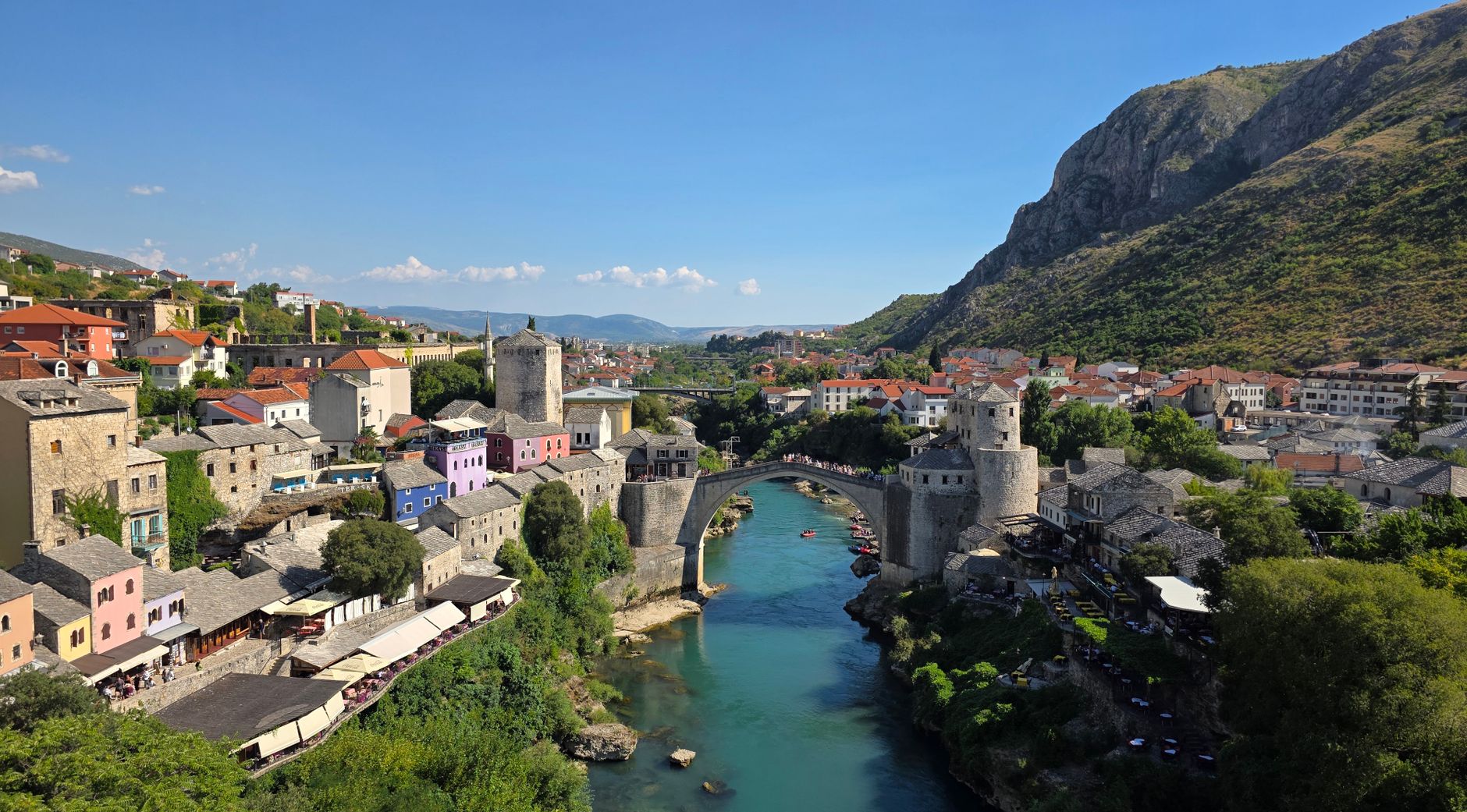


Mostar sits two hours southwest of Sarajevo by the morning train along the Neretva River canyon, and two hours north of Dubrovnik by road. It is known for its rebuilt sixteenth-century bridge, Stari Most, and its layered Ottoman and Austro-Hungarian quarters. The cobbled old town quiets down dramatically after five in the afternoon. Mostar is worth visiting if you want to drink copper-pot coffee beside emerald water, eat charcoal-grilled minced meat, and study resilient stone architecture. Look elsewhere if you want late-night clubs, a deep roster of indoor museums, or smooth, flat streets for easy walking.
Last updated 13 Sept 2026
Build a Mostar itinerary.
Choose up to 4 threads that pull you in. Your plan arrives organised around them.
The Bed
Where to stay in Mostar
Which part of town to book, and what each one costs you in walking, noise or quiet.
The Comparison
Mostar, or somewhere near it
The places you are realistically choosing between, and the honest case for each.
The Local Record
Where to read more about Mostar
The blogs, boards, guides and operators worth bookmarking.
What to do in Mostar Herzegovina Bosnia and Herzegovina
Mostar unfolds along the gorge of the Neretva, cleaving into the Ottoman quarter on the east bank and the Austro-Hungarian boulevards to the west. The rhythm here is unhurried. You spend the daylight hours crossing slick cobblestones, inspecting masonry, dodging midday tour groups, and drinking coffee in shaded courtyards. It suits travellers who appreciate layered European history, hearty Balkan cooking, and walking everywhere on foot.
24 hours in Mostar Herzegovina Bosnia and Herzegovina
Start early at Kriva Cuprija before day-trippers arrive, then cross Stari Most to Kujundziluk for a copper pot of coffee. Lunch on hot cevapi and kajmak at a riverside table. In the afternoon, climb the minaret at Koski Mehmed Pasha Mosque, and spend your evening sipping Zilavka wine on a stone terrace as the bridge lights up. Select 1 Day above to see it.
2 days in Mostar Herzegovina Bosnia and Herzegovina
Dedicate your second day to the city beyond the postcards. Walk the former frontline along Bulevar Revolucije, visit the Ottoman-era Muslibegovic House, and hike up Hum Hill for sunset over the valley. For dinner, seek out slow-braised veal under a heavy metal bell, known as teletina ispod saca, at a quiet suburban tavern. Choose 2 Days to expand the plan.
3 days in Mostar Herzegovina Bosnia and Herzegovina
A third day allows you to explore wider Herzegovina. Hire a car or take a taxi south to the fifteenth-century Dervish monastery at Blagaj, explore the steep stone lanes of fortified Pocitelj, and swim beneath the waterfalls at Kravica. Finish back in town with grilled river trout and a glass of robust Blatina.
Mostar Herzegovina Bosnia and Herzegovina itineraries by interest
Ottoman Architecture in Mostar Herzegovina Bosnia and Herzegovina
Inspect the stone arch of Stari Most, Kriva Cuprija, and the courtyard at Koski Mehmed Pasha Mosque with its climbable riverside minaret.
Local Grills in Mostar Herzegovina Bosnia and Herzegovina
Order ten beef cevapi tucked into warm somun bread with raw diced onions and thick kajmak at Tima-Irma along Kujundziluk lane.
Coffee Culture in Mostar Herzegovina Bosnia and Herzegovina
Sip thick bosanska kafa brewed in a copper dzezva, served on a tin tray with cold water and a gelatinous cube of Turkish delight.
Regional Wine in Mostar Herzegovina Bosnia and Herzegovina
Herzegovina grows crisp white Zilavka and mineral-driven red Blatina; taste both across local konobas or in family vineyards toward Citluk.
Craft Traditions in Mostar Herzegovina Bosnia and Herzegovina
Wander Kujundziluk to hear coppersmiths hammering ornate coffee sets, brass trays, and traditional carved tobacco boxes by hand.
Sacred Architecture in Mostar Herzegovina Bosnia and Herzegovina
Compare the Ottoman domes of Karadoz Bey Mosque with the Franciscan Church of Saints Peter and Paul and the Old Orthodox Church on the hillside.
Day Trips in Mostar Herzegovina Bosnia and Herzegovina
Catch a local bus south to the Dervish tekke at Blagaj spring, the medieval stone fortress of Pocitelj, and the cascading pools at Kravica.
Modern History in Mostar Herzegovina Bosnia and Herzegovina
Walk Bulevar Revolucije to see preserved wartime ruins, then visit the Museum of War and Genocide Victims for straightforward context.
Baking Traditions in Mostar Herzegovina Bosnia and Herzegovina
Buy fresh spiral burek filled with minced beef, cheese, or spinach from neighborhood pekaras like Pekara Dan i Noc, sliced hot by weight.
River Life in Mostar Herzegovina Bosnia and Herzegovina
Watch local divers plunge from Stari Most into the cold Neretva River, or sit on the gravel banks below the bridge as the sun drops.
Traditional Dining in Mostar Herzegovina Bosnia and Herzegovina
Sit down for slow-cooked veal sač, stuffed sogan dolma, and japrak wrapped in vine leaves at family-run restaurants along the Radobolja canal.
Hiking in Mostar Herzegovina Bosnia and Herzegovina
Climb the rocky path up Hum Hill for panoramic views of the entire Neretva valley, or hike the trails crossing the Velez mountain ridge.