


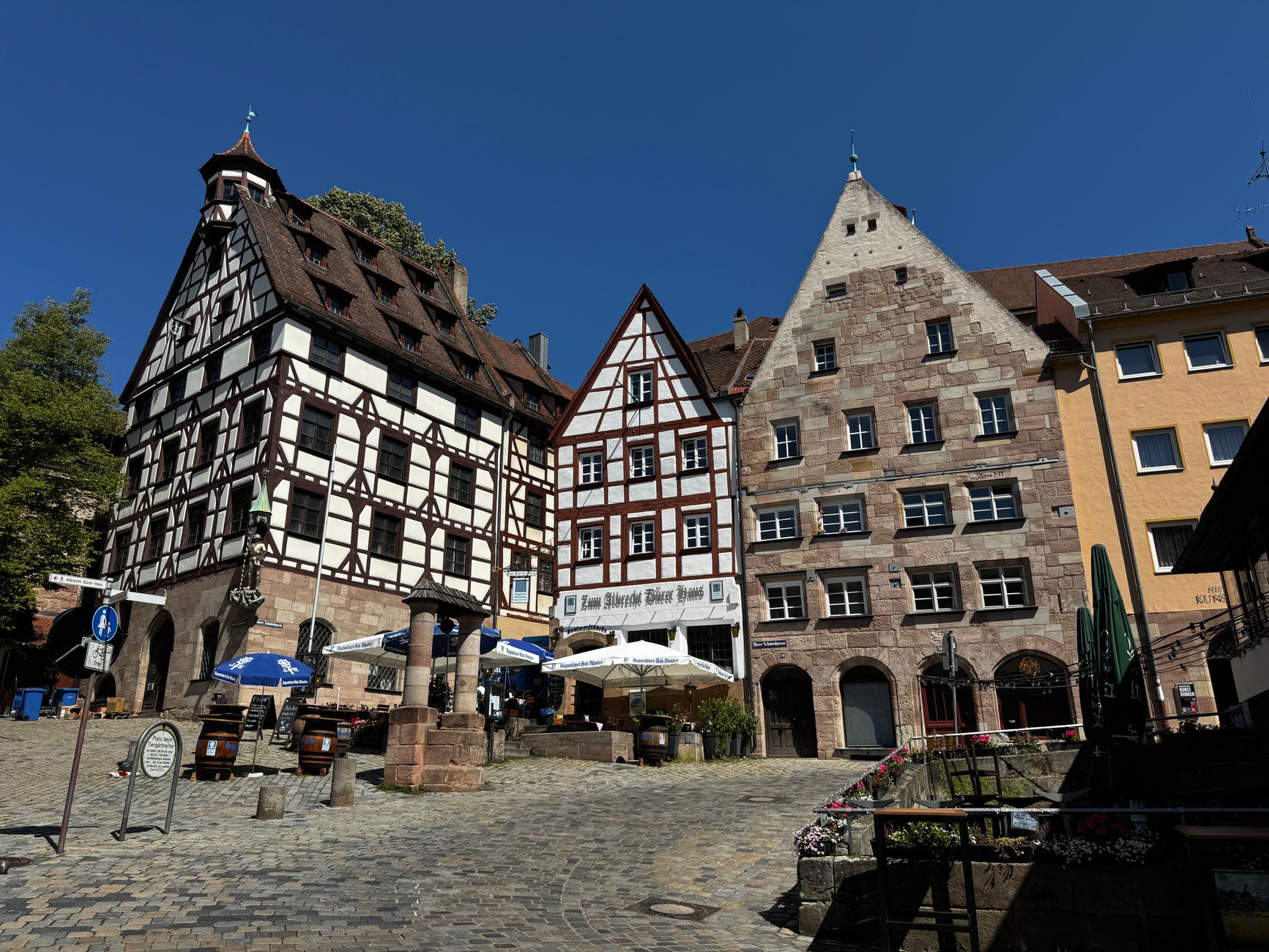


Nuremberg sits an hour north of Munich by high-speed ICE train, anchoring the Franconian basin with a sandstone fortress above the Pegnitz River. It is known for its medieval trading wealth, finger-sized sausages grilled over beechwood embers, and its unflinching confrontation with twentieth-century history at the former Nazi rally grounds. Nuremberg is worth visiting if you want to trace six centuries of German craftsmanship and law across a compact, walkable old town. Look elsewhere if you want high-energy late-night clubbing, rugged alpine scenery, or the sprawling scale of a major metropolis.
Last updated 9 Sept 2026
Build a Nuremberg itinerary.
Choose up to 4 threads that pull you in. Your plan arrives organised around them.
The Bed
Where to stay in Nuremberg
Which part of town to book, and what each one costs you in walking, noise or quiet.
The Comparison
Nuremberg, or somewhere near it
The places you are realistically choosing between, and the honest case for each.
The Local Record
Where to read more about Nuremberg
The blogs, boards, guides and operators worth bookmarking.
What to do in Nuremberg Bavaria Germany
Nuremberg is shaped by the Pegnitz River dividing the Altstadt into St. Sebald and St. Lorenz quarters. Mornings belong to the sandstone climb up to the Kaiserburg and the stalls of the Hauptmarkt, while afternoons ease into cellars for dark Rotbier and quiet museum visits. It suits travellers who appreciate walkable medieval lanes, frank political history, and hearty Franconian dining without tourist pretence.
24 hours in Nuremberg Bavaria Germany
Start early at the Kaiserburg fortress before walking down to Albrecht Dürer's house. Lunch on charcoal-grilled sausages at Bratwursthäusle beside St. Sebald. Spend the afternoon taking the S-Bahn out to the Documentation Centre, returning to the Altstadt for a cold cellar beer by the Henkersteg bridge. Select 1 Day above to see it.
2 days in Nuremberg Bavaria Germany
Dedicate day two to Courtroom 600 at the Memorium Nuremberg Trials in the western district of Gostenhof, followed by Turkish bakeries and vintage shops nearby. In the evening, explore the rock-cut Felsengänge cellars and sit down for crispy Schäufele roast pork in a neighbourhood tavern. Choose 2 Days to expand the plan.
3 days in Nuremberg Bavaria Germany
A third day gives you breathing room for Franconian day trips. Board the regional train north to Bamberg to drink smoked beer along the Regnitz, or take the train to Fürth to admire preserved art nouveau facades and historic Jewish community sites just ten minutes away.
Nuremberg Bavaria Germany itineraries by interest
Local Sausages in Nuremberg Bavaria Germany
Order six or twelve Nürnberger Rostbratwürste roasted over open beechwood at Zum Gulden Stern, served with sharp horseradish and kraut.
Medieval Fortifications in Nuremberg Bavaria Germany
Walk the surviving dry moat, ramparts, and sandstone bastions of the Kaiserburg, looking out over the red-tiled roofs of the Altstadt.
Brewing Heritage in Nuremberg Bavaria Germany
Sample dark Rotbier poured straight from wooden barrels at Hausbrauerei Altstadthof after touring the rock-cut beer cellars below.
Twentieth-Century History in Nuremberg Bavaria Germany
Visit the Dokuzentrum at the unfinished Congress Hall and stand in Courtroom 600 at the Palace of Justice where the trials unfolded.
Sacred Architecture in Nuremberg Bavaria Germany
Step inside St. Lorenz and St. Sebald to see Adam Kraft's intricate stone tabernacle and Veit Stoss's carved Linden-wood Annunciation.
Art & Printmaking in Nuremberg Bavaria Germany
Tour Albrecht Dürer's timber-framed workshop house near the Tiergärtnertor to examine Renaissance woodcuts and copperplate presses.
Underground Tunnels in Nuremberg Bavaria Germany
Descend into the Felsengänge, a four-level labyrinth of sandstone cellars hand-carved since the fourteenth century to protect beer and art.
Baking Traditions in Nuremberg Bavaria Germany
Pick up spicy, flourless Elisenlebkuchen glazed in dark chocolate or sugar from traditional bakers like Düll or Lebkuchen-Schmidt.
Craft Workshops in Nuremberg Bavaria Germany
Browse the Handwerkerhof near Königstor, where pewter smiths, glassblowers, and leatherworkers demonstrate historic guild trades.
Riverside Walks in Nuremberg Bavaria Germany
Follow the Pegnitz paths past the timber Henkersteg bridge and the Trödelmarkt island for afternoon shade and quiet bench stops.
Folk & Toy History in Nuremberg Bavaria Germany
Inspect tin figures, antique wooden dollhouses, and optical toys across three floors at the Spielzeugmuseum on Karlstraße.
Day Trips in Nuremberg Bavaria Germany
Take a 45-minute regional train to Bamberg for smoked rauchbier and canal views, or head east into the limestone crags of Franconian Switzerland.