Palm Springs.


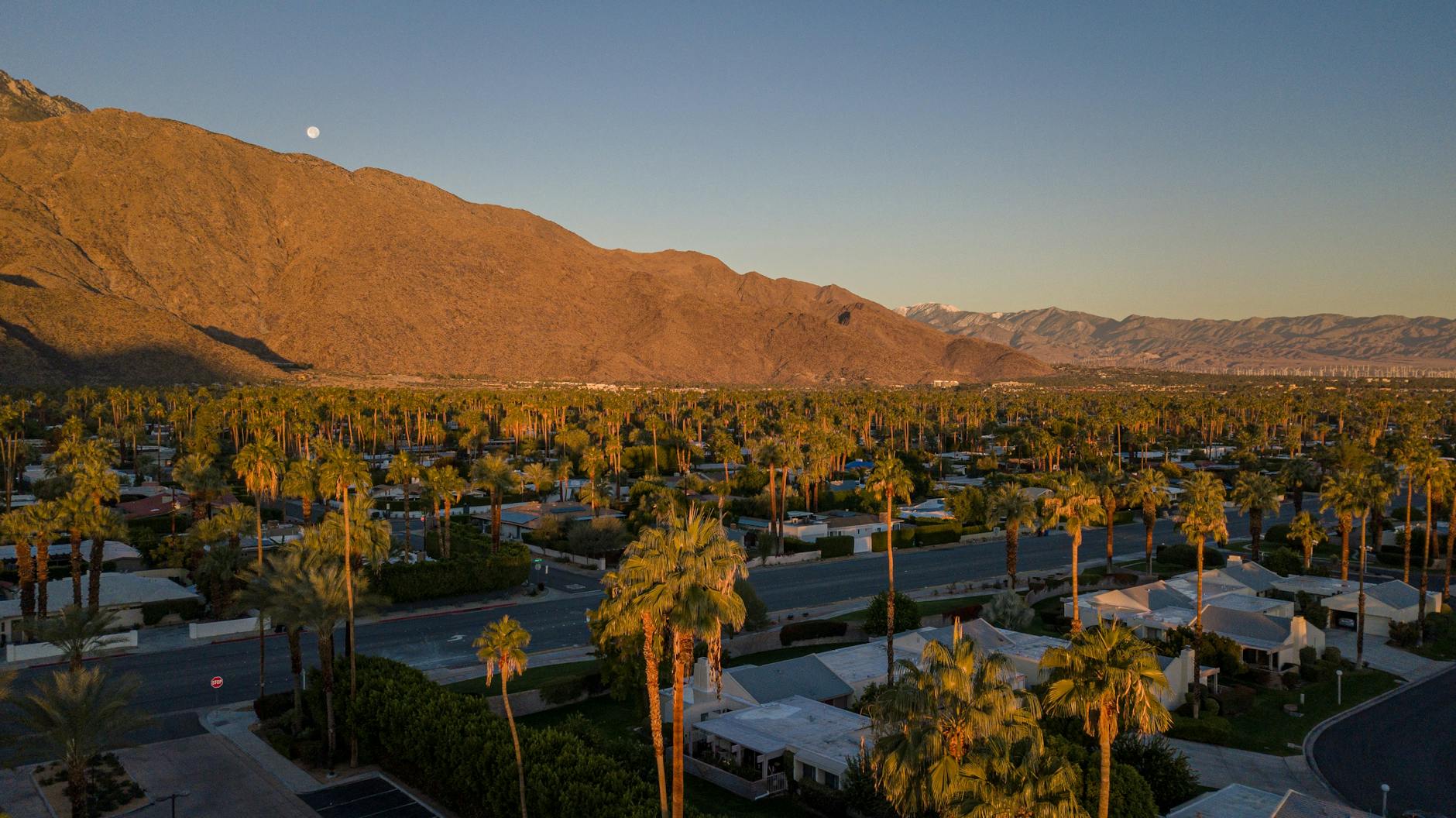
Sitting two hours east of Los Angeles along Interstate 10, Palm Springs occupies the Coachella Valley floor beneath the granite wall of Mount San Jacinto. The city is known for its dense collection of post-war modernist architecture, cold-martini supper clubs, and immediate access to stark desert canyons. It operates on an easy desert schedule dictated by heat and shadow. Palm Springs is worth visiting if you want to study mid-century architecture up close, hike native palm oases, and rest by a pool. Look elsewhere if you want a compact, walkable city center, high-energy late-night clubs, or an escape from triple-digit summer heat.
Last updated 9 Sept 2026
Build a Palm Springs itinerary.
Choose up to 4 threads that pull you in. Your plan arrives organised around them.
The Bed
Where to stay in Palm Springs
Which part of town to book, and what each one costs you in walking, noise or quiet.
The Comparison
Palm Springs, or somewhere near it
The places you are realistically choosing between, and the honest case for each.
The Local Record
Where to read more about Palm Springs
The blogs, boards, guides and operators worth bookmarking.
What to do in Palm Springs Deserts United States
Palm Springs arranges itself in a long, sunbaked grid parallel to the San Jacinto Mountains. Days here follow a sensible rhythm: active mornings in the rocky canyons or on foot through architectural neighbourhoods like Vista Las Palmas, followed by midday shelter from the sun, and late dinners on breezy patios along Palm Canyon Drive. It suits independent travellers who value design, calm desert air, and unhurried meals.
24 hours in Palm Springs Deserts United States
Start at 8:00 AM with a hike among the wild palms in Andreas Canyon before the midday heat settles. Head to the Uptown Design District for lunch, tour Albert Frey's compact architecture, and spend the evening over cold martinis and a steak at Melvyn's. Everything sits within a fifteen-minute drive. Select 1 Day above to see it.
2 days in Palm Springs Deserts United States
Day two adds elevation. Board the Palm Springs Aerial Tramway early to walk among the alpine pines of Mount San Jacinto State Park, then descend for an afternoon at the Palm Springs Art Museum. Finish with Mexican street tacos and cold beer in Cathedral City. Choose 2 Days to expand the plan.
3 days in Palm Springs Deserts United States
Three days lets you head east into Joshua Tree National Park without rushing, stopping at roadside stands in the Coachella Valley for date shakes along the route. Return for a quiet evening soak in the natural mineral waters of Desert Hot Springs as the desert cools down.
Palm Springs Deserts United States itineraries by interest
Modern Architecture in Palm Springs Deserts United States
Tour post-war modernist homes by Richard Neutra and Albert Frey in Twin Palms and Vista Las Palmas, noticing low rooflines designed for desert heat.
Desert Hiking in Palm Springs Deserts United States
Walk the shady fan palm groves of Indian Canyons or climb the steep switchbacks of the Skyline Trail up Mount San Jacinto for sweeping valley views.
Classic Cocktails in Palm Springs Deserts United States
Order dry gin martinis and prime rib in dimly lit booths at Melvyn's or the Purple Room, where desert supper club hospitality remains unchanged.
Indigenous Heritage in Palm Springs Deserts United States
Visit the Agua Caliente Cultural Museum and the sacred hot mineral springs downtown, learning Cahuilla basketry and deep valley history.
Regional Produce in Palm Springs Deserts United States
Sample sweet Medjool date shakes and citrus from roadside Coachella Valley growers along Highway 111, harvested fresh from desert groves.
Contemporary Art in Palm Springs Deserts United States
Walk Palm Canyon Drive gallery spaces and the Palm Springs Art Museum, known for its strong collection of desert landscape photography and glass.
Vintage Shopping in Palm Springs Deserts United States
Rummage through mid-century furniture, barware, and vintage resort wear in the consignment shops along the Uptown Design District.
Scenic Cable Cars in Palm Springs Deserts United States
Ride the rotating Palm Springs Aerial Tramway up 8,500 feet into cooler alpine pine forests, dropping thirty degrees in fifteen minutes.
Thermal Baths in Palm Springs Deserts United States
Soak in naturally heated lithium and sulfur mineral waters at low-key motels across the valley floor in nearby Desert Hot Springs.
Botanical Gardens in Palm Springs Deserts United States
Explore the collection of desert cactuses and succulents at Moorten Botanical Garden, an intimate family-run arboretum planted in 1938.
Outdoor Dining in Palm Springs Deserts United States
Eat fish tacos, citrus salads, and wood-fired flatbreads on misted patios shaded by bougainvillea along South Palm Canyon Drive.
Day Trips in Palm Springs Deserts United States
Drive forty-five minutes east into Joshua Tree National Park to see boulder piles, twisted yuccas, and open high-desert terrain.