
.jpg)

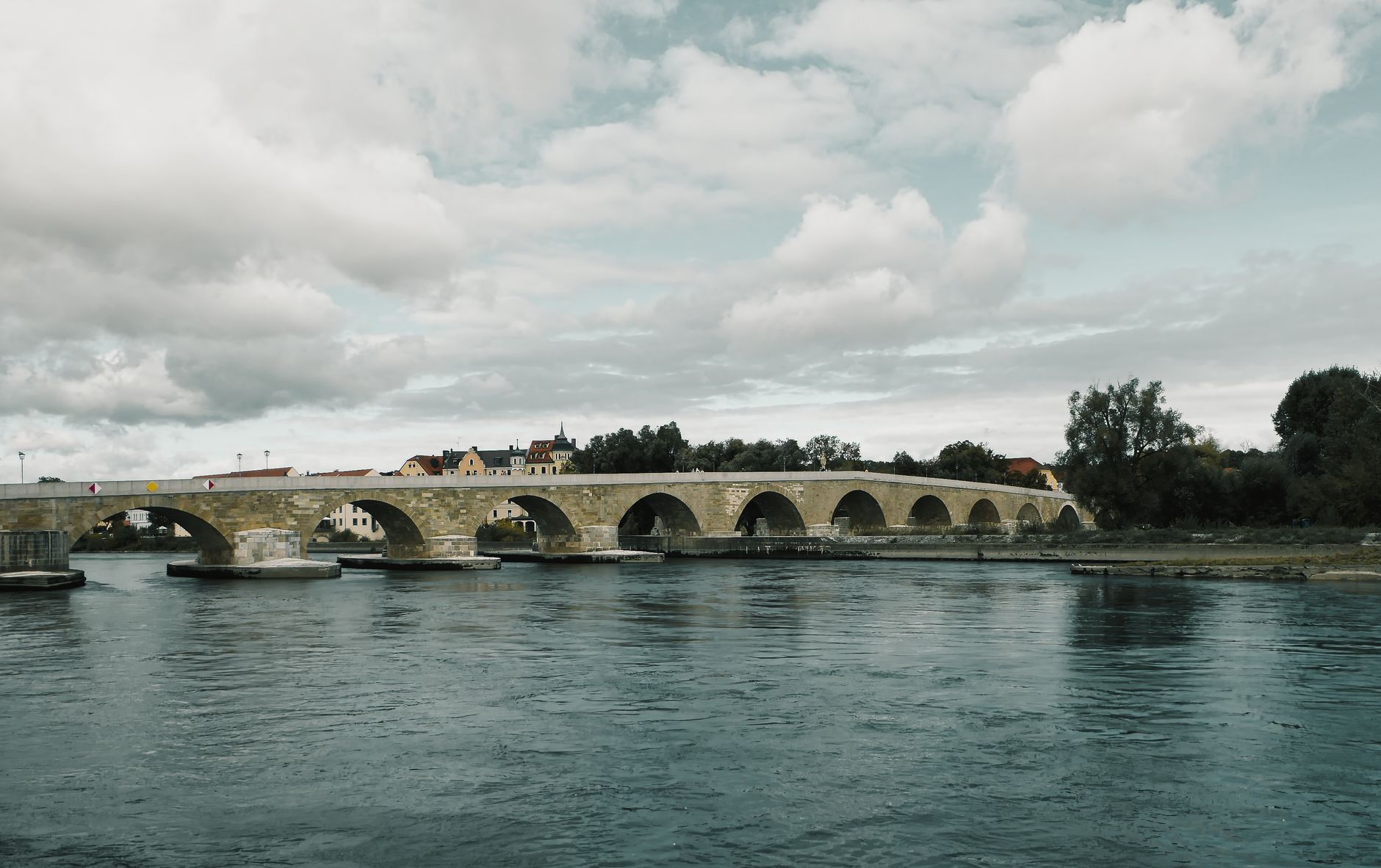


Sitting ninety minutes north of Munich by direct regional train, Regensburg contains Germany's most intact medieval city centre, spared significant wartime bombing and anchored by its thirteenth-century Gothic cathedral and stone Danube bridge. Regensburg is worth visiting if you want to walk narrow fourteenth-century lanes, inspect Roman masonry, and eat charcoal-grilled pork sausages by the river. Look elsewhere if you want late-night clubbing or alpine hiking directly from the town square.
Last updated 9 Oct 2026
Build a Regensburg itinerary.
Choose up to 4 threads that pull you in. Your plan arrives organised around them.
The Bed
Where to stay in Regensburg
Which part of town to book, and what each one costs you in walking, noise or quiet.
The Comparison
Regensburg, or somewhere near it
The places you are realistically choosing between, and the honest case for each.
The Local Record
Where to read more about Regensburg
The blogs, boards, guides and operators worth bookmarking.
What to do in Regensburg Bavaria Germany
Life in Regensburg follows the broad arc of the Danube. The old town is compact and entirely walkable, framed by stone alleys, patrician merchant towers, and the open paving of Haidplatz. Most travellers spend their hours alternating between quiet church naves, museum halls, and open-air brewery benches. It suits independent walkers, history enthusiasts, and anyone who prefers an intact medieval street plan over modern glass fronts.
24 hours in Regensburg Bavaria Germany
Start early at St. Peter Cathedral before the nave fills, then cross the Steinerne Brücke into Stadtamhof for mid-morning coffee. Have grilled sausages with sweet mustard at the historic dockside kitchen for lunch, visit the Imperial Diet hall in the Altes Rathaus, and finish with a cold dark beer at Spitalbrauerei. Select 1 Day above to see it.
2 days in Regensburg Bavaria Germany
Spend morning two inside the vast cloisters of Schloss Thurn und Taxis and the nearby Romanesque basilica of St. Emmeram. In the afternoon, explore the quiet lanes of the former Jewish quarter around Neupfarrplatz, ending with slow-roasted pork knuckle and knödel at a traditional tavern like Brauereigaststätte Kneitinger. Choose 2 Days to expand the plan.
3 days in Regensburg Bavaria Germany
A third day allows an unhurried boat trip downriver to the hilltop Walhalla temple, perched above the Danube at Donaustauf. Back in town, spend a slow afternoon hunting Roman walls along Unter den Schwibbögen, drinking filter coffee on Bismarckplatz, and browsing antique bookshops along Untere Bachgasse.
Regensburg Bavaria Germany itineraries by interest
Sacred Architecture in Regensburg Bavaria Germany
Stand before the 105-metre spires and fourteenth-century stained glass inside St. Peter Cathedral, Bavaria's premier French Gothic monument.
Historic Taverns in Regensburg Bavaria Germany
Order six charcoal-grilled pork sausages with sweet mustard and sauerkraut at Historische Wurstkuchl, operating beside the Danube since 1146.
Roman Heritage in Regensburg Bavaria Germany
Trace the limestone arches of the Porta Praetoria, erected in 179 AD under Emperor Marcus Aurelius as the northern gate of Castra Regina.
River Crossing in Regensburg Bavaria Germany
Walk the sixteen arches of the twelfth-century Steinerne Brücke, crossing the Danube to Stadtamhof with views back to the patrician towers.
Local Beer in Regensburg Bavaria Germany
Drink dunkles export and unfiltered weissbier under the chestnut trees at Spitalbrauerei, brewing on the northern riverbank since 1226.
Palatial History in Regensburg Bavaria Germany
Tour the neo-Renaissance cloisters and carriage museum at Schloss Thurn und Taxis, still inhabited by the former imperial postmaster dynasty.
Civic History in Regensburg Bavaria Germany
Visit the Reichssaal in the Altes Rathaus, where the Perpetual Imperial Diet of the Holy Roman Empire convened continuously from 1663 to 1806.
Cafe Culture in Regensburg Bavaria Germany
Sit for espresso and handmade pralines at Cafe Prinzess on the Rathausplatz, delivering chocolates and cakes to local residents since 1686.
Urban Walking in Regensburg Bavaria Germany
Weave through the car-free alleys between Haidplatz, Kohlenmarkt, and Watmarkt to spot fortified medieval patrician defensive towers.
Day Trips in Regensburg Bavaria Germany
Take a twenty-minute ferry down the Danube to Donaustauf to climb the neo-classical marble steps of the 1842 Walhalla memorial temple.
Monastic Art in Regensburg Bavaria Germany
Examine the Romanesque portal and gilded interior of St. Emmeram Basilica, an eighth-century Benedictine monastery reshaped by the Asam brothers.
Produce Markets in Regensburg Bavaria Germany
Browse radishes, regional cheeses, and seasonal white asparagus from local Bavarian growers at the weekly Neupfarrplatz morning farmers market.