


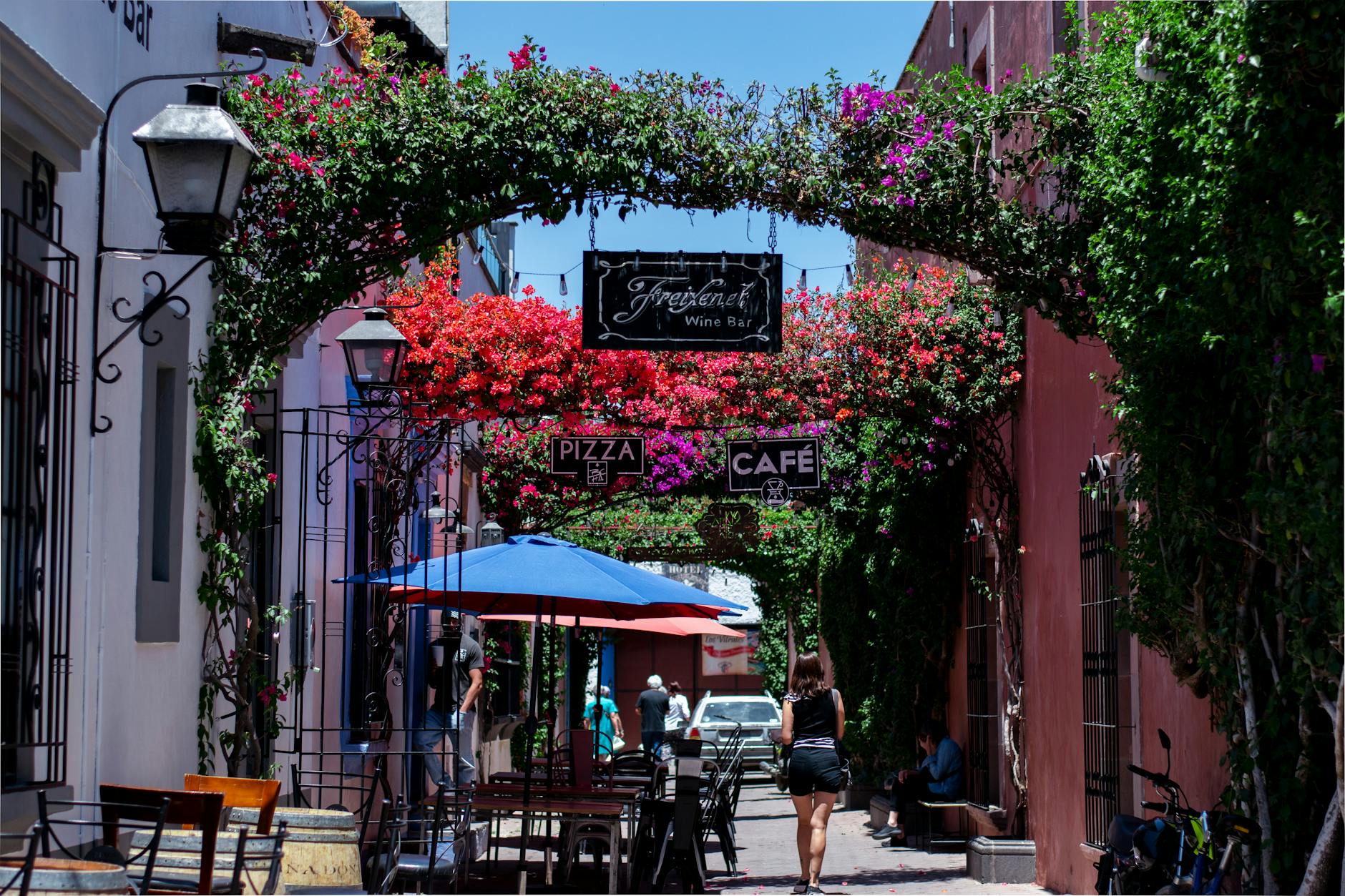
Ajijic sits forty-five minutes south of Guadalajara International Airport along the north shore of Lake Chapala. The town is known for its mild mountain-lake climate, painted adobe walls, and a settled rhythm built around morning markets and lakeside plazas. Ajijic is worth visiting if you want slow days split between sidewalk fondas, botanical courtyards, and walks along the malecón. Look elsewhere if you want late-night clubbing, sandy swimming beaches, or sleek modern infrastructure.
Last updated 15 Nov 2026
Build a Ajijic itinerary.
Choose up to 4 threads that pull you in. Your plan arrives organised around them.
The Bed
Where to stay in Ajijic
Which part of town to book, and what each one costs you in walking, noise or quiet.
The Comparison
Ajijic, or somewhere near it
The places you are realistically choosing between, and the honest case for each.
The Local Record
Where to read more about Ajijic
The blogs, boards, guides and operators worth bookmarking.
What to do in Ajijic Jalisco Mexico
Ajijic spreads between the Sierra de San Juan Cosalá and the northern shore of Lake Chapala. Life here moves slowly along cobblestone streets lined with bougainvillea and clay-tiled rooftops. The days revolve around morning coffee near the plaza, market errands, and late afternoon strolls along the malecón. It suits travellers who appreciate unhurried provincial rhythms, reliable mountain weather, and eating well at family-run tables.
24 hours in Ajijic Jalisco Mexico
Start with coffee and sweet bread off Calle Colón before browsing the mural-lined lanes down to the lake. Grab lunch at a fonda for fried charales with lime and salsa. Spend the afternoon in the shade of the Parroquia de San Andrés, then walk the malecón at sunset as vendors set up cart grills on the plaza. Select 1 Day above to see it.
2 days in Ajijic Jalisco Mexico
Day two heads uphill. Hike the morning trail to El Tepalo canyon before the midday heat, then reward the calves with birria de chivo near the Wednesday market stalls. In the afternoon, take a ten-minute local bus west to San Juan Cosalá for a long, quiet soak in the thermal mineral pools by the water. Choose 2 Days to expand the plan.
3 days in Ajijic Jalisco Mexico
A third day lets you hire a wooden lancha from the pier out to Isla de los Alacranes for fresh grilled tilapia. Spend the afternoon in the neighboring municipal seat of Chapala, walking its grander Porfirian boardwalk and visiting the old railway station museum before a quiet tequila back in Ajijic.
Ajijic Jalisco Mexico itineraries by interest
Street Food in Ajijic Jalisco Mexico
Tacos de birria de chivo on Calle Colón, crisp carnitas served with pickled nopales, and evening tamal vendors outside the main plaza.
Public Art in Ajijic Jalisco Mexico
Vivid community murals along Calle Marcos Castellanos depicting Purépecha mythology, local weavers, and Mexican revolution history.
Markets & Produce in Ajijic Jalisco Mexico
The Wednesday tianguis on Calle Revolución brings fresh queso panela, mountain berries, raw agave honey, and handmade tortillas.
Lakeside Walks in Ajijic Jalisco Mexico
The stone malecón stretches past fishermen hauling carp and white pelicans wintering along the shallow reed banks of Lake Chapala.
Hill Hiking in Ajijic Jalisco Mexico
Steep dirt trails climb past agave patches to El Tepalo waterfall and the ridgeline shrines overlooking the entire lake basin.
Local Distilling in Ajijic Jalisco Mexico
Local cantinas pour artisanal mezcal from the Jalisco highlands alongside small-batch reposado tequilas and tart sangrita chasers.
Sacred Architecture in Ajijic Jalisco Mexico
The 18th-century Parroquia de San Andrés and the quiet Capilla del Rosario frame the plaza with thick adobe walls and stone bells.
Traditional Crafts in Ajijic Jalisco Mexico
Backstrap weaving workshops and pottery studios along Calle Ocampo sell hand-dyed wool rugs and burnished clay cooking cazuelas.
Thermal Springs in Ajijic Jalisco Mexico
Nearby mineral bathhouses in San Juan Cosalá feed natural sulfur pools pumped straight from lakeside volcanic hot springs.
Plaza Culture in Ajijic Jalisco Mexico
Evenings at the central zócalo bring brass bands, shoe-shine stands, roasted corn vendors, and benches shaded by old ficus trees.
Regional Cooking in Ajijic Jalisco Mexico
Fondas serve crisp fried charales with lime, caldo de michi fish soup, and clay dishes of slow-cooked birria in ancho chile broth.
Day Trips in Ajijic Jalisco Mexico
Board a lancha to Isla de los Alacranes or explore the 19th-century railway station and boardwalk in the neighboring town of Chapala.