
_II.jpg)


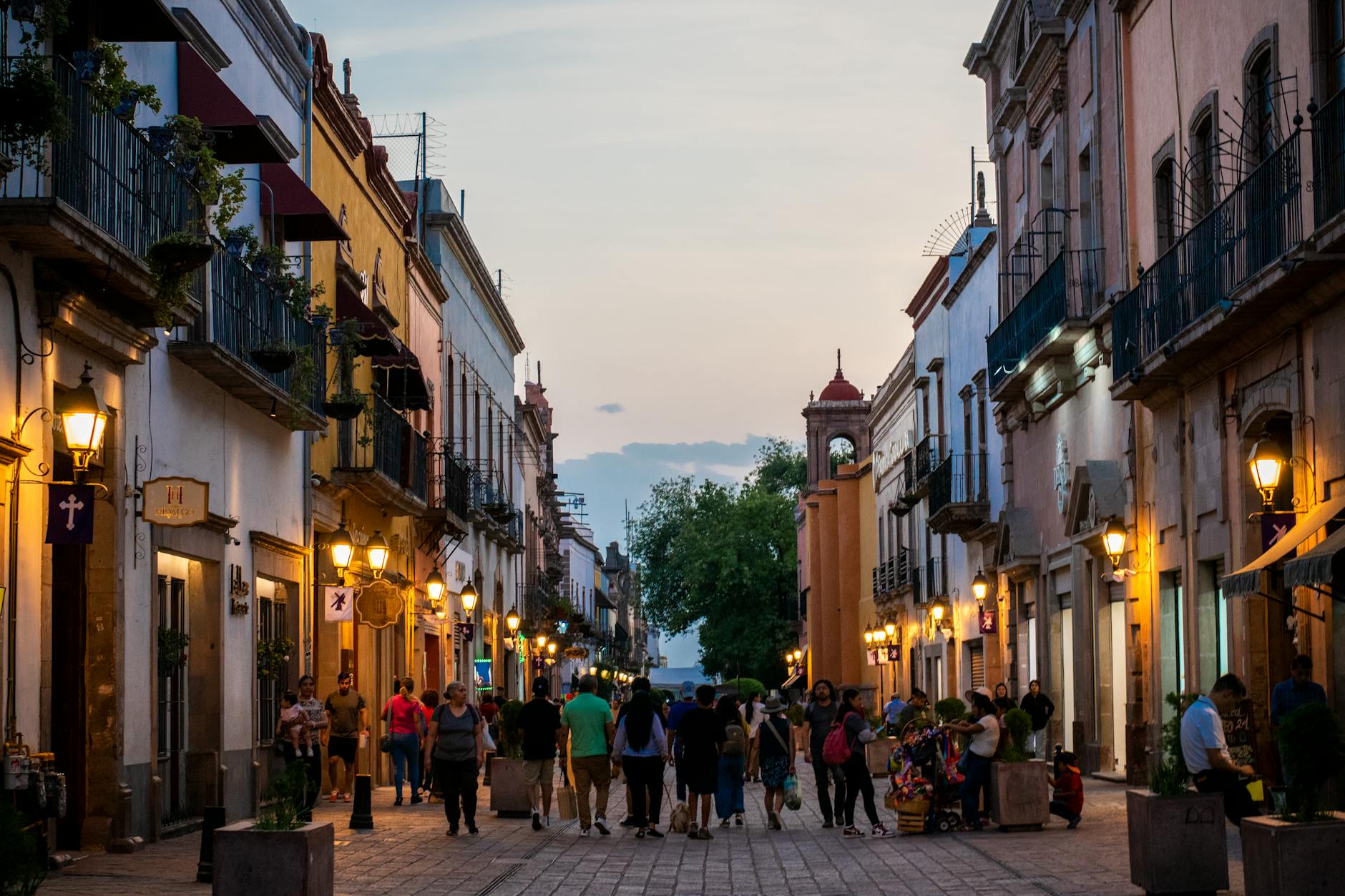
Seventy-four pink quarry stone arches stride across the eastern horizon, built in the eighteenth century to carry spring water into town. Below them, Querétaro unrolls across flat, immaculate pedestrian lanes lined with baroque courtyards, heavy ash trees, and polished stone plazas. It is an orderly, confident city where evenings center around Plaza de Armas, brass bands play under the bandstand, and street vendors fold hot enchiladas queretanas into paper boats.
Last updated 28 Aug 2026
Build a Querétaro itinerary.
Choose up to 4 threads that pull you in. Your plan arrives organised around them.
The Bed
Where to stay in Querétaro
Which part of town to book, and what each one costs you in walking, noise or quiet.
The Comparison
Querétaro, or somewhere near it
The places you are realistically choosing between, and the honest case for each.
The Local Record
Where to read more about Querétaro
The blogs, boards, guides and operators worth bookmarking.
What to do in Querétaro Querétaro Mexico
Querétaro is remarkably easy to navigate on foot, centered on a dense historic grid of car-free stone alleys and leafy plazas. The daily rhythm swings between quiet museum mornings, long courtyard lunches, and communal evening strolls around Plaza de Armas. It suits travellers who appreciate preserved baroque architecture, regional Central Mexican cooking, and a polished city life that stays completely unhurried.
24 hours in Querétaro Querétaro Mexico
Start under the pink arches of the aqueduct, then walk west into Centro Histórico for breakfast gorditas at Mercado La Cruz. Spend midday inside the carved interior of Santa Rosa de Viterbo. Finish with a cold beer and a plate of enchiladas queretanas near Jardín Zenea as the evening church bells start. Everything sits within an easy twenty-minute walk. Select 1 Day above to see it.
2 days in Querétaro Querétaro Mexico
Head beyond the historic core on day two to climb Cerro de las Campanas, where Emperor Maximilian met his end in 1867. Afterward, wander the peaceful residential streets of the Santa Ana quarter, stopping for roasted carnitas and an afternoon espresso along Calle 5 de Mayo before an evening concert at Teatro de la República. Choose 2 Days to expand the plan.
3 days in Querétaro Querétaro Mexico
Take day three into the semi-desert valley of the Bajío. Catch a forty-minute taxi out to the towering monolith at Peña de Bernal, climbing its lower trails before heading south to Tequisquiapan for sheep's milk cheese tastings and sparkling wine cellars, returning to Querétaro in time for dinner.
Querétaro Querétaro Mexico itineraries by interest
Sacred Architecture in Querétaro Querétaro Mexico
Santa Rosa de Viterbo's carved wooden altarpieces, Moorish details, and the austere cloister of the seventeenth-century Templo de San Agustín.
Street Food in Querétaro Querétaro Mexico
Enchiladas queretanas tossed in guajillo sauce with carrots and potatoes, plus gorditas de migajas served hot at Mercado La Cruz.
Wine & Vineyards in Querétaro Querétaro Mexico
Sparkling wines and crisp whites along the Bajío route, focusing on Viñedos La Redonda and Freixenet's deep subterranean cellars.
Historic Plazas in Querétaro Querétaro Mexico
Shaded benches, cast-iron lamps, and evening music across Plaza de Armas, Jardin Zenea, and the courtyard at Plaza de los Fundadores.
Markets & Produce in Querétaro Querétaro Mexico
Mercado Josefa Ortiz de Domínguez (La Cruz) for smoked cheeses, cactus paddles, fresh corn masa, and morning bowls of slow-cooked barbacoa.
Regional History in Querétaro Querétaro Mexico
The neoclassical Teatro de la República where the 1917 constitution was signed, and the hilltop Cerro de las Campanas monument.
Colonial Engineering in Querétaro Querétaro Mexico
The grand eighteenth-century Los Arcos aqueduct, spanning over a kilometer with seventy-four soaring pink quarry stone arches.
Craft Traditions in Querétaro Querétaro Mexico
Otomí embroidered dolls from Amealco, hand-blown glass workshops, and traditional stamped leather sold in Centro Histórico.
Art Museums in Querétaro Querétaro Mexico
Museo de Arte de Querétaro inside the former convent of San Agustín, celebrated for its baroque courtyard and viceregal paintings.
Day Trips in Querétaro Querétaro Mexico
The dramatic monolithic rock of Peña de Bernal and the quiet cobbled alleys and artisanal cheesemakers in neighbouring Tequisquiapan.
Coffee & Cafés in Querétaro Querétaro Mexico
Independent espresso bars along Calle 5 de Mayo, serving Veracruz single-origin beans and sweet pan dulce on breezy sidewalk tables.
Nature & Hiking in Querétaro Querétaro Mexico
Mountain bike trails and desert scrub routes through the protected microclimate of Parque Nacional El Cimatario.