

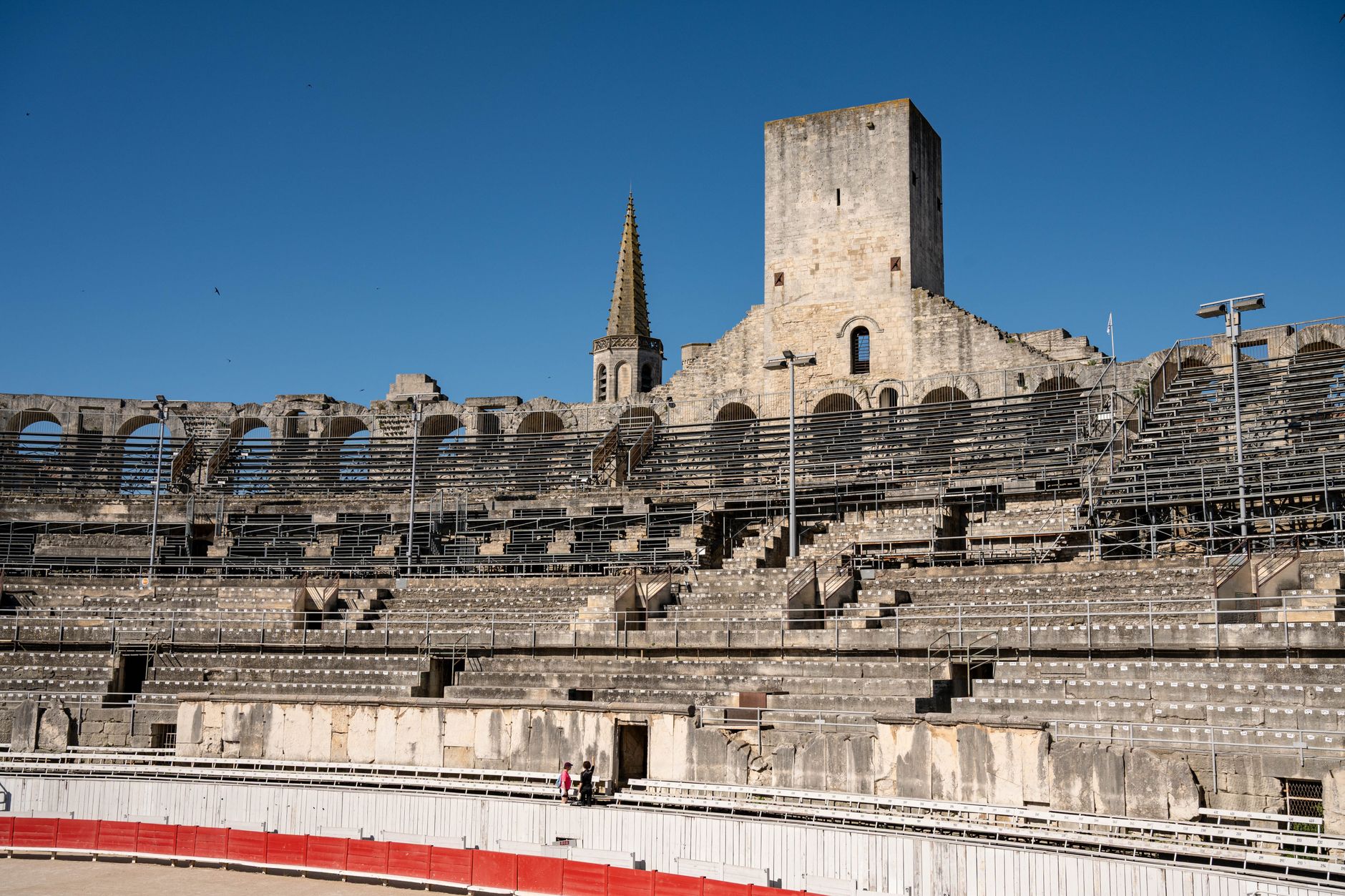
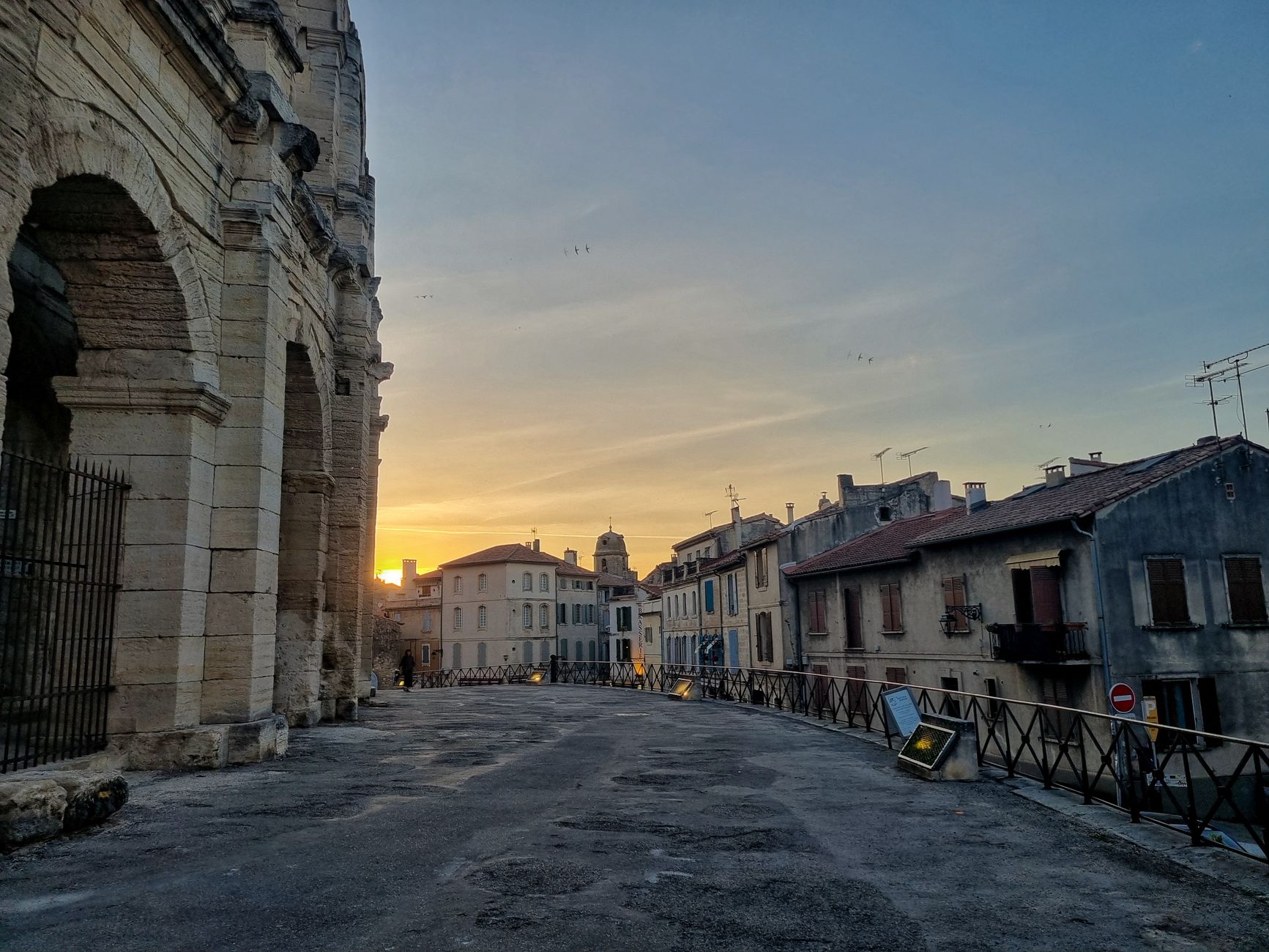


The limestone glare catches you first, bouncing harsh and brilliant off two-thousand-year-old Roman arches right into the middle of everyday life. The Grand Rhône curves past the old quarter, where butchers still cure saucisson d'Arles and the Mistral whips down the narrow alleys of La Roquette. You come for the ancient amphitheatre and the brushstroke ghosts of 1888, but you stay because the squares welcome you to sit with a pastis and watch the town get on with its day.
Last updated 28 Aug 2026
Build a Arles itinerary.
Choose up to 4 threads that pull you in. Your plan arrives organised around them.
The Bed
Where to stay in Arles
Which part of town to book, and what each one costs you in walking, noise or quiet.
The Comparison
Arles, or somewhere near it
The places you are realistically choosing between, and the honest case for each.
The Local Record
Where to read more about Arles
The blogs, boards, guides and operators worth bookmarking.
What to do in Arles Provence France
Arles sits compact within ancient stone walls along the Grand Rhône, making it an easy town to navigate entirely on foot. Mornings belong to open-air espresso and Roman monuments, while afternoons slow down beneath the plane trees of Place du Forum. It suits curious walkers, history lovers, and anyone who appreciates unhurried regional dining where Camargue bull stew and crisp local rosé take centre stage over fuss.
24 hours in Arles Provence France
Start early at the Roman amphitheatre before the sun climbs, then walk two minutes to the cloisters at Saint-Trophime. Grab a casual lunch of gardiane de taureau in La Roquette. Spend your afternoon admiring the LUMA tower exhibitions before settling on Place Paul Doumer for an evening pastis. Select 1 Day above to see it.
2 days in Arles Provence France
A second day gives you time to wander the quiet cypress paths of Les Alyscamps necropolis and explore the Fondation Vincent van Gogh. Cross the river for a seafood lunch of grilled tellines in Trinquetaille, followed by a late afternoon stroll through the gallery-lined lanes of the Hauture district. Choose 2 Days to expand the plan.
3 days in Arles Provence France
With three days, head twenty minutes south into the Camargue wetlands to watch pink flamingos and grazing bulls against the salt pans. Alternatively, take a short bus trip into the limestone crags of the Alpilles to explore the medieval ruins of Les Baux before heading back for dinner along the Rhône quay.
Arles Provence France itineraries by interest
Roman Antiquity in Arles Provence France
Tour the 1st-century Les Arènes amphitheatre, the Roman theatre ruins, and the subterranean cryptoportiques beneath Place du Forum without rushing.
Markets & Produce in Arles Provence France
Shop Saturday along Boulevard des Lices for goat cheese, Cavaillon melons, Tellines clams, and jars of dark Camargue honey straight from producers.
Regional Cooking in Arles Provence France
Eat slow-simmered gardiane de taureau with red Camargue rice and saucisson d'Arles at unpretentious neighbourhood bistros across La Roquette.
Modern Art in Arles Provence France
Visit Frank Gehry's reflective stainless steel LUMA tower and contemporary exhibits inside the converted railway yards of the Parc des Ateliers.
Sacred Architecture in Arles Provence France
Study the intricate 12th-century carved portal and Romanesque cloisters at Église Saint-Trophime, right on the stone plaza of Place de la République.
Photography in Arles Provence France
Catch international exhibitions during the summer Rencontres d'Arles or browse photographic galleries tucked into medieval stone warehouses year-round.
Local Wine in Arles Provence France
Taste IGP Alpilles reds and mineral-driven rosés poured by the glass at small wine bars near Place Paul Doumer, paired with anchovy tapenade.
Walking Routes in Arles Provence France
Follow quiet residential passages through the old working-class La Roquette quarter and loop around the tree-shaded stone embankment along the Rhône.
Historic Monuments in Arles Provence France
Walk the cypress-lined avenue of Les Alyscamps, a Roman and medieval pagan-to-Christian necropolis sketched by artists and poets over centuries.
Nature & Wildlife in Arles Provence France
Drive south to the Camargue salt flats and marshlands to spot wild white horses, black bulls, and flocks of pink flamingos wading through lagoons.
Day Trips in Arles Provence France
Catch an easy morning bus or train north to the Roman aqueduct at Pont du Gard or the perched limestone ramparts of Les Baux-de-Provence.
Art History in Arles Provence France
Track the painter's 1888 yellow motifs at Fondation Vincent van Gogh and stand beside the courtyard garden restored at the former hospital.