

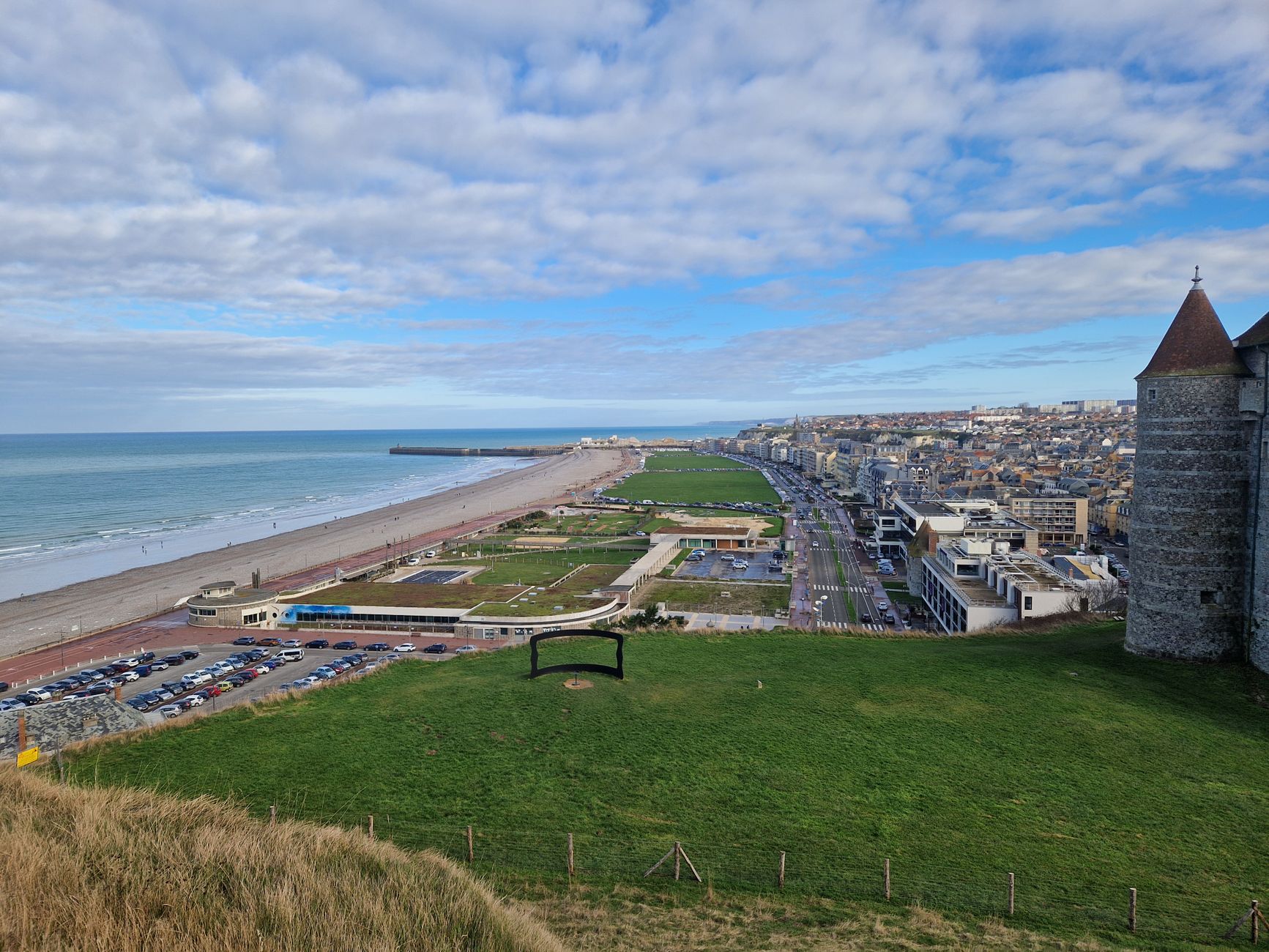
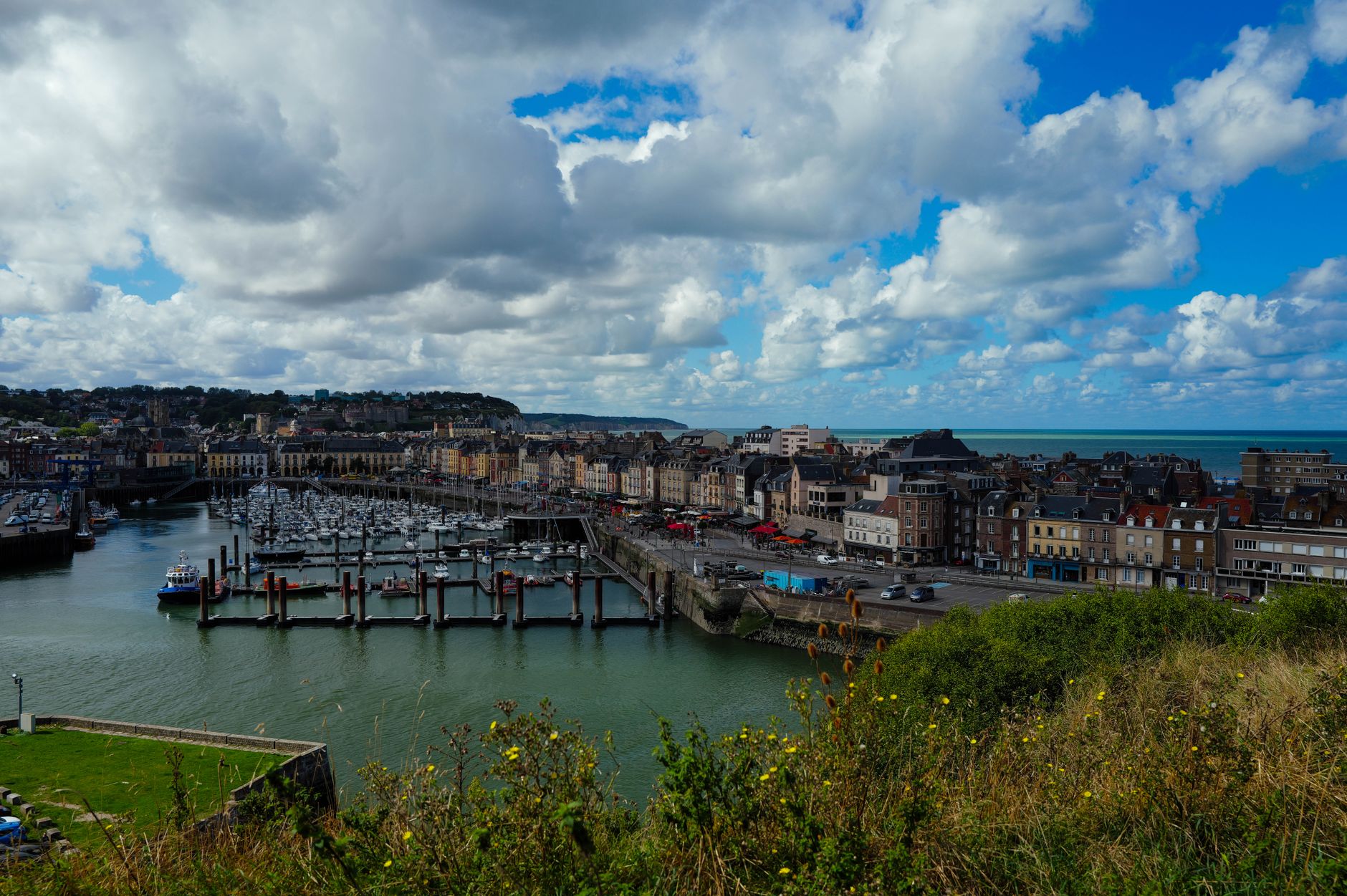

Dieppe sits two hours northwest of Paris by train via Rouen, facing the English Channel. It operates as a serious working port known for Saint-Jacques scallops, Saturday street markets, and a pebbled shoreline framed by steep chalk headlands. The town is compact enough to navigate entirely on foot from the railway station to the marina. Dieppe is worth visiting if you want to eat scallops straight off the boats and walk cliff paths without resort crowds. Look elsewhere if you want soft sand beaches, late-night clubs, high-end resort polish, or guaranteed warm swimming weather.
Last updated 11 Sept 2026
Build a Dieppe itinerary.
Choose up to 4 threads that pull you in. Your plan arrives organised around them.
The Bed
Where to stay in Dieppe
Which part of town to book, and what each one costs you in walking, noise or quiet.
The Comparison
Dieppe, or somewhere near it
The places you are realistically choosing between, and the honest case for each.
The Local Record
Where to read more about Dieppe
The blogs, boards, guides and operators worth bookmarking.
What to do in Dieppe Normandy France
Dieppe sits between two high chalk cliffs, oriented around its working deep-water marina and a broad pebble waterfront. Mornings belong to the fish stalls along Quai Henri IV and the pedestrianised Grande Rue. Afternoons drift toward cliff walks along the GR21 or wandering the flint alleys of Le Pollet. It suits travellers who prefer cold salt air, working harbours, and unpretentious seafood over polished resort gentrification.
24 hours in Dieppe Normandy France
Start before nine at the fish market on Quai Henri IV, then walk ten minutes up to the fourteenth-century château for views over the port. Order marmite dieppoise or fresh scallops at a quayside bistro for lunch. Spend the late afternoon walking the pebbled shore along Boulevard de Verdun, finishing with a carafe of dry cider in Le Pollet. Select 1 Day above to see it.
2 days in Dieppe Normandy France
Cross the lifting bridge to explore Le Pollet on foot, climbing the steep stairs to Notre-Dame de Bonsecours. Head ten minutes west to the cliffs of Pourville-sur-Mer, walking where Monet painted the coast. Eat heartier fare tonight: duck breast with local Camembert sauce or grilled mackerel at an unvarnished backstreet tavern. Choose 2 Days to expand the plan.
3 days in Dieppe Normandy France
Take a fifteen-minute bus ride to Varengeville-sur-Mer to see Georges Braque's stained glass and marine churchyard above the sea. Return via the forested trails of Parc des Moutiers. Spend your final evening lingering over heart-shaped Neufchâtel cheese and Calvados, watching the Newhaven ferry clear the breakwater under the dusk light.
Dieppe Normandy France itineraries by interest
Local Seafood in Dieppe Normandy France
Coquilles Saint-Jacques landed at Quai Henri IV, marmite dieppoise fish stew with cream and cider, and seasonal herring grilled over charcoal.
Markets & Produce in Dieppe Normandy France
Saturday market along Grande Rue for raw milk Neufchâtel cheese, salted butter, local cider, and coastal produce straight from Pays de Caux farms.
Maritime History in Dieppe Normandy France
The 1942 Operation Jubilee memorial at the beach casino and sixteenth-century privateer heritage documented inside Château de Dieppe museum.
Coastal Walks in Dieppe Normandy France
The GR21 trail rising along the Alabaster Coast chalk cliffs toward Pourville-sur-Mer, offering views over pebble beaches and sea swells.
Sacred Architecture in Dieppe Normandy France
Église Saint-Jacques with its fourteenth-century nave and intricate stone carvings of sixteenth-century mariners alongside Église Saint-Rémy.
Local History in Dieppe Normandy France
Château-Musée Dieppe, a fourteenth-century fortress holding carved ivory crafts, marine charts, and paintings by Camille Pissarro and Braque.
Beaches in Dieppe Normandy France
The broad pebble beach on Boulevard de Verdun, backed by wide lawns and nineteenth-century seaside bathhouses facing the Channel tide.
Historic Quarters in Dieppe Normandy France
Le Pollet, the historic fishermen quarter across the bridge, with stepped flint cottages, narrow alleys, and small neighbourhood bistros.
Day Trips in Dieppe Normandy France
Varengeville-sur-Mer for the cliff-edge churchyard, tomb of Georges Braque, and the botanical gardens of Parc Floral des Moutiers.
Regional Cider in Dieppe Normandy France
Dry Normandy cidre bouché, aged Calvados from Pays d'Auge distilleries, and crisp pear poiré poured in harbourside brasseries.
Modern Art in Dieppe Normandy France
Impressionist heritage trails mapping coastal spots where Claude Monet, Walter Sickert, and Camille Pissarro set up their seaside easels.
Botanical Gardens in Dieppe Normandy France
Bois des Moutiers and the Shamrock hydrangea collection in nearby Varengeville, showcasing woodland landscaping and British Arts and Crafts design.