Essaouira.


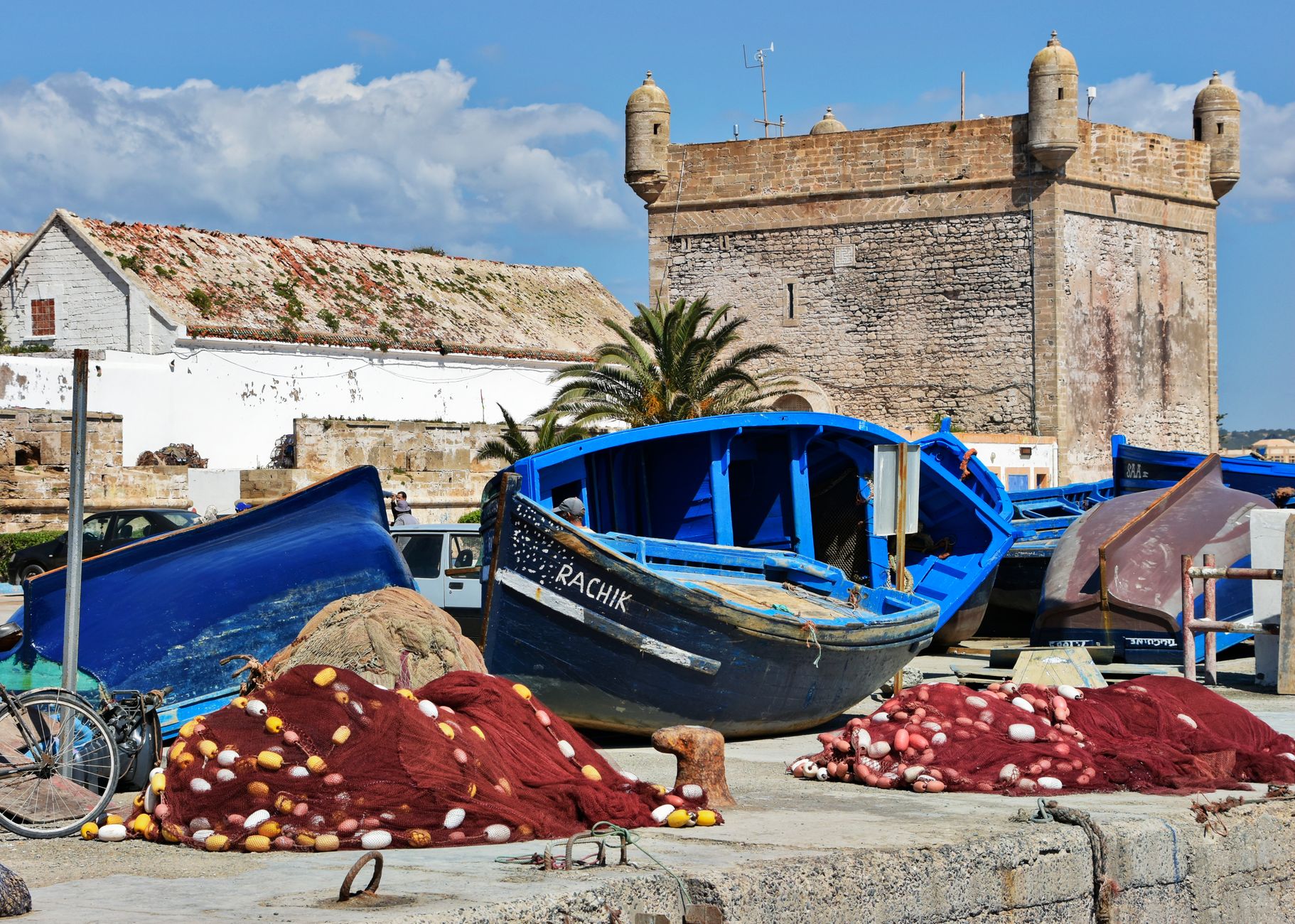


Essaouira sits on Morocco's Atlantic coast, roughly three hours west of Marrakech by direct CTM bus or taxi. The town is built around an eighteenth-century fortified medina, working sardine docks, and relentless Atlantic trade winds that keep summer temperatures moderate. It is compact and easily walked from the harbour to the northern ramparts in twenty minutes. Essaouira is worth visiting if you want fresh grilled sardines right off the boat and a stone medina you can navigate without needing a compass or an iron nerve. Look elsewhere if you want windless beach sunbathing, warm ocean swimming, or late-night clubbing.
Last updated 10 Sept 2026
Build a Essaouira itinerary.
Choose up to 4 threads that pull you in. Your plan arrives organised around them.
The Bed
Where to stay in Essaouira
Which part of town to book, and what each one costs you in walking, noise or quiet.
The Comparison
Essaouira, or somewhere near it
The places you are realistically choosing between, and the honest case for each.
The Local Record
Where to read more about Essaouira
The blogs, boards, guides and operators worth bookmarking.
What to do in Essaouira Atlantic Coast Morocco
Essaouira is shaped by its Atlantic coastline and a compact grid medina built behind thick stone ramparts. The daily rhythm revolves around the morning fish auction at the port, quiet afternoon wanders through whitewashed alleys, and sundowners overlooking the crashing surf at Skala de la Ville. It suits travellers who prefer ocean breezes, approachable walking distances, and honest seafood over frantic sightseeing.
24 hours in Essaouira Atlantic Coast Morocco
Spend your morning watching blue wooden trawlers unload at the harbour before grabbing a paper plate of grilled sardines at Port d'Essaouira. Walk off lunch through the thuya workshops along Rue Chbanat, then climb the ramparts at the Skala for sunset before an evening tagine on Place Moulay Hassan. Everything is within a fifteen-minute stroll. Select 1 Day above to see it.
2 days in Essaouira Atlantic Coast Morocco
Dedicate day two to the northern Mellah quarter and the spice stalls of the Souk Jdid. Afterward, take a twenty-minute taxi south to the open beaches of Sidi Kaouki for a lunch of fresh calamari and spiced lentils at a beachfront shack, returning for mint tea and almond pastries in the medina. Choose 2 Days to expand the plan.
3 days in Essaouira Atlantic Coast Morocco
A third day allows an unhurried excursion into the rural Arganeraie hills to visit a women's argan oil cooperative, followed by a tasting of regional Gris wine at the Val d'Argan vineyard near Ounagha. Finish with a late afternoon walk across the Diabat dunes to see the ruins of the Sultan's Palace.
Essaouira Atlantic Coast Morocco itineraries by interest
Local Seafood in Essaouira Atlantic Coast Morocco
Eat charcoal-grilled sardines, sea bream, and spider crab seasoned with salt and cumin right on the docks at Port d'Essaouira.
Maritime History in Essaouira Atlantic Coast Morocco
Walk the 18th-century Scala du Port and the ramparts designed by French engineer Théodore Cornut, lined with bronze Dutch cannons.
Craft Traditions in Essaouira Atlantic Coast Morocco
Watch woodworkers carve aromatic thuya root into boxes along the Skala de la Ville, inlaid with lemonwood and mother-of-pearl.
Markets & Produce in Essaouira Atlantic Coast Morocco
Browse the Souk Jdid for stone-milled argan oil, preserved lemons, cumin seed, and dark wildflower honey from the Arganeraie biosphere.
Street Food in Essaouira Atlantic Coast Morocco
Order msemen flatbreads folded with soft cheese and honey, bowls of spiced snails, and hot mint tea around Place Moulay Hassan.
Wind & Watersports in Essaouira Atlantic Coast Morocco
Take on the fierce Alizee trade winds with kitesurfing and windsurfing along the broad south bay toward the village of Diabat.
Traditional Music in Essaouira Atlantic Coast Morocco
Listen to Gnawa musicians playing three-string guembri lutes and iron qraqeb castanets in small cultural venues across the medina.
Sacred Heritage in Essaouira Atlantic Coast Morocco
Visit the restored Slat Lkahal and Rabbi Chaim Pinto synagogues in the historic Jewish quarter of the old Mellah.
Coastal Walks in Essaouira Atlantic Coast Morocco
Hike along the open shoreline past the sand dunes to the crumbling watchtower ruins of Borj El Berod at low tide.
Day Trips in Essaouira Atlantic Coast Morocco
Drive thirty minutes south to Sidi Kaouki for deserted surf beaches, or north to the quiet fishing anchorage of Moulay Bouzerktoun.
Art Galleries in Essaouira Atlantic Coast Morocco
Inspect outsider art and vibrant canvas paintings at Galerie Frédéric Damgaard and the artist collectives along Rue Mohamed Ben Abdallah.
Regional Cooking in Essaouira Atlantic Coast Morocco
Try ocean tagines simmered with conger eel, raisins, and tomatoes, or lamb cooked slowly in earthenware pots with prunes.