

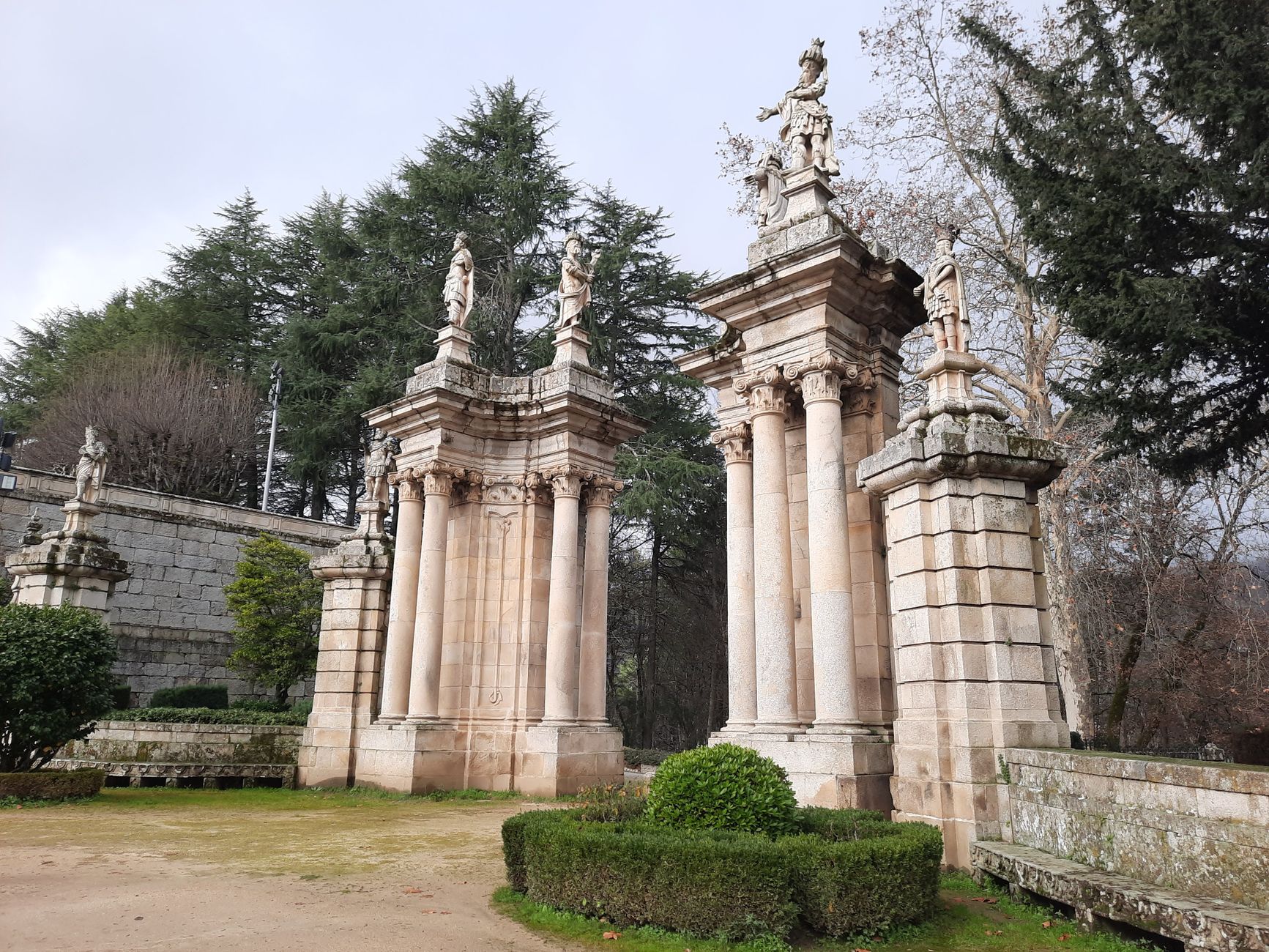
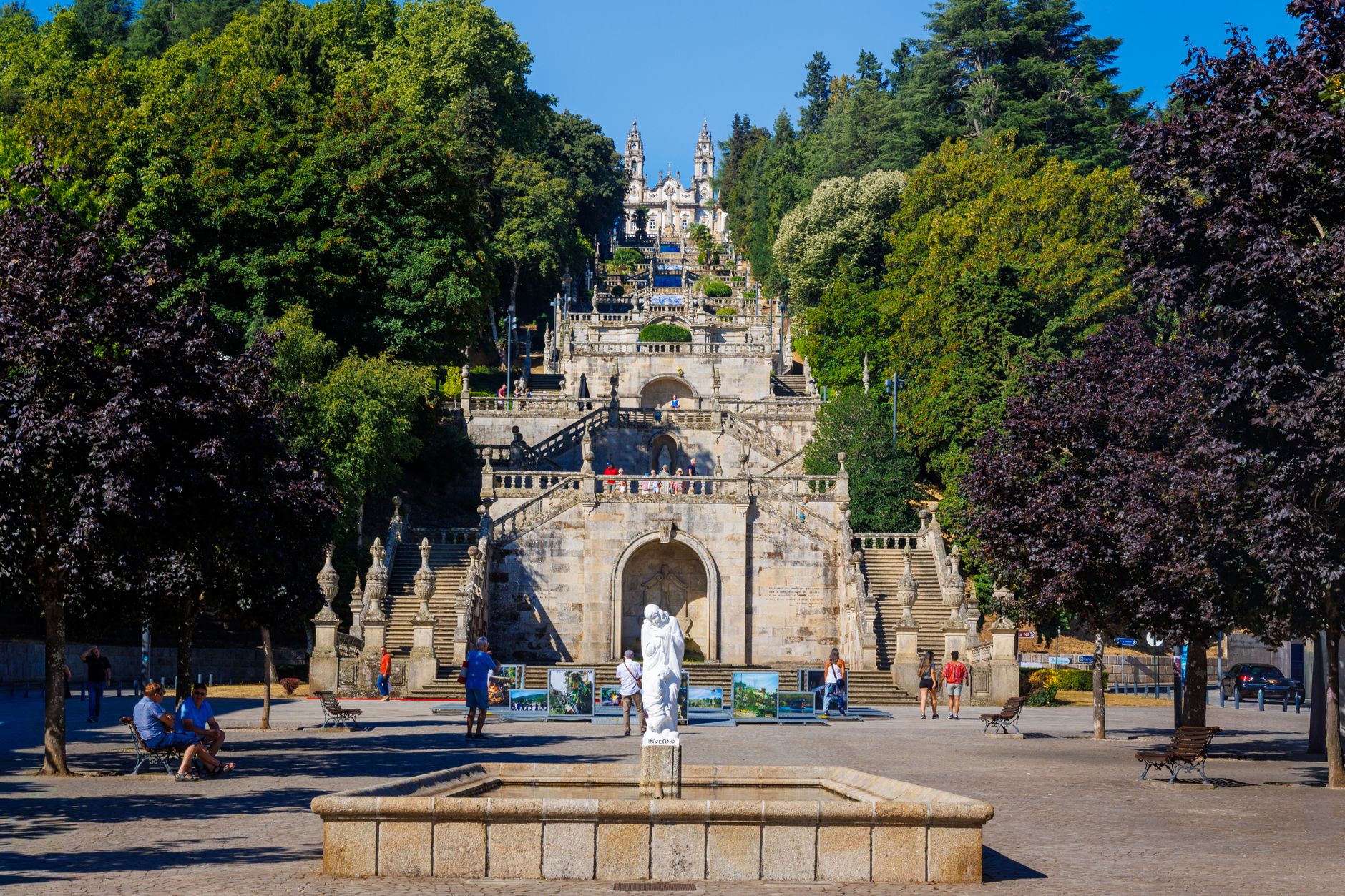


Lamego sits in the green fold just south of the Douro, smelling faintly of woodsmoke, yeast, and cold granite. You climb past six hundred and eighty-six azulejo-tiled steps to the shrine of Remédios, your calves burning in penance, before descending for thick slabs of warm bôla packed with cured ham and a cold flute of local espumante. It is an ancient episcopal town that treats lunch with absolute, unflinching gravity.
Last updated 22 Aug 2026
Build a Lamego itinerary.
Choose up to 4 threads that pull you in. Your plan arrives organised around them.
We'll craft a 3-lens plan for Lamego, one collapsible strand per lens.
River Journeys
Head twelve kilometres north to the riverbanks of Peso da Régua to board traditional rabelo boats or catch the Linha do Douro train running beside the water.
River Journeys
Head twelve kilometres north to the riverbanks of Peso da Régua to board traditional rabelo boats or catch the Linha do Douro train running beside the water.
Slow-Roasted Cabrito and Douro Vintages
Restaurante Vindouro
Book a table for 8:00 PM to secure the roasted kid goat with chestnuts, paired with a mineral Douro red. Dinner runs about 35 euros per person.
Editor TipTraditional transmontano roasting methods meet Douro Valley viticulture here, celebrating mountain grazing traditions alongside bold Touriga Nacional and Tinta Roriz blends. Ask for a local sparkling Raposeira as an aperitif before diving straight into the heavier river valley reds.
Douro Viticulture Collection
Museu do Douro
Open daily at 09:00 in Peso da Régua. Buy the standard admission at the front desk and give yourself ninety minutes to explore the old warehouse galleries overlooking the river.
Editor TipHoused in the former headquarters of the Real Companhia Velha, this collection traces how the 1756 demarcated wine region reshaped both the river navigation and the lives of schist-quarrying labourers. Head straight to the riverside terrace out back with a morning bica before the organised cruise groups disembark.
Museum Collections
Step into the Museu de Lamego inside the 18th-century Episcopal Palace to see Flemish tapestries and Renaissance panels painted by Vasco Fernandes.
Museum Collections
Step into the Museu de Lamego inside the 18th-century Episcopal Palace to see Flemish tapestries and Renaissance panels painted by Vasco Fernandes.
Climbing Baroque Granite Steps
Santuário de Nossa Senhora dos Remédios
Free entry to the grounds and chapel. Take a local taxi up to the hilltop sanctuary and walk the 686 steps down through oak woods into the town centre, allowing one hour.
Editor TipBegun in 1750, this zigzagging Baroque staircase served Douro pilgrims seeking relief from illness, adorned with blue azulejos, granite obelisks and tiered courtyards. Walk down rather than up to save your knees for the museum floors later in the day.
Examining Renaissance Flemish Tapestries
Museu de Lamego
Open Tuesday to Sunday from 10:00. Tickets cost 3 euros at the front desk. Allow ninety minutes to browse the episcopal collection and quiet chapel cloisters.
Editor TipHoused in the 18th-century Episcopal Palace, the collection preserves monumental 16th-century Brussels wool tapestries and Renaissance panels painted by master Grão Vasco. Head straight to the upper floor first to see the five Oedipus tapestries in quiet natural light.
Vineyard Trails
Walk the terraced granite slopes descending toward Peso da Régua and the Douro river, following ancient stone paths between old Touriga Nacional vines.
Vineyard Trails
Walk the terraced granite slopes descending toward Peso da Régua and the Douro river, following ancient stone paths between old Touriga Nacional vines.
Warm Bôla and Morning Bica
Pastelaria da Sé
Walk in around 08:30 and order a thick slice of bôla de presunto fresh from the oven with an espresso. Pay at the counter; three euros covers breakfast.
Editor TipThis savoury leavened loaf, stuffed with spiced cured pork or bísaro ham, fueled vineyard workers marching down to the Douro river terraces since the fourteenth century. Ask for the crust edge if you prefer crunch; the counter staff respect a person who cares about texture.
Mountain Charcuterie and Sparkling Brut
Tasca da Quinta
Walk in by 19:30 or reserve ahead. Order the smoked presunto platter, grilled alheira sausage, and a chilled bottle of dry regional sparkling wine.
Editor TipLamego sits higher and cooler than the sweltering Douro river basin, allowing its high granite plateau to yield crisp base grapes for Portugal's oldest sparkling cellars. Ask for the cured mountain cheese with crusty bread; the salty richness cuts right through the bone-dry brut.
Terraced Schist Vineyard Walk
Quinta do Tedo
Drive fifteen minutes east on the N222 to Folgosa. Follow the marked pedestrian trail through the organic Touriga Nacional vines down to the Tedo River confluence; no reservations required for walking.
Editor TipHand-stacked schist stone terraces date back centuries, trapping daytime heat to ripen grapes on slopes too steep for tractors, where the quiet Tedo flows into the main river corridor. Wear sturdy shoes with solid grip. Dry schist dust on steep stone steps can be slicker than polished marble.
Granite Lagar Wine Dinner
Quinta da Pacheca
Book dinner a week ahead. Walk the 18th-century estate rows before sunset, then order the roasted kid goat paired with their estate Touriga Nacional.
Editor TipEstablished in 1738, this estate still stomps grapes by foot in open granite lagares, preserving the arduous Douro harvest technique that modern stainless steel cannot replicate. Arrive forty minutes early; the river-facing garden benches catch the late amber light across the terraced vines.
Note from the Editor
“Beat the midday heat on the Sanctuary steps by tackling them right after breakfast. The museum stays cool and empty before eleven, giving you the Flemish tapestries to yourself.”
The Bed
Where to stay in Lamego
Which part of town to book, and what each one costs you in walking, noise or quiet.
The Comparison
Lamego, or somewhere near it
The places you are realistically choosing between, and the honest case for each.
The Local Record
Where to read more about Lamego
The blogs, boards, guides and operators worth bookmarking.
What to do in Lamego Douro Portugal
Lamego arranges itself around the broad Avenida Dr. Alfredo de Sousa, running straight into the forested hill crowned by Nossa Senhora dos Remédios. Life moves at a measured pace governed by church bells, bakery trays, and afternoon glasses of brut espumante. It suits travellers who appreciate walkable stone streets, deep agricultural roots, and hearty mountain cooking over polished resort comforts.
24 hours in Lamego Douro Portugal
Start at the bottom of the Baroque staircase before the midday heat hits, climbing past the tile panels to the hilltop shrine. Head down to Bairro do Castelo for a lunch of cabrito assado, then spend your afternoon tasting sparkling wine at Caves da Raposeira before an evening stroll along Avenida Visconde Guedes Teixeira. Select 1 Day above to see it.
2 days in Lamego Douro Portugal
Day two brings you to the Museu de Lamego for Grão Vasco paintings, followed by a short three-kilometre trip down to the Visigothic chapel of São Pedro de Balsemão. In the evening, track down a family-run tasca for a plate of bazulaque and fresh presunto cut thick. Choose 2 Days to expand the plan.
3 days in Lamego Douro Portugal
A third day allows an unhurried drive into the windswept Serra de Montemuro or down to the river quays at Peso da Régua. You have time to tour small quintas along the Varosa valley, sampling aged sparklers and olive oil without checking the clock.
Lamego Douro Portugal itineraries by interest
Sparkling Wine in Lamego Douro Portugal
Visit the cool cellars of Caves da Raposeira on Alto dos Meninos to taste bottle-fermented espumante made from Malvasia Fina and Cerceal grapes.
Sacred Architecture in Lamego Douro Portugal
Climb the 686 Baroque granite steps of Santuário dos Remédios, lined with blue azulejos and fountain obelisks, or visit the 12th-century Sé.
Baked Goods in Lamego Douro Portugal
Pick up warm bôla de Lamego stuffed with presunto, shredded cod, or vinha d'alhos pork directly from pastelarias along Avenida Dr. Alfredo de Sousa.
Medieval History in Lamego Douro Portugal
Walk the 12th-century keep of Castelo de Lamego and descend into the vaulted stone cisterna, one of Portugal's finest surviving urban reservoirs.
Regional Meats in Lamego Douro Portugal
Sit down for slow-roasted cabrito assado with oven-baked rice cooked in clay pots, or sample cured presunto cured in nearby high-altitude villages.
Ancient Ruins in Lamego Douro Portugal
Take a short drive to the 7th-century Visigothic Capela de São Pedro de Balsemão, tucked beside the Balsemão river with carved stone sarcophagi.
Vineyard Trails in Lamego Douro Portugal
Walk the terraced granite slopes descending toward Peso da Régua and the Douro river, following ancient stone paths between old Touriga Nacional vines.
Local Markets in Lamego Douro Portugal
Browse the morning market on Mercado Municipal for wild mountain honey, smoked chouriço, seasonal chestnuts, and fresh Serra do Montemuro cheeses.
Museum Collections in Lamego Douro Portugal
Step into the Museu de Lamego inside the 18th-century Episcopal Palace to see Flemish tapestries and Renaissance panels painted by Vasco Fernandes.
River Journeys in Lamego Douro Portugal
Head twelve kilometres north to the riverbanks of Peso da Régua to board traditional rabelo boats or catch the Linha do Douro train running beside the water.
Hill Walking in Lamego Douro Portugal
Hike the rugged granite trails across the high Serra de Montemuro plateau, crossing quiet shepherd hamlets and rocky streams above the river valley.
Traditional Sweets in Lamego Douro Portugal
Try the local bôla doce da Páscoa with cinnamon and sugar, or peixinhos de chila almond pastries from traditional convent recipes in town.