


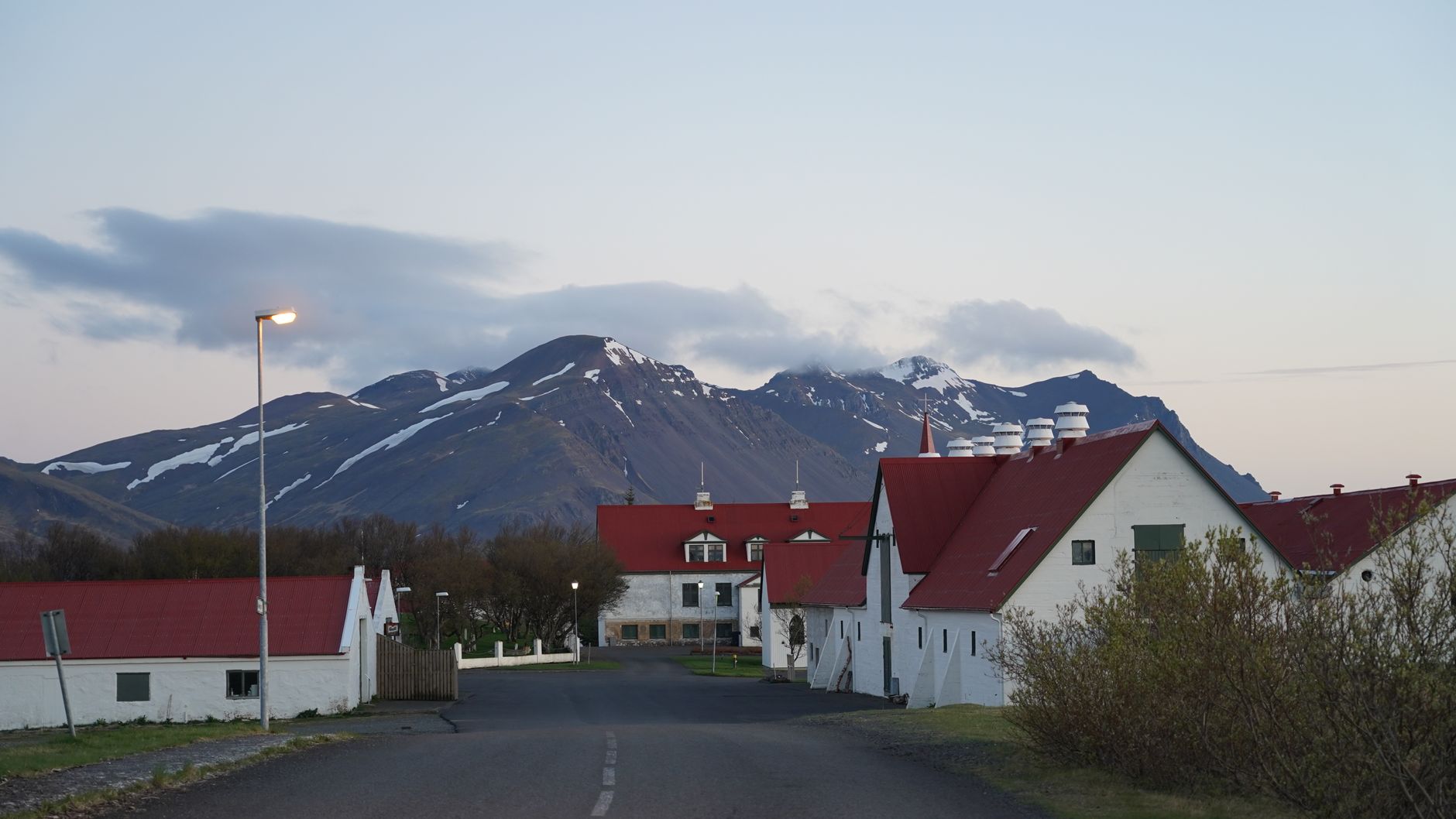


The North Atlantic pounds the sea wall here with relentless purpose, spraying cold brine over low turf banks and weatherboard cottages. Built over the eight-thousand-year-old Great Þjórsá lava flow, this former fishing village trades in salt air, quiet coastal flats, and garlic-butter langoustine tails served in deep pans. You can walk the breakwater in twenty minutes, watching fulmars skim the surf before ducking inside to peel hot crustacean shells with your fingers. Stokkseyri is worth visiting if you want sweet Icelandic langoustine eaten beside a roaring grey sea. Look elsewhere if you want lively nightlife, a walkable main street with shops and cafes, sandy swimming beaches, or indoor attractions to fill a rainy afternoon.
Last updated 6 Sept 2026
Build a Stokkseyri itinerary.
Choose up to 4 threads that pull you in. Your plan arrives organised around them.
The Bed
Where to stay in Stokkseyri
Which part of town to book, and what each one costs you in walking, noise or quiet.
The Comparison
Stokkseyri, or somewhere near it
The places you are realistically choosing between, and the honest case for each.
The Local Record
Where to read more about Stokkseyri
The blogs, boards, guides and operators worth bookmarking.
What to do in Stokkseyri Suðurland Iceland
Stokkseyri is a quiet, sea-battered coastal hamlet on the south coast of Iceland, settled on ancient prehistoric lava. Life here centers around the open shoreline, the sheltered kayak canals, and the aroma of butter-fried langoustine drifting from the harbor front. It suits road-trippers and slower travelers who prefer unvarnished maritime character, coastal walks in the salt air, and honest seafood over crowded bus-tour routes.
24 hours in Stokkseyri Suðurland Iceland
Spend your morning kayaking the lagoon canals before walking the lava shoreline toward Stokkseyrakirkja. In the afternoon, explore the Ghost Centre displays. Cap the day with a booked dinner at Fjöruborðið, feasting on skillet-roasted langoustine tails and tomato bisque while the evening waves crash outside. Select 1 Day above to see it.
2 days in Stokkseyri Suðurland Iceland
A second day lets you follow Route 427 five kilometers west to historic Eyrarbakki. Tour the 1765 timber merchant house at Húsið, sample rye bread and fish stew at Rauða Húsið, and return to Stokkseyri for a late-afternoon beach walk along the black basalt flats. Choose 2 Days to expand the plan.
3 days in Stokkseyri Suðurland Iceland
Three days allows an unhurried loop inland to the hot river valley of Reykjadalur near Hveragerði or the waterfall at Urriðafoss on the Þjórsá river. Base yourself in Stokkseyri for quiet evenings beside the sea wall, watching gulls ride the evening wind.
Stokkseyri Suðurland Iceland itineraries by interest
Local Seafood in Stokkseyri Suðurland Iceland
Sit down to cast-iron pans of Atlantic langoustine tails roasted in garlic butter at Fjöruborðið, served with warm bread and thick tomato soup.
Coastal Walks in Stokkseyri Suðurland Iceland
Follow the sea wall trail along the Great Þjórsá lava field, where rough black basalt rocks meet crashing North Atlantic breakers and tide pools.
Kayaking & Canoeing in Stokkseyri Suðurland Iceland
Paddle sit-on-top sea kayaks along the calm coastal canals and marshland lagoons winding between the village meadows and the ocean barrier.
Folklore & Legends in Stokkseyri Suðurland Iceland
Wander the atmospheric installations at the Ghost Centre on Eyrarvegur, dedicated to traditional Icelandic supernatural tales and coastal hauntings.
Maritime History in Stokkseyri Suðurland Iceland
Inspect early twentieth-century wooden fishing vessels and restored turf-roofed boathouses that sheltered open-rowing skiffs along the shore.
Sacred Architecture in Stokkseyri Suðurland Iceland
Visit Stokkseyrakirkja, a neat wooden church consecrated in 1886 with an ornate carved pulpit and views facing out toward the ocean breakers.
Birdwatching in Stokkseyri Suðurland Iceland
Scan the coastal mudflats and ponds around the harbour for nesting eider ducks, redshanks, black-tailed godwits, and passing arctic terns.
Geological Sights in Stokkseyri Suðurland Iceland
Examine the Þjórsárhraun lava flow underfoot, the largest single Holocene lava field on Earth, which formed the low-lying shoreline 8,600 years ago.
Neighbouring Villages in Stokkseyri Suðurland Iceland
Drive five minutes west along Route 427 to Eyrarbakki to see preserved nineteenth-century timber merchants' houses and the historic prison.
Local Arts in Stokkseyri Suðurland Iceland
Browse studios in the repurposed fish processing plant, where regional painters, sculptors, and glassmakers display work inspired by the sea.
Beach Exploration in Stokkseyri Suðurland Iceland
Comb the coarse black sand and smooth volcanic pebbles at low tide, finding sea glass, bleached drift timber, and kelp washed up by storms.
Winter Skies in Stokkseyri Suðurland Iceland
Stand by the unlit breakwater on clear winter nights to watch the northern lights reflect off the tide pools without distracting street lighting.