Ston.
.jpg)




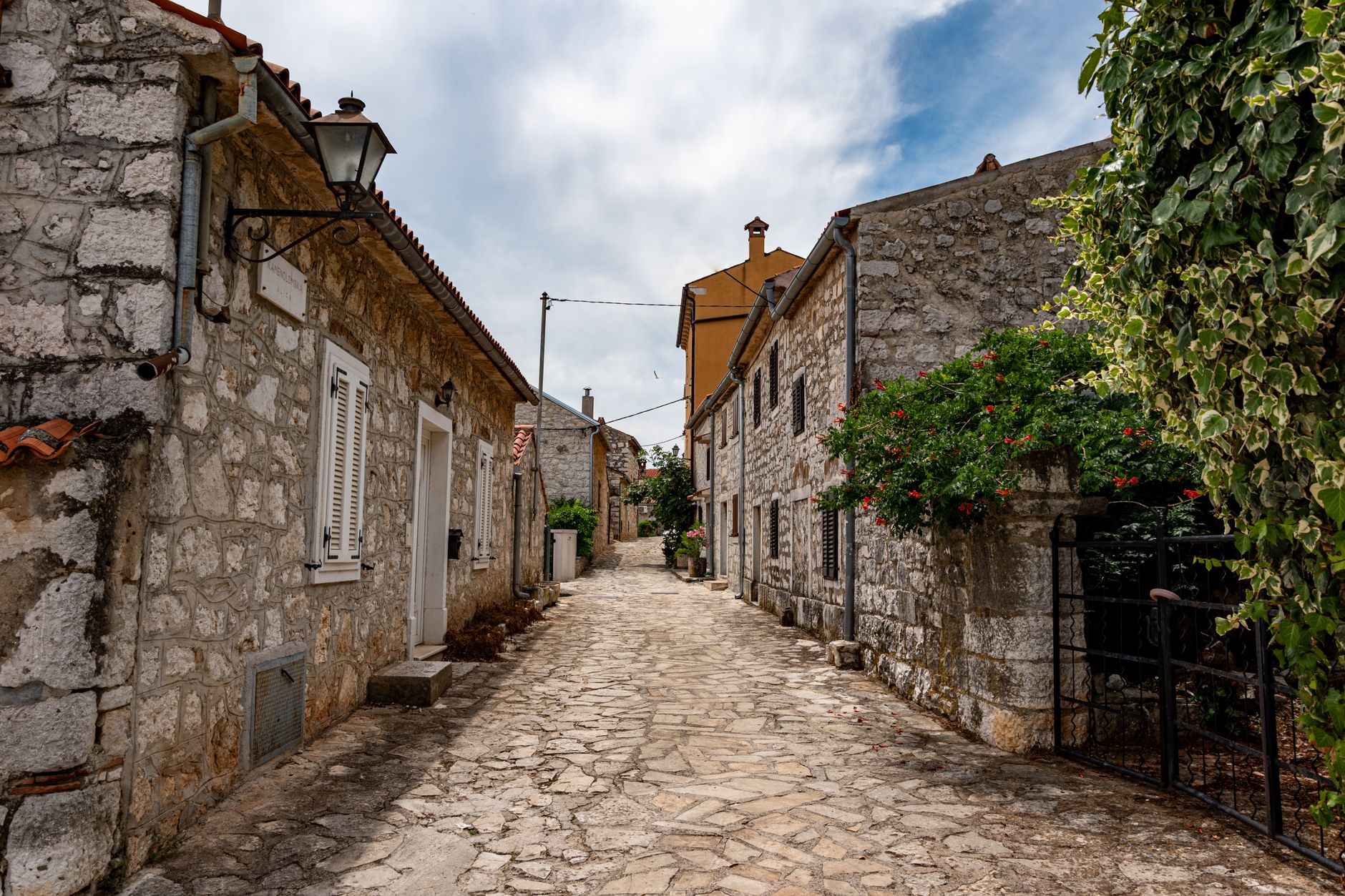
Salt crusts the shallow evaporation ponds just outside town, worked the same way since the fourteenth century. Above them climbs a five-kilometre limestone wall linking Ston to Mali Ston, built by Dubrovnik to guard its mineral wealth. Down in the grid of quiet alleys, waiters carry pewter platters of raw flat oysters pulled that morning from the bay and dressed with nothing more than lemon. It is austere, functional stone meeting cold seawater. Ston is worth visiting if you want to climb medieval fortifications and eat fresh oysters directly from the water. Look elsewhere if you want late-night bars, broad swimming beaches, indoor museums for rainy days, or dining options beyond local seafood.
Last updated 5 Sept 2026
Build a Ston itinerary.
Choose up to 4 threads that pull you in. Your plan arrives organised around them.
The Bed
Where to stay in Ston
Which part of town to book, and what each one costs you in walking, noise or quiet.
The Comparison
Ston, or somewhere near it
The places you are realistically choosing between, and the honest case for each.
The Local Record
Where to read more about Ston
The blogs, boards, guides and operators worth bookmarking.
What to do in Ston Dubrovnik-Neretva Croatia
Ston divides neatly into two halves: the quiet administrative grid of Veliki Ston and the fishing harbor at Mali Ston, connected by massive stone ramparts. Days here move to the rhythm of the salt pans, oyster harvests, and steady walks along the battlements. It suits travellers who appreciate unhurried seafood meals, honest defensive architecture, and a quiet base for exploring the Pelješac wine country.
24 hours in Ston Dubrovnik-Neretva Croatia
Start early with the ninety-minute walk across the walls from Ston to Mali Ston before midday heat. Stop at Kapetanova Kuća for Mali Ston oysters and black risotto, then walk back along the low road to tour the 1333 saltworks in the afternoon. Select 1 Day above to see it.
2 days in Ston Dubrovnik-Neretva Croatia
Spend morning two swimming at Prapratno cove before driving west into the Pelješac interior. Sample Plavac Mali wine at cellars in Ponikve, then return to Ston for stonska torta at a terrace cafe on Placa as the stone alleys cool down. Choose 2 Days to expand the plan.
3 days in Ston Dubrovnik-Neretva Croatia
Take a skiff into the oyster beds with a shellfish farmer from Mali Ston to taste bivalves directly from the ropes. Spend the afternoon taking the short ferry from Prapratno to Mljet National Park to walk around the saltwater lakes.
Ston Dubrovnik-Neretva Croatia itineraries by interest
Local Seafood in Ston Dubrovnik-Neretva Croatia
Raw European flat oysters from Mali Ston Bay, black cuttlefish risotto, and steamed mussels with garlic, parsley, and dry white wine.
Defensive Architecture in Ston Dubrovnik-Neretva Croatia
The five-kilometre fourteenth-century defensive wall connecting Ston to Mali Ston, featuring Bartolomeo fortress and Koruna fortress.
Industrial Heritage in Ston Dubrovnik-Neretva Croatia
The Solana Ston saltworks, harvesting sea salt in granite-paved basins by hand using the same evaporative tidal system since 1333.
Wine & Vineyards in Ston Dubrovnik-Neretva Croatia
Robust Plavac Mali reds from the steep limestone slopes of Dingač and Postup, plus crisp white Pošip poured at small Pelješac cellars.
Traditional Desserts in Ston Dubrovnik-Neretva Croatia
Stonska torta, a medieval cake made from macaroni pasta, ground walnuts, almonds, chocolate, and butter wrapped in a thin pastry shell.
Boat Trips in Ston Dubrovnik-Neretva Croatia
Skiffs departing Mali Ston harbour for oyster beds in the channel, where farmers open fresh bivalves directly over the side.
Hiking & Trails in Ston Dubrovnik-Neretva Croatia
The steep climb up Pozvizd fortress ridge for views over the salt flats, or rocky trails across the Pelješac spine toward Prapratno.
Sacred Architecture in Ston Dubrovnik-Neretva Croatia
The fourteenth-century Franciscan Monastery of Saint Nicholas and the Romanesque Church of Saint Michael perched on the hill above town.
Coastal Walks in Ston Dubrovnik-Neretva Croatia
The seaside footpath between Mali Ston and Hodilje, tracking the quiet edge of the inlet past small fishing piers and olive groves.
Nearby Beaches in Ston Dubrovnik-Neretva Croatia
The sandy crescent and shallow water at Prapratno cove, three kilometres south through the pine woods and olive terraces.
Local Produce in Ston Dubrovnik-Neretva Croatia
Locally pressed Pelješac extra virgin olive oil, wild sage honey, dried figs, and coarse sea salt scooped straight from the solar pans.
Day Trips in Ston Dubrovnik-Neretva Croatia
The ferry from Prapratno to Sobra on Mljet Island, or driving west along the peninsula to the maritime captain town of Orebić.