Trier.


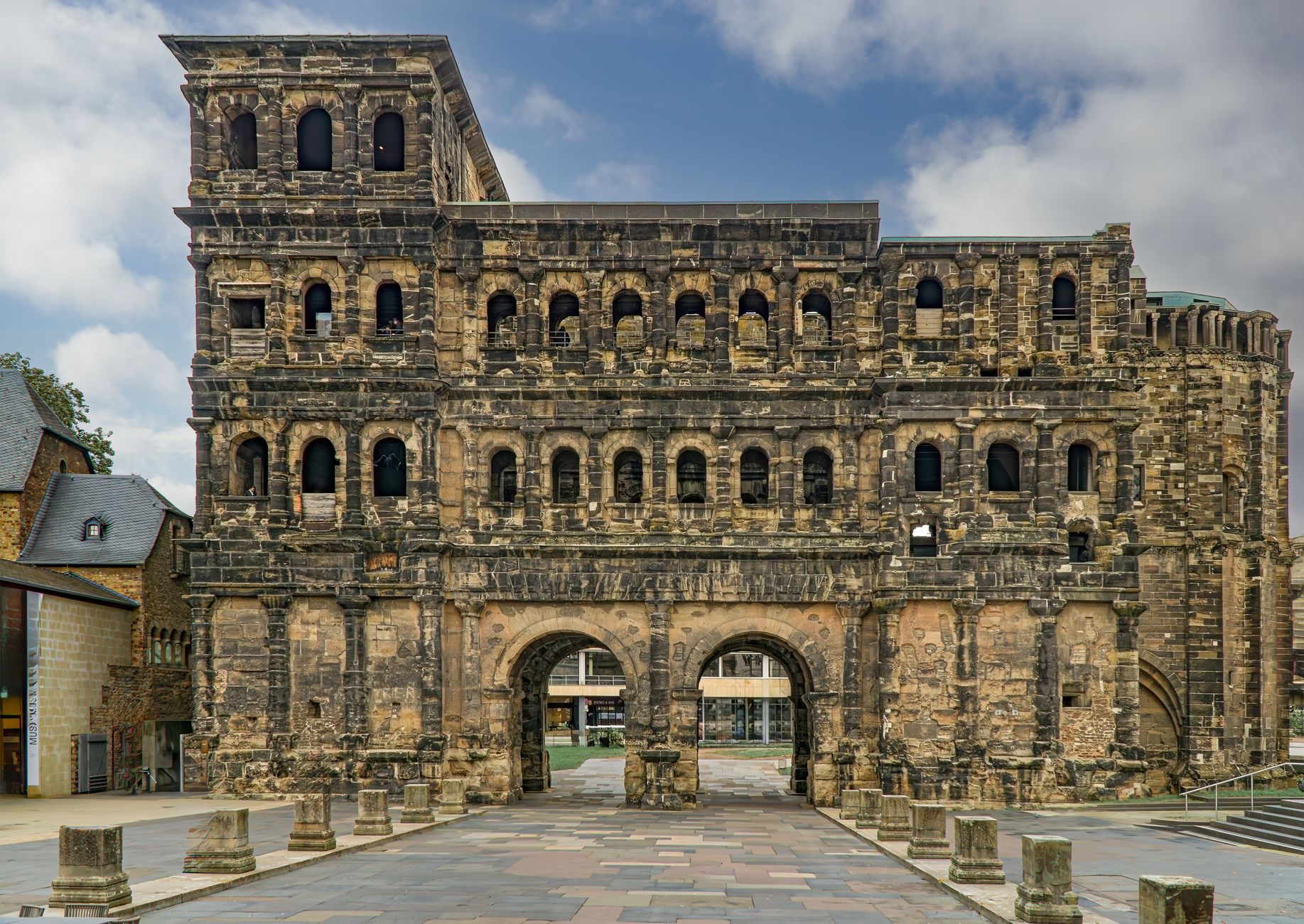


Sitting fifty minutes east of Luxembourg City by train, Trier is Germany's oldest city, built as an imperial Roman capital on the Mosel River. It is known for monumental Roman ruins, a colossal stone gate called the Porta Nigra, and dry Riesling grown on steep slate hills. Trier is worth visiting if you want to inspect Roman brickwork by morning and drink Mosel wine in quiet courtyard taverns by afternoon. Look elsewhere if you want late-night clubbing, high-octane city pace, or modern architecture.
Last updated 20 Oct 2026
Build a Trier itinerary.
Choose up to 4 threads that pull you in. Your plan arrives organised around them.
We'll craft a 1-lens plan for Trier, one collapsible strand per lens.
River Cruises
Board a slow wooden-decked riverboat at Zurlauben harbour for a gentle perspective on the vineyard cliffs framing the Mosel River valley.
River Cruises
Board a slow wooden-decked riverboat at Zurlauben harbour for a gentle perspective on the vineyard cliffs framing the Mosel River valley.
Crossing The Roman Riverbed
Römerbrücke Trier
Free to cross on foot anytime. Walk the pedestrian path from the east bank for twenty minutes to take in the basalt pillars before heading north toward the docks.
Editor TipBuilt in the second century, these stone piers still carry daily traffic across the Moselle, anchoring Trier to the trade route that fed Roman Gaul. Look downstream from the central pier for the clearest view of the morning river barges navigating the locks.
Cruising The Moselle Valley
Zurlaubener Ufer Pier
Book the one-hour Kolb river loop at the dock kiosk for roughly sixteen euros. Board fifteen minutes early to secure an open-air starboard bench facing the red sandstone cliffs.
Editor TipRiver freight and passenger barges have defined Moselle life since Celtic times, carrying slate and dry Riesling past steep terraced banks. Order a glass of local Elbling at the onboard bar; it is bone-dry, cheap, and pairs well with cold river wind.
Cruising the Moselle River
Personenschifffahrt Gebr. Kolb Zurlauben Dock
Boats depart the Zurlauben dock hourly for two-hour loops along the riverbanks. Buy your twenty-euro ticket at the riverside kiosk ten minutes before departure and claim an upper-deck wooden bench.
Editor TipThe Moselle has carried slate, wine, and Roman legions since Augustus founded Augusta Treverorum in 16 BC, carving a gorge lined with steep Devonian slate vineyards. Sit on the port side heading out for uninterrupted views of the sandstone cliffs above the water.
Riverside Moselle Wine and Pikeperch
Historisches Wirtshaus Zurlauben
Reserve a terrace table looking onto the moored river barges. Order the pan-fried Zander with riesling sauce and a carafe of dry, slate-grown Elbling wine for around thirty euros.
Editor TipZurlauben was an eighteenth-century fishermen village outside the city walls, where rivermen traded freshwater catch for local cool-climate white wine before retiring to these stone cottages. Ask for an Elbling from the Upper Moselle; it is crisp, unpretentious, and cuts through rich fish sauces cleanly.
Moselle Lock Transit Cruise
Trierer Personenschifffahrt Kolb
Buy a round-trip ticket at the Zurlauben pier kiosk for fifteen euros. The one-hour circuit navigates the city river channel and the Trier barrage lock every morning from ten thirty.
Editor TipCanalised in the 1960s to link Lorraine steelworks with the Rhine, the modern Moselle is a working waterway where tourist day-cruisers share lock chambers with thousand-ton freight barges. Sit on the open upper port side for clear views of the red sandstone cliffs rising above the western bank.
Moselle Riverboat Cruise
Zurlaubener Ufer Boat Dock
Board the one-hour Moselle loop from the Zurlauben dock. Tickets cost around fifteen euros at the gangway; sit on the upper deck portside for clear views of the slate vineyards.
Editor TipZurlauben served as Trier's working fishermen's wharf from the eighteenth century, where bargemen navigated the shallow Moselle before twentieth-century locks canalised the river. Wind off the water catches you off guard even in July. Pack a windbreaker and skip the overpriced ship coffee.
Roman Wine Vessel Landing
Yachthafen Neumagen-Dhron
Disembark at Germany's oldest documented wine village to inspect the Stella Noviomagi, a floating wooden reconstruction of a circa-220 AD Roman cargo ship. Walk the paved bank trail in under an hour.
Editor TipNeumagen was a fortified Roman supply post where stone reliefs of laden wine barrels were buried in defensive ramparts, preserving concrete evidence of the region's two-thousand-year viticulture. The local information pavilion near the marina loans detailed walking maps of the Roman archaeological trail for free.
Sailing the Moselle Horseshoe
Personenschifffahrt Kolb Dock Bernkastel
Board the one-hour loop toward Lieser without prior booking; pay eighteen euros on deck and grab a bench on the starboard side for the best vineyard angles.
Editor TipThese sheer Devonian slate slopes tilt at sixty-degree angles, catching solar heat reflected off the river to ripen Riesling grapes where tractors cannot go. Wind off the water bites even in sunshine. Keep a light wool layer handy while watching the lock gates work.
Riesling Braised River Trout
Doctor-Weinstuben
Walk five minutes inland from the pier into this seventeenth-century timbered tavern. Reserve a courtyard table and order pan-seared river trout with parsley butter.
Editor TipBernkastel's Doctor vineyard legendary status dates to the fourteenth century, when its crisp Riesling allegedly cured Archbishop Boemund of a deadly fever. Order a glass of dry Kabinett rather than sweet; it cuts through rich butter without any pretension.
Note from the Editor
“Head to Zurlauben pier by ten to beat the coach tours to the open deck. If morning river fog clings to the water, grab a coffee and wait ten minutes; the steep valley slopes clear fast.”
The Bed
Where to stay in Trier
Which part of town to book, and what each one costs you in walking, noise or quiet.
The Comparison
Trier, or somewhere near it
The places you are realistically choosing between, and the honest case for each.
The Local Record
Where to read more about Trier
The blogs, boards, guides and operators worth bookmarking.
What to do in Trier Rhineland-Palatinate Germany
Trier unfolds easily on foot. Everything orbits the central Hauptmarkt and the grand Roman axis running down Simeonstrasse to the river. Mornings belong to cool stone basilicas and vaulted Roman baths, while afternoons slow down over chilled glasses of Riesling at outdoor cafe tables. It suits walkers, history readers, and travellers who appreciate a manageable scale, good bread, and evenings that end with a quiet walk along dark Roman walls.
24 hours in Trier Rhineland-Palatinate Germany
Start early at the Porta Nigra before crowds arrive, then walk down Simeonstrasse to the cathedral cloister. Break for lunch over a bowl of hearty potato soup at a Hauptmarkt tavern. Spend the afternoon exploring the Kaiserthermen ruins and the vast Aula Palatina, finishing with Mosel wine in the courtyard at Weinstube Kesselstatt. Select 1 Day above to see it.
2 days in Trier Rhineland-Palatinate Germany
Day two takes you south to the former fishermen's quarter of Zurlauben for a riverfront lunch of pan-fried trout. In the afternoon, explore the mosaics at the Rheinisches Landesmuseum and walk up to the Roman amphitheatre. End the evening with pork schnitzel and sour cider at a neighbourhood Gasthaus along Neustrasse. Choose 2 Days to expand the plan.
3 days in Trier Rhineland-Palatinate Germany
A third day allows you to catch the regional train up the river to Saarburg, where a waterfall crashes directly through the old timbered town centre. Return to Trier for a relaxed evening walking across the ancient Römerbrücke as the sun hits the sandstone cliffs, followed by a glass of late-harvest Riesling.
Trier Rhineland-Palatinate Germany itineraries by interest
Roman History in Trier Rhineland-Palatinate Germany
Climb the sandstone Porta Nigra, descend into the Kaiserthermen subterranean passages, and walk the fourth-century Roman amphitheatre.
Wine & Vineyards in Trier Rhineland-Palatinate Germany
Sample bone-dry Mosel Riesling and Elbling pressed from steep riverbanks at Weinstube Kesselstatt opposite the high Romanesque cathedral.
Sacred Architecture in Trier Rhineland-Palatinate Germany
Inspect Roman brick masonry in Trier Cathedral and walk into the French-Gothic nave of the adjacent thirteenth-century Liebfrauenkirche.
Local Taverns in Trier Rhineland-Palatinate Germany
Order a carafe of dry Riesling alongside Saumagen or Tresterfleisch at wood-panelled taverns tucked along the quiet alleys of Fleischstrasse.
Riverside Walks in Trier Rhineland-Palatinate Germany
Stroll along the Mosel bank towards the second-century Römerbrücke, crossing the oldest standing bridge north of the Alps at twilight.
Markets & Produce in Trier Rhineland-Palatinate Germany
Pick up regional cheeses, crusty sourdough, and seasonal stone fruit from the stalls clustered in the cobbled Hauptmarkt beneath the cross.
Archaeology in Trier Rhineland-Palatinate Germany
Examine gold coin hoards and elaborate mosaic floors inside the Rheinisches Landesmuseum along the edge of the imperial palace gardens.
Day Trips in Trier Rhineland-Palatinate Germany
Ride the local regional train thirty minutes along the Mosel valley to Saarburg to watch the waterfall turn medieval mill wheels in town.
Urban Walking in Trier Rhineland-Palatinate Germany
Wander the pedestrianised Simeonstrasse lined with Renaissance and baroque facades connecting the Porta Nigra to the central market square.
Bakery Traditions in Trier Rhineland-Palatinate Germany
Start your morning with a fresh Quarktasche or streusel slice from family-run bakeries along Neustrasse before the tour groups assemble.
River Cruises in Trier Rhineland-Palatinate Germany
Board a slow wooden-decked riverboat at Zurlauben harbour for a gentle perspective on the vineyard cliffs framing the Mosel River valley.
Historic Libraries in Trier Rhineland-Palatinate Germany
View ninth-century illuminated manuscripts and early Gutenberg printings preserved inside the municipal treasury on Weberbach.