
_3.jpg)
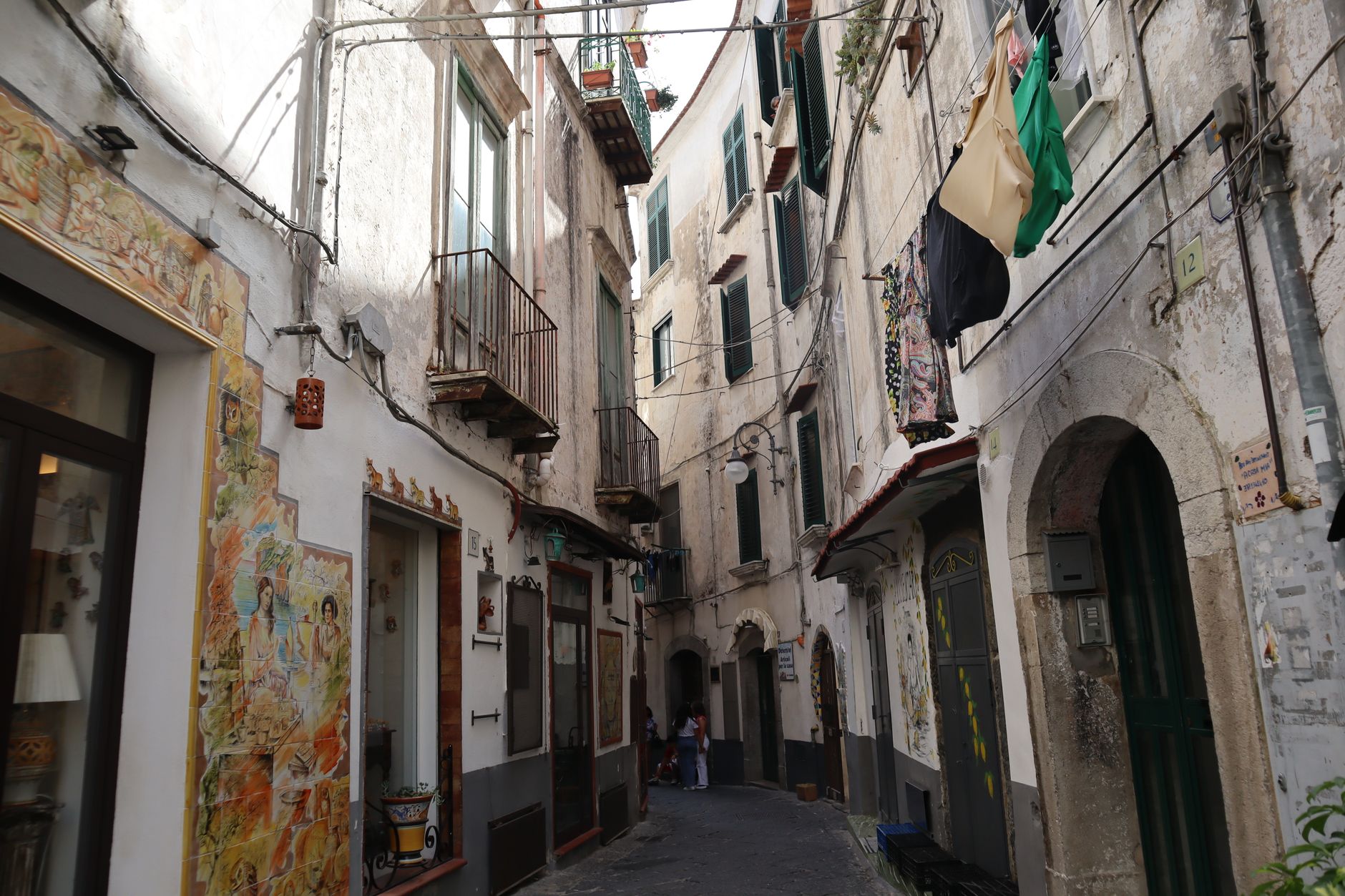


The kiln heat hits you first along Corso Umberto I, where potters still paint cobalt oxide onto raw majolica tiles with swift, unthinking precision. Hanging high above the Gulf of Salerno, the town skips the polished theatre of Positano for steep stone stairways, laundry lines, and the green-and-yellow dome of San Giovanni Battista. Down at Marina di Vietri, fishing boats rest on dark sand while lunch shifts toward fried anchovies and chilled Falanghina. Vietri sul Mare is worth visiting if you want artisanal ceramics at the workshop source and honest Campanian seafood without the Amalfi crowds. Look elsewhere if you need flat, step-free walking between the town and the beach, late-night clubs, luxury designer boutiques, or broad sandy shores.
Last updated 5 Sept 2026
Build a Vietri sul Mare itinerary.
Choose up to 4 threads that pull you in. Your plan arrives organised around them.
The Bed
Where to stay in Vietri sul Mare
Which part of town to book, and what each one costs you in walking, noise or quiet.
The Comparison
Vietri sul Mare, or somewhere near it
The places you are realistically choosing between, and the honest case for each.
The Local Record
Where to read more about Vietri sul Mare
The blogs, boards, guides and operators worth bookmarking.
What to do in Vietri sul Mare Campania Italy
Vietri sul Mare splits cleanly between an upper ceramic district along Corso Umberto I and the working waterfront at Marina di Vietri below. The day follows the rhythm of clay workshops, midday espresso in Piazza Matteotti, and lingering seafood lunches. It suits travellers who prefer genuine artisanal heritage, manageable walking distances, and regular train connections to the frantic glamour found further west.
24 hours in Vietri sul Mare Campania Italy
Spend the morning inspecting kilns along Via Madonna degli Angeli and the tiled cupola of San Giovanni Battista. Walk down the stepped path to Marina di Vietri for fried anchovies at a beachside table, then finish with an evening passeggiata along Corso Umberto I. The two town tiers sit fifteen minutes apart on foot. Select 1 Day above to see it.
2 days in Vietri sul Mare Campania Italy
Take the local bus up to the hill hamlets of Raito and Albori on day two. Tour the ceramics museum at Villa Guariglia among the vineyards, then settle into a terraced trattoria for scialatielli pasta tossed with zucchini and provolone del Monaco, looking straight down the gulf. Choose 2 Days to expand the plan.
3 days in Vietri sul Mare Campania Italy
A third day allows an easy morning ferry or bus hop to the fishing harbour of Cetara for colatura di alici, followed by an afternoon hike up the wooded slopes of the Monti Lattari. Return to Vietri for a bottle of chilled Falanghina and grilled calamari as the fishing boats return.
Vietri sul Mare Campania Italy itineraries by interest
Ceramic Arts in Vietri sul Mare Campania Italy
Watch potters throw majolica clay at Ceramica Solimene, an eccentric organic factory built by Paolo Soleri in 1954 along Via Madonna degli Angeli.
Local Seafood in Vietri sul Mare Campania Italy
Order alici fritte, spaghetti alle vongole veraci, and stewed octopus pulled fresh by fishermen working from the slipway at Marina di Vietri.
Sacred Architecture in Vietri sul Mare Campania Italy
Admire the 17th-century majolica-tiled dome and painted coffered ceiling inside the Church of San Giovanni Battista in the upper historic center.
Coastal Walks in Vietri sul Mare Campania Italy
Climb the steep stepped paths linking the main town to the hamlet of Raito, winding through lemon terraces with broad views of Salerno.
Beaches in Vietri sul Mare Campania Italy
Walk down to Spiaggia della Crestarella for clear water and views of I Due Fratelli, the pair of sea stacks anchoring the local coastline.
Regional Wine in Vietri sul Mare Campania Italy
Sip Costa d'Amalfi DOC whites made from Biancolella and Falanghina, poured straight from the jug at family-run enoteche near Piazza Amendola.
Village Life in Vietri sul Mare Campania Italy
Stroll the quiet, car-free lanes of Albori, a whitewashed hamlet perched high above the sea known for stone archways and slow afternoon espresso.
Pastry & Sweets in Vietri sul Mare Campania Italy
Try sfogliatella Santa Rosa and delizia al limone with morning espresso at old-school pasticcerie along Corso Umberto I.
Museums in Vietri sul Mare Campania Italy
Inspect five centuries of glazed terracotta and German-influenced pottery at the Museo della Ceramica inside Villa Guariglia in Raito.
Hiking in Vietri sul Mare Campania Italy
Follow the uphill trail toward the Alta Via dei Monti Lattari, ascending through chestnut groves and limestone cliffs above the Dragone river.
Local Produce in Vietri sul Mare Campania Italy
Pick up salted anchovy colatura from nearby Cetara, local sfusato amalfitano lemons, and fresh fiordilatte cheese at small corner grocers.
Day Trips in Vietri sul Mare Campania Italy
Hop on the local bus or passenger ferry to Cetara and Salerno, trading ceramic lanes for tuna docks and medieval Norman history in twenty minutes.