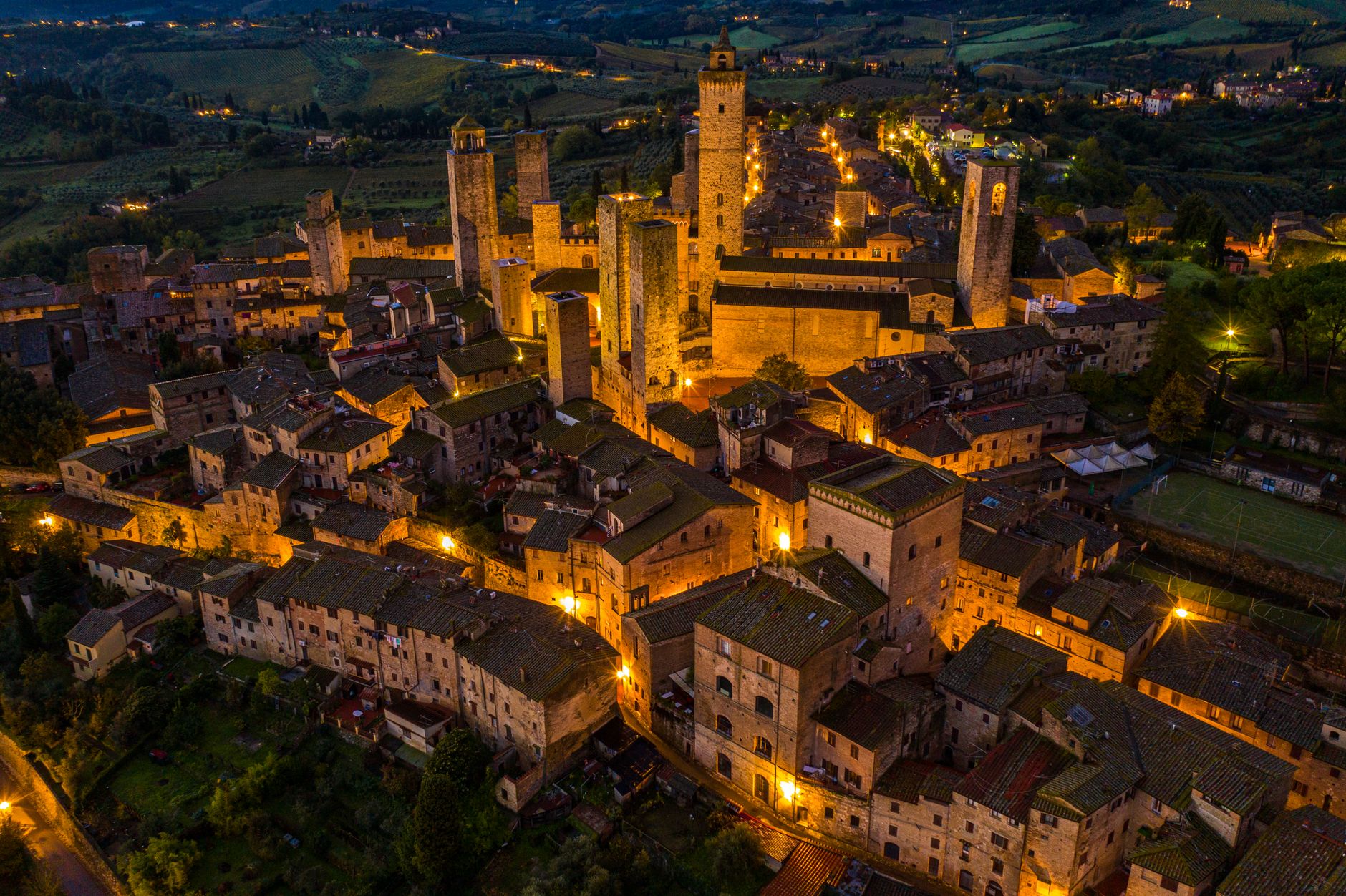

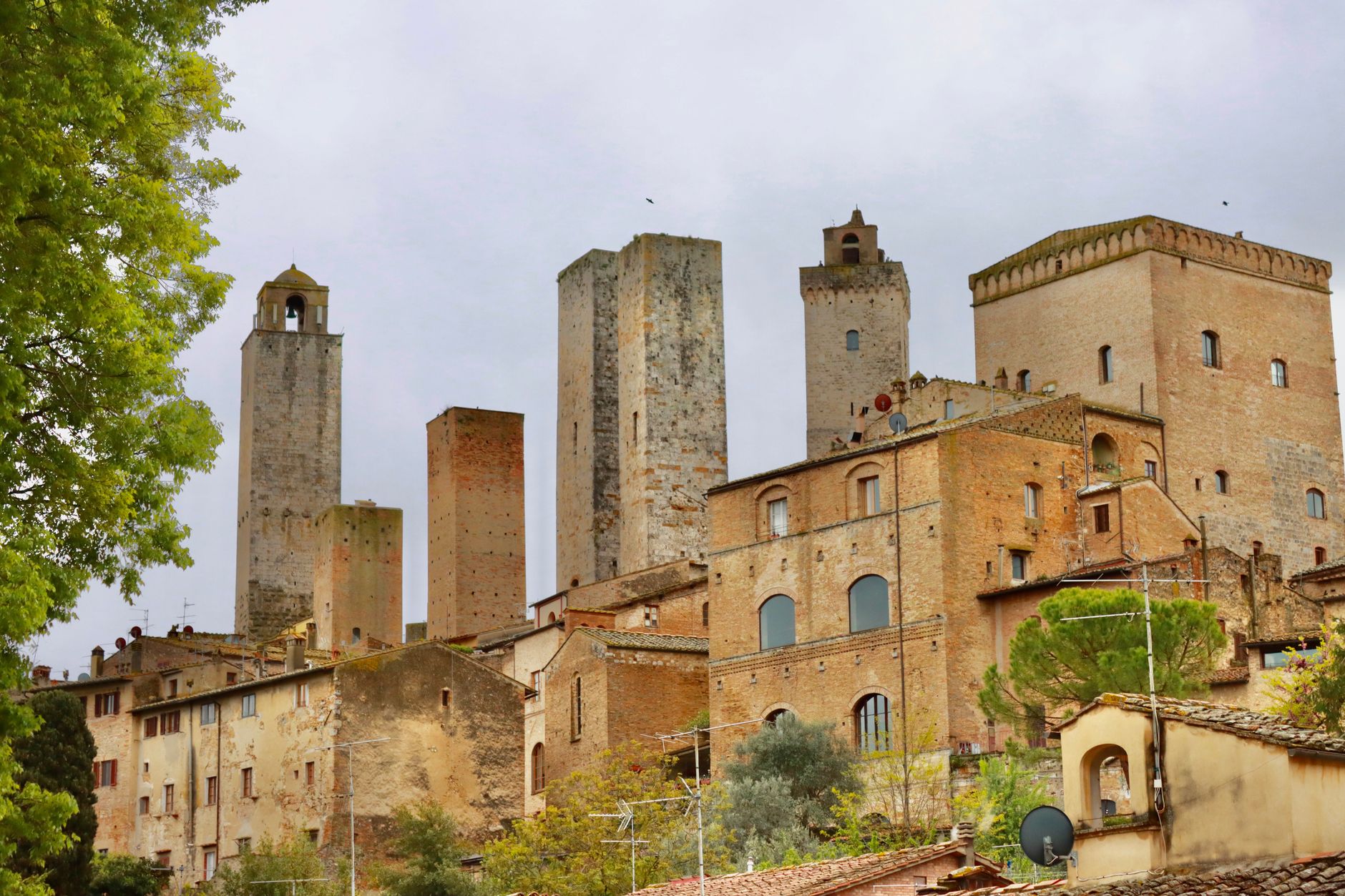


Fourteen stone towers rise like a fourteenth-century Manhattan above the Val d'Elsa, built by rival families competing in stone and ego. Walking up from Porta San Giovanni, the slope pulls at your calves while tour groups cluster around Piazza della Cisterna. Slip past them. In the back lanes near Sant'Agostino, stonemasons worked golden travertine centuries ago, and you can still lean on the parapet with a glass of crisp Vernaccia, watching shadows stretch across the olive groves below.
Last updated 27 Aug 2026
Build a San Gimignano itinerary.
Choose up to 4 threads that pull you in. Your plan arrives organised around them.
The Bed
Where to stay in San Gimignano
Which part of town to book, and what each one costs you in walking, noise or quiet.
The Comparison
San Gimignano, or somewhere near it
The places you are realistically choosing between, and the honest case for each.
The Local Record
Where to read more about San Gimignano
The blogs, boards, guides and operators worth bookmarking.
What to do in San Gimignano Tuscany Italy
The walled town sits high on a ridge, compact enough to cross on foot in twenty minutes if you ignore the steep incline. The day naturally revolves around dodging mid-day tour coaches, lingering in quiet frescoed chapels, and settling onto Piazza della Cisterna once the light softens. It suits walkers and slow travellers who value medieval stonework, honest white wine, and quiet morning streets before the tour buses arrive.
24 hours in San Gimignano Tuscany Italy
Enter through Porta San Giovanni by eight in the morning. Beat the queues at Torre Grossa, study the Old Testament frescoes inside the Collegiata, and sit down for pici al cinghiale on Via San Matteo. By sunset, take a glass of chilled Vernaccia up to the Rocca di Montestaffoli fortress ruins when the day-trippers have gone. Select 1 Day above to see it.
2 days in San Gimignano Tuscany Italy
Spend your morning outside the walls walking a section of the dirt Via Francigena trail down into the olive valleys. Loop back through Porta San Jacopo for lunch, then visit the peaceful cloister of Sant'Agostino in the northern quarter. Finish with saffron-spiced gelato and wild boar salumi away from the tour groups. Choose 2 Days to expand the plan.
3 days in San Gimignano Tuscany Italy
A third day allows a thirty-minute drive to the alabaster workshops of Volterra or the fortified stone ring of Monteriggioni. Dedicate your afternoon to visiting small Vernaccia vineyards across the Pliocene hills of the Val d'Elsa, stopping for a leisurely farmhouse dinner of bistecca and roasted vegetables.
San Gimignano Tuscany Italy itineraries by interest
Local Wine in San Gimignano Tuscany Italy
Taste crisp Vernaccia di San Gimignano DOCG at Rocca di Montestaffoli, noting the flinty minerality grown on ancient Pliocene soils.
Medieval Architecture in San Gimignano Tuscany Italy
Climb the 218 steps of Torre Grossa on Piazza Duomo for views across the Val d'Elsa and fourteen surviving merchant towers.
Sacred Art in San Gimignano Tuscany Italy
Study Bartolo di Fredi's Old Testament frescoes in the Collegiata and Gozzoli's vibrant Saint Augustine cycle at Sant'Agostino.
Artisan Gelato in San Gimignano Tuscany Italy
Queue alongside locals at Gelateria Dondoli in Piazza della Cisterna for crema di Santa Fina flavoured with saffron and pine nuts.
Regional Cured Meats in San Gimignano Tuscany Italy
Order finocchiona and wild boar prosciutto at bottegas along Via San Matteo, sliced thin on unsalted Tuscan pane sciocco.
Historic Fortifications in San Gimignano Tuscany Italy
Walk the perimeter of the fourteenth-century Medici fortress walls, starting at Porta San Matteo and ending at Porta San Giovanni.
Local Agriculture in San Gimignano Tuscany Italy
Track the harvest of DOP saffron, cultivated in the surrounding hills since the Middle Ages when it paid off civic war debts.
Scenic Trails in San Gimignano Tuscany Italy
Hike the unpaved Via Francigena path towards Monteriggioni, passing through quiet olive groves, vineyards, and oak woodlands.
Ceramics & Crafts in San Gimignano Tuscany Italy
Browse handmade majolica and terracotta workshops tucked along the quiet flagstone alleys of Via delle Romite.
Archaeology in San Gimignano Tuscany Italy
Inspect Etruscan funeral urns and Roman glass fragments in the quiet rooms of the Museo Archeologico on Piazza Santa Chiara.
Tuscan Cooking in San Gimignano Tuscany Italy
Eat ribollita and handmade pici pasta tossed with wild boar ragu at unpretentious neighbourhood trattorias off the main drag.
Day Trips in San Gimignano Tuscany Italy
Drive twenty minutes west to Volterra to explore alabaster carving shops, wind-swept Roman ruins, and severe medieval palazzi.