Aït Benhaddou.
_(30765760583)_(cropped_to_focus_on_old_town).jpg)


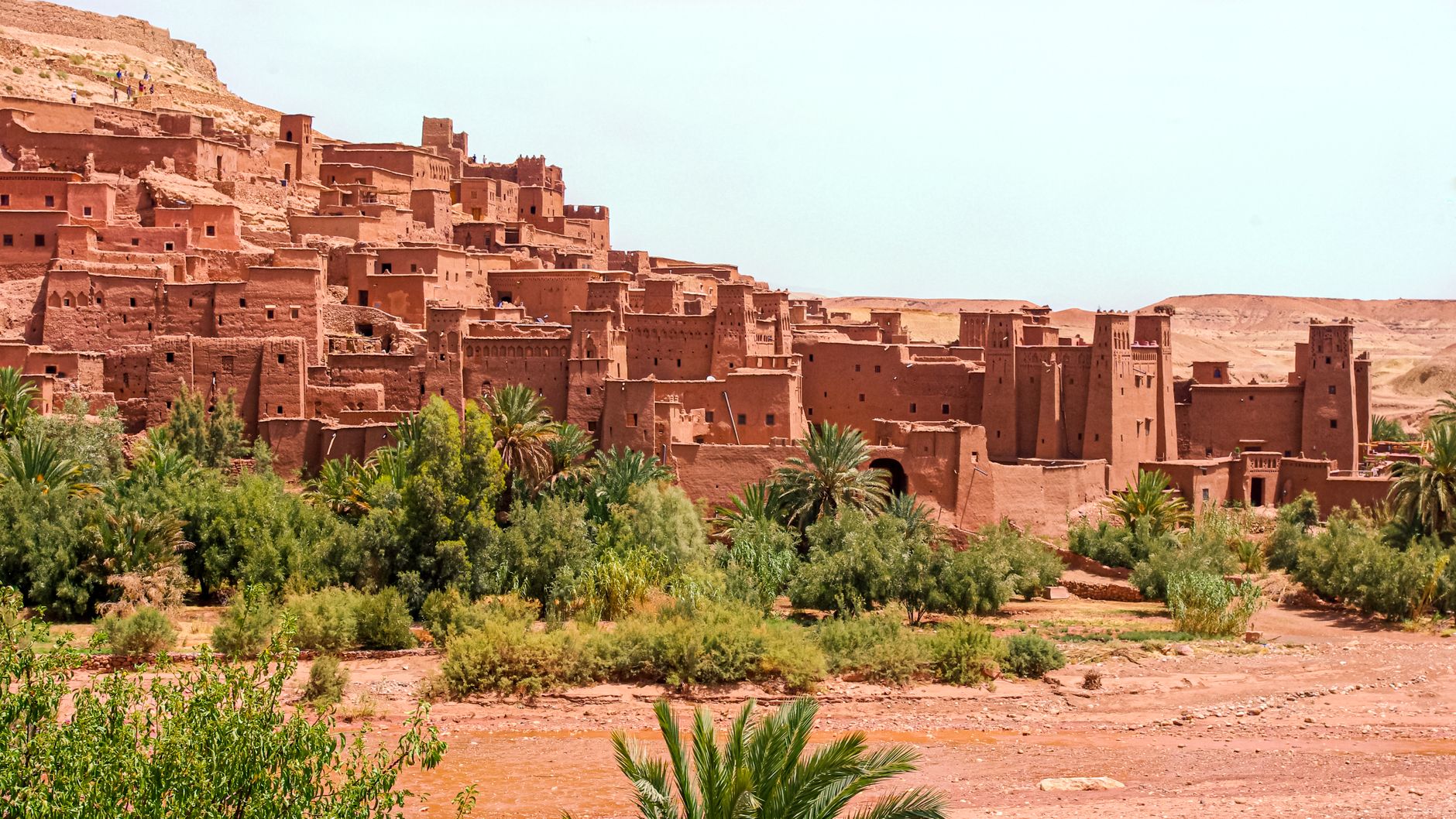
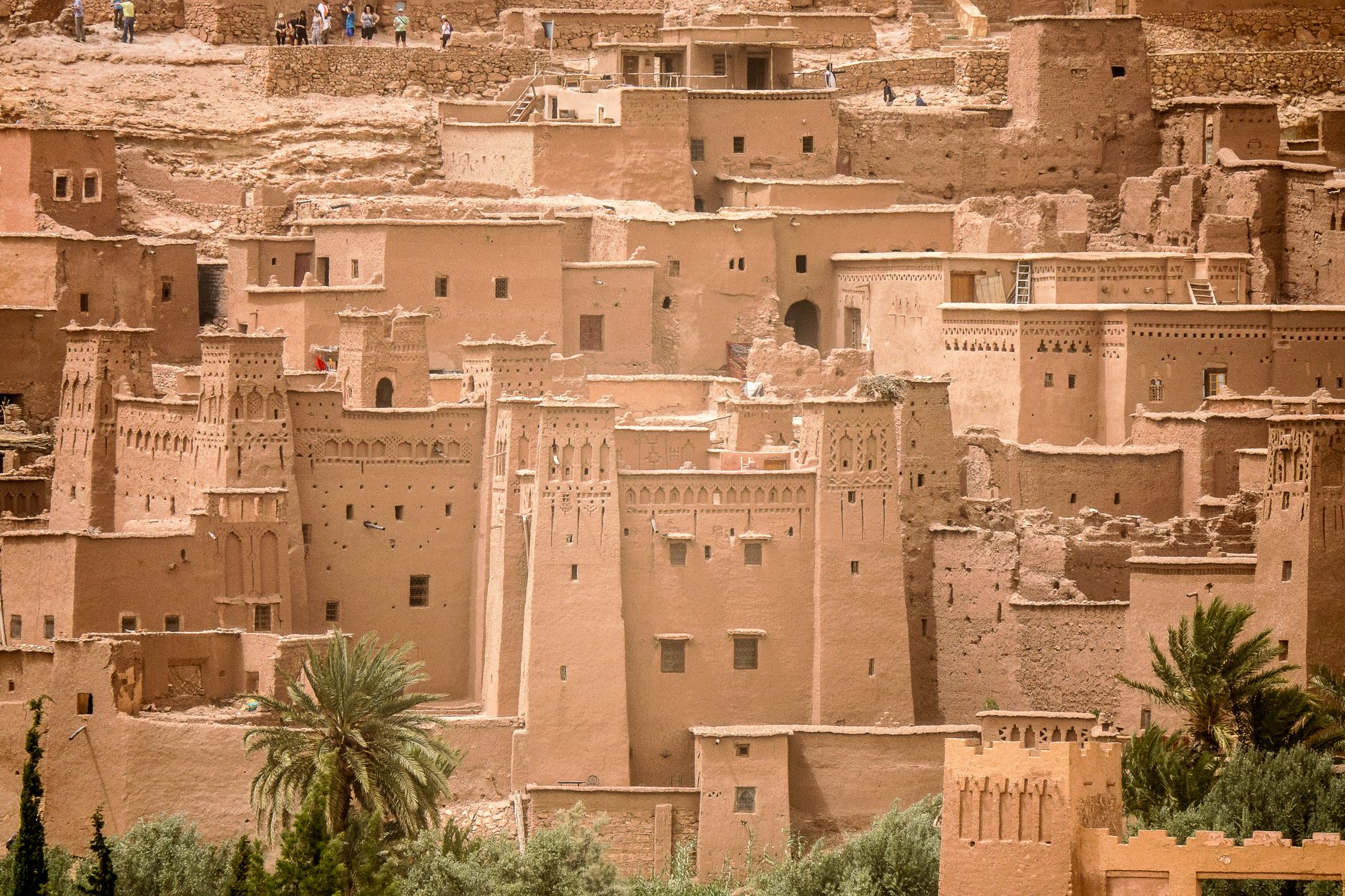
Aït Benhaddou sits thirty kilometres northwest of Ouarzazate and roughly four hours over the High Atlas from Marrakech via the Tizi n'Tichka pass. The village is known for its fortified earthen ksar, built from clay and straw along the old trans-Saharan caravan route to Timbuktu. A few families still live inside the red mud walls, while the rest reside across the riverbed. Aït Benhaddou is worth visiting if you want to explore intact pre-Saharan earthen architecture and walk quiet riverbed trails before tour buses arrive. Look elsewhere if you want lively nightlife, paved accessible streets, upscale dining, or enough attractions to fill more than a single day.
Last updated 13 Sept 2026
Build a Aït Benhaddou itinerary.
Choose up to 4 threads that pull you in. Your plan arrives organised around them.
The Bed
Where to stay in Aït Benhaddou
Which part of town to book, and what each one costs you in walking, noise or quiet.
The Comparison
Aït Benhaddou, or somewhere near it
The places you are realistically choosing between, and the honest case for each.
The Local Record
Where to read more about Aït Benhaddou
The blogs, boards, guides and operators worth bookmarking.
What to do in Aït Benhaddou Drâa & Tafilalet Morocco
The ksar is clustered on a clay hillside above the Ounila River, facing the modern village of new earthen houses and cafés across the dry wash. Daily rhythm here is dictated by light and tour traffic: the midday heat brings tour buses from Marrakech, while mornings and late afternoons leave the alleys utterly quiet. It suits travellers who appreciate desert masonry, slow hill walks, and sitting on a rooftop terrace with mint tea as the sun drops.
24 hours in Aït Benhaddou Drâa & Tafilalet Morocco
Cross the river early via the stepping stones to climb to the hilltop agadir before 10:00. Eat a lamb tagine with prunes at a terrace in the new village, then browse the saffron painters. In the evening, watch sunset light ignite the earthen towers. Select 1 Day above to see it.
2 days in Aït Benhaddou Drâa & Tafilalet Morocco
A second day lets you hire a grand taxi north into the Ounila Valley toward Tamdaght to explore its ruined kasbah and riverside olive groves. Dine on slow-cooked goat with cumin at a family guesthouse far from the day-tripper rush. Choose 2 Days to expand the plan.
3 days in Aït Benhaddou Drâa & Tafilalet Morocco
Three days permits an unhurried excursion to the Glaoui stronghold at Telouet via the winding canyon road, paired with an afternoon exploring the cinema sets and Kasbah Taourirt in nearby Ouarzazate before returning for quiet desert nights.
Aït Benhaddou Drâa & Tafilalet Morocco itineraries by interest
Vernacular Architecture in Aït Benhaddou Drâa & Tafilalet Morocco
Examine rammed-earth pisé walls, corner watchtowers, and mud-brick defensive crenellations built to keep interiors cool through desert summers.
Trade Routes in Aït Benhaddou Drâa & Tafilalet Morocco
Trace the old caravan path that carried gold, salt, and spices from Sub-Saharan Africa across the High Atlas to the markets of Marrakech.
Local Cooking in Aït Benhaddou Drâa & Tafilalet Morocco
Order Berber tagines simmered over charcoal with preserved lemon, dried prunes, tender mountain mutton, and fresh khobz flatbread.
Valley Walks in Aït Benhaddou Drâa & Tafilalet Morocco
Step along the stony bed of the Ounila River among date palms, almond orchards, and irrigation channels feeding small family plots.
Historic Fortifications in Aït Benhaddou Drâa & Tafilalet Morocco
Climb to the fortified agadir granary at the hill's crown for clear defensive lines over the desert and the southern Atlas peaks.
Craft Traditions in Aït Benhaddou Drâa & Tafilalet Morocco
Watch artisans use saffron, green tea, and indigo ink on paper, scorching the pigments over a gas flame to bring out deep ochre tones.
Day Trips in Aït Benhaddou Drâa & Tafilalet Morocco
Drive north along the P1506 road to Telouet Kasbah, the crumbling palace of the Glaoui clan lined with carved cedar and zellij tile.
Mountain Passes in Aït Benhaddou Drâa & Tafilalet Morocco
Navigate the hairpin turns of the Tizi n'Tichka pass, linking the arid plains of the south to the fertile valleys of the High Atlas.
Desert Gateways in Aït Benhaddou Drâa & Tafilalet Morocco
Head thirty minutes southeast to Ouarzazate to visit the maze-like Kasbah Taourirt and cinema production sets in the stony desert.
Film Locations in Aït Benhaddou Drâa & Tafilalet Morocco
Wander the restored mud alleys where productions like Lawrence of Arabia and Gladiator used the monumental earthen gates as backdrops.
Market Produce in Aït Benhaddou Drâa & Tafilalet Morocco
Seek out small roadside vendors selling Taliouine saffron, raw honeycomb, dried figs, and cold-pressed argan oil from nearby cooperatives.
Photography in Aït Benhaddou Drâa & Tafilalet Morocco
Cross the concrete stepping stones at dawn when low horizontal light turns the red mud façades glowing copper against the dry sky.