Merzouga.


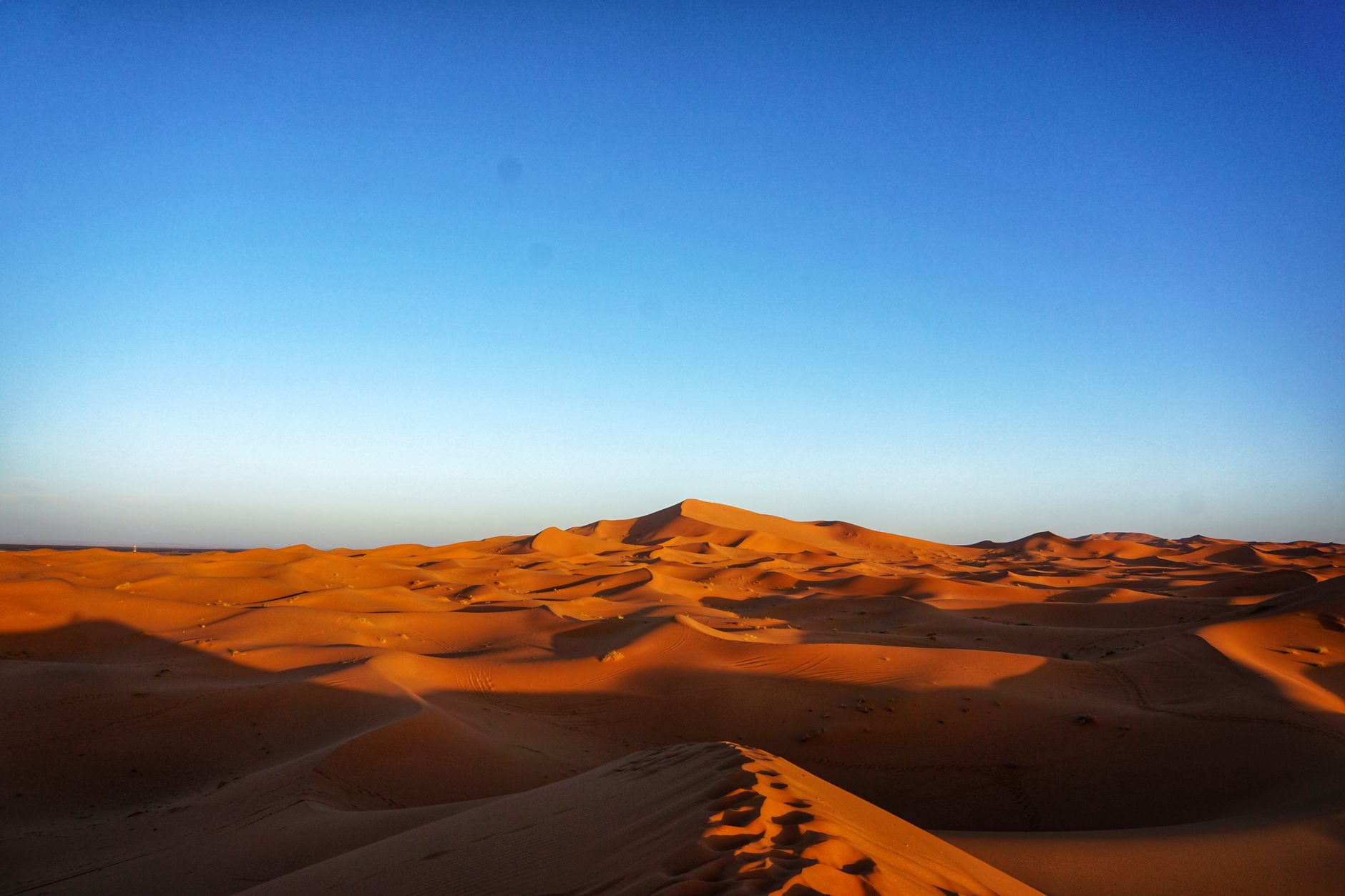
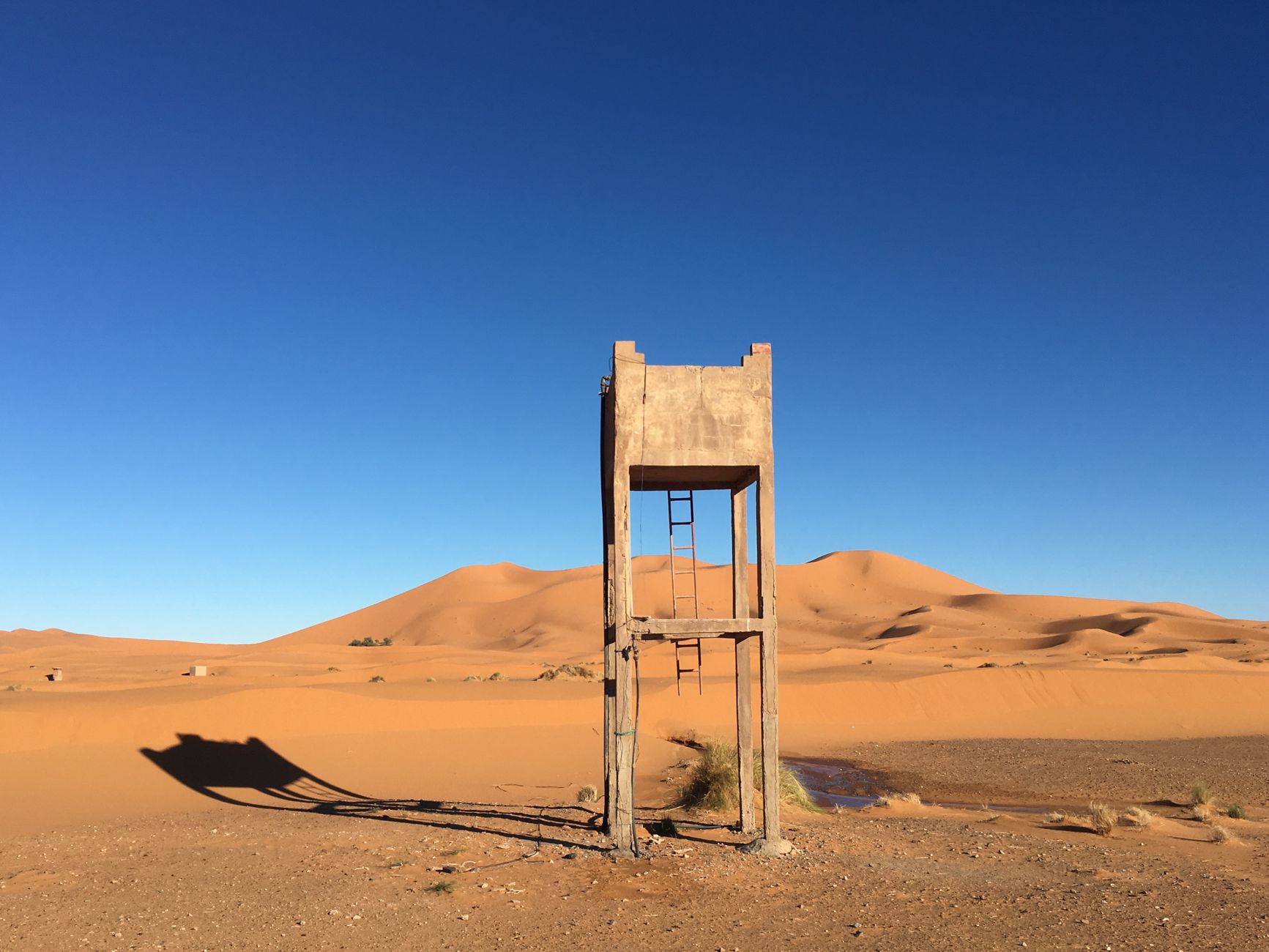

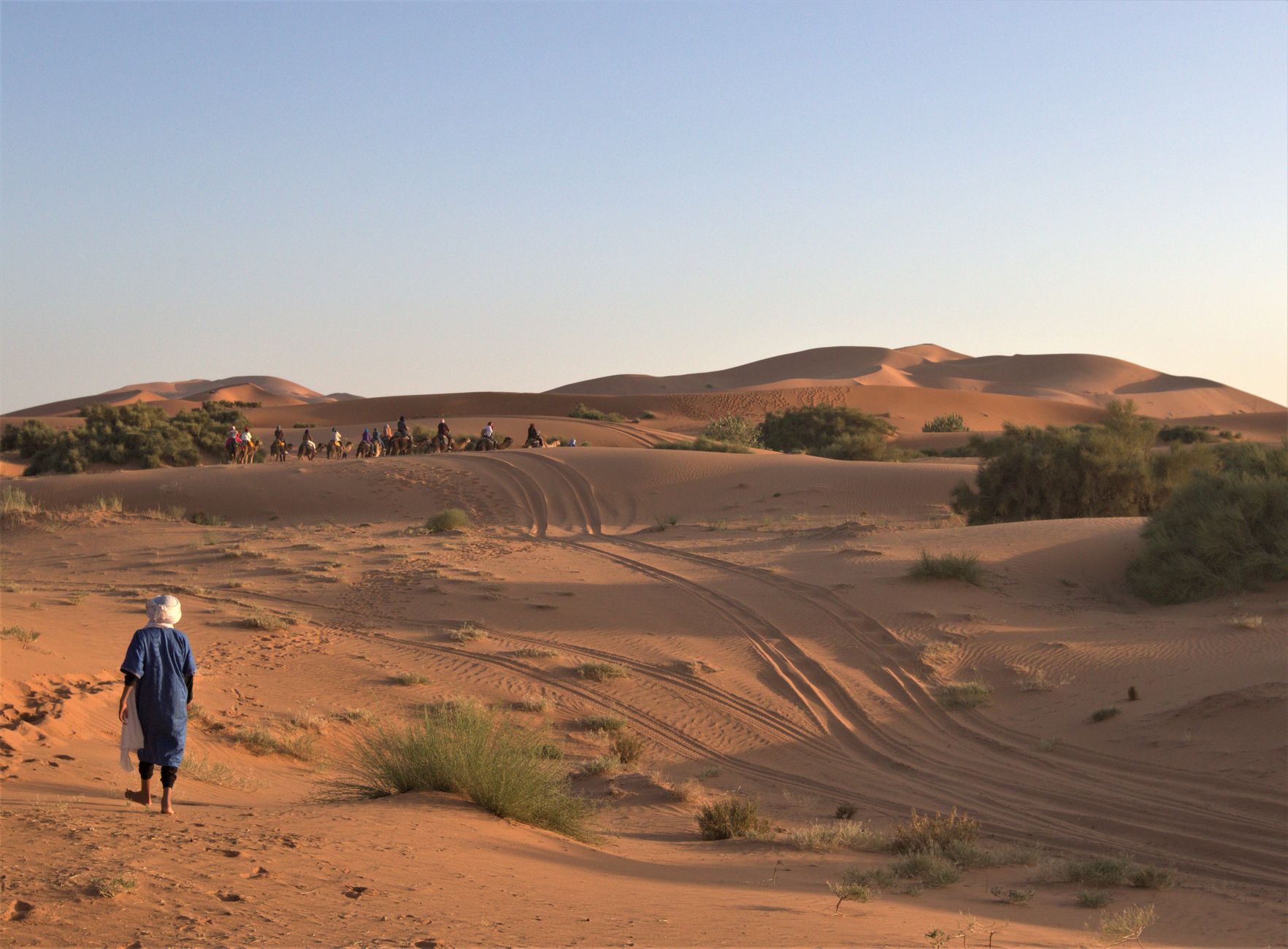
Merzouga sits in southeastern Morocco, a two-hour drive south of the regional airport at Errachidia or an eight-hour journey across the Atlas from Fes. The village fringes the Erg Chebbi dune field, famous for its towering orange sand ridges and desert auberges. Daily life centres around camel trekking, 4x4 tracks, and date palms watered by ancient khettara channels. Merzouga is worth visiting if you want to climb high Saharan dunes at dawn and eat spiced medfouna flatbread baked in earthen ovens. Look elsewhere if you want lively nightlife, historic architecture, indoor museums, or a paved, walkable town centre.
Last updated 13 Sept 2026
Build a Merzouga itinerary.
Choose up to 4 threads that pull you in. Your plan arrives organised around them.
The Bed
Where to stay in Merzouga
Which part of town to book, and what each one costs you in walking, noise or quiet.
The Comparison
Merzouga, or somewhere near it
The places you are realistically choosing between, and the honest case for each.
The Local Record
Where to read more about Merzouga
The blogs, boards, guides and operators worth bookmarking.
What to do in Merzouga Drâa & Tafilalet Morocco
Merzouga is a low-slung desert settlement strung along a single paved road facing the Erg Chebbi sand sea. Daily life runs in two sharp pulses: dawn climbs before the sun scorches the ridges, and late afternoon expeditions into the dunes. Midday belongs to shaded courtyards, mint tea, and slow lunches. It suits travellers who welcome sand in their boots and quiet nights under vast desert skies.
24 hours in Merzouga Drâa & Tafilalet Morocco
Begin before dawn with an hour-long trek up Erg Chebbi's main dune. By midday, walk to a local bakery for hot, spiced medfouna flatbread. In the late afternoon, head seven kilometres south to Khamlia to hear Gnawa musicians before watching sunset over the sand from an auberge terrace. Select 1 Day above to see it.
2 days in Merzouga Drâa & Tafilalet Morocco
On day two, walk the irrigation paths of the Hassi Labied palmeraie just north of town, then drive out to the ghost village of M'Fis to view old mineral mines. For dinner, order a slow-simmered camel tagine with dates and almonds at a quiet guesthouse off the main strip. Choose 2 Days to expand the plan.
3 days in Merzouga Drâa & Tafilalet Morocco
A third day allows a forty-minute trip northwest to Rissani, the ancient trade capital of Sijilmassa, to explore the souk and sample local street grilled skewers. Finish with an afternoon detour to the Devonian fossil quarries near Erfoud before an unhurried evening in the dunes.
Merzouga Drâa & Tafilalet Morocco itineraries by interest
Desert Landscapes in Merzouga Drâa & Tafilalet Morocco
Climb the shifting 150-metre orange sand peaks of Erg Chebbi before sunrise, when temperatures are mild and the ridge crests cast razor-sharp shadows.
Local Bread in Merzouga Drâa & Tafilalet Morocco
Tear into medfouna, the stuffed Berber flatbread packed with spiced minced beef, hard-boiled eggs, almonds, and suet, baked crisp inside a wood oven.
Music Traditions in Merzouga Drâa & Tafilalet Morocco
Listen to the metal qraqeb clappers and three-string guembri lutes played by Gnawa musicians at the Dar Gnawa cultural house in nearby Khamlia village.
Bird Watching in Merzouga Drâa & Tafilalet Morocco
Scan the seasonal waters of Dayet Srji lake in late winter for pink flamingos, ruddy shelducks, and desert warblers resting along the dune basin.
Desert Agriculture in Merzouga Drâa & Tafilalet Morocco
Walk the shaded paths of Hassi Labied palmeraie to see how gravity-fed khettara irrigation channels water date palms, mint patches, and alfalfa.
Mining Heritage in Merzouga Drâa & Tafilalet Morocco
Explore the abandoned French-era lead and kohl mines at M'Fis, where rusted cable carts and open shafts overlook the Algerian border plains.
Markets & Produce in Merzouga Drâa & Tafilalet Morocco
Visit Rissani's lively souk on Tuesday, Thursday, or Sunday to buy Medjool dates, cumin, sheepskins, and hand-forged desert charcoal braziers.
Regional Stews in Merzouga Drâa & Tafilalet Morocco
Sample camel meat tagine slow-cooked with prunes, onions, and ras el hanout, served with hot semolina bread in family-run auberges along the N13.
Stargazing in Merzouga Drâa & Tafilalet Morocco
Step beyond the village light perimeter on clear winter nights to view the Milky Way, guided by local Saharan drivers who navigate by the constellations.
Fossil Sites in Merzouga Drâa & Tafilalet Morocco
Search the limestone beds near Erfoud and Taouz for polished orthoceras and ammonite fossils dating back to the Devonian period 400 million years ago.
Nomadic Life in Merzouga Drâa & Tafilalet Morocco
Learn how semi-nomadic families construct woven camel-hair tents and manage herds across the rocky reg plains of the Sahara.
Off-Road Routes in Merzouga Drâa & Tafilalet Morocco
Ride the old Paris-Dakar rally tracks in a 4x4 across black volcanic gravel flats, dry oued beds, and sandy passes towards Ouzina.