

Two small rivers, the Alcoa and the Baça, slip beneath the limestone paving before you notice them. Everything in this valley converges on the massive 12th-century Cistercian abbey, where pale stone turns honey-coloured under the late afternoon sun. Inside, King Pedro I and Inês de Castro lie foot-to-foot in carved Gothic stone, waiting for resurrection. Across the square, pastry shops whip egg yolks and sugar into cornucópias, carrying on monastic recipes with quiet, methodical precision.
Last updated 27 Aug 2026
Build a Alcobaça itinerary.
Choose up to 4 threads that pull you in. Your plan arrives organised around them.
The Bed
Where to stay in Alcobaça
Which part of town to book, and what each one costs you in walking, noise or quiet.
The Comparison
Alcobaça, or somewhere near it
The places you are realistically choosing between, and the honest case for each.
The Local Record
Where to read more about Alcobaça
The blogs, boards, guides and operators worth bookmarking.
What to do in Alcobaça Leiria Portugal
A visit here revolves naturally around the monumental monastery on Praça 25 de Abril and the slow, easy strolls through the narrow lanes flanking the rivers. It suits travellers who appreciate austere medieval stonework, genuine pastry heritage, and an unhurried central Portuguese town that empties out comfortably once the afternoon tour buses head back to Lisbon.
24 hours in Alcobaça Leiria Portugal
Spend the morning inside the monastery before the light fills the Cloister of Silence. For lunch, order roasted goat at a tavern on Rua D. Pedro V, then sample cornucópias at Pastelaria Alcoa. Walk up to the ruined medieval castle before sundown for a broad valley view. Select 1 Day above to see it.
2 days in Alcobaça Leiria Portugal
A second day lets you visit the Museu do Vinho on Rua de Leiria, then drive fifteen minutes west to the cliffs of Nazaré. Eat grilled sardines along the beachfront, watch the Atlantic swells roll in, and return to Alcobaça for an evening glass of local sour cherry ginja. Choose 2 Days to expand the plan.
3 days in Alcobaça Leiria Portugal
With three days, explore the limestone trails of Serra dos Candeeiros or head north to Batalha's Gothic abbey. Spend an unhurried afternoon tasting Encostas d'Aire wines at nearby quinta estates, returning for an easy dinner of bacalhau at a quiet neighbourhood adega.
Alcobaça Leiria Portugal itineraries by interest
Sacred Architecture in Alcobaça Leiria Portugal
Mosteiro de Alcobaça's austere Gothic nave, the Manueline sacristy, and the colossal monastery kitchen with its diverted river channel.
Royal History in Alcobaça Leiria Portugal
The intricate fourteenth-century carved tombs of Pedro I and Inês de Castro, positioned foot-to-foot in the monastery transept.
Convent Sweets in Alcobaça Leiria Portugal
Monastic baking traditions live on in crisp cornucópias, trouxas de ovos, and castanhas de ovos made with sugar and rich egg yolks.
Regional Liqueurs in Alcobaça Leiria Portugal
Local ginjinha, the tart sour cherry liqueur macerated with spices, served straight or in edible chocolate cups around the square.
Orchard Fruits in Alcobaça Leiria Portugal
The protected Maçã de Alcobaça, crisp IGP apples cultivated across the valley slopes between the Atlantic breeze and limestone hills.
Ceramics & Pottery in Alcobaça Leiria Portugal
Traditional glazed earthenware and blue-and-white faiança produced in local workshops, reflecting centuries of monastic craft.
Traditional Dining in Alcobaça Leiria Portugal
Robust Estremadura cooking featuring roasted suckling pig, bacalhau à lagareiro, and slow-braised pork with beans in family-run tascas.
Market Shopping in Alcobaça Leiria Portugal
The bustling municipal market on Praça 25 de Abril, piled high with fresh Serra greens, local cheeses, salt cod, and seasonal fruit.
Coastal Escapes in Alcobaça Leiria Portugal
The Atlantic rollers and rugged cliffs of Nazaré and the sheltered shell-shaped bay of São Martinho do Porto, a quick drive west.
Nature & Trails in Alcobaça Leiria Portugal
Walking routes through Parque Natural das Serras de Aire e Candeeiros, traversing dry limestone plateaus and olive terraces.
Castle Ruins in Alcobaça Leiria Portugal
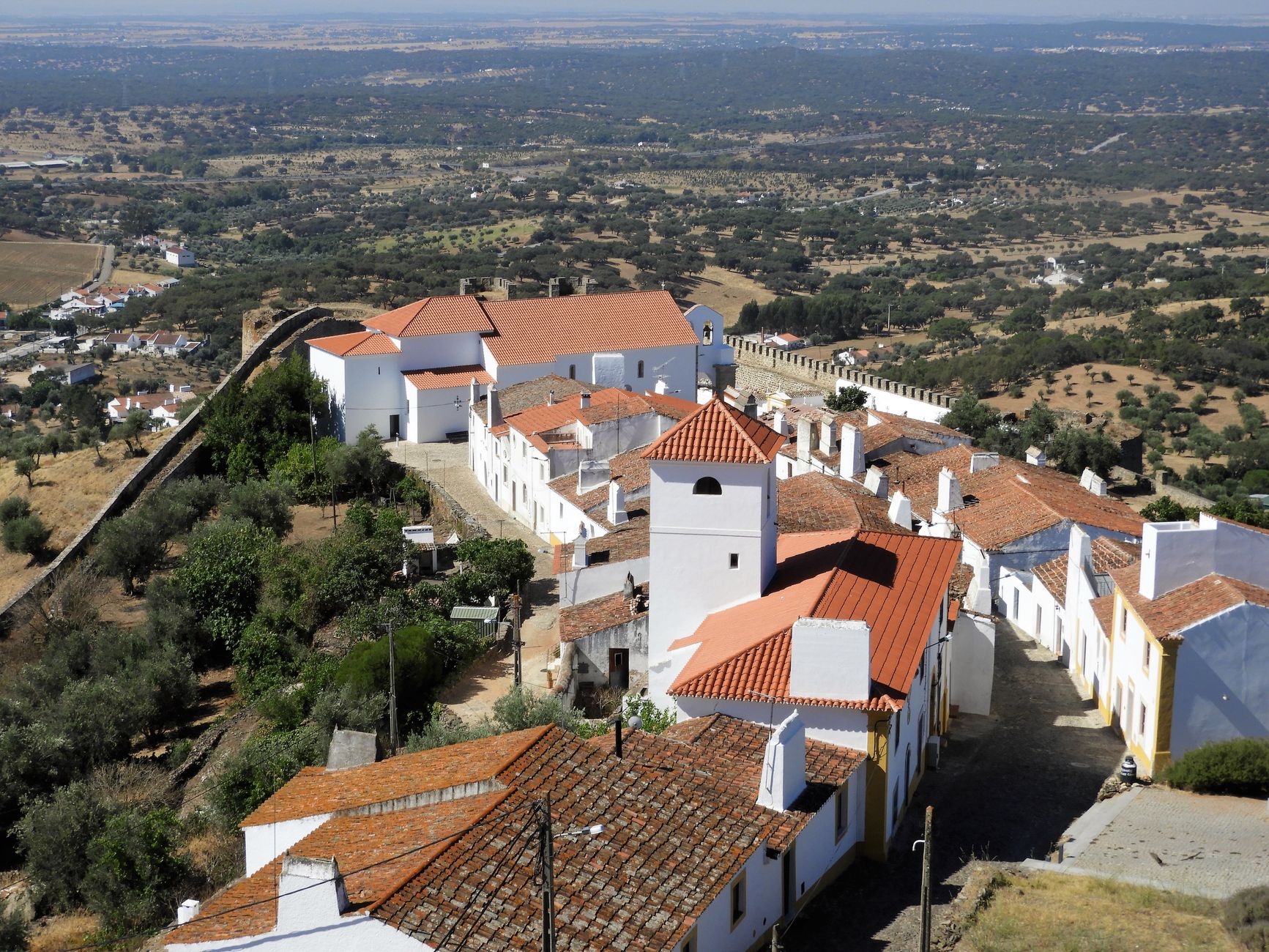
The hilltop ramparts of Castelo de Alcobaça, offering wide views over the abbey roofs, terracotta tiles, and the valley floor.
Wine & Cellars in Alcobaça Leiria Portugal
The Museu do Vinho de Alcobaça and tastings of crisp white and robust red Encostas d'Aire wines from surrounding valley vineyards.