Antalya.

.jpg)

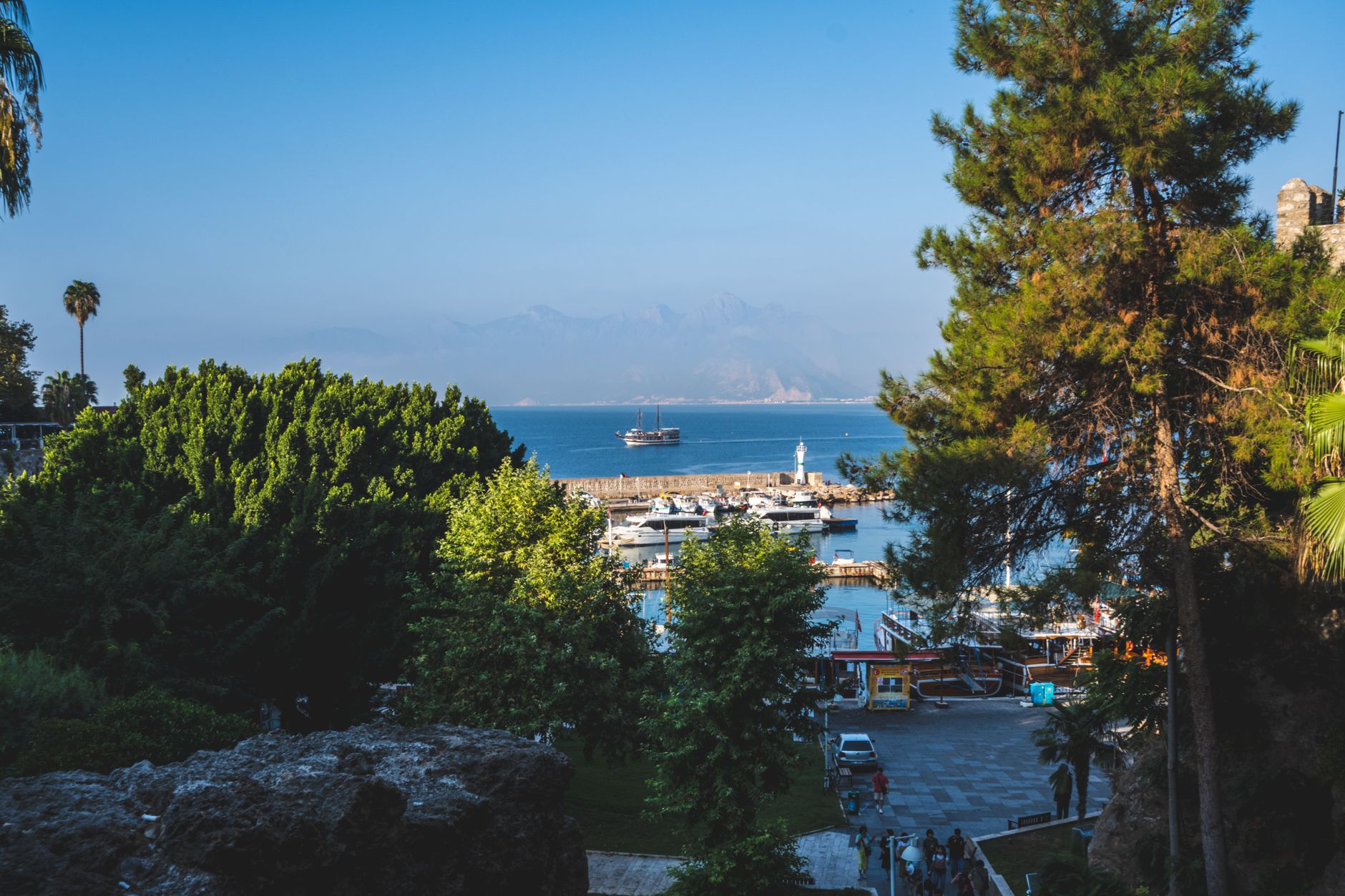


Limestone cliffs drop straight into turquoise water while the jagged ridge of Mount Tahtalı cuts the sky behind. You enter Kaleiçi through Hadrian's three-arched white marble gate and instantly lose the modern city grid to narrow stone alleys, timber Ottoman houses, and the clinking glasses of street-corner meyhanes. Down in the Roman harbour, wooden gulets rock against stone quays where fishermen mend green nets under a relentless Mediterranean sun.
Last updated 1 Sept 2026
Build a Antalya itinerary.
Choose up to 4 threads that pull you in. Your plan arrives organised around them.
We'll craft a 1-lens plan for Antalya, one collapsible strand per lens.
Traditional Crafts
Watch coppersmiths beat pots in Demirciler Çarşısı and find hand-knotted Döşemealtı wool rugs dyed with pomegranate peel.
Traditional Crafts
Watch coppersmiths beat pots in Demirciler Çarşısı and find hand-knotted Döşemealtı wool rugs dyed with pomegranate peel.
Studying Anatolian Carpet Weaving
Suna & İnan Kıraç Kaleiçi Museum
Buy tickets at the entrance for 50 lira. Spend forty-five minutes in this restored Ottoman mansion examining regional Döşemealtı kilims and rare folk ceramics before tour groups arrive.
Editor TipAntalya's upland Yörük nomads have woven geometric Döşemealtı carpets from hand-spun wool and natural madder dyes for centuries, encoding tribal identities into every vegetable-dyed knot. Step through the quiet garden courtyard first; the morning light over the restored Greek Orthodox chapel is unbeatable.
Watching Hand-Hammered Coppersmithing
Sobacılar Çarşısı
Wander the shaded stone arcade near the Clock Tower for forty minutes for free. Watch metalworkers hammer thick sheet copper and tin cookware over glowing charcoal braziers.
Editor TipOnce the metalworking hub of Ottoman Antalya, this restored guild bazaar keeps alive the centuries-old tradition of hand-raising copper pots and forging iron hearth implements without machinery. Buy a hand-hammered cezve straight from the artisan; friendly bargaining is an unhurried chat over tea, never an argument.
Hand-Hammered Copper and Tin
Tarihi Bakırcılar Çarşısı
Walk the covered lane just north of the Clock Tower. Artisans shape and tin copper pots from 09:00 to 18:00 daily except Sunday. Expect to spend 45 minutes browsing.
Editor TipAnatolian coppersmithing dates back millennia, preserved here by masters who hand-raise and tin cooking vessels using anvil stakes and charcoal forges. Look for heavy, unlacquered cezve coffee pots lined in silver tin; they outlast modern steel by decades.
Observing Traditional Anatolian Weaving
Antalya Olgunlaşma Enstitüsü
Wander the courtyard studios to watch artisans at wooden looms and needlework stations. Open weekdays 09:00 to 17:00 with free admission.
Editor TipThis public institute preserves regional heritage crafts, documenting the geometric patterns of nomadic Yörük textiles and centuries-old Antalya silk lace before the techniques vanish. Do not skip the vegetable dye room. The master dyer will explain how local pomegranate skins produce rich gold hues.
Döşemealtı Hand-Woven Kilims
Galerie Ikman
Browse rooms of vegetal-dyed wool rugs from nearby Döşemealtı. No entry fee required; spend an hour examining knots over unprompted glasses of black tea.
Editor TipNomadic Yörük weavers on the Döşemealtı plateau spin local sheep wool and dye it with madder and indigo, building geometric motifs entirely from memory. Inspect the back of the weave. A tight, slightly irregular knot count indicates months on a hand loom.
Hand-Knotted Wool Weaving
Döşemealtı Halı Dokuma Atölyesi
Drive thirty minutes north on the D650 to watch weavers work upright looms. Free to observe; budget 45 minutes and bring cash if you plan to purchase direct from the makers.
Editor TipDöşemealtı rugs carry centuries of Yörük nomadic geometry, spun from hand-carded Anatolian sheep wool and dyed with madder root and walnut husks rather than synthetic chemicals. Look for the blue-and-red scorpion motif, traditionally woven as a talisman to protect households from venomous pests.
Kick-Wheel Terracotta Pottery
Çakallık Çömlek Atölyesi
Head east toward Serik where master potters throw unglazed porous vessels. Expect to pay a modest fee for a thirty-minute workshop session, or just linger and watch.
Editor TipÇakallık potters use iron-rich alluvial clay from the Köprüçay basin, throwing water jugs designed to sweat through their pores and cool drinking water by evaporative chill. Test pots by tapping the rim with a knuckle. A clean ring means the clay cured evenly without hairline firing cracks.
Clay-Pot Braised Toros Lamb
Berberoğlu Konağı
Dine on mountain lamb slow-cooked in thick earthenware pots inside a restored merchant house. Tables fill by seven; order the güveç and house-made grape molasses.
Editor TipThe surrounding village preserves five centuries of button-house carpentry, where Toros craftsmen interlock raw cedar beams with dry-stacked limestone without mortar. Arrive thirty minutes before dinner to inspect the intricate exterior timber joints in daylight.
Wildcards
Worth your time whatever brought you here.
Wildcards
Worth your time whatever brought you here.
Tahinli Piyaz and Charcoal Skewers
Piyazcı Sami
Arrive by 19:30 to grab an outdoor table. Order the şiş köfte with Antalya piyaz and a cold ayran. No reservations, cash preferred, dinner runs around 45 minutes.
Editor TipAntalya piyaz is a registered regional craft dating to 1933, using boiled Çandır beans bound in a rich emulsion of raw sesame tahini, aged vinegar and garlic. Do not stir the salad immediately; taste the warm beans against the cold tahini dressing first.
Note from the Editor
“Enter Kaleiçi right at eight through Hadrian's Gate. The limestone flagstones are cool, weavers are just rolling up their shutters, and you will have the Ottoman lanes entirely to yourself before tour buses descend.”
The Bed
Where to stay in Antalya
Which part of town to book, and what each one costs you in walking, noise or quiet.
The Comparison
Antalya, or somewhere near it
The places you are realistically choosing between, and the honest case for each.
The Local Record
Where to read more about Antalya
The blogs, boards, guides and operators worth bookmarking.
What to do in Antalya Turquoise Coast Türkiye
Antalya balances the ease of a seaside resort with genuine historical weight. Days revolve around the pedestrian alleys of Kaleiçi, morning swims along Konyaaltı Beach, and late afternoon strolls above the cliffs of Karaalioğlu Park. It suits independent travellers who want ancient ruins, accessible transport, and serious food without sacrificing urban convenience.
24 hours in Antalya Turquoise Coast Türkiye
Start at Hadrian's Gate, navigating Kaleiçi down to the Roman harbour. Grab lunch—try local Antalya-style bean salad with tahini (piyaz)—then ride the heritage tram to the exceptional Archaeological Museum. End with a glass of raki and grilled fish at a cliffside table above the marina. Select 1 Day above to see it.
2 days in Antalya Turquoise Coast Türkiye
Dedicate your morning to the expansive ruins of Perge and the intact Roman theatre at Aspendos, thirty minutes east by car. Spend the afternoon swimming off the pebble shores of Konyaaltı, then eat your way through the meyhanes of Atatürk Caddesi as the city cools down. Choose 2 Days to expand the plan.
3 days in Antalya Turquoise Coast Türkiye
Head high into the rugged Taurus Mountains to hike among the unexcavated ruins of Termessos, set inside a wild national park. Return via the Upper Düden waterfall for quiet tea gardens, finishing your evening with a plate of burnt-milk ice cream in the old quarter.
Antalya Turquoise Coast Türkiye itineraries by interest
Street Food in Antalya Turquoise Coast Türkiye
Grab warm Antalya piyaz dressed in tahini and vinegar, followed by crisp yanık dondurma (burnt-milk ice cream) on Atatürk Caddesi.
Classical Antiquity in Antalya Turquoise Coast Türkiye
Walk through Hadrian's Gate into Roman history, then head out to the colossal theatre at Aspendos and the colonnades of Perge.
Local Seafood in Antalya Turquoise Coast Türkiye
Order grilled levrek (sea bass) or red mullet with meze at the cliffside restaurants overlooking the old Roman harbour.
Coastal Walks in Antalya Turquoise Coast Türkiye
Stroll the dramatic cliff paths of Karaalioğlu Park at dusk, looking across the gulf toward the sheer wall of the Beydağları range.
Historic Architecture in Antalya Turquoise Coast Türkiye
Trace centuries of stone along Kaleiçi's winding alleys, from the fluted Yivli Minare to restored Ottoman timber-frame mansions.
Markets & Produce in Antalya Turquoise Coast Türkiye
Browse Friday markets for salted black olives, fresh mountain thyme, pomegranate molasses, and boxes of crumbly Turkish delight.
Day Trips in Antalya Turquoise Coast Türkiye
Drive forty minutes west to the mountain ruins of Termessos, or head east to the thermal travertine terraces of Pamukkale.
Beaches in Antalya Turquoise Coast Türkiye
Pick between the smooth pebbles and clear deep water of Konyaaltı or the soft golden sands and shallow surf at Lara Beach.
Museum Collections in Antalya Turquoise Coast Türkiye
Spend a quiet morning at the Antalya Archaeological Museum inspecting Roman imperial statues excavated from nearby Perge.
Mountain Hiking in Antalya Turquoise Coast Türkiye
Follow sections of the long-distance Lycian Way trail starting near Geyikbayırı, threading through pine forests and limestone gorges.
River & Waterfalls in Antalya Turquoise Coast Türkiye
Watch the Lower Düden Falls plunge forty metres off the cliff face into the sea, or walk behind the spray at Upper Düden.
Traditional Crafts in Antalya Turquoise Coast Türkiye
Watch coppersmiths beat pots in Demirciler Çarşısı and find hand-knotted Döşemealtı wool rugs dyed with pomegranate peel.