

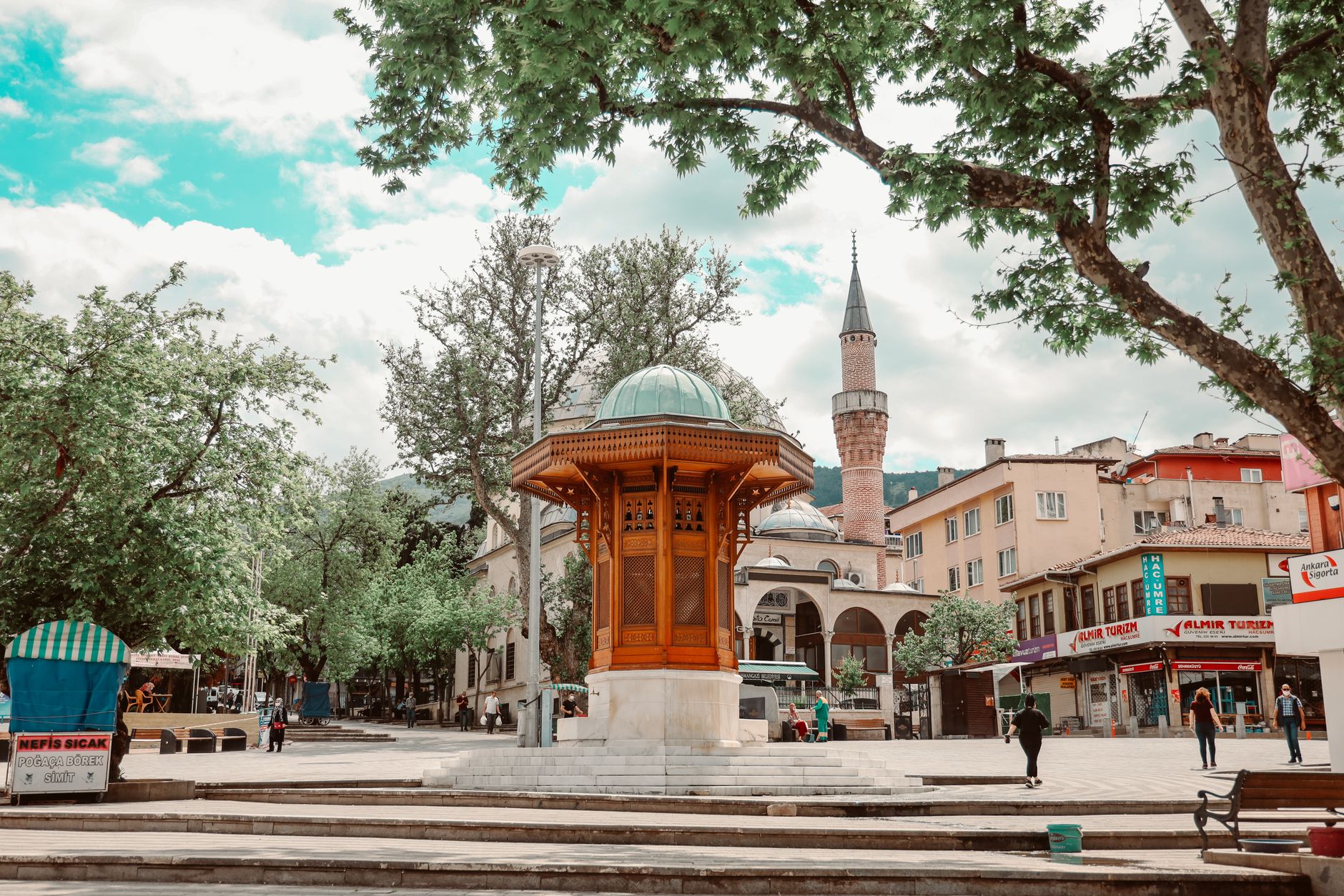


Bursa sits two hours south of Istanbul across the Sea of Marmara by fast ferry and connecting bus. As the first capital of the Ottoman Empire, it is defined by fourteenth-century stone mosques, an intact covered silk bazaar, and mountain slopes feeding natural mineral springs. You come here to eat shaved lamb basted in brown butter at the source and walk quiet neighbourhood monuments without the capital's crowds. Bursa is worth visiting if you want early Ottoman history and mountain thermal baths paired with authentic regional cooking. Look elsewhere if you want lively nightlife, a flat and compact walkable center, or coastal beaches.
Last updated 9 Sept 2026
Build a Bursa itinerary.
Choose up to 4 threads that pull you in. Your plan arrives organised around them.
The Bed
Where to stay in Bursa
Which part of town to book, and what each one costs you in walking, noise or quiet.
The Comparison
Bursa, or somewhere near it
The places you are realistically choosing between, and the honest case for each.
The Local Record
Where to read more about Bursa
The blogs, boards, guides and operators worth bookmarking.
What to do in Bursa Marmara Türkiye
Bursa stretches along the northern foothills of Mount Uludağ, anchored by its historic core around Atatürk Caddesi and the Han district. Days naturally revolve around early market walks through Koza Han, afternoon mosque visits, and long lunches centered on wood-roasted lamb. It suits travellers who appreciate unhurried Islamic architecture, thermal water culture, and deep regional food traditions without tourist fanfare.
24 hours in Bursa Marmara Türkiye
Start by 09:00 inside the Grand Mosque before browsing the silk stalls of Koza Han. Walk ten minutes east for lunch at Kebapçı İskender on Ünlü Cadde. Spend the afternoon at Yeşil Türbe, then take an evening taxi to Tophane Park for sunset across the valley. Select 1 Day above to see it.
2 days in Bursa Marmara Türkiye
Head twenty minutes east to the stone lanes of Cumalıkızık for a sprawling village breakfast of cheeses and baked jams. Return to the city for an afternoon soak at Tarihi Yeni Kaplıca in Çekirge, finishing with wood-fired cantık flatbreads in the Kayhan market. Choose 2 Days to expand the plan.
3 days in Bursa Marmara Türkiye
Take the thirty-minute morning bus north to the coastal town of Mudanya for grilled sea bass along the boardwalk. From there, take a local dolmuş to Gölyazı on Lake Uluabat to watch local fishermen haul perch beneath century-old plane trees.
Bursa Marmara Türkiye itineraries by interest
Regional Cooking in Bursa Marmara Türkiye
Order Iskender kebab at Kebapçı İskender on Ünlü Cadde, shaved lamb over pide soaked in tomato sauce, sheep butter, and cold yoghurt.
Sacred Architecture in Bursa Marmara Türkiye
Visit the fourteenth-century Ulu Cami with its twenty domes and central ablution fountain, then walk to the green-tiled Yeşil Camii.
Historic Markets in Bursa Marmara Türkiye
Walk the vaulted corridors of Koza Han, trading silk since 1491, where courtyards serve strong black tea under plane trees.
Mountain Hiking in Bursa Marmara Türkiye
Ride the Bursa Teleferik up Mount Uludağ for high alpine trails, cooler summer air, and pine forests twenty minutes from the city.
Thermal Springs in Bursa Marmara Türkiye
Soak in the historic mineral baths of Çekirge, where hot spring water has fed bathhouses like Tarihi Yeni Kaplıca since 1552.
Village Life in Bursa Marmara Türkiye
Take a morning minibus to Cumalıkızık, a seven-hundred-year-old Ottoman village of cobblestone alleys, timber houses, and village breakfasts.
Local Sweets in Bursa Marmara Türkiye
Stop along Atatürk Caddesi for kestane şekeri, candied chestnuts preserved in sugar syrup and dark chocolate, sold since the 1930s.
Craft Traditions in Bursa Marmara Türkiye
Browse traditional silk weavers at Koza Han and shadow-puppet workshops dedicated to Karagöz and Hacivat along Çekirge Caddesi.
Coastal Escapes in Bursa Marmara Türkiye
Catch the local bus twenty minutes north to Mudanya for wooden seafront houses, fresh Marmara sardines, and cool evening promenades.
Street Food in Bursa Marmara Türkiye
Grab fresh cantık, a spiced minced meat flatbread baked in wood-fired ovens, and tahinli pide from neighbourhood bakeries in Kayhan.
City Viewpoints in Bursa Marmara Türkiye
Climb to Tophane Park by the old clock tower for panoramic valley views and the stone tombs of Ottoman founders Osman and Orhan Gazi.
Lake Excursions in Bursa Marmara Türkiye
Head east to Gölyazı on Lake Uluabat, a fishing settlement linked by causeway, known for carp stews and waterside tea gardens.