Ayutthaya.


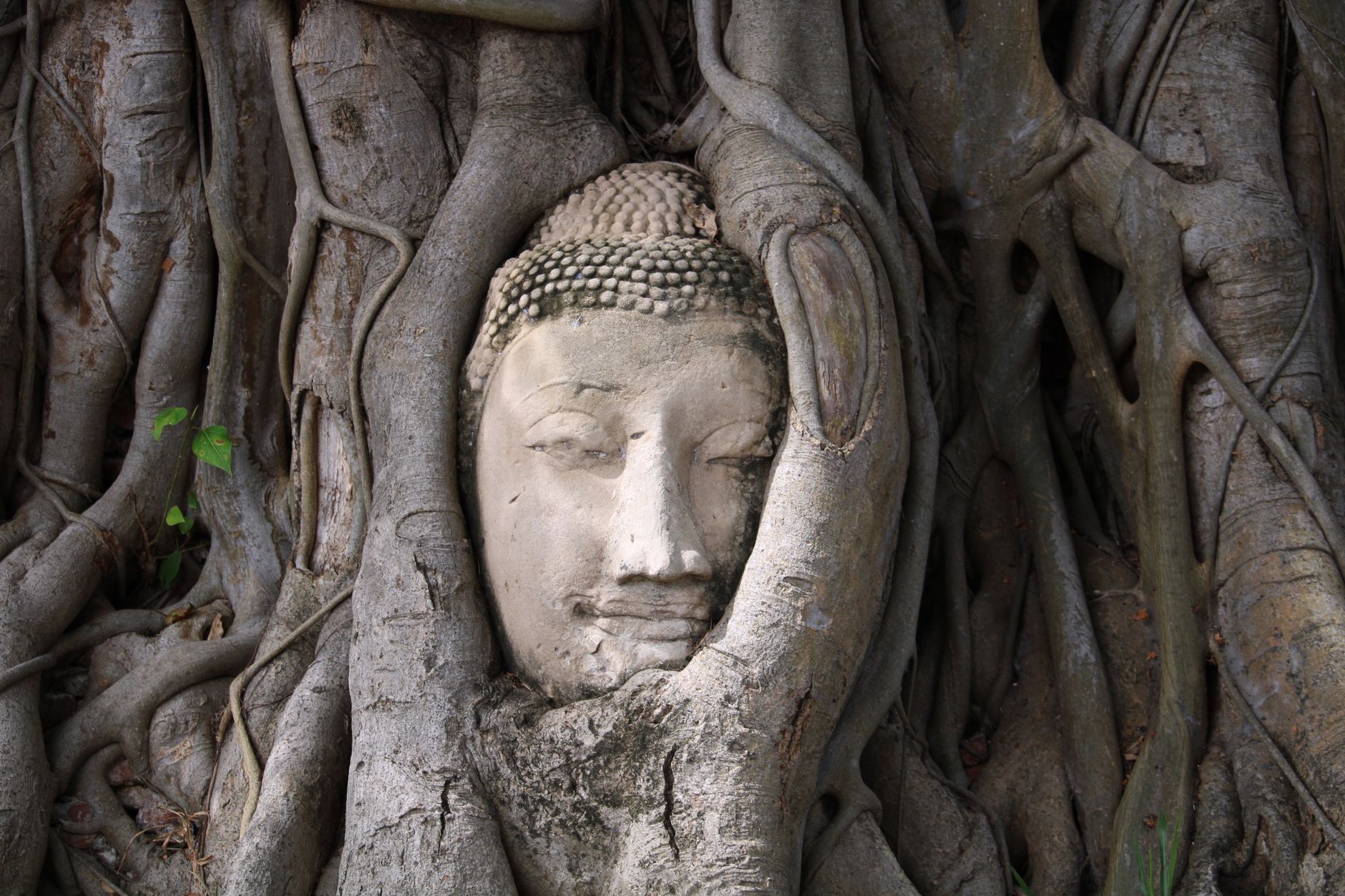


Three converging rivers ring Ayutthaya, turning the former Siamese capital into a flat island of sun-baked brick and river mist. You rent a clunky single-speed bicycle by the railway station, pedal past the towering prangs of Wat Mahathat, and immediately smell charcoal. The city lives between fourteenth-century ruins and the riverbanks, where cooks grill forearm-sized prawns and simmer rich, spiced boat noodles in shallow iron pots. It is humid, straightforward, and wonderfully unpretentious.
Last updated 22 Aug 2026
Build a Ayutthaya itinerary.
Choose up to 4 threads that pull you in. Your plan arrives organised around them.
We'll craft a 3-lens plan for Ayutthaya, one collapsible strand per lens.
Sacred Architecture
Walk the restored fourteenth-century laterite towers of Wat Chaiwatthanaram and the three central stupas at Wat Phra Si Sanphet, built during the peak of the Ayutthaya Kingdom.
Sacred Architecture
Walk the restored fourteenth-century laterite towers of Wat Chaiwatthanaram and the three central stupas at Wat Phra Si Sanphet, built during the peak of the Ayutthaya Kingdom.
Contemplating Ruined Brick Prangs
Wat Mahathat
Buy the 50 THB ticket at the gate. Walk the cloisters early while the sandstone is still cool and you have the ruined laterite corridors largely to yourself.
Editor TipFounded in 1374, this royal monastery housed sacred relics and set the standard for Ayutthaya's soaring Khmer-style towers before the 1767 Burmese sacking. Crouch below the Buddha head embedded in the banyan roots when taking photos; standing above it is considered poor form.
Late Afternoon Riverside Prangs
Wat Chaiwatthanaram
Pay the 50 THB entry at the booth. Spend ninety minutes roaming the central 35-meter prang and gallery chedis as the harsh midday heat recedes.
Editor TipCommissioned in 1630 by King Prasat Thong, this royal monastery mirrors Khmer cosmological design, representing Mount Meru surrounded by world oceans. Enter around 16:00 to catch low sun raking across the restored brickwork before sunset crowds gather on the riverbank.
Traditional Crafts
Watch weavers fold dried palm leaves into traditional hanging carp mobiles at local home workshops, or observe sugar-spinners pulling thin strands of golden roti sai mai.
Traditional Crafts
Watch weavers fold dried palm leaves into traditional hanging carp mobiles at local home workshops, or observe sugar-spinners pulling thin strands of golden roti sai mai.
Wrapping Spun Sugar Roti
Roti Sai Mai Mae Pom
Arrive before the morning rush on U-Thong Road. Pay eighty baht for a bag of warm pandan crepes and watch the cooks pull boiling sugar into delicate, golden threads.
Editor TipAyutthaya’s Muslim enclave has preserved this Persian-influenced confection for generations, refining a delicate sugar-pulling craft that outlasted the royal courts. Roll and eat your crepe immediately; tropical river humidity turns airy spun silk into sticky candy within minutes.
Pulling Hot Sugar Silk
Roti Sai Mai Abeedeen-Pranom Sangsuwan
Buy warm, pandan-scented crêpes and freshly spun cane sugar threads directly from the counter. A standard set costs around 50 baht and takes five minutes to assemble.
Editor TipAyutthaya's Muslim quarter has crafted roti sai mai for generations, stretching heated palm sugar by hand until it yields fine, shimmering threads wrapped in savoury roti. Skip the pre-bagged sets. Ask for warm wrappers straight off the flat griddle, then use two pinches of sugar per pancake.
Forging Carbon Steel Cleavers
Ban Aranyik Village
Drive twenty-five minutes northeast to Nakhon Luang. Walk straight into open-air workshops along the main lane; master bladesmiths will let you test knife balance for free.
Editor TipCenturies ago, Vientiane blacksmiths resettled here along the Pa Sak River to forge swords for the royal army, refining a charcoal-tempering method still beaten by hand today. Buy an untreated carbon steel chef knife directly from the smith; wrap it in newspaper for the flight home.
River Cruises
Board a wooden longtail boat at Phra Kal Pier for a clockwise circle of the island, viewing riverside Buddhist monasteries and Catholic churches from the waterline.
River Cruises
Board a wooden longtail boat at Phra Kal Pier for a clockwise circle of the island, viewing riverside Buddhist monasteries and Catholic churches from the waterline.
Chartering a Longtail River Circuit
Chantharakasem Pier
Hire a wooden longtail boat at the pier for about 700 THB an hour. A ninety-minute loop circles the entire island while keeping you in the river breeze.
Editor TipAyutthaya operated as an amphibious fortress, where the Chao Phraya, Lopburi, and Pa Sak rivers met to defend trade routes and royal barge fleets. Sit mid-boat to escape both engine noise and spray. Keep exact baht notes ready for the boatman before you step aboard.
Chao Phraya Sunset Drift
Hua Ro Pier
Hire a wooden longtail boat at the pier for a one-hour loop along the Pasak and Chao Phraya rivers. Expect to pay 600 to 800 baht for the private charter.
Editor TipAyutthaya grew as an island fortress where riverways dictated life, trade, and temple alignments, leaving sanctuaries like Wat Phutthaisawan facing the water rather than the road. Sit on the port side of the boat as you approach Wat Chaiwatthanaram to catch the late sun hitting the riverside prangs.
Gothic Buddhist Morning Prayers
Wat Niwet Thammaprawat
Ride the yellow pulley-cable car across the Chao Phraya River from Bang Pa-In parking lot. Free admission, small donation for the crossing. Give it an hour.
Editor TipBuilt in 1878 by King Chulalongkorn, this is a Theravada Buddhist temple dressed entirely in European Gothic revival drag, complete with stained glass and carved pews. Arrive before nine to hear the monks chanting while the morning river breeze cuts through the cloister.
Sunset Longtail Boat Run
Chao Phraya River Pier
Charter a covered wooden longtail at the pier for two hours before dusk. Settle the fare directly with the boatman, roughly 800 baht, and sit near the centre to stay dry.
Editor TipBefore paved highways, central Siam moved strictly by water, orienting every major monastery toward the river so royal barge processions could arrive directly at the steps. Sit on the port side during the return loop when the brick towers of Wat Chaiwatthanaram light up against the dark.
Note from the Editor
“Ayutthaya heats up fast by ten in the morning. Beat the tour buses to the central ruins at eight, keep your shoulders covered, and take to the river before the midday blacktop turns merciless.”
The Bed
Where to stay in Ayutthaya
Which part of town to book, and what each one costs you in walking, noise or quiet.
The Comparison
Ayutthaya, or somewhere near it
The places you are realistically choosing between, and the honest case for each.
The Local Record
Where to read more about Ayutthaya
The blogs, boards, guides and operators worth bookmarking.
What to do in Ayutthaya Central Thailand Thailand
Ayutthaya is an easy-going river island surrounded by the Chao Phraya, Lopburi, and Pa Sak rivers. Days revolve around exploring centuries-old temple ruins in the cool morning air, breaking for a slow lunch of river prawns, and watching the sunset light turn the stupas dark ochre. It suits independent travellers who prefer quiet exploration on bicycles, train arrivals from Bangkok, and unhurried meals at open-air wooden shacks by the water.
24 hours in Ayutthaya Central Thailand Thailand
Arrive on the morning train and cross the river by passenger ferry. Rent a bike to explore Wat Phra Si Sanphet and Wat Mahathat before midday heat sets in. For lunch, pull up a stool for boat noodles near Wat Yai Chai Mongkhon. Finish with sunset views across the water at Wat Chaiwatthanaram and dinner at Bang Lan Night Market. Select 1 Day above to see it.
2 days in Ayutthaya Central Thailand Thailand
A second day lets you cross the outer waterways to the southern riverbanks. Visit the Portuguese Settlement and Baan Hollanda to understand the old international port, then hire a wooden boat at sunset. Eat grilled giant river prawns at a riverside deck along U-Thong Road, accompanied by tart green mango salad. Choose 2 Days to expand the plan.
3 days in Ayutthaya Central Thailand Thailand
Three days allow a slower rhythm. Spend a morning taking the local train down to the eclectic pavilions of Bang Pa-In Summer Palace. Return to wander Hua Ro Market for morning sweets, visit the gold crypt exhibits at Chao Sam Phraya National Museum, and discover quieter outlying ruins like Wat Maheyong without any tour crowds.
Ayutthaya Central Thailand Thailand itineraries by interest
Street Food in Ayutthaya Central Thailand Thailand
Order kuay teow reua (boat noodles) thickened with pig blood and star anise beside the Pa Sak River, followed by sweet roti sai mai spun from palm sugar on U-Thong Road.
Sacred Architecture in Ayutthaya Central Thailand Thailand
Walk the restored fourteenth-century laterite towers of Wat Chaiwatthanaram and the three central stupas at Wat Phra Si Sanphet, built during the peak of the Ayutthaya Kingdom.
Riverfront Dining in Ayutthaya Central Thailand Thailand
Sit along the Chao Phraya for giant freshwater river prawns split lengthwise and grilled over wood coals, served with spicy nam jim seafood sauce and hot jasmine rice.
Cycling Routes in Ayutthaya Central Thailand Thailand
Rent a heavy steel commuter bike near the ferry dock to loop the flat six-kilometre inner island path connecting Wat Ratburana to the public park at Bueng Phra Ram.
Night Markets in Ayutthaya Central Thailand Thailand
Head to Bang Lan Night Market after five in the evening for charcoal-grilled skewers, crispy mussel pancakes, sweet coconut kanom krok, and plastic stools beside the road.
Local History in Ayutthaya Central Thailand Thailand
Examine bronze Buddha heads and gold treasures recovered from temple crypts at Chao Sam Phraya National Museum before exploring the former Royal Palace grounds.
River Cruises in Ayutthaya Central Thailand Thailand
Board a wooden longtail boat at Phra Kal Pier for a clockwise circle of the island, viewing riverside Buddhist monasteries and Catholic churches from the waterline.
Traditional Crafts in Ayutthaya Central Thailand Thailand
Watch weavers fold dried palm leaves into traditional hanging carp mobiles at local home workshops, or observe sugar-spinners pulling thin strands of golden roti sai mai.
Day Trips in Ayutthaya Central Thailand Thailand
Travel twenty kilometres south by local train to Bang Pa-In Summer Palace, walking between nineteenth-century European, Chinese, and traditional Thai pavilion architecture.
Monastic Traditions in Ayutthaya Central Thailand Thailand
Wake early near Wat Yai Chai Mongkhon to watch saffron-robed monks receive morning alms, then climb the monumental bell stupa built to mark a sixteenth-century victory.
Produce Markets in Ayutthaya Central Thailand Thailand
Walk Hua Ro Market at daybreak for fresh galangal, kaffir lime leaves, blocks of tamarind, fermented fish paste, and morning stalls frying sweet banana fritters.
Cultural Enclaves in Ayutthaya Central Thailand Thailand
Explore historical foreign settlements outside the city moat, including the Japanese Village, the Dutch Baan Hollanda compound, and the Portuguese quarter at San Pedro.