Sukhothai.


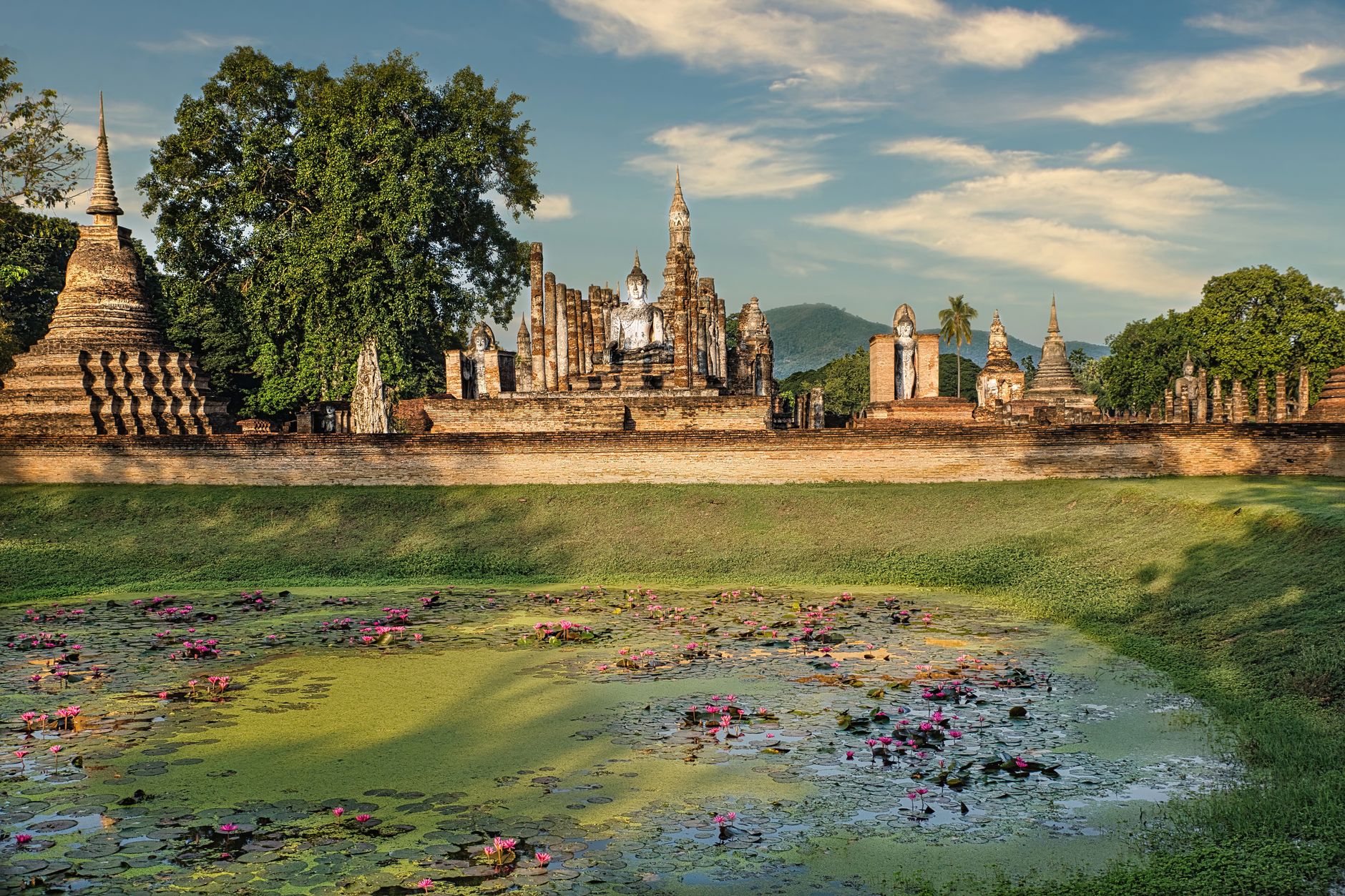
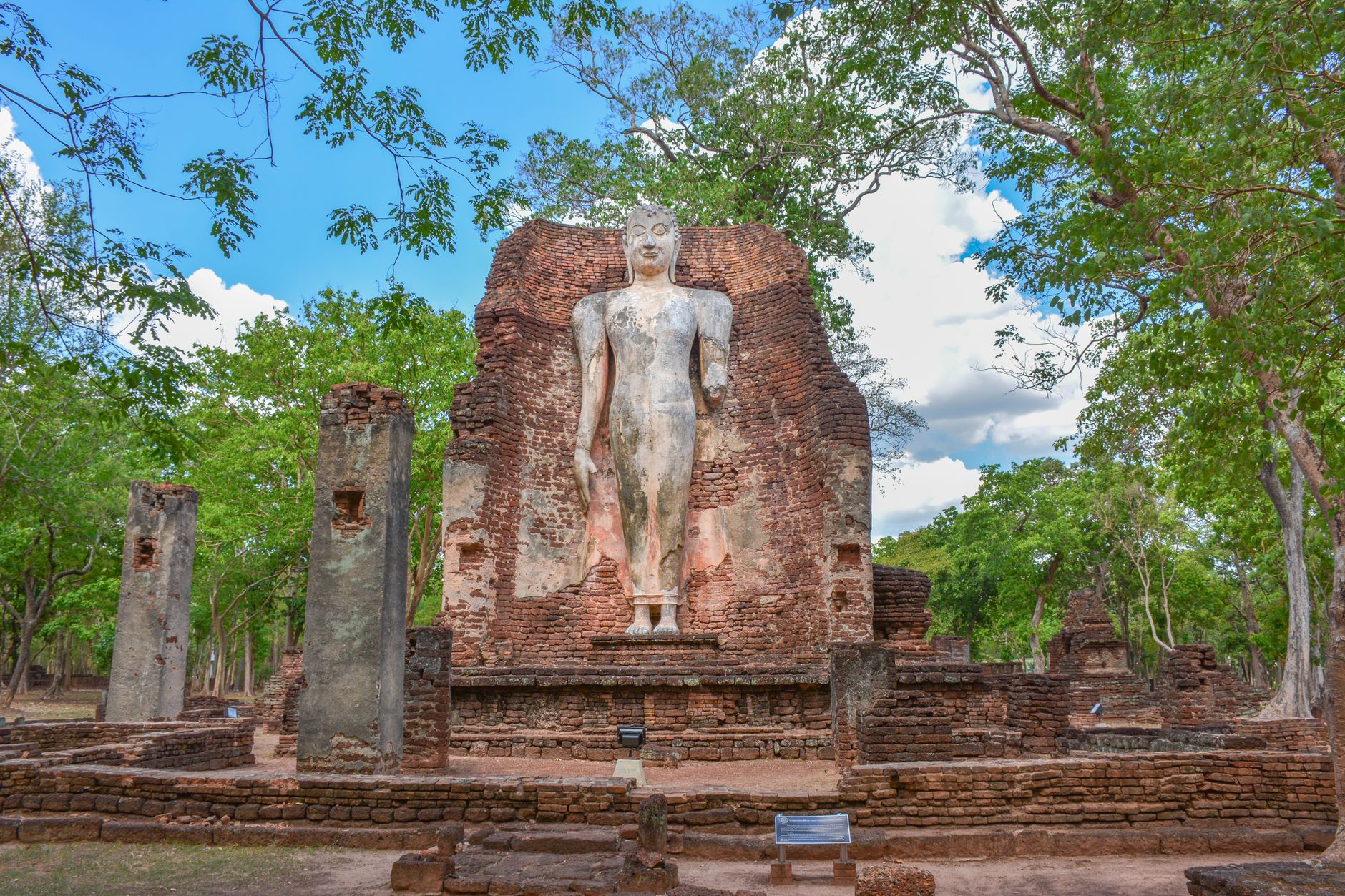
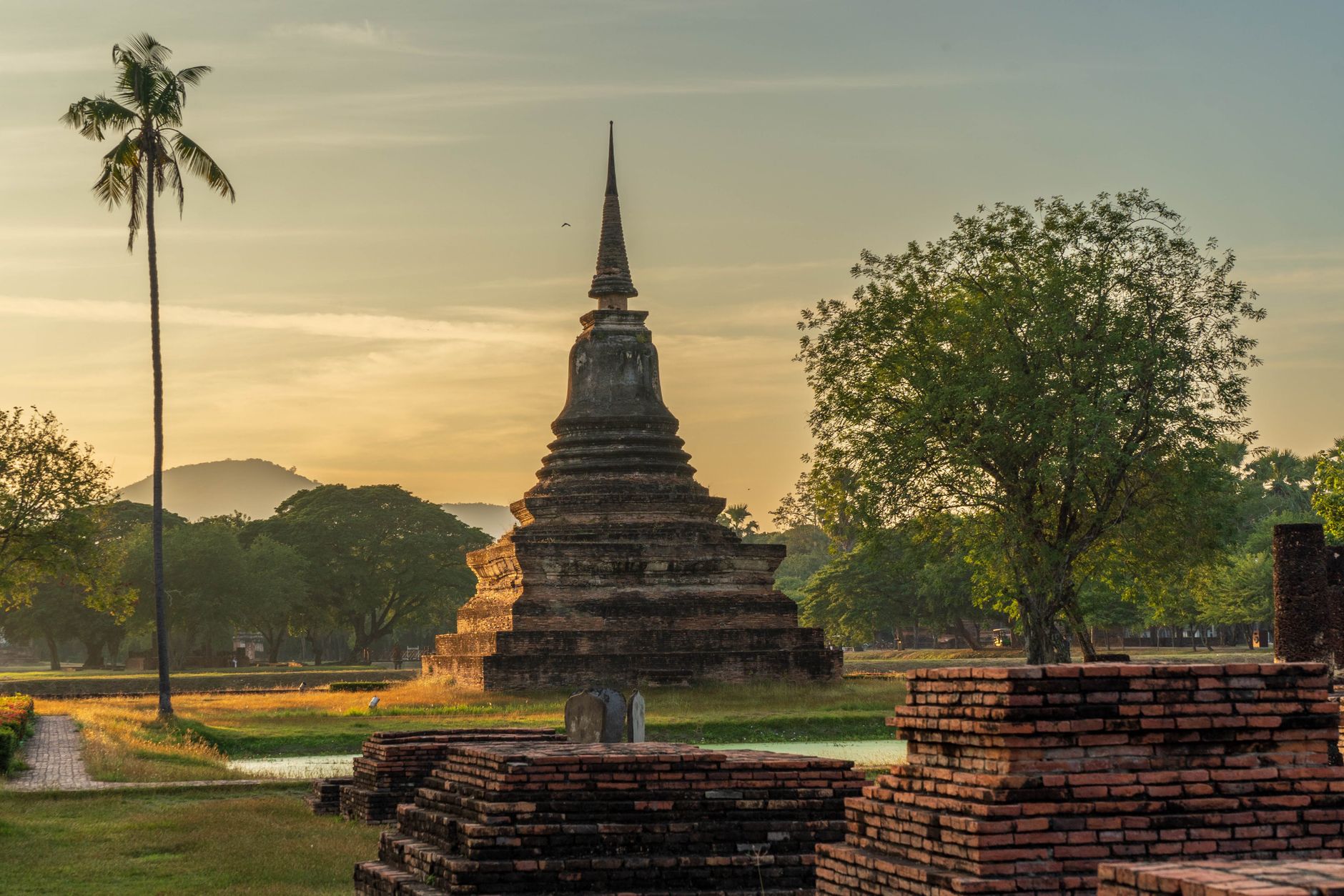
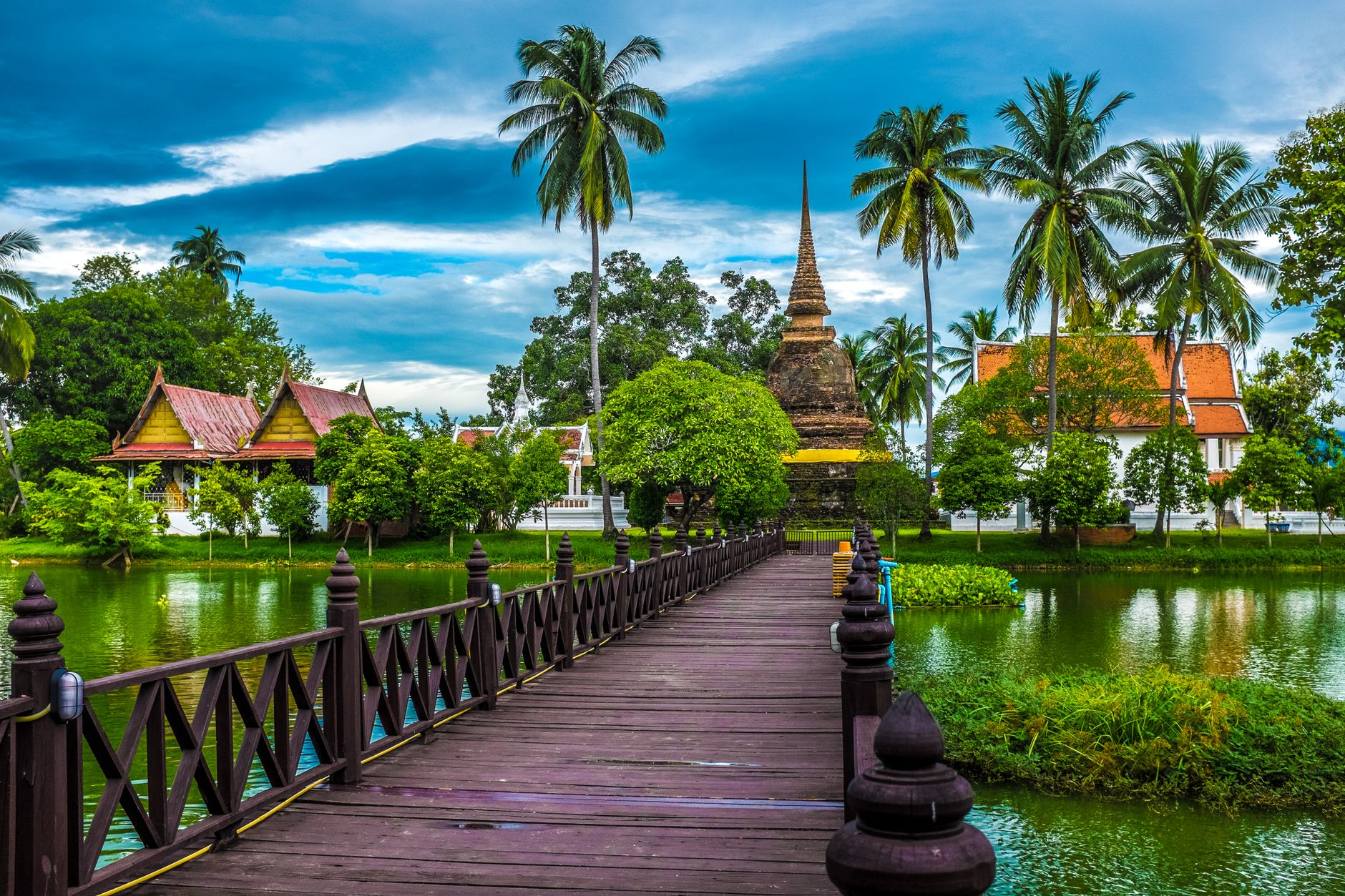
You arrive either in the functioning, concrete sprawl of New Sukhothai or out among the water lilies of the Historical Park twelve kilometres west. The morning light cuts through red laterite columns at Wat Mahathat, where seated stone Buddhas sit serenely above calm moat water. Rent a battered city bicycle for thirty baht. The air smells of pond silt, burnt sugarcane, and sweet crushed garlic from roadside noodle stands serving kuay teow Sukhothai tossed with long beans, dried shrimp, and fresh lime.
Last updated 22 Aug 2026
Build a Sukhothai itinerary.
Choose up to 4 threads that pull you in. Your plan arrives organised around them.
We'll craft a 3-lens plan for Sukhothai, one collapsible strand per lens.
Sacred Architecture
Laterite and brick stupas from the thirteenth century stand at Wat Mahathat and Wat Si Chum, where a fifteen-metre seated Buddha peers through a narrow doorway.
Sacred Architecture
Laterite and brick stupas from the thirteenth century stand at Wat Mahathat and Wat Si Chum, where a fifteen-metre seated Buddha peers through a narrow doorway.
Pedaling Through Wat Mahathat
Sukhothai Historical Park Central Zone
Pay 100 THB plus 10 THB for your rental bike at the central entrance. Give yourself ninety unhurried minutes to weave between the lotus ponds and crumbling stupas.
Editor TipFounded in the thirteenth century, this complex served as the spiritual engine of the first Siamese kingdom, pioneering the graceful lotus-bud chedi that defined Sukhothai art. Cycle clockwise around the main sanctuary to catch the morning sun lighting the seated stone Buddhas.
Encountering the Slit-Eye Giant
Wat Si Chum
Ride two kilometres north past the moat wall. Entry to this northern zone is an extra 100 THB at the kiosk; forty minutes is ample time inside the roofless brick chamber.
Editor TipThe colossal seated brick-and-stucco Buddha, Phra Atchana, was engineered within narrow slit walls to awe visiting envoys and inspire fourteenth-century Siamese armies. Step back to the threshold to take in the slender slit entrance; it frames the hand coated in gold leaf perfectly.
Wooden Bridge Morning Alms
Wat Traphang Thong
Arrive before eight. Buy a wrapped basket of rice and fruit from village vendors by the lotus pond for fifty baht, then slip off your shoes on the wooden walkway.
Editor TipThis 14th-century temple remains the spiritual anchor for Old Sukhothai village, where residents still feed monks across the moat before opening their morning shops. Dress conservatively with covered shoulders. Kneel quietly when offering food into the bronze alms bowls.
Handmade Celadon Clay Etching
Suthep Sangkhalok Pottery
Rent a cruiser bike for thirty baht, pedal five minutes south of the old wall, and spend an hour painting iron-oxide fish motifs under the shade of the workshop eaves.
Editor TipSukhothai dominated Southeast Asian ceramic trade from the 13th century onward, firing distinctive green glaze and twin-fish stoneware in massive brick kilns. Fired pieces require days in the kiln, but unglazed carved plates can travel securely packed in your bag today.
Night Markets
Evening vendors along the Yom River in New Sukhothai grill pork satay, fry crispy mussel pancakes, and ladle sweet coconut milk over shaved ice and sweet potatoes.
Night Markets
Evening vendors along the Yom River in New Sukhothai grill pork satay, fry crispy mussel pancakes, and ladle sweet coconut milk over shaved ice and sweet potatoes.
Bowls Of Sukhothai Noodles
Sukhothai Night Market
Grab a metal stool along Nikorn Kasem Road. Order dry rice noodles tossed with ground pork, crispy crackling, green beans, and ground peanuts for sixty baht.
Editor TipSukhothai noodles balance sweet palm sugar, lime, and fish sauce, distinguished from central Thai variations by sliced yardlong beans and pickled radish. Ask for 'haeng' to get them dry with a bowl of broth on the side, and carry small change for the vendors.
Sampling Steamed Wrinkle Noodles
Khao Poep Baan Na Ton Chan
Pull up a wooden bench at this open-sided kitchen and order a bowl of steamed rice noodles with soft egg and clear pork broth for forty baht. Cash only.
Editor TipOriginating in this northern Sukhothai weaving village, khao poep is made by steaming fermented rice flour slurry over taut cotton, folding it over cabbage and minced pork. Squeeze in fresh lime and roasted chili flakes right away; the broth is naturally mild and benefits from the snap.
Cycling Routes
Flat paved lanes connect the central, northern, and western zones of Sukhothai Historical Park, with bicycle rentals right outside the main eastern ticket gate.
Cycling Routes
Flat paved lanes connect the central, northern, and western zones of Sukhothai Historical Park, with bicycle rentals right outside the main eastern ticket gate.
Cycling Forested Laterite Ruins
Si Satchanalai Historical Park
Pay the hundred-baht ticket at the gate and hire a sturdy single-speed cruiser for thirty baht. Give yourself two full hours along the shaded paths.
Editor TipEstablished in 1250 as the northern garrison of the Sukhothai Kingdom, these temples rely heavily on porous laterite blocks rather than brick, cradled by native teak groves. Inspect the chain and tyre pressure before riding off; walking a flat back through tropical heat builds character nobody needs.
Note from the Editor
“Rent your bicycle outside the main gate at eight sharp before the midday heat settles over the laterite brick. The central monuments empty out briefly around ten when tour groups head for tea.”
The Bed
Where to stay in Sukhothai
Which part of town to book, and what each one costs you in walking, noise or quiet.
The Comparison
Sukhothai, or somewhere near it
The places you are realistically choosing between, and the honest case for each.
The Local Record
Where to read more about Sukhothai
The blogs, boards, guides and operators worth bookmarking.
What to do in Sukhothai Northern Thailand Thailand
Sukhothai divides neatly between the modern provincial capital on the Yom River and the quiet archaeological park twelve kilometres away. Days revolve around cycling the ruined temples before the midday heat, breaking for lunch over bowls of sweet-and-sour noodles, and visiting outer ruins in the softer afternoon light. It suits independent travellers who appreciate early mornings, unhurried flat cycling, and regional Thai cooking without tour-bus frenzy.
24 hours in Sukhothai Northern Thailand Thailand
Rent a bicycle at 06:30 at the main gate to explore Wat Mahathat and Wat Sa Si before the sun climbs. For lunch, eat noodles at Ta Pui near Old Town. Spend the cooler late afternoon at the monumental seated Buddha of Wat Si Chum in the northern zone, finishing with dinner along New Sukhothai's night market by the river. Select 1 Day above to see it.
2 days in Sukhothai Northern Thailand Thailand
Day two takes you out to the wooded ruins of Si Satchanalai Historical Park, fifty kilometres up highway 101, where temples sit beneath teak canopies. Return in the evening for river prawns grilled over charcoal and a quiet stroll through the Ban Rai market stalls. Choose 2 Days to expand the plan.
3 days in Sukhothai Northern Thailand Thailand
A third day allows an early climb to Wat Saphan Hin for valley views, followed by an afternoon exploring the celadon ceramic kilns of Ban Ko Noi. End the trip sampling coconut desserts and spicy northern sausages at the municipal morning market in New Sukhothai.
Sukhothai Northern Thailand Thailand itineraries by interest
Sacred Architecture in Sukhothai Northern Thailand Thailand
Laterite and brick stupas from the thirteenth century stand at Wat Mahathat and Wat Si Chum, where a fifteen-metre seated Buddha peers through a narrow doorway.
Local Noodles in Sukhothai Northern Thailand Thailand
Kuay teow Sukhothai arrives dry or in broth, dressed with lime juice, ground peanuts, sliced yardlong beans, crispy pork crackling, and sweet preserved radish.
Cycling Routes in Sukhothai Northern Thailand Thailand
Flat paved lanes connect the central, northern, and western zones of Sukhothai Historical Park, with bicycle rentals right outside the main eastern ticket gate.
Ceramic Traditions in Sukhothai Northern Thailand Thailand
Sangkhalok celadon stoneware kilns along the Yom River produced distinctive fish and flower plates during the kingdom's golden age, still cast in local workshops.
Night Markets in Sukhothai Northern Thailand Thailand
Evening vendors along the Yom River in New Sukhothai grill pork satay, fry crispy mussel pancakes, and ladle sweet coconut milk over shaved ice and sweet potatoes.
Day Trips in Sukhothai Northern Thailand Thailand
Fifty kilometres north, Si Satchanalai Historical Park offers wooded, uncrowded temple ruins like Wat Chang Lom, easily reached by local bus or private hire.
Rural Life in Sukhothai Northern Thailand Thailand
Farming hamlets around Old Sukhothai grow jasmine rice and sugar cane, where roadside stalls sell cold sugarcane juice and bananas roasted over charcoal embers.
Historical Museums in Sukhothai Northern Thailand Thailand
The Ramkhamhaeng National Museum houses bronze Buddha images, stone inscriptions, and excavated Sukhothai-era weaponry near the park entrance.
Sunset Viewing in Sukhothai Northern Thailand Thailand
Wat Sa Si sits on a small island inside a lotus pond, perfectly positioned for watching the evening sun dip behind brick chedis and teak tree silhouettes.
Street Food in Sukhothai Northern Thailand Thailand
Morning markets near Sukhothai Bus Terminal sell sticky rice with grilled pork skewers, coconut rice cakes, and deep-fried dough sticks dipped in pandan custard.
Forest Temples in Sukhothai Northern Thailand Thailand
Hike up the gentle western hills to Wat Saphan Hin, a ruined forest sanctuary with a standing Buddha looking out across the entire Sukhothai valley.
Coffee Culture in Sukhothai Northern Thailand Thailand
Open-air cafes clustered outside Old Sukhothai serve strong Thai dark-roast coffee sweetened with condensed milk alongside modern pour-overs.