


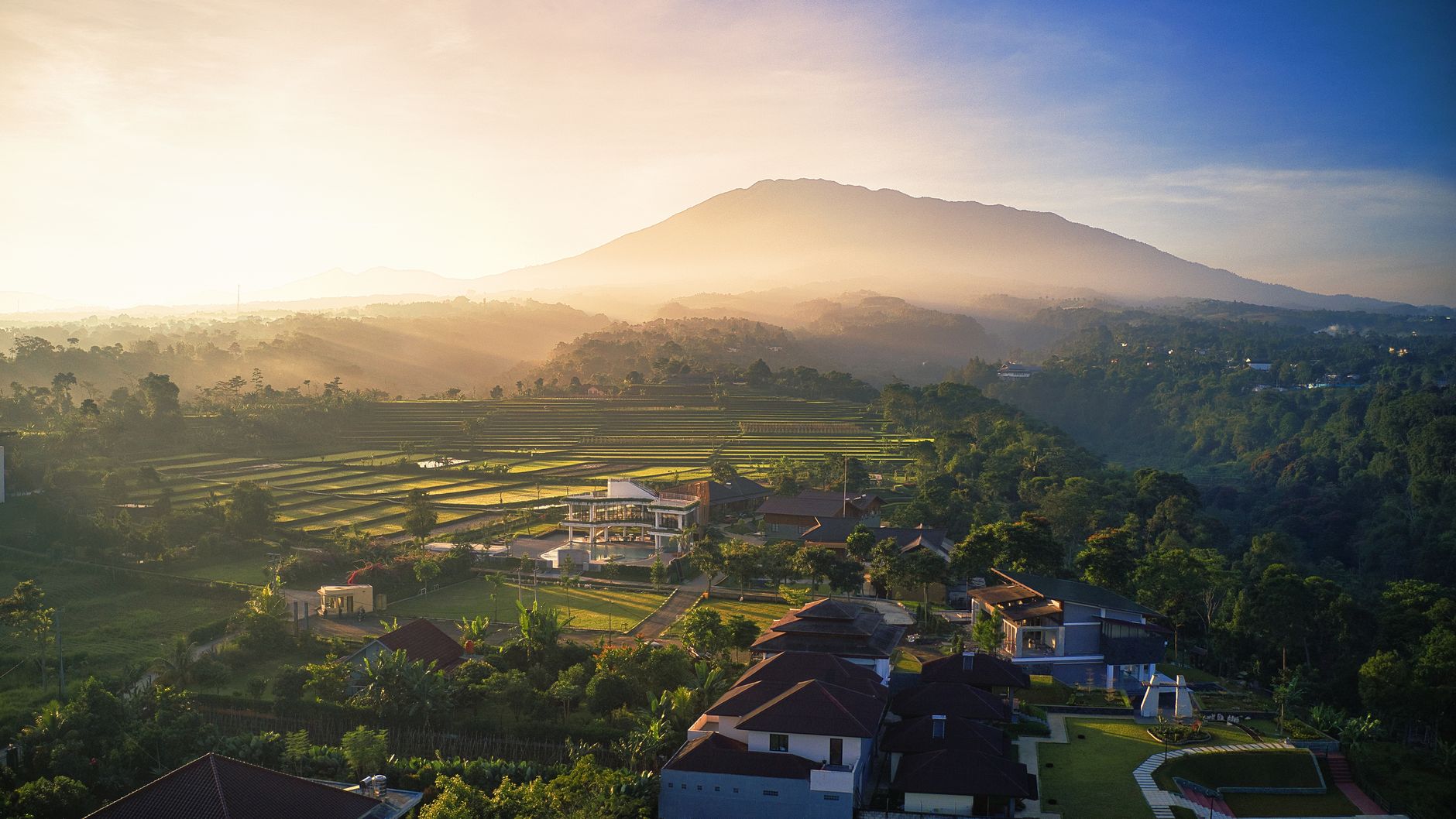


Bogor sits sixty kilometres south of Jakarta, reached in fifty minutes on the direct red line commuter train from Manggarai. It is known across Java for its 1817 botanical gardens, frequent afternoon downpours, and pungent Sundanese cooking. Bogor is worth visiting if you want to walk among centuries-old canopy trees and eat sour-spicy asinan on rainy afternoons. Look elsewhere if you want dry sunny evenings, late-night bar culture, or easily walkable sidewalks outside the palace perimeter.
Last updated 29 Oct 2026
Build a Bogor itinerary.
Choose up to 4 threads that pull you in. Your plan arrives organised around them.
The Bed
Where to stay in Bogor
Which part of town to book, and what each one costs you in walking, noise or quiet.
The Comparison
Bogor, or somewhere near it
The places you are realistically choosing between, and the honest case for each.
The Local Record
Where to read more about Bogor
The blogs, boards, guides and operators worth bookmarking.
What to do in Bogor West Java Indonesia
Life here revolves around the colossal central green space of the Kebun Raya and the food stalls flanking Jalan Suryakencana. Mornings start early with birdsong and cool highland air before the inevitable mid-afternoon rainstorm clears the streets. It suits independent travellers keen on slow botanical walks, unpretentious Javanese culinary tradition, and a grounded escape from Jakarta without the sprawl.
24 hours in Bogor West Java Indonesia
Arrive by train at 8:00 to beat the midday heat in the botanical gardens. By noon, walk five minutes south to Jalan Suryakencana for beef soto kuning and cold es pala nutmeg syrup. Head inside a heritage coffee house near Jalan Ahmad Yani as the daily three-o'clock downpour hits. Select 1 Day above to see it.
2 days in Bogor West Java Indonesia
Use day two for the old Dutch quarter around Jalan Juanda and the Batutulis inscription stone. Eat lunch at a traditional Sundanese joint for fried freshwater carp, raw lalap greens, and fiery terasi sambal, then browse the spice vendors around Pasar Anyar before dusk. Choose 2 Days to expand the plan.
3 days in Bogor West Java Indonesia
A third day allows an early morning climb up Mount Salak to the Kawah Ratu sulfur vents, or a slow drive into the tea fields of Gunung Mas above Cisarua. Return for a calm dinner of grilled goat satay on Jalan Pajajaran before the evening commute south.
Bogor West Java Indonesia itineraries by interest
Street Food in Bogor West Java Indonesia
Spoon up soto kuning broth loaded with beef tendon on Jalan Surya Kencana, or try toge goreng noodles tossed with fermented oncom sauce.
Botanical Gardens in Bogor West Java Indonesia
Walk the 1817 Kebun Raya, home to giant Amazonian water lilies, towering ficus canopies, and the neoclassical Dutch governor-general palace.
Traditional Markets in Bogor West Java Indonesia
Weave through Pasar Anyar for pungent bunches of petai stink beans, fresh galangal, fermented tauco jars, and baskets of sour green gandaria fruit.
Regional Cooking in Bogor West Java Indonesia
Order Sundanese lunch at a warung: grilled gourami fish, fiery sambal dadak crushed with bird's-eye chilies, fresh lalap greens, and warm nasi timbel.
Heritage Architecture in Bogor West Java Indonesia
Trace Dutch colonial villas, the 1881 Bogor railway station, and the historic red-brick gate of Batutulis inscribed with fourteenth-century Sunda script.
Coffee Culture in Bogor West Java Indonesia
Drink smooth West Java arabica brewed in renovated vintage shophouses along Jalan Halimun, paired with warm fried bananas drizzled with palm sugar.
Craft Traditions in Bogor West Java Indonesia
Visit home workshops in Sukaraja where craftsmen carve wayang golek wooden rod puppets and tune copper gamelan gong sets by ear.
Hill Hiking in Bogor West Java Indonesia
Climb past pine stands to the mist-shrouded crater edge of Kawah Ratu on Mount Salak, dodging steam vents and crossing cool volcanic creeks.
Fruit & Produce in Bogor West Java Indonesia
Crack open spiky durian monthong and sweet purple mangosteens sold by the kilo from open-air pickup trucks lining Jalan Pajajaran.
Day Trips in Bogor West Java Indonesia
Drive forty minutes up toward the Puncak pass to walk the tiered tea terraces of Gunung Mas plantation and breathe cold alpine mountain air.
Sweet Specialities in Bogor West Java Indonesia
Queue for warm lapis talas taro sponge cake, fresh unpasteurised cow milk from local dairies, and vinegar-soaked fruit asinan dressed in chili.
Sacred Architecture in Bogor West Java Indonesia
Inspect the 1672 Hok Tek Bio Chinese temple on Jalan Suryakencana, standing alongside century-old minarets and quiet Catholic stone chapels.