Chiang Rai.


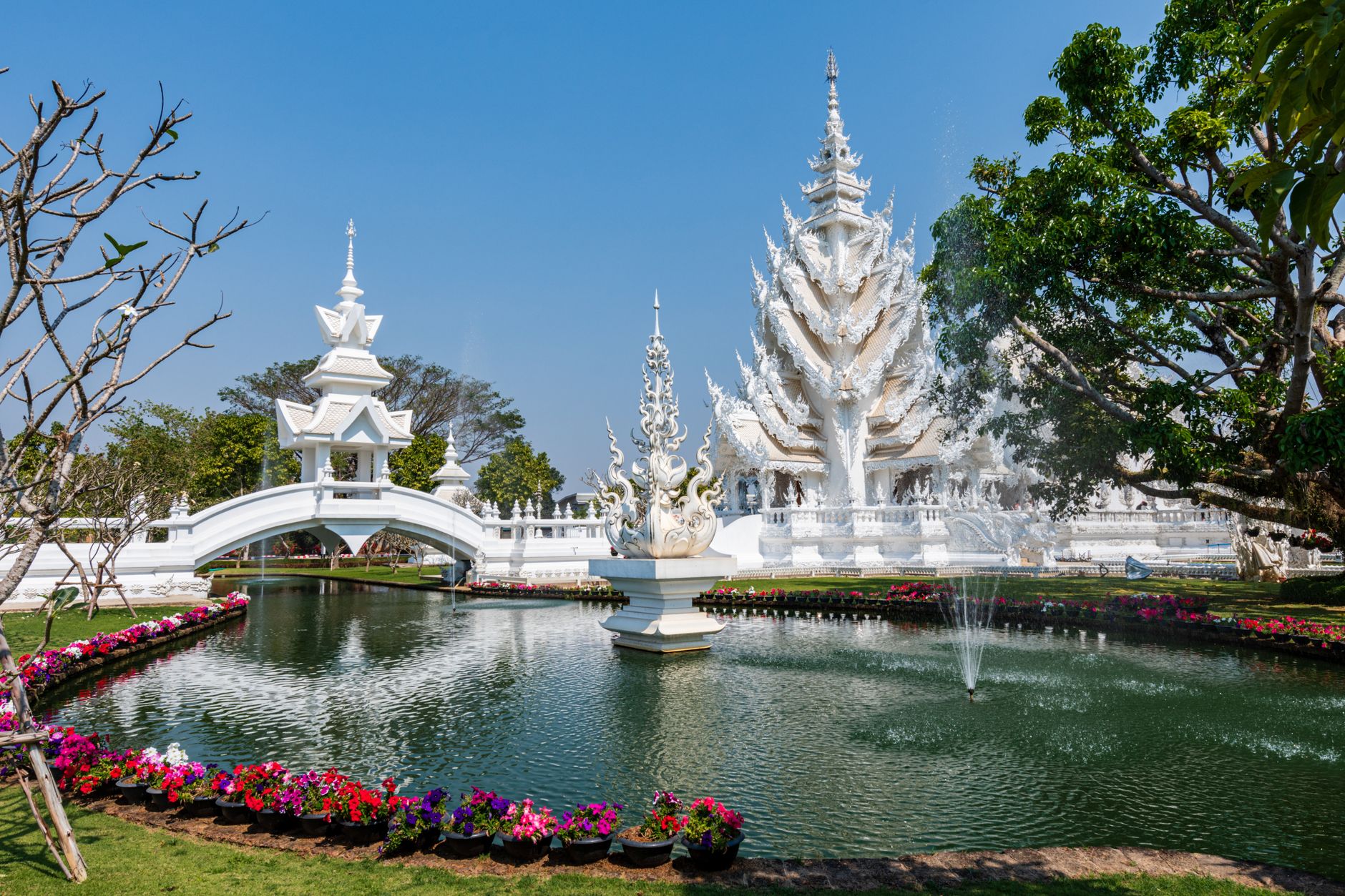


You smell charcoal, wild coriander, and motor oil the moment you step off the bus. Chiang Rai sits in Thailand's northern corner, flatter and quieter than Chiang Mai, framed by dark jagged hills. The town runs on woodsmoke and pork broth. It is famous for Chalermchai Kositpipat's blinding white temple and Thawan Duchanee's brooding Black House, but its real life happens at dawn around the simmering vats of Kad Luang.
Last updated 22 Aug 2026
Build a Chiang Rai itinerary.
Choose up to 4 threads that pull you in. Your plan arrives organised around them.
We'll craft a 4-lens plan for Chiang Rai, one collapsible strand per lens.
Historic Monuments
King Mengrai founded the Lanna capital here in 1262; his bronze monument stands on Phaholyothin Road, surrounded daily by fresh marigold garlands.
Historic Monuments
King Mengrai founded the Lanna capital here in 1262; his bronze monument stands on Phaholyothin Road, surrounded daily by fresh marigold garlands.
Clay Pot Broth and Sausage
Chiang Rai Night Bazaar
Open nightly from 18:30 near the bus station. Claim a central wooden table, order an herbed pork hot pot, and pay vendors directly in cash.
Editor TipEvening dining here centres on bubbling earthenware pots and coils of charred sai oua, packed with lemongrass, galangal and fresh kaffir lime peel. Head to the stall with the deepest smoke plumes for the freshest herb sausage; turnover is reliably fast.
Tasting Morning Nam Ngiao
Kad Luang Market
Wander the inner food stalls on Utarakit Road for fresh kanom jeen noodles in tart pork-and-tomato broth. A hearty bowl costs under forty baht; bring small bills.
Editor TipNam ngiao is the definitive Northern Lanna breakfast, built on fermented rice noodles, roasted chili paste, dried dok ngiao flowers, and pork ribs simmered over charcoal. Take a low plastic stool near the broth cauldrons and add pickled mustard greens to cut the rich chili oil.
Deciphering Teak Shrine Carvings
Wat Klang Wiang
Enter the compound off Rattanaket Road to study the intricate red-and-gold Lanna woodwork surrounding the city navel shrine. Free entry; dress with covered shoulders.
Editor TipFounded in 1432, this site holds the original cosmological center of Chiang Rai, rebuilt with classic Lanna tiering, guardian nagas, and master woodcarving traditions. Walk clockwise around the main viharn to catch the morning light catching the gilded wooden peacocks above the eaves.
Night Markets
The weekend walking street on Thanalai Road fills with local dancers, grilled bamboo sticky rice, fried insects, and hand-stitched textiles.
Night Markets
The weekend walking street on Thanalai Road fills with local dancers, grilled bamboo sticky rice, fried insects, and hand-stitched textiles.
Salt-Crusted Mekong River Fish
Chiang Saen Night Market
Stalls fire up along Rim Khong Road by 17:30. Order a charcoal-roasted pla pao stuffed with lemongrass for roughly 160 THB and grab a low plastic table.
Editor TipNight market cooks along this quiet border stretch maintain northern Thai riverfront cooking, pairing charcoal-roasted freshwater fish with fiery green nam jim and khao niao. Sit facing the water to catch the river breeze as the Laotian riverbank across the Mekong dims to dusk.
Sacred Architecture
Wat Phra Kaew housed the Emerald Buddha in 1434, while Wat Rong Suea Ten glows electric blue with modern lacquer, mother-of-pearl, and gold leaf.
Sacred Architecture
Wat Phra Kaew housed the Emerald Buddha in 1434, while Wat Rong Suea Ten glows electric blue with modern lacquer, mother-of-pearl, and gold leaf.
Tracing the Emerald Buddha
Wat Phra Kaew
Walk the teak museum and main ubosot early before monks begin their morning duties. Entry is free; leave twenty baht in the donation box and spend forty-five minutes on the grounds.
Editor TipIn 1434, lightning split an octagonal chedi here, uncovering Thailand's most revered palladium, now housed in Bangkok and replaced locally by a jade replica. The two-storey teak Hong Luang Saengkaeo museum behind the main hall is cool, quiet, and usually entirely empty.
Craft Traditions
Local weavers at the Hilltribe Museum demonstrate backstrap loomed cotton, while studios outside town throw wood-fired stoneware pottery.
Craft Traditions
Local weavers at the Hilltribe Museum demonstrate backstrap loomed cotton, while studios outside town throw wood-fired stoneware pottery.
Crossing the Bridge of Rebirth
Wat Rong Khun
Buy your 100-baht ticket at the kiosk, cross the moat bridge past outstretched plaster hands, and allow ninety minutes for the temple and contemporary gallery.
Editor TipConceived in 1997 by artist Chalermchai Kositpipat, the blinding white plaster and mirror mosaic reinterpret traditional Buddhist cosmology through surrealist craft. Walk steadily across the bridge; temple guards with megaphones will firmly discourage halting for dramatic selfies.
Tracing Lanna Teak Carvings
Wat Phra Sing Chiang Rai
Wander the quiet courtyard on Singhakhlai Road. Admission is free, dress modestly covering shoulders and knees, and spend forty-five minutes inspecting the carved teak ubosot doors.
Editor TipBuilt in 1385, this monastery exemplifies northern Thai religious craft, preserving carved teak panels and gilded wood gables that predate Bangkok by four centuries. Sit on the low wooden benches behind the chedi when the afternoon heat peaks; the courtyard catches a steady breeze.
Surveying Fourteenth-Century Brick Stupas
Wat Pa Sak Historical Site
Pay 50 THB at the wooden kiosk and take the shaded path through the teak trees. Plan for about an hour to explore the ruins on foot before tour vans reach the gate.
Editor TipCommissioned in 1295 by King Saen Phu, this sacred complex showcases refined brickwork and stucco reliefs that harmonize Hariphunchai and Sukhothai craft traditions. The gatekeeper occasionally sells chilled pomelo from her garden; it beats any bottled drink.
Observing Wood-Fired Stoneware Throwing
Doi Din Dang Pottery
Admission is free. Wander through the open-air wooden workshops to see potters at their wheels, then spend forty-five minutes browsing finished stoneware and tea cups.
Editor TipMaster potter Somluk Pantiboon established this woodland studio to marry local northern Thai red clay with the unglazed wood-firing traditions of Japanese Bizen ware. The staff will pack fragile unglazed cups in sturdy cardboard if you mention you are flying.
Note from the Editor
“Beat the midday tour coaches out to the White Temple by leaving the old town before eleven. Keep your shoulders covered and slip-on shoes ready to spare yourself the undignified pavement hop.”
The Bed
Where to stay in Chiang Rai
Which part of town to book, and what each one costs you in walking, noise or quiet.
The Comparison
Chiang Rai, or somewhere near it
The places you are realistically choosing between, and the honest case for each.
The Local Record
Where to read more about Chiang Rai
The blogs, boards, guides and operators worth bookmarking.
What to do in Chiang Rai Northern Thailand Thailand
Chiang Rai is an unhurried northern town whose rhythms follow the sun. Days begin early at Kad Luang market over steaming noodle bowls and drift through temple courtyards before converging at the Night Bazaar for grilled fish and cold Singha beer. It suits independent travellers who prefer quiet mountain roads, rich Lanna flavours, and accessible cycling routes over packed resort strips.
24 hours in Chiang Rai Northern Thailand Thailand
Start at 8:00 AM at Wat Rong Khun before tour buses arrive. Head into the centre for a bowl of nam ngiao at Pa Suk on San Khok Chang Road, spend the afternoon walking the quiet grounds of Wat Phra Kaew, and finish at 7:00 PM watching the illuminated Clock Tower change colour. Select 1 Day above to see it.
2 days in Chiang Rai Northern Thailand Thailand
A second day takes you out of town. Spend your morning exploring the forty dark teak structures of Baan Dam, then drive north along Route 1 to Doi Mae Salong. Here, Chinese Yunnanese communities serve braised pork leg with steamed buns and pour high-mountain oolong tea. Choose 2 Days to expand the plan.
3 days in Chiang Rai Northern Thailand Thailand
Three days allow an early dawn departure for the ridge at Phu Chi Fa, where cliffs look out across cloud layers into Laos. On the return, stop at the Hall of Opium near Chiang Saen to understand the Mekong's complex border history without having to rush your driving.
Chiang Rai Northern Thailand Thailand itineraries by interest
Sacred Architecture in Chiang Rai Northern Thailand Thailand
Wat Phra Kaew housed the Emerald Buddha in 1434, while Wat Rong Suea Ten glows electric blue with modern lacquer, mother-of-pearl, and gold leaf.
Regional Soups in Chiang Rai Northern Thailand Thailand
Seek out nam ngiao, a sour, spicy noodle broth stained deep red with dried cotton flowers and pork blood cakes, simmered for hours over low coals.
Modern Art in Chiang Rai Northern Thailand Thailand
Chalermchai Kositpipat's blinding plaster Wat Rong Khun contrasts with Thawan Duchanee's Baan Dam, a compound of teak halls filled with animal bones.
Tea & Coffee in Chiang Rai Northern Thailand Thailand
Ride up to Doi Mae Salong for oolong tea plantations terraced by former Kuomintang soldiers, or Doi Chang for Arabica grown in shade forests.
Market Culture in Chiang Rai Northern Thailand Thailand
Kad Luang wakes at dawn with steaming tubs of sai ua pork sausage, bitter herb bundles, fresh rice noodles, and bags of spicy nam phrik num.
River Life in Chiang Rai Northern Thailand Thailand
Longtail boats leave Chiang Rai Pier on the Kok River, heading west toward hot springs and quiet riverside Shan and Karen settlements near Tha Ton.
Street Food in Chiang Rai Northern Thailand Thailand
Around the golden Clock Tower, pushcart vendors fry crispy chive cakes, grill skewered chicken liver, and ladle coconut khao soi over egg noodles.
Day Trips in Chiang Rai Northern Thailand Thailand
Drive ninety minutes north to the Golden Triangle at Sop Ruak, where the Mekong divides Thailand, Laos, and Myanmar beside the Hall of Opium.
Craft Traditions in Chiang Rai Northern Thailand Thailand
Local weavers at the Hilltribe Museum demonstrate backstrap loomed cotton, while studios outside town throw wood-fired stoneware pottery.
Night Markets in Chiang Rai Northern Thailand Thailand
The weekend walking street on Thanalai Road fills with local dancers, grilled bamboo sticky rice, fried insects, and hand-stitched textiles.
Mountain Hiking in Chiang Rai Northern Thailand Thailand
Trails around Phu Chi Fa wind through pine forests to sheer limestone cliffs overlooking Laos, best climbed before dawn for the sea of mist.
Historic Monuments in Chiang Rai Northern Thailand Thailand
King Mengrai founded the Lanna capital here in 1262; his bronze monument stands on Phaholyothin Road, surrounded daily by fresh marigold garlands.