

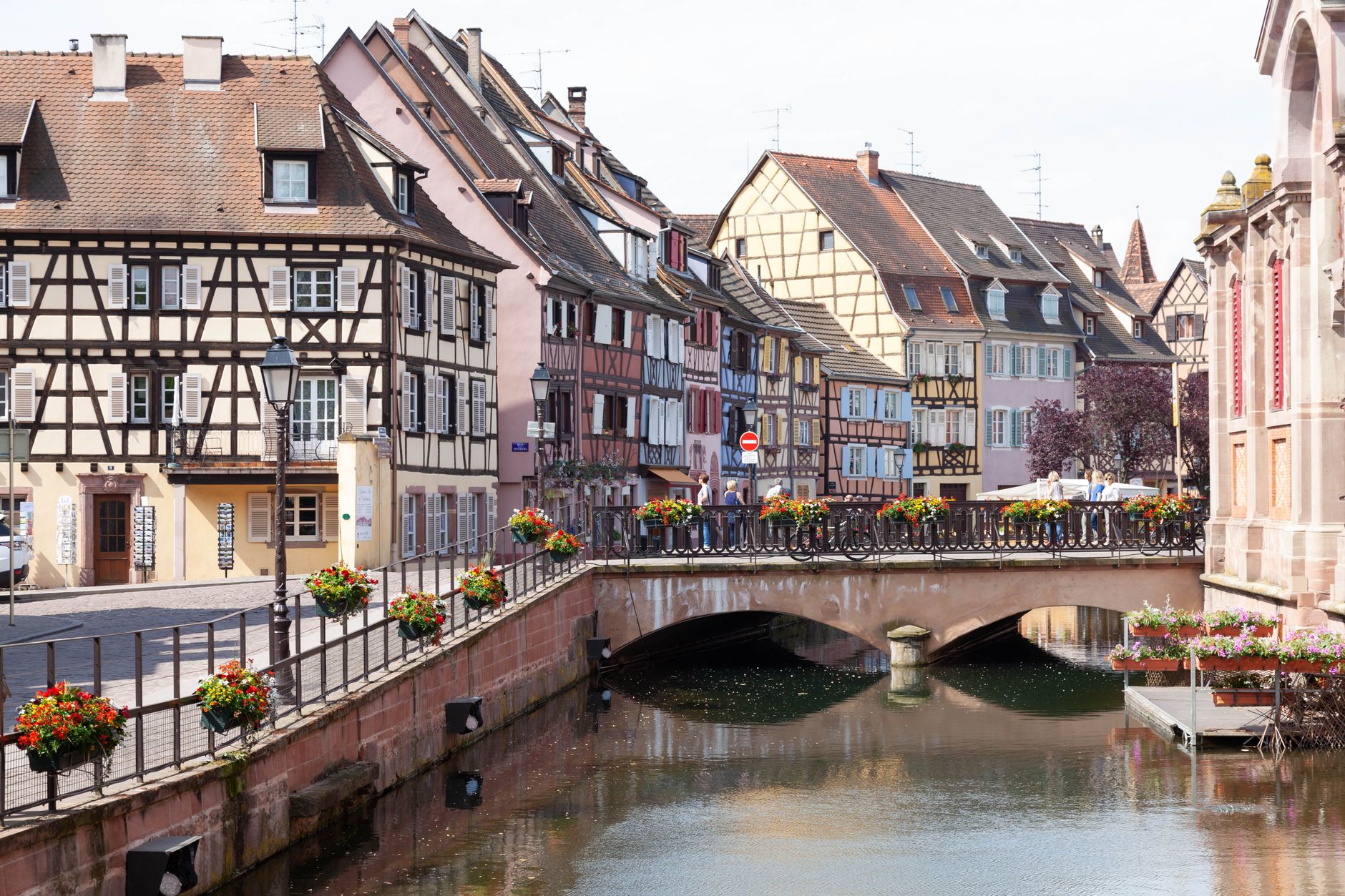
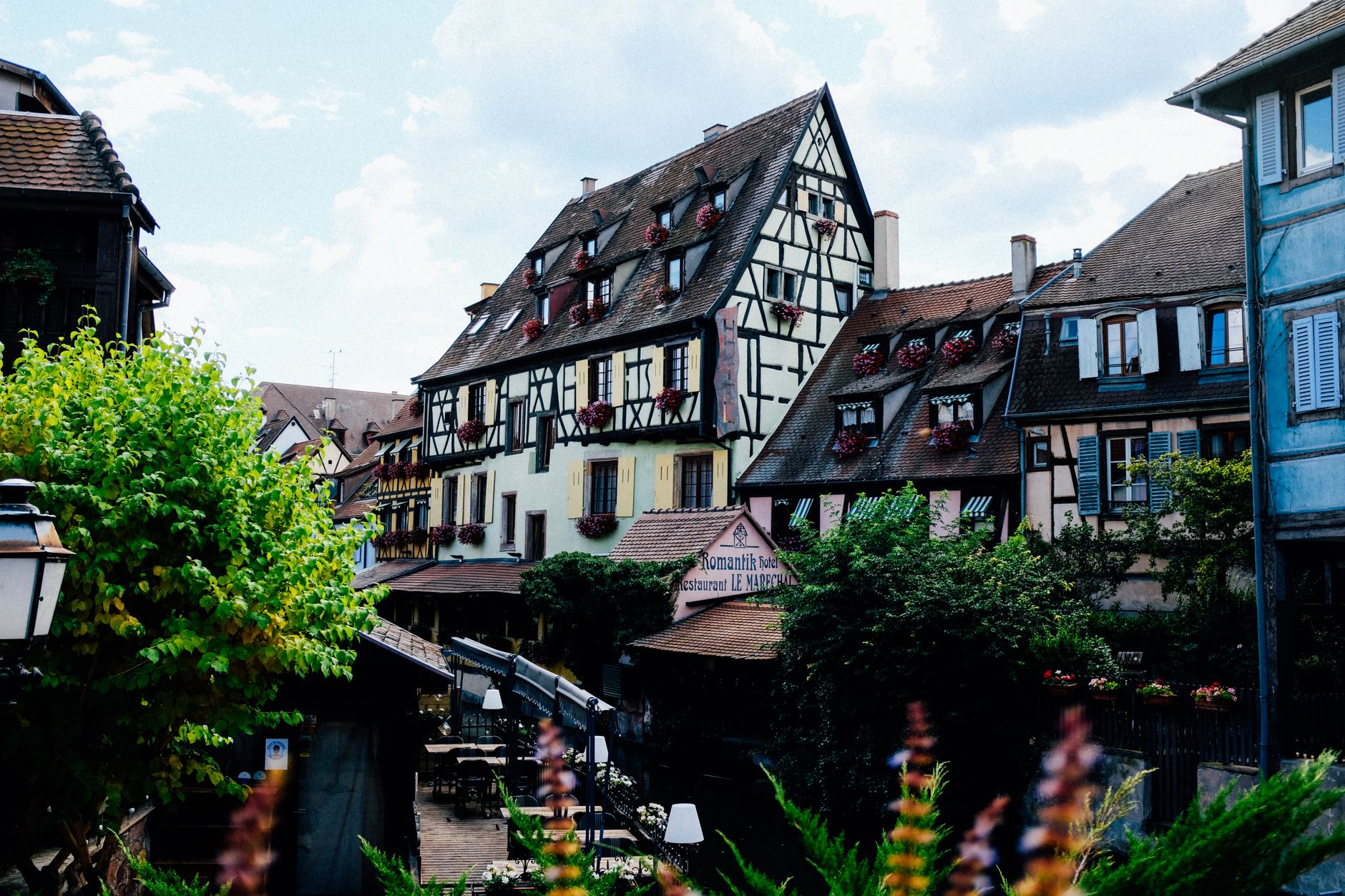
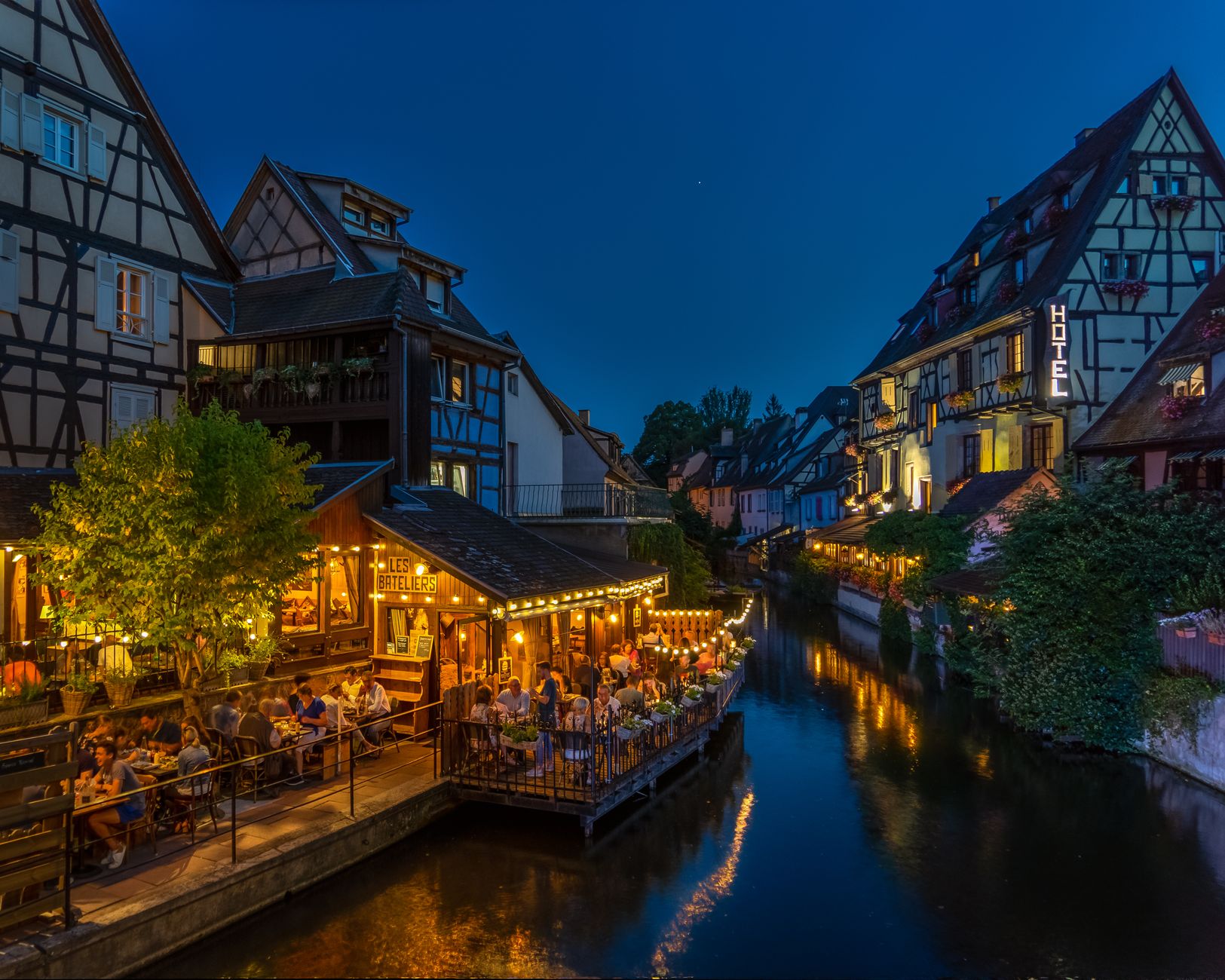

Water laps against weeping willows along the Lauch river, reflecting the pink Vosges sandstone and yellow timbering of the Krutenau quarter. The town sits flat against the Alsatian plain, catching the rain shadow of the western hills. You come for Matthias Grünewald’s haunting Isenheim Altarpiece in the Unterlinden Museum, stay for the pork-heavy choucroute and dry Riesling at the corner winstub, and spend the afternoon quietly navigating cobblestones that have survived five centuries of border shifts.
Last updated 27 Aug 2026
Build a Colmar itinerary.
Choose up to 4 threads that pull you in. Your plan arrives organised around them.
The Bed
Where to stay in Colmar
Which part of town to book, and what each one costs you in walking, noise or quiet.
The Comparison
Colmar, or somewhere near it
The places you are realistically choosing between, and the honest case for each.
The Local Record
Where to read more about Colmar
The blogs, boards, guides and operators worth bookmarking.
What to do in Colmar Alsace France
Colmar is a compact, easily walked town where daily life follows a steady rhythm between morning markets and evening carafes of wine. The old core curves around the Lauch river and pedestrianised stone alleys, making it effortless to explore on foot. It suits curious art lovers drawn to the Unterlinden and travellers who appreciate hearty borderland cuisine, Renaissance facades, and afternoons spent sipping Pinot Blanc without checking the time.
24 hours in Colmar Alsace France
Start early at the Unterlinden Museum before crowds gather around Grünewald’s altarpiece. Cross Rue des Marchands to the Marché Couvert for Munster and a fresh pretzel, then wander the canal paths of the Krutenau. Finish over a piping-hot tarte flambée and a glass of dry Riesling at Wistub Brenner. The entire circuit is under two miles of easy walking. Select 1 Day above to see it.
2 days in Colmar Alsace France
A second day lets you look closer at the town's architectural quirks. Tour the Maison des Têtes and the Bartholdi Museum in the morning. After a lunch of slow-cooked baeckeoffe, take a fifteen-minute bus out to Eguisheim or Kaysersberg to walk through hillside vineyards and taste wines straight from family cellars before returning for dinner. Choose 2 Days to expand the plan.
3 days in Colmar Alsace France
With three days, head into the Vosges mountains to tour the medieval ramparts of Château du Haut-Kœnigsbourg. Spend a quiet afternoon cycling the vineyard lanes to Riquewihr or exploring the Dominican Church. You will have time to settle into a neighbourhood winstub twice, which is precisely how one gets the best table and the honest pour.
Colmar Alsace France itineraries by interest
Wine & Vineyards in Colmar Alsace France
Sample bone-dry Riesling, floral Gewurztraminer, and Pinot Gris along the Route des Vins d'Alsace or in timbered cellar doors near Rue des Marchands.
Sacred Architecture in Colmar Alsace France
Examine the Gothic Collegiate Church of Saint-Martin, built in distinct yellow sandstone, and the Dominican church housing Martin Schongauer's Madonna.
Museums & Masterpieces in Colmar Alsace France
Study the Isenheim Altarpiece at the Unterlinden Museum, a former 13th-century Dominican convent with quiet cloisters and northern Renaissance treasures.
Regional Cooking in Colmar Alsace France
Order choucroute garnie, slow-cooked baeckeoffe, and crisp tarte flambée with lardons and crème fraîche in a traditional wood-panelled winstub.
Canal Walks in Colmar Alsace France
Stroll along the Lauch canal through the Krutenau and Quai de la Poissonnerie, where flat-bottomed wooden boats glide past half-timbered merchant facades.
Covered Markets in Colmar Alsace France
Browse the 1865 brick-and-iron Marché Couvert for Munster cheese, smoked pork sausages, freshly baked kougelhopf, and warm pretzels from local bakers.
Historic Quarters in Colmar Alsace France
Walk the pedestrian core around the 1609 Maison des Têtes, the carved Koïfhus customs building, and the Renaissance Pfister House on Rue Mercière.
Day Trips in Colmar Alsace France
Catch a short bus to surrounding fortified wine villages like Riquewihr, Kaysersberg, and Eguisheim, set against terraced hillside vineyards.
Craft Traditions in Colmar Alsace France
Explore local pottery workshops throwing traditional salt-glazed stoneware and discover the legacy of Statue of Liberty sculptor Frédéric-Auguste Bartholdi.
Local Baking in Colmar Alsace France
Stop at morning bakeries for fluted kougelhopf dusted with sugar, crusty bretzels with coarse salt, and spiced gingerbread pain d'épices.
Sculpture & Memorials in Colmar Alsace France
Visit the Musée Bartholdi inside the sculptor's birth house on Rue des Marchands, showcasing original bronze models and Statue of Liberty preparatory casts.
Castle Ruins in Colmar Alsace France
Venture into the Vosges foothills to explore Château du Haut-Kœnigsbourg and the Three Castles of Eguisheim overlooking the Rhine Valley.