Corfu.


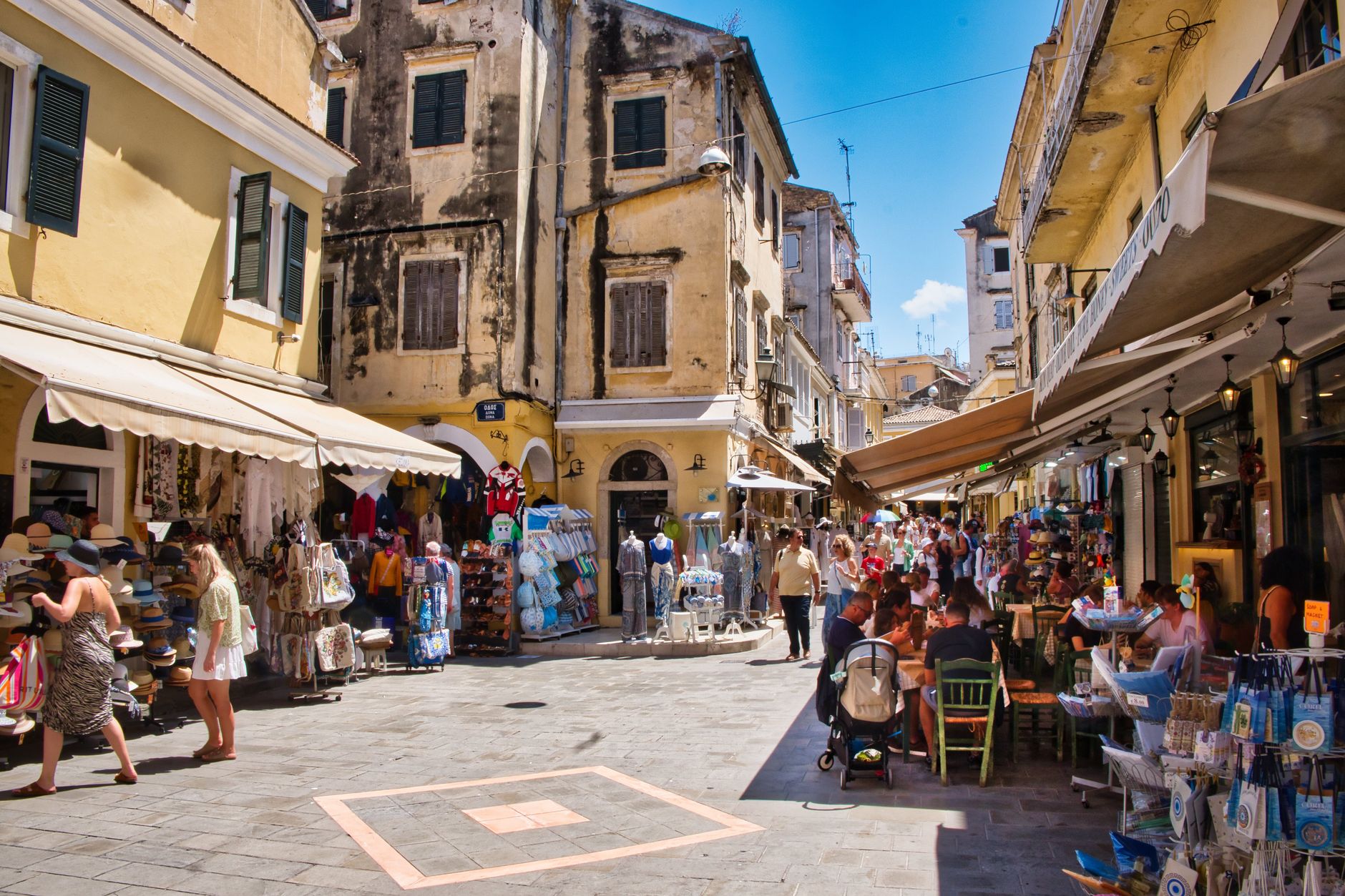
Venetian shutters rattle four storeys above flagstones polished slick by centuries of leather soles. In the Campiello district, washing lines run between pastel facades like rigging, while down on the Spianada, retirees argue politely over cricket matches played on the grass. You come for the Ionian blue, but you stay for the garlic-heavy sofrito and the slow clatter of cutlery in back-alley tavernas where the house white arrives in a dented copper jug.
Last updated 28 Aug 2026
Build a Corfu itinerary.
Choose up to 4 threads that pull you in. Your plan arrives organised around them.
The Bed
Where to stay in Corfu
Which part of town to book, and what each one costs you in walking, noise or quiet.
The Comparison
Corfu, or somewhere near it
The places you are realistically choosing between, and the honest case for each.
The Local Record
Where to read more about Corfu
The blogs, boards, guides and operators worth bookmarking.
What to do in Corfu Ionian Islands Greece
Corfu Town divides neatly between its vast parade ground, the Spianada, and the dense labyrinth of the Campiello. Mornings belong to espresso beneath the Liston arches and wandering the fortifications; afternoons slow down around quiet cove swims and long lunches of slow-cooked meat and bitter greens. It suits travellers who appreciate layered Mediterranean history, walkable historic centres, and unhurried meals with a carafe of local wine.
24 hours in Corfu Ionian Islands Greece
Start before the heat peaks at the Old Fortress, climbing to the lighthouse for views across to Albania. Cut into the Campiello for a plate of veal sofrito at a shaded corner table on Nikiforou Theotoki. Finish with an evening stroll along the Liston colonnade and a cold bottle of local ginger beer. Select 1 Day above to see it.
2 days in Corfu Ionian Islands Greece
Head west across the island to Paleokastritsa, taking a morning boat between the sea caves and limestone headlands. By afternoon, drive up to the hilltop village of Lakones for a late lunch of spicy fish bourdeto, looking down over the bays as the light turns copper. Choose 2 Days to expand the plan.
3 days in Corfu Ionian Islands Greece
Drive north to Mount Pantokrator and wander the ghost village of Old Perithia, where fourteenth-century stone houses sit under walnut trees. Stop at a taverna for walnut pie and spit-roasted lamb before continuing to the quiet pebble beaches and harbour tavernas of Kassiopi.
Corfu Ionian Islands Greece itineraries by interest
Local Seafood in Corfu Ionian Islands Greece
Scorpionfish simmered in fiery red pepper for bourdeto, or sea bass poached gently with garlic, lemon, and potatoes in a classic bianco broth.
Regional Stews in Corfu Ionian Islands Greece
Veal sofrito braised down with white wine and vinegar, alongside rooster pastitsada tossed with thick tubular pasta under a heavy dusting of kefalotyri.
Historic Fortifications in Corfu Ionian Islands Greece
The sixteenth-century Old Fortress overlooking the bay, and the brooding New Fortress guarding the port with its dry moats and Venetian bastions.
Coastal Walks in Corfu Ionian Islands Greece
The cliffside path winding between Agios Georgios and the double bay at Porto Timoni, or the gentle olive-lined loop around the headland at Kassiopi.
Wine & Vineyards in Corfu Ionian Islands Greece
Crisp Kakotrygis whites and earthy Skopelitiko reds poured from chilled carafes at family-run cellars around the Ropa Valley and central hills.
Old Town Architecture in Corfu Ionian Islands Greece
The Liston arcade modelled on Parisian streets, neoclassical palaces, and the tall, cramped Venetian tenements tucked along the cantounia alleys.
Markets & Produce in Corfu Ionian Islands Greece
Stalls stacked with bitter wild greens, jars of candied kumquats, pickled wild caper leaves, and freshly pressed Lianolia olive oil near the open market.
Mountain Villages in Corfu Ionian Islands Greece
Quiet stone hamlets like Old Perithia on Mount Pantokrator, where taverna owners slow-roast lamb over wild herbs in wood-fired ovens.
Local Beverages in Corfu Ionian Islands Greece
Fermented ginger beer brewed locally since British rule, alongside chilled kumquat liqueurs and bitter herbal digests served after dinner.
Sacred Architecture in Corfu Ionian Islands Greece
The silver casket of Saint Spyridon in his namesake sixteenth-century church, and the whitewashed sea-girt monastery at Vlacherna.
Coastal Coves in Corfu Ionian Islands Greece
Limestone cliffs framing the cobalt bays of Paleokastritsa, and the clay shelves of Canal d'Amour shaped by winter storms at Sidari.
Rural Olive Groves in Corfu Ionian Islands Greece
Gnarled centuries-old trees covering the central ridges, shading unpaved farm tracks and quiet stone presses around Ano Korakiana.