Delphi.


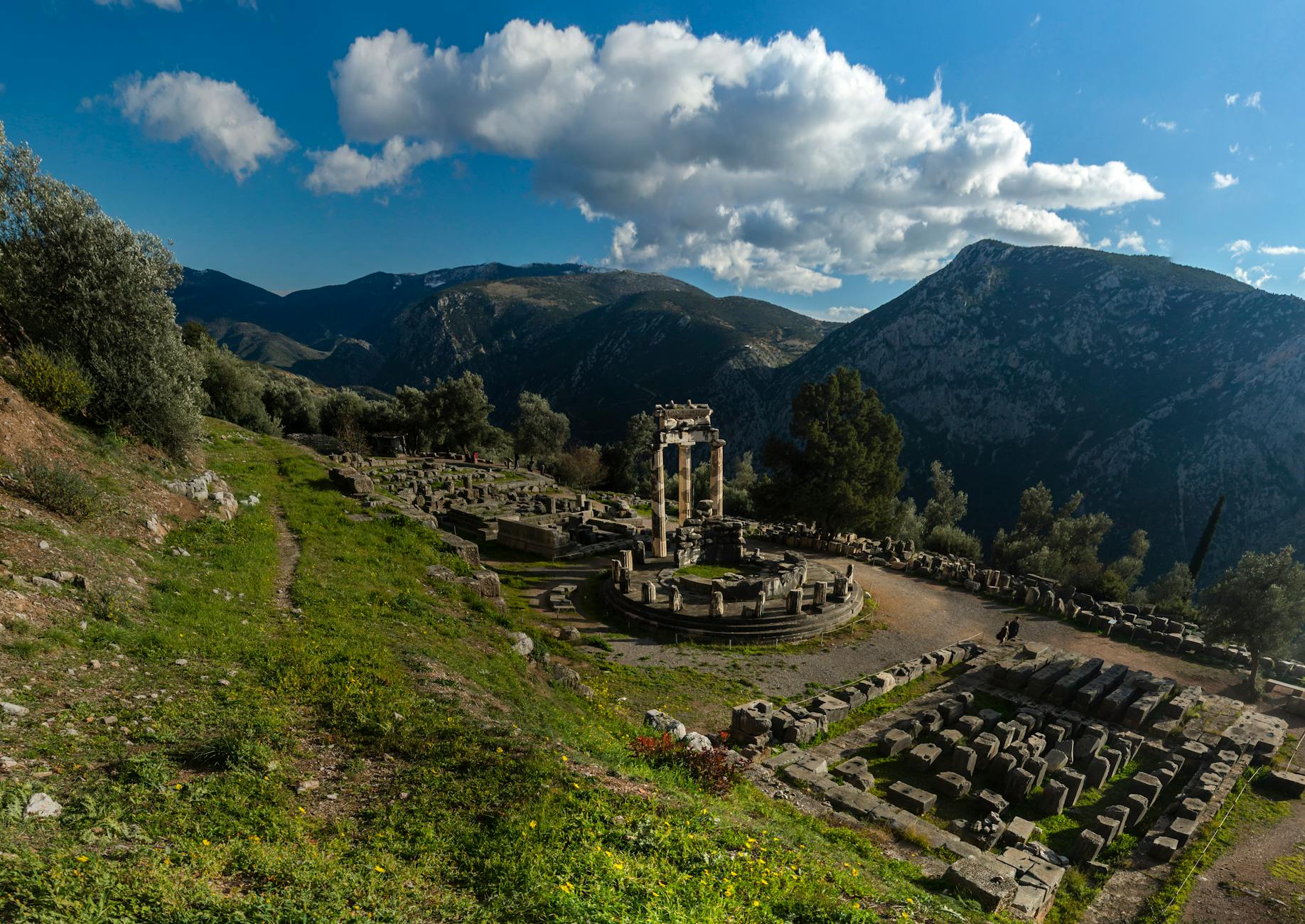
Cold wind cuts across the south face of Mount Parnassus before the sun clears the Phaedriades cliffs. Down below, a million olive trees fill the Pleistos valley like a grey-green river running out to the Gulf of Corinth. The modern village clings to the rock along two narrow streets, but the ancient sanctuary remains the gravity well here. Walking up the Sacred Way past the Treasury of the Athenians demands sturdy soles and an early start before the tour buses roll in from Athens.
Last updated 28 Aug 2026
Build a Delphi itinerary.
Choose up to 4 threads that pull you in. Your plan arrives organised around them.
The Bed
Where to stay in Delphi
Which part of town to book, and what each one costs you in walking, noise or quiet.
The Comparison
Delphi, or somewhere near it
The places you are realistically choosing between, and the honest case for each.
The Local Record
Where to read more about Delphi
The blogs, boards, guides and operators worth bookmarking.
What to do in Delphi Central Greece Greece
Delphi divides naturally between ancient ruins terraced into Mount Parnassus and the quiet modern village built along the ridge. Mornings belong to the Sanctuary of Apollo and the museum before midday heat sets in. Afternoons slow down over plates of grilled meats and Amphissa olives on terrace tavernas facing the Pleistos valley. It suits independent walkers, history enthusiasts, and anyone willing to stay overnight once the tour buses depart.
24 hours in Delphi Central Greece Greece
Be at the sanctuary gates at 08:00 to climb the Sacred Way up to the ancient theatre in peace. Spend midday in the air-conditioned Delphi Archaeological Museum, then order lamb chops and wild greens at Taverna Vakhos. Walk down to the Tholos of Athena Pronaia before dusk. Select 1 Day above to see it.
2 days in Delphi Central Greece Greece
A second morning lets you hike down the ancient footpath into the olive plain or drive ten minutes east to Arachova for hand-loomed textiles and fried formaela cheese. Return to Delphi village for slow-braised beef stifado and a glass of central Greek Mavroudi as the valley dims. Choose 2 Days to expand the plan.
3 days in Delphi Central Greece Greece
Three days allow a thirty-minute drive down to the Gulf of Corinth. Spend the morning walking past captains' mansions in Galaxidi, eat grilled sea bream right on the harbour, then explore the Corycian Cave on the high limestone slopes of Parnassus on your way back.
Delphi Central Greece Greece itineraries by interest
Ancient History in Delphi Central Greece Greece
Sacred Way stone path climbing past the Athenian Treasury to the Temple of Apollo and the 4th-century BC theatre overlooking the gorge.
Museum Collections in Delphi Central Greece Greece
The Delphi Archaeological Museum houses the bronze Charioteer, the archaic twin Kouroi, and the Naxian Sphinx with well-labelled halls.
Mountain Hiking in Delphi Central Greece Greece
The E4 trail leads uphill to the Corycian Cave and drops down the ancient pilgrim footpath through the Pleistos Gorge toward the coast.
Local Tavernas in Delphi Central Greece Greece
Family-run grills along Pavlou street serving slow-roasted kontosouvli, wild greens, and grilled local formaela cheese with house wine.
Olive Groves in Delphi Central Greece Greece
The vast olive sea of Amphissa below town produces plump konservolia olives cured in brine, paired with fresh village sourdough bread.
Sacred Architecture in Delphi Central Greece Greece
The circular Tholos at the Sanctuary of Athena Pronaia sits quietly downhill from the Castalian Spring, best viewed in late afternoon light.
Scenic Viewpoints in Delphi Central Greece Greece
The highest tier of the ancient stadium and terrace bars along Apollonos street look out over the deep ravine toward the Gulf of Corinth.
Day Trips in Delphi Central Greece Greece
Arachova sits ten minutes east for stone lanes and woven textiles, while the quiet port of Galaxidi lies thirty minutes down on the water.
Regional Cheeses in Delphi Central Greece Greece
Parnassus pastures yield salty feta and PDO formaela, sliced thick, pan-fried crisp in olive oil, and served with a wedge of fresh lemon.
Village Life in Delphi Central Greece Greece
Modern Delphi slows after five in the afternoon, when locals gather in the central platanos square for Greek coffee and backgammon.
Coastal Walks in Delphi Central Greece Greece
A short descent brings you to Itea and Galaxidi for quiet harbour promenades, grilled red mullet, and swimming off pebble coves.
Artisan Crafts in Delphi Central Greece Greece
Workshop weavers and leather workers in neighbouring mountain hamlets still produce woollen blankets and hand-carved olive wood utensils.