


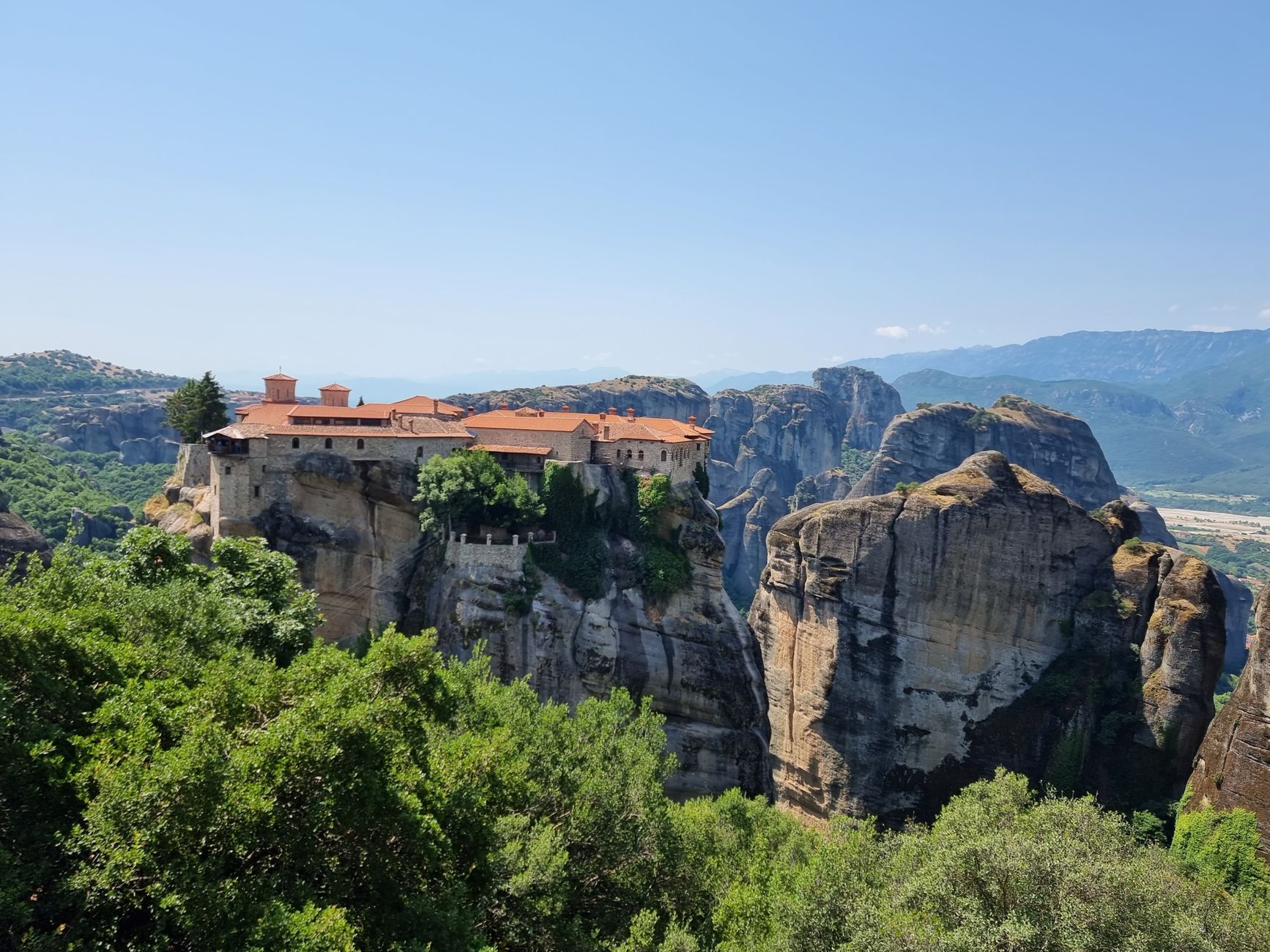

Vertical grey conglomerate pillars rear up sheer behind the roofs of the old quarter, cutting off half the sky. Walking up toward Sopoto, the rumble of modern Greek traffic drops away, replaced by the tap of walking poles and bells from the high hermitages. Monks built monasteries on these pinnacles in the fourteenth century to escape Ottoman raids; today, the town below feeds walkers with clay-pot veal, local sausages, and generous glasses of Thessalian tsipouro.
Last updated 28 Aug 2026
Build a Kalambaka itinerary.
Choose up to 4 threads that pull you in. Your plan arrives organised around them.
The Bed
Where to stay in Kalambaka
Which part of town to book, and what each one costs you in walking, noise or quiet.
The Comparison
Kalambaka, or somewhere near it
The places you are realistically choosing between, and the honest case for each.
The Local Record
Where to read more about Kalambaka
The blogs, boards, guides and operators worth bookmarking.
What to do in Kalambaka Meteora Greece
Kalambaka sits in the shadow of Meteora's limestone pillars in central Greece. The town functions as an honest basecamp: hikers, independent motorists, and pilgrims share morning coffee before climbing the monastery trails. Days revolve around ascending the rock pinnacles early, resting during the heat of the afternoon, and taking evening meals of clay-pot stews along Riga Fereou Street.
24 hours in Kalambaka Meteora Greece
Take the early morning bus or taxi to the Monastery of Great Meteoron before tour buses arrive. Walk the dirt path downhill to Roussanou, then follow the trail back to town for a late lunch of spetsofai and crusty bread on Vlachava Street. Select 1 Day above to see it.
2 days in Kalambaka Meteora Greece
Spend morning two walking through adjacent Kastraki up to Holy Trinity and Saint Stephen. In the afternoon, explore the ancient Church of the Dormition in Sopoto, followed by local trout or roast lamb at a family taverna in Diava across the river. Choose 2 Days to expand the plan.
3 days in Kalambaka Meteora Greece
A third day lets you drive west into the Pindus mountains to explore the stone village of Metsovo and the Pyli stone bridge. Alternatively, visit the prehistoric Theopetra Cave and take a relaxed twilight walk among the lower crags of Doupiani.
Kalambaka Meteora Greece itineraries by interest
Sacred Architecture in Kalambaka Meteora Greece
Climb to Great Meteoron and Varlaam to see sixteenth-century frescoes, carved iconostases, and old windlass nets that once hauled monks up sheer rock.
Hiking Trails in Kalambaka Meteora Greece
Follow the cobbled Byzantine footpath up from Kastraki to Holy Trinity, or skirt the pillar bases on the shaded eastern trails below Roussanou.
Regional Dining in Kalambaka Meteora Greece
Order Thessalian spetsofai with country sausage and peppers, slow-cooked kleftiko lamb in paper, or baked giant beans at a neighbourhood taverna.
Local Spirits in Kalambaka Meteora Greece
Sip un-aniseed tsipouro from Tyrnavos alongside mezze like smoked Metsovone cheese, pickled wild greens, and spicy tirokafteri dip.
Archaeology in Kalambaka Meteora Greece
Visit the prehistoric Theopetra Cave just south of town, where a Middle Palaeolithic stone wall and human footprints predate the monasteries by millennia.
Rock Climbing in Kalambaka Meteora Greece
Tackle classic multi-pitch trad routes on the conglomerate sandstone towers like Alyssos and Doupiani, with routes established since the 1970s.
Bakeries & Sweets in Kalambaka Meteora Greece
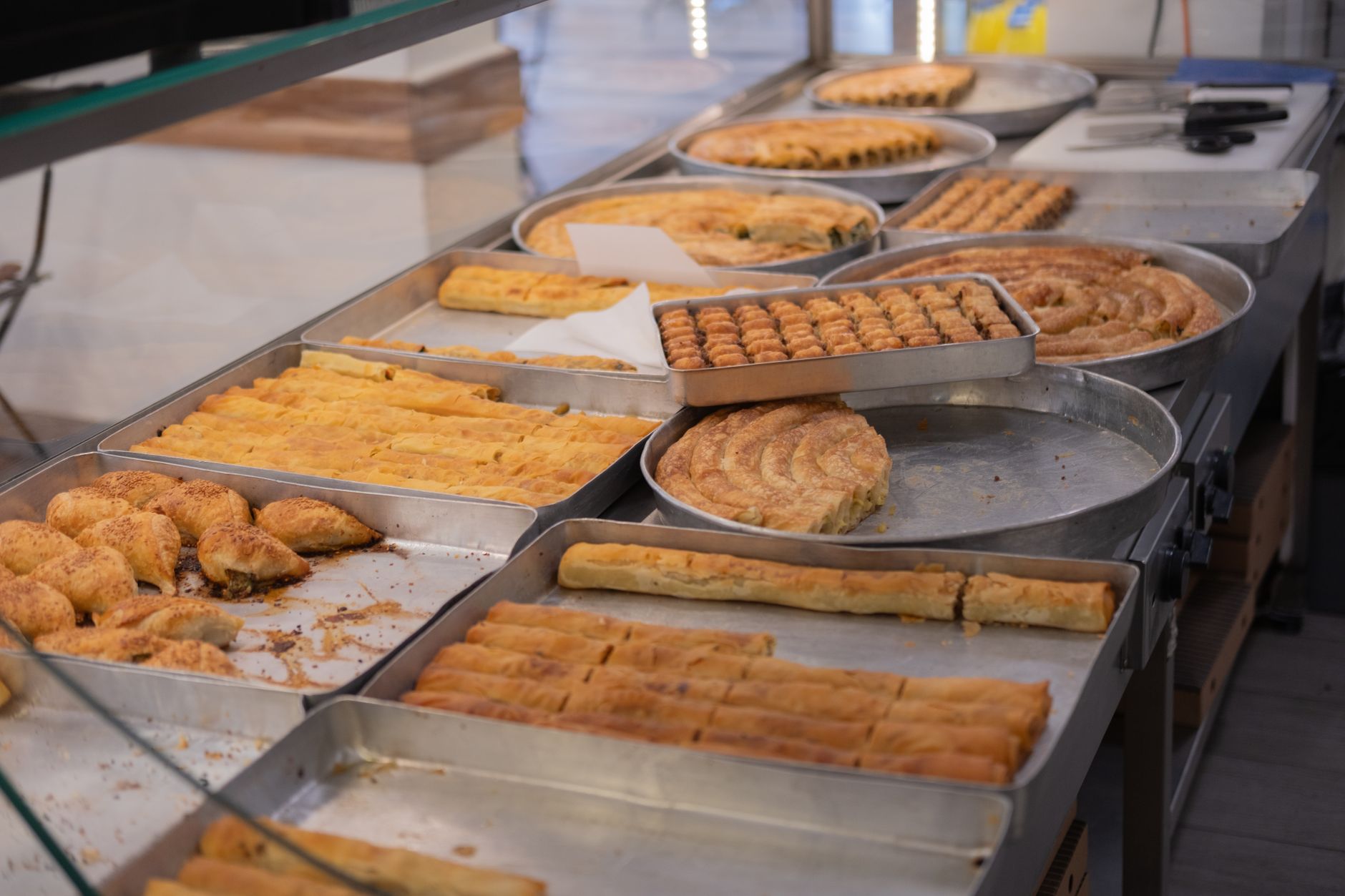
Stop at town bakeries for warm spanakopita rolled with thick horiatiko filo, alongside local halva Farsalon made with cornstarch and browned butter.
Historic Quarters in Kalambaka Meteora Greece
Wander the steep, quiet alleys of Sopoto beneath the cliffs to reach the tenth-century Church of the Dormition with its rare freestanding marble ambo.
Scenic Viewpoints in Kalambaka Meteora Greece
Gather at the Psaropetra lookout on the monastery ridge road at dusk to watch the sandstone towers turn copper across the Peneus valley.
Mountain Excursions in Kalambaka Meteora Greece
Drive thirty miles west into the Pindus Range to Metsovo for grilled sheep chops, smoked cheeses, and dense red Katogi Averoff wines.
Woodcarving & Icons in Kalambaka Meteora Greece
Watch local icon painters in Kalambaka workshop-studios prepare egg tempera and gold leaf according to strict Mount Athos Byzantine guidelines.
Stone Bridges in Kalambaka Meteora Greece
Head into the upper Aspropotamos valley to seek out arched Ottoman-era stone bridges like the single-span bridge of Agios Vissarion in Pyli.