


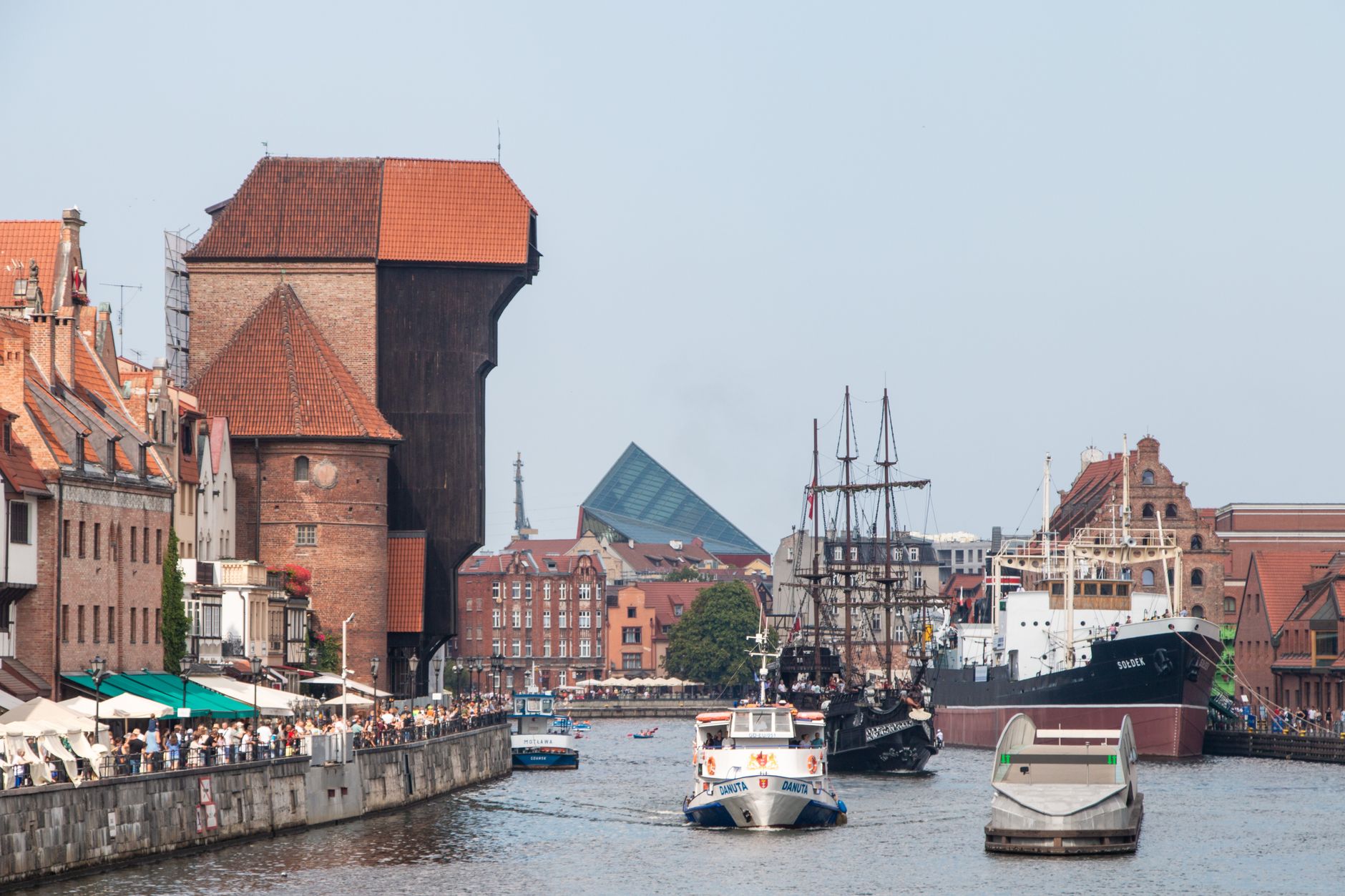
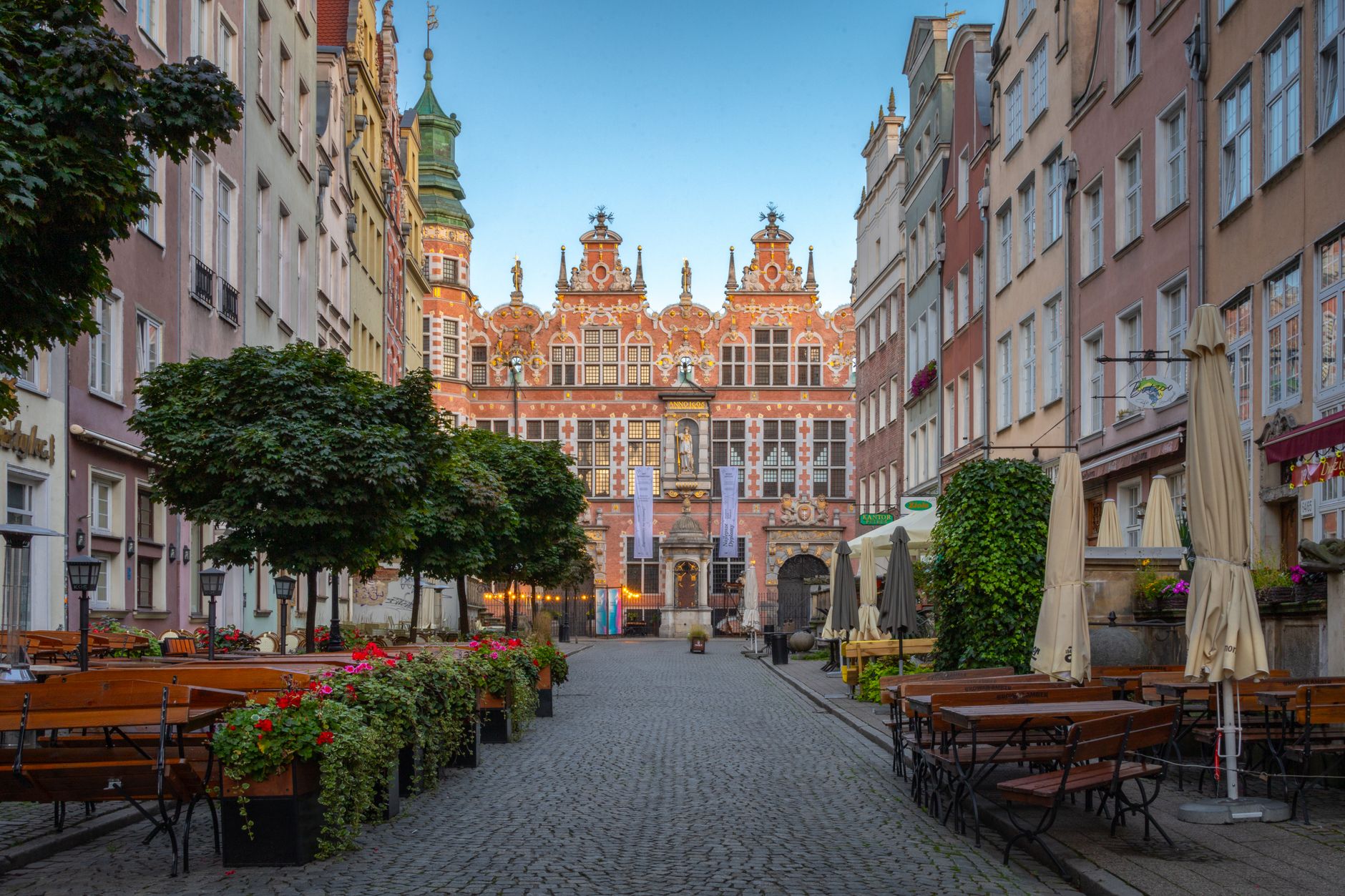
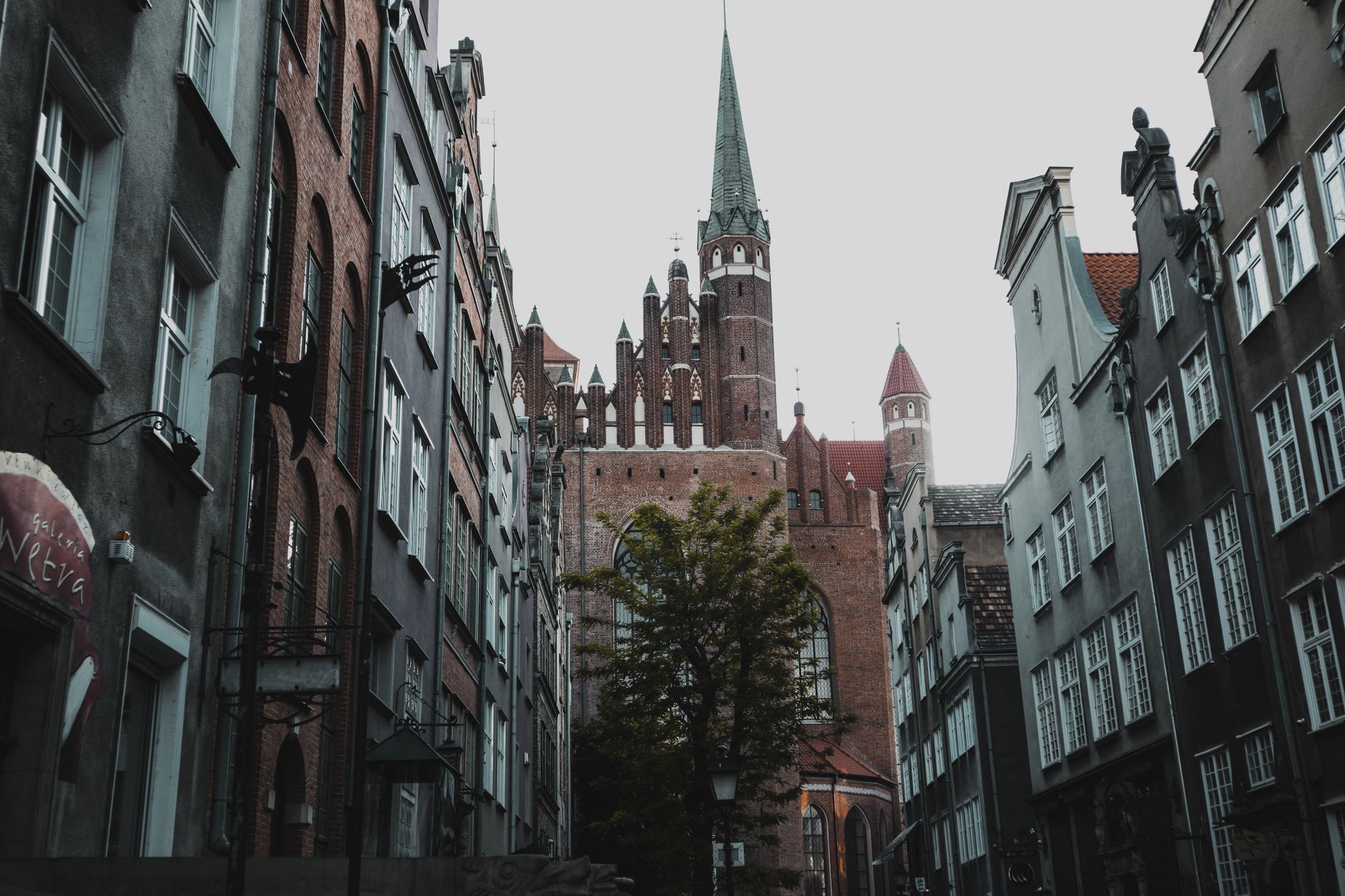
Gulls circle the black timber cranes of the Motława before the morning tour groups clear their throats. Brick by brick, the city rebuilt its Flemish facades after 1945, creating a grand Hanseatic corridor along Ulica Długa that opens to the Baltic docklands. Here, maritime power meets the Solidarity shipyard gates. You walk through centuries of merchant wealth, eat fried Baltic cod in modest milk bars, and find yourself looking up at red-brick vaults that survived it all.
Last updated 26 Aug 2026
Build a Gdańsk itinerary.
Choose up to 4 threads that pull you in. Your plan arrives organised around them.
We'll craft a 3-lens plan for Gdańsk, one collapsible strand per lens.
Modern History
Spend a quiet morning inside the subterranean Museum of the Second World War, examining wartime artefacts beneath its tilted glass tower.
Modern History
Spend a quiet morning inside the subterranean Museum of the Second World War, examining wartime artefacts beneath its tilted glass tower.
Westerplatte Peninsula Walk
Westerplatte
Board bus 106 from Gdańsk Główny directly to the turnaround loop. The outdoor battlefield site is free and open daily; budget ninety minutes to walk the full wooded perimeter.
Editor TipOn 1 September 1939, two hundred Polish soldiers held this narrow sand spit against the German battleship Schleswig-Holstein for seven days, marking the opening clash of World War II. Arrive before ten to walk the hollowed concrete barracks in peace before tour groups disembark from the city ferries.
Coastal Walks
Take the local train north to Brzeźno pier to walk the coastal promenade and windy sandy beaches facing the Gulf of Gdańsk.
Coastal Walks
Take the local train north to Brzeźno pier to walk the coastal promenade and windy sandy beaches facing the Gulf of Gdańsk.
Shipyard Exhibition and Rust-Steel Walk
European Solidarity Centre
Book your morning ticket online to skip the desk line. The permanent exhibition covers two floors with an audio guide, requiring about two hours to navigate thoroughly.
Editor TipBuilt beside the Lenin Shipyard gates where the 1980 strikes ignited, the rusty steel facade echoes the hulls that birthed the Solidarity trade union movement. Take the lift to the sixth-floor roof terrace afterwards for the clearest view over the working industrial cranes.
Baltic Shoreline Pine Stride
Brzezno Pier and Promenade
Take Tram 3 from Wrzeszcz to the Brzezno terminus, then walk the wooden pier and coastal path west toward Jelitkowo for an easy hour-long stroll.
Editor TipNineteenth-century bathhouses turned this former Kashubian fishing hamlet into a restorative salt-air retreat long before heavy industry hemmed in the shipyards. The wind off the Gulf of Gdańsk cuts deep even in mild weather, so bring a dense woollen scarf.
Baltic Beachfront Walk
Molo w Brzeźnie
Walk the wooden pier and paved coastal trail towards Jelitkowo. Tram lines 3 and 5 drop you three blocks from the sand. Free access, plan for ninety minutes.
Editor TipBrzeźno shifted from a quiet Kashubian fishing settlement into a nineteenth-century health resort, retaining its working-class seaside character through the postwar decades. The wind off the Gulf of Gdańsk has real bite after four in the afternoon; bring a windbreaker even in late spring.
Beachside Fried Baltic Cod
Bar Przystań
Ride the SKM train to Sopot and walk fifteen minutes south along the beach promenade. Queue at the counter for the spicy fisherman soup and fresh cod by weight, roughly 50 PLN.
Editor TipSopot's small working fishing fleet still pulls wooden skiffs directly onto the sand each morning using mechanical winches, frying the daily Baltic haul just yards from the waterline. Take an unheated terrace table closest to the surf; the hot fish broth easily counters the sea breeze.
Pan-Fried Baltic Turbot
Tawerna Orłowska
Take a deck table facing the wooden pier and order butter-fried Baltic turbot with dill potatoes. No weekend reservations; dinner runs about 90 PLN.
Editor TipPomeranian coastal cooking relies on inshore skiff fishermen landing fresh flatfish at dawn, seared crisp in hot fat alongside shredded salted cabbage. Skip the cream sauces and ask for the whole fresh catch of the day with a cold regional beer.
Traditional Dining
Queue alongside dockers and students at Bar Mleczny Neptun for hot żurek soup in rye bread, fried pork kotlet, and cheese pierogi.
Traditional Dining
Queue alongside dockers and students at Bar Mleczny Neptun for hot żurek soup in rye bread, fried pork kotlet, and cheese pierogi.
Counter-Service Milk Bar Breakfast
Bar Mleczny Neptun
Grab a tray, order scrambled eggs and sweet farmer cheese pancakes at the counter, and pay in cash. Breakfast takes thirty minutes and costs under twenty złoty.
Editor TipMilk bars began as state-subsidised canteens for workers in the communist era, serving dairy and grain staples that outlived the regime because the food is honest. Study the chalkboard menu before stepping up; the line moves briskly and rewards decisiveness.
Shipyard Gates and Solidarity
Europejskie Centrum Solidarności
Book your permanent exhibition ticket online to skip the desk line. Allow two full hours with the included audio guide to trace the strike that reshaped Europe.
Editor TipRising above the historic Lenin Shipyard, this rust-steel monument marks where dockers led by Lech Wałęsa challenged Soviet rule in August 1980, sparking the Solidarity trade union. Head up to the sixth-floor roof terrace afterwards for a sharp view over the industrial dockyard cranes.
Crisp Duck and Baltic Herring
Restauracja Kubicki
Reserve a table by the window overlooking the Motława River. Order the sour rye soup in bread followed by slow-roasted duck with apples and red cabbage.
Editor TipServing dockers, merchants, and sailors along the waterfront since 1918, this dining room anchors Gdańsk culinary history with hearty Kashubian and Pomeranian recipes. Pair your fish starter with a chilled measure of dry rye vodka; it cuts through the rich pickled cream effortlessly.
Countertop Rye and Farmer Cheese
Bar Mleczny Jaros
Walk straight to the cash counter on Wajdeloty Street. Order twarog with chives, two soft-boiled eggs, and rye bread with butter for under twenty zloty.
Editor TipWrzeszcz was once an affluent Prussian suburb, but its post-war dairy bars preserved subsidized, honest eating for dockers and railway staff through decades of rationing. Clear your own melamine tray to the wash hatch; leaving it sitting on the table is poor form.
Note from the Editor
“Start early on the Royal Way before tour groups assemble. The cobblestones are quiet at eight, and booking your museum slots online saves you forty minutes standing in the Baltic wind.”
The Bed
Where to stay in Gdańsk
Which part of town to book, and what each one costs you in walking, noise or quiet.
The Comparison
Gdańsk, or somewhere near it
The places you are realistically choosing between, and the honest case for each.
The Local Record
Where to read more about Gdańsk
The blogs, boards, guides and operators worth bookmarking.
What to do in Gdańsk Pomerania Poland
Days in Gdańsk settle comfortably into the rhythm of the Main Town and the riverbank. Travellers spend mornings tracing merchant mansions on Długi Targ, afternoon hours among the industrial relics of the shipyards, and evenings over herring and cold beer on Mariacka Street. The centre is compact, flat, and remarkably walkable on foot, making it an easy fit for curious wanderers and history enthusiasts alike.
24 hours in Gdańsk Pomerania Poland
Start at the Golden Gate and follow Ulica Długa to the river for breakfast. Climb St. Mary Church tower by midday, then cross the footbridge to Ołowianka island. Finish with sour rye żurek and pierogi at a classic milk bar before a sunset walk along Rybackie Pobrzeże. Select 1 Day above to see it.
2 days in Gdańsk Pomerania Poland
Day two belongs to modern history and the coast. Spend the morning at the European Solidarity Centre beside the shipyard cranes, then take the SKM commuter train north to suburban Oliwa for park paths and cathedral organ recitals, ending with fried flounder at a seaside tavern in Sopot. Choose 2 Days to expand the plan.
3 days in Gdańsk Pomerania Poland
A third day allows for the 45-minute train ride south to Malbork, home to the largest red-brick Gothic castle in the world. Return to Gdańsk in time to browse amber workshops on Mariacka and settle into a cellar pub on Piwna for local Baltic porter and roasted pork knuckle.
Gdańsk Pomerania Poland itineraries by interest
Maritime History in Gdańsk Pomerania Poland
Walk the Motława docks to the 15th-century Zuraw crane and the National Maritime Museum, where wooden hulls tell centuries of Hanseatic shipping.
Local Seafood in Gdańsk Pomerania Poland
Order pan-fried Baltic cod, smoked eel, and pickled herring alongside dill potatoes at waterfront fish bars along Rybackie Pobrzeże.
Historic Architecture in Gdańsk Pomerania Poland
Climb the 400 steps of red-brick St. Mary Church and study the Flemish Renaissance gables reconstructed along Ulica Długa and Długi Targ.
Craft Traditions in Gdańsk Pomerania Poland
Browse tiny workshop stalls along cobblestoned Mariacka Street, where silversmiths cut raw Baltic amber into rings, pins, and pendants.
Political History in Gdańsk Pomerania Poland
Tour the European Solidarity Centre and historic Gate No. 2 at the Lenin Shipyard, where the 1980s labour movement altered European borders.
Traditional Dining in Gdańsk Pomerania Poland
Queue alongside dockers and students at Bar Mleczny Neptun for hot żurek soup in rye bread, fried pork kotlet, and cheese pierogi.
Coastal Walks in Gdańsk Pomerania Poland
Take the local train north to Brzeźno pier to walk the coastal promenade and windy sandy beaches facing the Gulf of Gdańsk.
Modern History in Gdańsk Pomerania Poland
Spend a quiet morning inside the subterranean Museum of the Second World War, examining wartime artefacts beneath its tilted glass tower.
Street Life in Gdańsk Pomerania Poland
Linger at sidewalk tables on Chlebnicka and Piwna streets as evening lanterns illuminate brick arches and craft beer taverns tap local ales.
Day Trips in Gdańsk Pomerania Poland
Board the 45-minute regional train to Malbork Castle to inspect the vast 13th-century brick fortress built by the Teutonic Knights.
Spirits & Breweries in Gdańsk Pomerania Poland
Taste herbal Goldwasser liqueur infused with real gold flakes, followed by a dark Baltic porter brewed in Pomeranian style near the Old Town.
Urban Greenery in Gdańsk Pomerania Poland
Ride the tram to Oliwa Park for manicured French parterres, quiet ponds, and organ concerts inside the neighbouring archcathedral.