

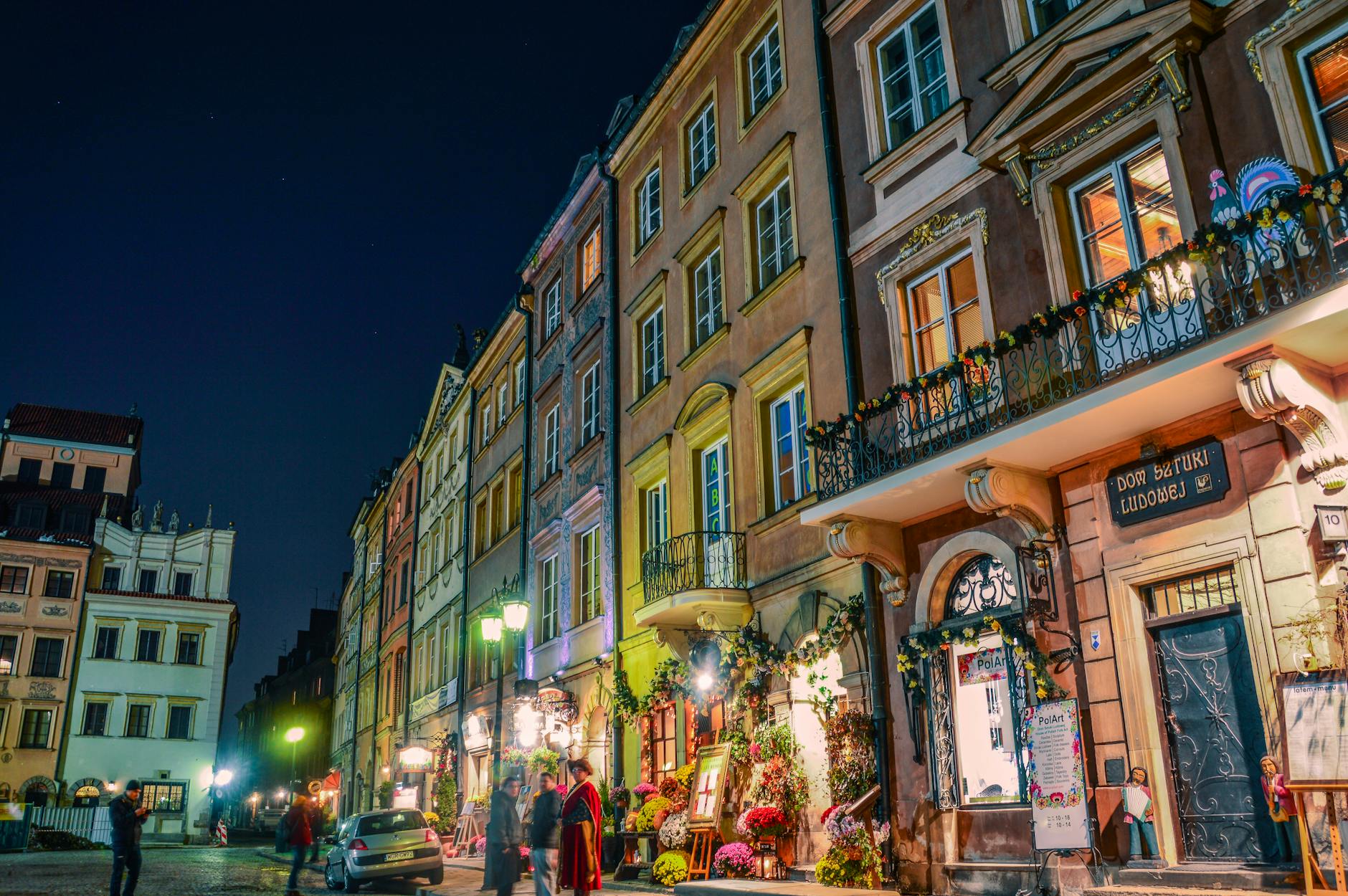


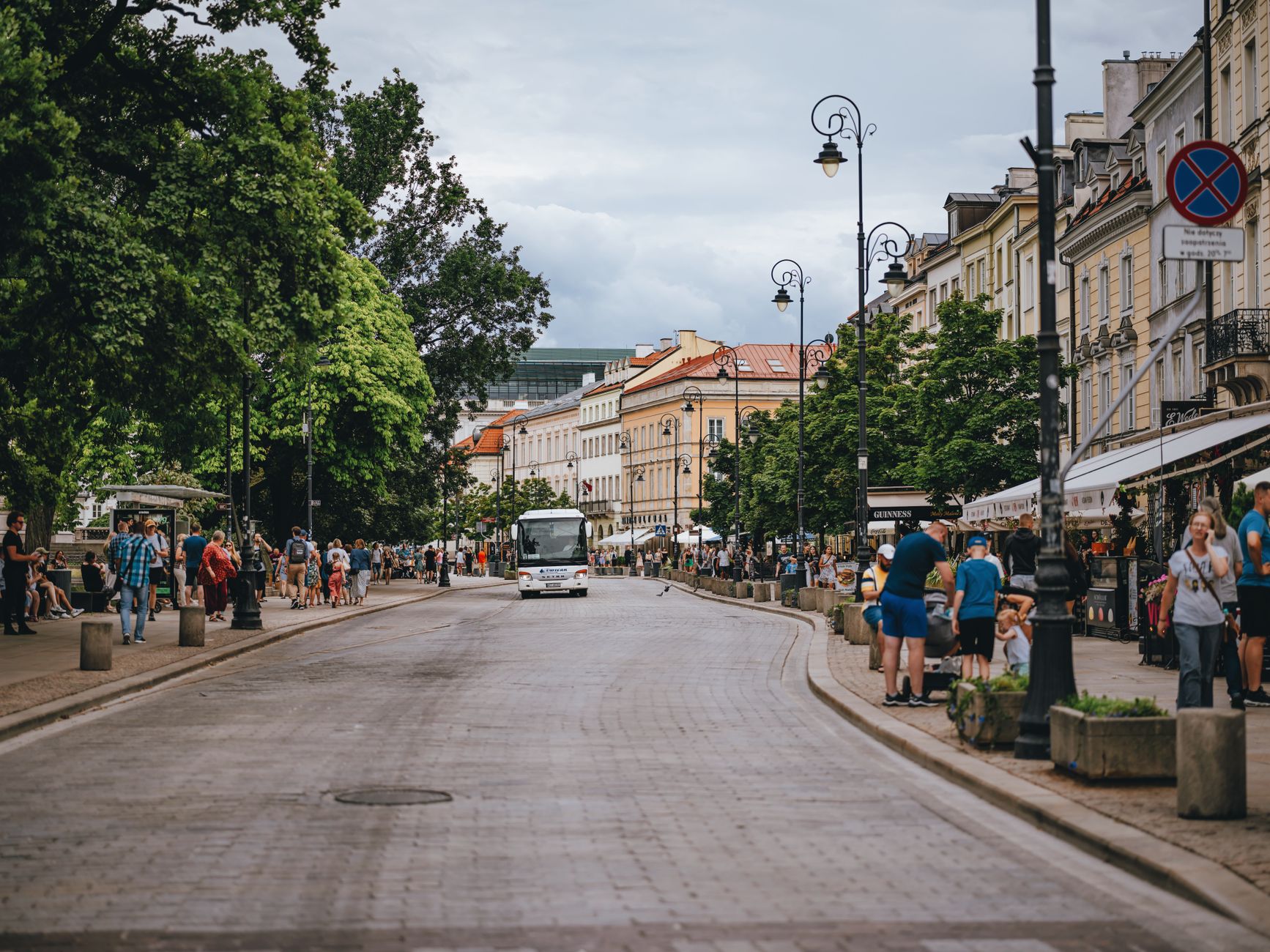
Concrete blocks give way to cobblestones reconstructed brick by brick after 1944. Trams rattle down Marszałkowska, cut across wide postwar boulevards, and drop you near milk bars where cooks dish out pierogi and barszcz behind steam tables. Across the Vistula, the eastern bank remains unpaved and wild. You spend afternoons walking between grand neoclassical avenues and modern towers around the Palace of Culture. Warsaw is worth visiting if you want to trace postwar reconstruction, eat classic Central European food, and explore twentieth-century history on foot. Look elsewhere if you want an authentically preserved pre-war historic core, a compact and quaint pedestrian center, or a postcard-pretty fairytale city.
Last updated 3 Sept 2026
Build a Warsaw itinerary.
Choose up to 4 threads that pull you in. Your plan arrives organised around them.
The Bed
Where to stay in Warsaw
Which part of town to book, and what each one costs you in walking, noise or quiet.
The Comparison
Warsaw, or somewhere near it
The places you are realistically choosing between, and the honest case for each.
The Local Record
Where to read more about Warsaw
The blogs, boards, guides and operators worth bookmarking.
What to do in Warsaw Masovia Poland
Warsaw rewards curious walkers who appreciate heavy twentieth-century history alongside a lively modern dining room. The city splits across the Vistula River: the left bank holds the reconstructed Royal Route and financial high-rises, while the right bank in Praga keeps its raw prewar tenements. Days naturally revolve around museum visits, park strolls, and hearty mid-afternoon lunches at neighbourhood milk bars.
24 hours in Warsaw Masovia Poland
Start along Krakowskie Przedmieście and walk north to the rebuilt Old Town Market Square. Have lunch at Bar Mleczny Prasowy on Marszałkowska, ordering cabbage rolls or pierogi. Spend the afternoon at the Warsaw Rising Museum, then take an evening tram down to the Vistula boulevards for grilled river fish and a cold local pilsner. Select 1 Day above to see it.
2 days in Warsaw Masovia Poland
Cross the Śląsko-Dąbrowski Bridge into Praga on your second morning to see prewar courtyards and the Soho Factory complex. After lunching on pork cutlets and pickled cucumbers along Ząbkowska, spend the afternoon walking the manicured grounds of Łazienki Park to catch the afternoon Chopin recital by the water. Choose 2 Days to expand the plan.
3 days in Warsaw Masovia Poland
A third day allows an unhurried morning market run to Hala Mirowska for local berries and cheeses before catching a suburban bus south to Wilanów Palace. Return for dinner in Mokotów or Muranów, lingering over sour rye soup and modern Polish wine, without having to rush between tram stops.
Warsaw Masovia Poland itineraries by interest
Milk Bar Dining in Warsaw Masovia Poland
Order ruskie pierogi, żurek in sourdough, and compote from the counter at Bar Mleczny Prasowy on Marszałkowska for honest, subsidised everyday cooking.
Twentieth-Century History in Warsaw Masovia Poland
Examine the 1944 uprising at the Warsaw Rising Museum on Grzybowska, then visit the POLIN Museum documenting a thousand years of Polish Jewish life.
Urban Parks in Warsaw Masovia Poland
Stroll the landscaped paths of Łazienki Królewskie past roaming peacocks, neoclassical pavilions, and the Chopin Monument for summer piano recitals.
Riverside Life in Warsaw Masovia Poland
Walk the paved Vistula boulevards on the left bank or sit by summer bonfires on the wild, sandy beaches across the river in the Praga district.
Classical Music in Warsaw Masovia Poland
Visit Chopin's heart entombed at Holy Cross Church on Krakowskie Przedmieście, followed by a Chopin Museum tour on Okólnik.
Modern Art in Warsaw Masovia Poland
Visit Zachęta National Gallery of Art and the Museum of Modern Art in Śródmieście for radical contemporary Polish painting and sculpture.
Architecture in Warsaw Masovia Poland
Survey the socialist-realist Palace of Culture and Science, modernist Muranów housing blocks, and the brick ramparts of the reconstructed Old Town.
Neighbourhood Walks in Warsaw Masovia Poland
Wander Praga Północ along Ząbkowska Street, where prewar red-brick facades house independent galleries, artisan roasters, and neon signs.
Covered Markets in Warsaw Masovia Poland
Browse fresh dill, seasonal forest mushrooms, and local twaróg cheese under the twin vaulted iron roofs of Hala Mirowska on Plac Mirowski.
Craft Traditions in Warsaw Masovia Poland
Search for traditional Polish posters in Stare Miasto and explore classic glassware and ceramics in design workshops along Mokotowska.
Pastry and Baking in Warsaw Masovia Poland
Eat hot pączki filled with rose jam from Pracownia Cukiernicza on Górczewska or jagodzianki bilberry buns in seasonal summer bakeries.
Palaces and Estates in Warsaw Masovia Poland
Take the 116 bus south to Wilanów Palace to inspect the Baroque royal apartments and manicured Italian gardens built for King Jan III Sobieski.