.jpg)
_-_n._2152_-_Nel_Porto_di_Genova._Veduta_Istantanea.jpg)

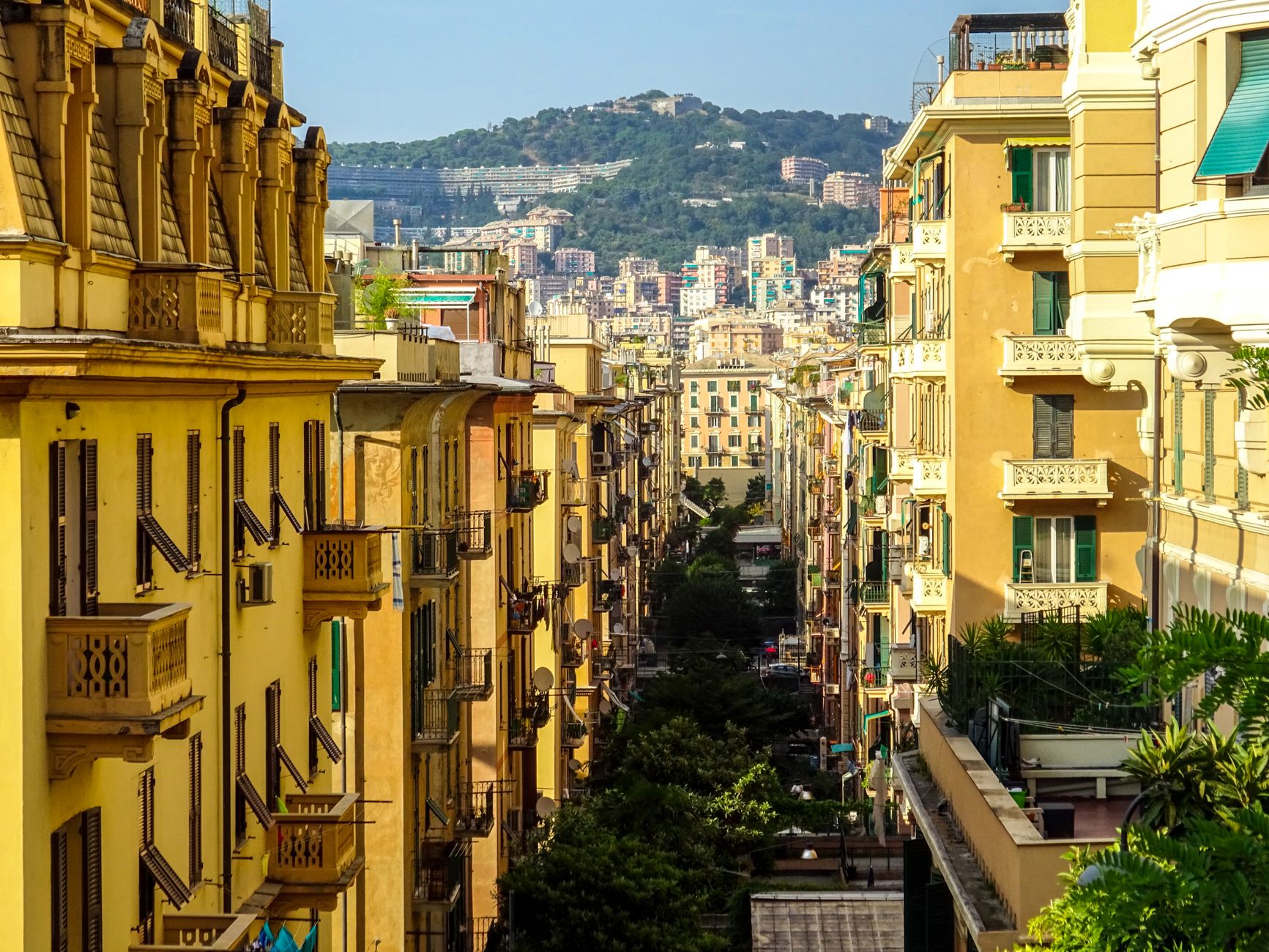

Iron cranes screech across the docks while maritime palaces of marble loom over narrow alleys where sun rarely touches the cobblestones. Genova sits trapped between the Apennines and the sea, vertical and stubborn. You lose your phone signal in the medieval caruggi, only to spill out into a piazza where an old baker slides oily, dimpled focaccia straight onto greaseproof paper. The city does not perform for tourists; it works. Genova is worth visiting if you want to eat mortar-ground pesto, navigate dense sixteenth-century palazzi on foot, and witness an unvarnished Mediterranean port going about its business. Look elsewhere if you want wide sandy beaches, flat strolling, polished resort amenities, or the manicured quiet of a typical Riviera holiday.
Last updated 5 Sept 2026
Build a Genova itinerary.
Choose up to 4 threads that pull you in. Your plan arrives organised around them.
The Bed
Where to stay in Genova
Which part of town to book, and what each one costs you in walking, noise or quiet.
The Comparison
Genova, or somewhere near it
The places you are realistically choosing between, and the honest case for each.
The Local Record
Where to read more about Genova
The blogs, boards, guides and operators worth bookmarking.
What to do in Genova Liguria Italy
Life in Genova unfolds between the heights of the Apennines and the deep waters of the Ligurian Sea. Days centre on navigating the narrow caruggi, hopping between historic botteghe, and examining aristocratic courtyards. It suits travellers who prefer rough-edged maritime character and historic depth over manicured resort towns, rewarding those comfortable on their feet.
24 hours in Genova Liguria Italy
Start with hot focaccia from a neighbourhood panificio before touring the Rolli palaces along Via Garibaldi. By midday, take the Castelletto elevator for harbour panoramas, then eat trofie al pesto near Piazza delle Erbe. Spend your evening strolling the old port quays. Select 1 Day above to see it.
2 days in Genova Liguria Italy
Head east along Corso Italia to the pastel cove of Boccadasse for an afternoon spritz and fried squid by the pebbles. Ride the funicular up to the Righi hills for an airy ridge walk, then settle into an authentic osteria in the Maddalena quarter for pansoti in walnut sauce. Choose 2 Days to expand the plan.
3 days in Genova Liguria Italy
Board a regional train to Camogli for morning espresso beside the sea, then take the small ferry out to the secluded abbey of San Fruttuoso. Return to Genova for an evening exploring the Mercato Orientale and the atmospheric wine bars hidden around San Luca.
Genova Liguria Italy itineraries by interest
Street Food in Genova Liguria Italy
Queue at Antica Friggitoria Carega for fried panissa and friscieu, then grab warm, olive-oil-soaked focaccia genovese straight from bakery trays.
Renaissance Palaces in Genova Liguria Italy
Tour the UNESCO-listed Palazzi dei Rolli along Via Garibaldi, including Palazzo Rosso and Palazzo Bianco, built for sixteenth-century Genoese nobility.
Local Seafood in Genova Liguria Italy
Order cappon magro, anchovies tossed with olive oil and lemon, and whole baked sea bream in no-nonsense dockside trattorias near the Porto Antico.
Pasta & Sauces in Genova Liguria Italy
Eat handmade trofie coated in mortar-ground basil pesto, or pansoti stuffed with bitter wild greens served under creamy walnut sauce.
Maritime History in Genova Liguria Italy
Examine centuries of naval dominance at the Galata Museo del Mare, then climb the stairs of the fourteenth-century Lanterna lighthouse.
Historic Markets in Genova Liguria Italy
Browse Mercato Orientale on Via XX Settembre for Prescinsêua cheese, salted anchovies, seasonal artichokes, and taggiasca olives.
Urban Views in Genova Liguria Italy
Ride the Art Nouveau Spianata Castelletto lift from Piazza Portello up to the panoramic terrace overlooking tile roofs and the working port.
Sacred Architecture in Genova Liguria Italy
Step inside Cattedrale di San Lorenzo with its zebra-striped marble facade, and find the unexploded British naval shell from World War II.
Coastal Walks in Genova Liguria Italy
Follow the seaside promenade of Anita Garibaldi in Nervi, winding along rocky cliffs and salt spray past turn-of-the-century gardens.
Fishing Villages in Genova Liguria Italy
Walk twenty minutes along Corso Italia to Boccadasse, where pastel fishing houses cup a pebble beach and small boats rest on dry ground.
Fortifications in Genova Liguria Italy
Take the Zecca-Righi funicular into the hills to hike the ridge trail past Forte Sperone and Forte Diamante along the old defensive walls.
Day Trips in Genova Liguria Italy
Catch the regional train down the Riviera di Levante to the promontory of Camogli, San Fruttuoso abbey, and the quiet trails of Portofino.