


Bicycle bells ring out along the wide crest of the sixteenth-century ramparts, where four kilometres of brick keep modern traffic entirely outside the gates. Inside, the street grid follows Roman lines into Piazza dell'Anfiteatro, paved over ancient gladiatorial sands. You come here to walk stone alleys without checking your rear-view mirror, climb Guinigi Tower among its rooftop holm oaks, and eat bowls of meat-stuffed tordelli.
Last updated 28 Aug 2026
Build a Lucca itinerary.
Choose up to 4 threads that pull you in. Your plan arrives organised around them.
The Bed
Where to stay in Lucca
Which part of town to book, and what each one costs you in walking, noise or quiet.
Places to stay
Central, well-rated and easy to find again. Distances are from the middle of town.
These links go to Booking.com and earn us a commission. They cost you nothing extra.
The Comparison
Lucca, or somewhere near it
The places you are realistically choosing between, and the honest case for each.
The Local Record
Where to read more about Lucca
The blogs, boards, guides and operators worth bookmarking.
What to do in Lucca Tuscany Italy
Lucca is flat, compact, and blissfully car-free inside its perimeter walls, making it an easy place to slow your pace. Days naturally orbit around morning laps on the ramparts, unhurried lunches of farro soup and roast pork, and late-afternoon strolls down Via Fillungo. It suits travellers who prefer quiet exploration, classical music, and honest Tuscan cooking over frantic museum queues.
24 hours in Lucca Tuscany Italy
Start at 9:00 with an espresso and buccellato on Piazza San Michele, then scale the Torre Guinigi before the midday heat. Lunch on tordelli at an osteria on Via San Giorgio. Spend the afternoon cycling the ramparts, finishing with a Puccini concert at San Giovanni. Everything sits within a fifteen-minute walk. Select 1 Day above to see it.
2 days in Lucca Tuscany Italy
A second day lets you rent a bicycle and ride five miles out to the noble estates of Marlia, touring the camellia gardens of Villa Reale. Return for an afternoon exploring the botanical garden by the south wall, followed by a dinner of Garfagnana trout and local Colline Lucchesi red wine at a quiet neighbourhood trattoria. Choose 2 Days to expand the plan.
3 days in Lucca Tuscany Italy
With three days, take the 25-minute train up the Serchio valley to Borgo a Mozzano to see the asymmetrical arches of the Ponte della Maddalena. Continue into Barga for mountain pecorino and chestnut polenta, returning to Lucca in time for an evening aperitivo in Piazza dell'Anfiteatro as the lamps come on.
Lucca Tuscany Italy itineraries by interest
Pasta & Soups in Lucca Tuscany Italy
Order tordelli lucchese stuffed with beef, pork, and nutmeg in rich ragù, or zuppa di farro made with ancient spelt and local extra virgin olive oil.
Cycling & Walking in Lucca Tuscany Italy
Rent a city bike by Porta Santa Maria to pedal the flat four-kilometre ramparts, shaded by plane trees with benches every few hundred yards.
Sacred Architecture in Lucca Tuscany Italy
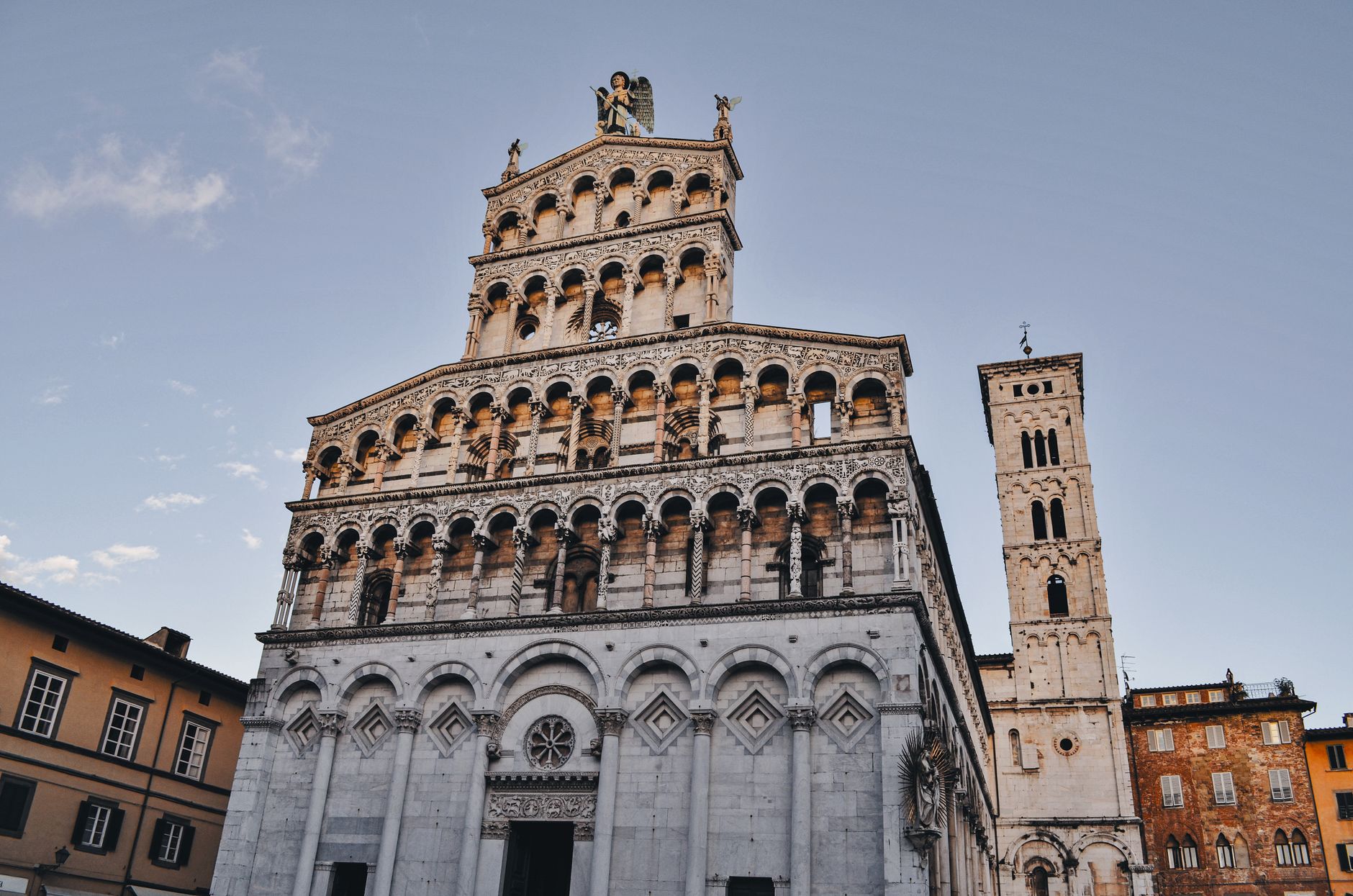
Inspect the Romanesque facade of San Michele in Foro and visit the Volto Santo crucifix inside the eleventh-century cathedral of San Martino.
Local Baking in Lucca Tuscany Italy
Pick up sweet buccellato scented with aniseed and raisins at Taddeucci on Piazza San Michele, or order warm castagnaccio chestnut flour cake.
Wine & Olive Oil in Lucca Tuscany Italy
Taste Colline Lucchesi DOC reds and delicate, peppery olive oils pressed from Frantoio and Leccino olives in the terraced hills of Montecarlo.
Historic Towers in Lucca Tuscany Italy
Climb the 230 stone steps of the fourteenth-century Torre Guinigi to sit beneath seven live holm oaks growing high above the terracotta roofs.
Classical Music in Lucca Tuscany Italy
Visit Giacomo Puccini's birthplace on Corte San Lorenzo, then catch the nightly recital series inside the Romanesque church of San Giovanni.
Markets & Produce in Lucca Tuscany Italy
Browse the weekly market along the ramparts for Garfagnana pecorino, cured biroldo blood sausage, and bundles of wild Tuscan cavolo nero.
Historic Palaces in Lucca Tuscany Italy
Wander the baroque terraced gardens and frescoed salons of Palazzo Pfanner, laid out in 1667 just beneath the northern city walls.
Country Villas in Lucca Tuscany Italy
Cycle northeast to Villa Torrigiani and Villa Reale di Marlia to explore manicured camellia paths, water theatres, and Renaissance grottoes.
Mountain Day Trips in Lucca Tuscany Italy
Ride the local train north into the Garfagnana valley to walk the medieval Devil's Bridge in Borgo a Mozzano and eat mountain farro.
Antique Shopping in Lucca Tuscany Italy
Hunt through the monthly open-air antique fair spread across Piazza del Duomo, trading vintage brass, mid-century pottery, and linen.