

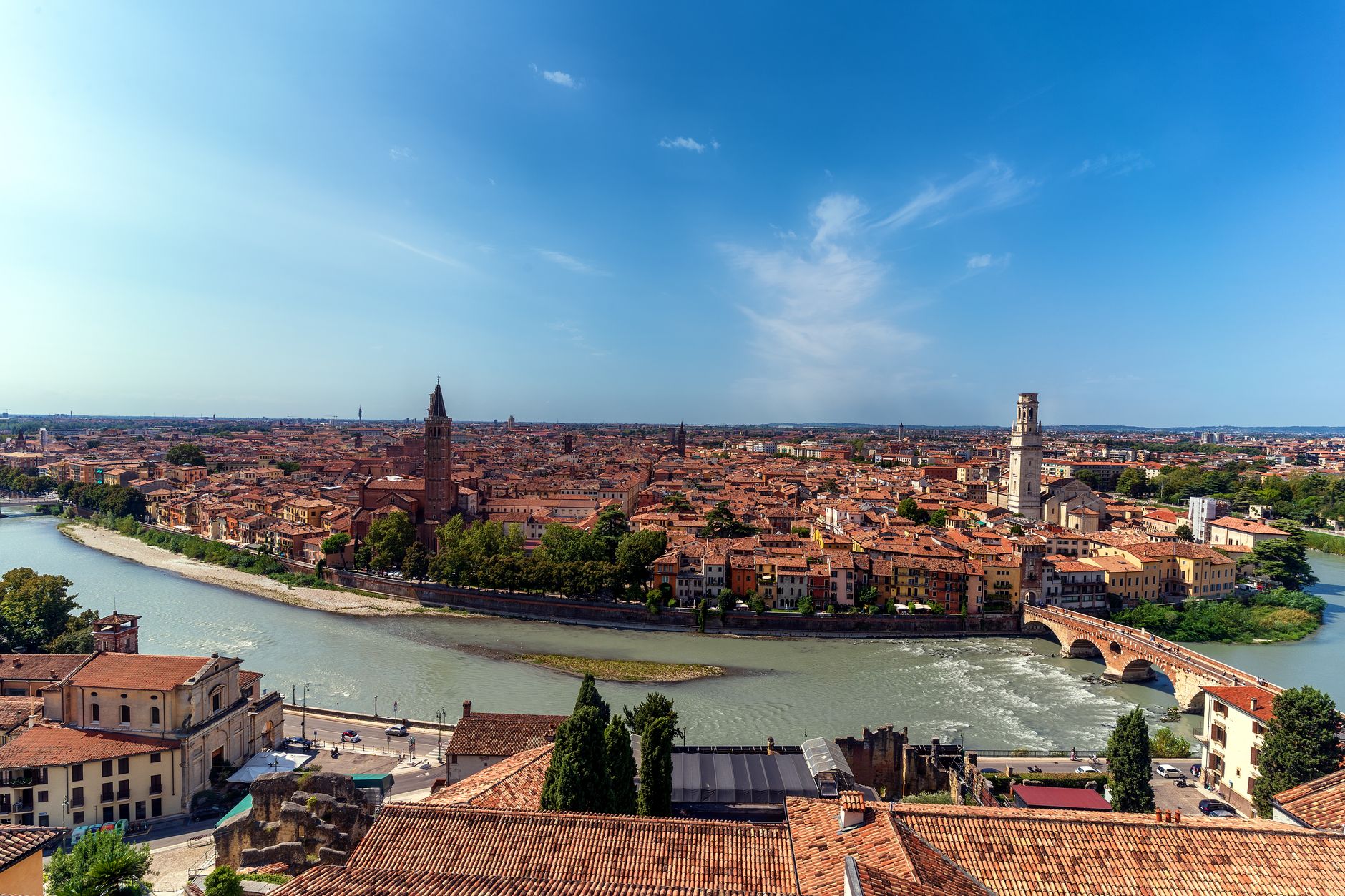


The Adige sweeps in a broad grey-green loop around Roman brick and rose-tinted marble, keeping the town compact and walkable. You cross the Ponte Pietra, step past the first-century Arena, and realise this is a functioning northern hub rather than an operatic stage set. Locals gather at marble counter-tops for a glass of crisp Garganega or rich Amarone, debating football over bowls of braised horsemeat pastissada. It rewards an unhurried footpace.
Last updated 28 Aug 2026
Build a Verona itinerary.
Choose up to 4 threads that pull you in. Your plan arrives organised around them.
The Bed
Where to stay in Verona
Which part of town to book, and what each one costs you in walking, noise or quiet.
The Comparison
Verona, or somewhere near it
The places you are realistically choosing between, and the honest case for each.
The Local Record
Where to read more about Verona
The blogs, boards, guides and operators worth bookmarking.
What to do in Verona Veneto Italy
Verona centers on the loop of the Adige River, where Roman ruins and medieval palaces sit side by side. Daily life revolves around morning espresso in Piazza delle Erbe, quiet afternoon walks through churches like San Zeno, and late-afternoon wine in corner taverns. It suits culture enthusiasts, couples, and food lovers who prefer an easily walkable town with world-class opera and robust regional cooking.
24 hours in Verona Veneto Italy
Start early at the Roman Arena on Piazza Bra to beat the crowds, then follow Via Mazzini to Piazza delle Erbe for lunch. Spend the afternoon crossing the Castelvecchio bridge, ending your evening with a plate of bigoli with duck ragu and a glass of Ripasso near Piazza dei Signori. Select 1 Day above to see it.
2 days in Verona Veneto Italy
Cross the Ponte Pietra into the hillside Veronetta district to explore the Giardino Giusti and climb to Castel San Pietro. For dinner, seek out a traditional osteria on the east bank to try pastissada de caval with creamy polenta alongside a bold Amarone. Choose 2 Days to expand the plan.
3 days in Verona Veneto Italy
A third day allows an effortless twenty-minute train trip west to the olive-lined shores of Lake Garda, or a relaxed rental car tour through the cellars of Negrar in the Valpolicella hills, returning for late-evening gelato by the Adige.
Verona Veneto Italy itineraries by interest
Wine & Vineyards in Verona Veneto Italy
Sip velvety Amarone della Valpolicella and crisp white Soave at historic osterie along Vicolo San Marco in Foro.
Roman Heritage in Verona Veneto Italy
Tour the first-century Arena on Piazza Bra and cross the ancient stone arches of Ponte Pietra above the rushing Adige.
Sacred Architecture in Verona Veneto Italy
Admire the Romanesque bronze doors of the Basilica di San Zeno Maggiore and the striped marble facade of the Duomo.
Traditional Dining in Verona Veneto Italy
Eat pastissada de caval braised horsemeat stew with polenta, or handmade bigoli pasta tossed in rich duck ragu.
City Views in Verona Veneto Italy
Ride the funicular or climb the stone stairway to Castel San Pietro for a panoramic view over terracotta rooftops.
Historic Squares in Verona Veneto Italy
Browse market stalls under Renaissance frescoes in Piazza delle Erbe, then linger over espresso in Piazza dei Signori.
Local Markets in Verona Veneto Italy
Pick up Monte Veronese cheese, seasonal radicchio, and cured soppressa salami from covered food stalls near Via Mazzini.
Castles & Fortresses in Verona Veneto Italy
Walk the fortified red-brick battlements and cross the river bridge at the fourteenth-century Castelvecchio museum.
Walking Routes in Verona Veneto Italy
Wander the quiet medieval lanes of the Veronetta district across the river, climbing past quiet gardens and chapels.
Day Trips in Verona Veneto Italy
Take a twenty-minute train ride to Peschiera del Garda on Lake Garda, or head into the vineyards of the Valpolicella.
Garden Walks in Verona Veneto Italy
Stroll between centuries-old cypress trees, boxwood mazes, and Renaissance statues at the terraced Giardino Giusti.
Pastries & Sweets in Verona Veneto Italy
Sample flaky nadalin holiday bread, sugar-dusted pandoro, or crisp zaletti cornmeal biscuits at historic pasticcerie.