


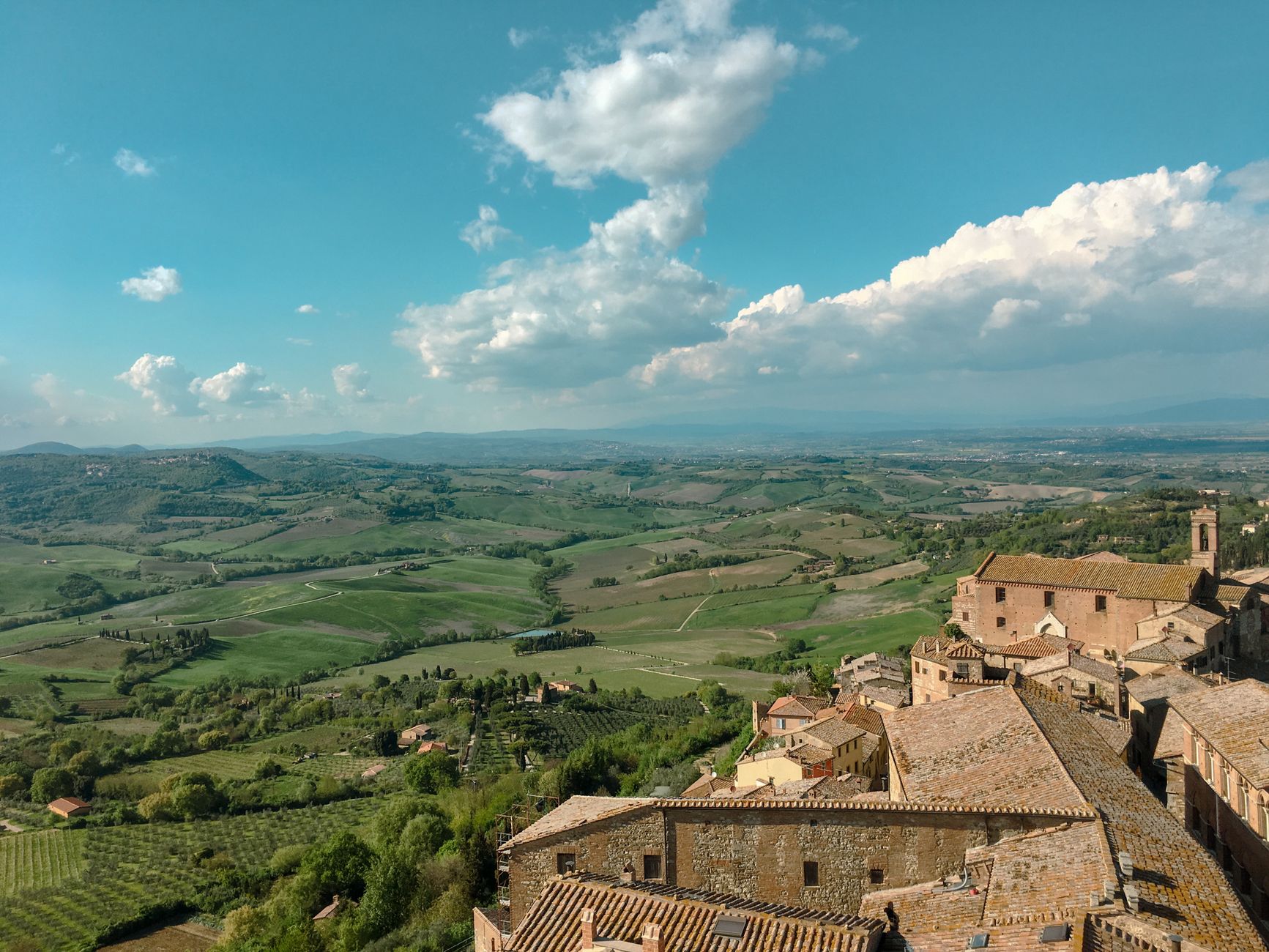
Your calves will register the slope long before your eyes settle on the Piazza Grande. Built along a narrow limestone spine between the Val di Chiana and the Val d'Orcia, this high medieval town funnels you upward past sixteenth-century palazzi to vaulted cellars cut straight into the tufa. You come for the Vino Nobile di Montepulciano, aged in massive oak casks underground, and stay for plates of hand-rolled pici tossed in garlic and breadcrumbs.
Last updated 28 Aug 2026
Build a Montepulciano itinerary.
Choose up to 4 threads that pull you in. Your plan arrives organised around them.
The Bed
Where to stay in Montepulciano
Which part of town to book, and what each one costs you in walking, noise or quiet.
The Comparison
Montepulciano, or somewhere near it
The places you are realistically choosing between, and the honest case for each.
The Local Record
Where to read more about Montepulciano
The blogs, boards, guides and operators worth bookmarking.
What to do in Montepulciano Tuscany Italy
Montepulciano runs along a steep single ridge, demanding sturdy shoes and rewarding you with underground cellars and high Renaissance stone. Days revolve around cellar tours, unhurried lunches of thick pici pasta, and evening strolls along Via del Corso. It suits independent walkers, wine lovers, and travellers who prefer quiet evenings over late-night commotion.
24 hours in Montepulciano Tuscany Italy
Enter through Porta al Prato at nine and wind up Via di Gracciano. Tour the subterranean vaults of Cantina Ercolani or De' Ricci, pause for pici all'aglione on Via di Voltaia, then reach Piazza Grande before climbing the town hall tower by four for sunset. Select 1 Day above to see it.
2 days in Montepulciano Tuscany Italy
A second day lets you walk out through Porta delle Farine down to San Biagio in the morning light. Spend the afternoon tasting Rosso di Montepulciano at small estates on the road toward Monticchiello, finishing with grilled Chianina steak in a rustic cellar. Choose 2 Days to expand the plan.
3 days in Montepulciano Tuscany Italy
With three days, venture across the clay knolls of the Val d'Orcia to Pienza for aged pecorino, or soak in the hot mineral waters at Bagno Vignoni. You return each evening without hurry, taking an outdoor table for a quiet glass of Vin Santo as the valley cools.
Montepulciano Tuscany Italy itineraries by interest
Wine & Vineyards in Montepulciano Tuscany Italy
Cellars like De' Ricci and Contucci age Vino Nobile from Sangiovese grapes inside vast vaulted caverns carved directly into the rock below the streets.
Historic Architecture in Montepulciano Tuscany Italy
Antonio da Sangallo the Elder left his mark on the town hall facade and the freestanding Renaissance temple of San Biagio just below the city walls.
Regional Pasta in Montepulciano Tuscany Italy
Pici are thick, hand-rolled Tuscan noodles, best served all'aglione with local sweet garlic or with a slow-simmered wild boar ragu at a wooden table.
Sacred Art in Montepulciano Tuscany Italy
The Duomo on Piazza Grande houses Taddeo di Bartolo's 1401 Assumption of the Virgin triptych, flanked by stone works from Michelozzo.
Scenic Viewpoints in Montepulciano Tuscany Italy
Climb the tower of Palazzo Comunale on clear mornings for panoramic views across the Val d'Orcia, Lake Trasimeno, and distant Monte Amiata.
Countryside Walks in Montepulciano Tuscany Italy
A gravel path descends through olive groves from Porta al Prato down to the sixteenth-century travertine dome of the Madonna di San Biagio.
Cured Meats in Montepulciano Tuscany Italy
Butchers along Via di Gracciano nel Corso slice salty Cinta Senese prosciutto, wild boar salumi, and fennel-dusted finocchiona.
Local Crafts in Montepulciano Tuscany Italy
Workshops tucked into alleys along Via di Voltaia produce hand-stitched leather goods, hammered copper cookware, and hand-thrown ceramics.
Thermal Baths in Montepulciano Tuscany Italy
The sulfur springs of Terme di Montepulciano and nearby Bagno Vignoni offer restorative soaks in ancient travertine pools just minutes away.
Day Trips in Montepulciano Tuscany Italy
Drive twenty minutes west across rolling cypress hills to Pienza for wheels of pecorino, or south to the fortress town of Radicofani.
Town Squares in Montepulciano Tuscany Italy
Piazza Grande sits at the town crest, framed by the raw brick Duomo, Palazzo Contucci, and Palazzo de' Nobili-Tarugi with its open loggia.
Local Produce in Montepulciano Tuscany Italy
Weekly Thursday markets at Piazzale Nenni sell Chianina beef cuts, seasonal porcini mushrooms, local chestnut honey, and fresh sheep ricotta.