Mykonos Town.


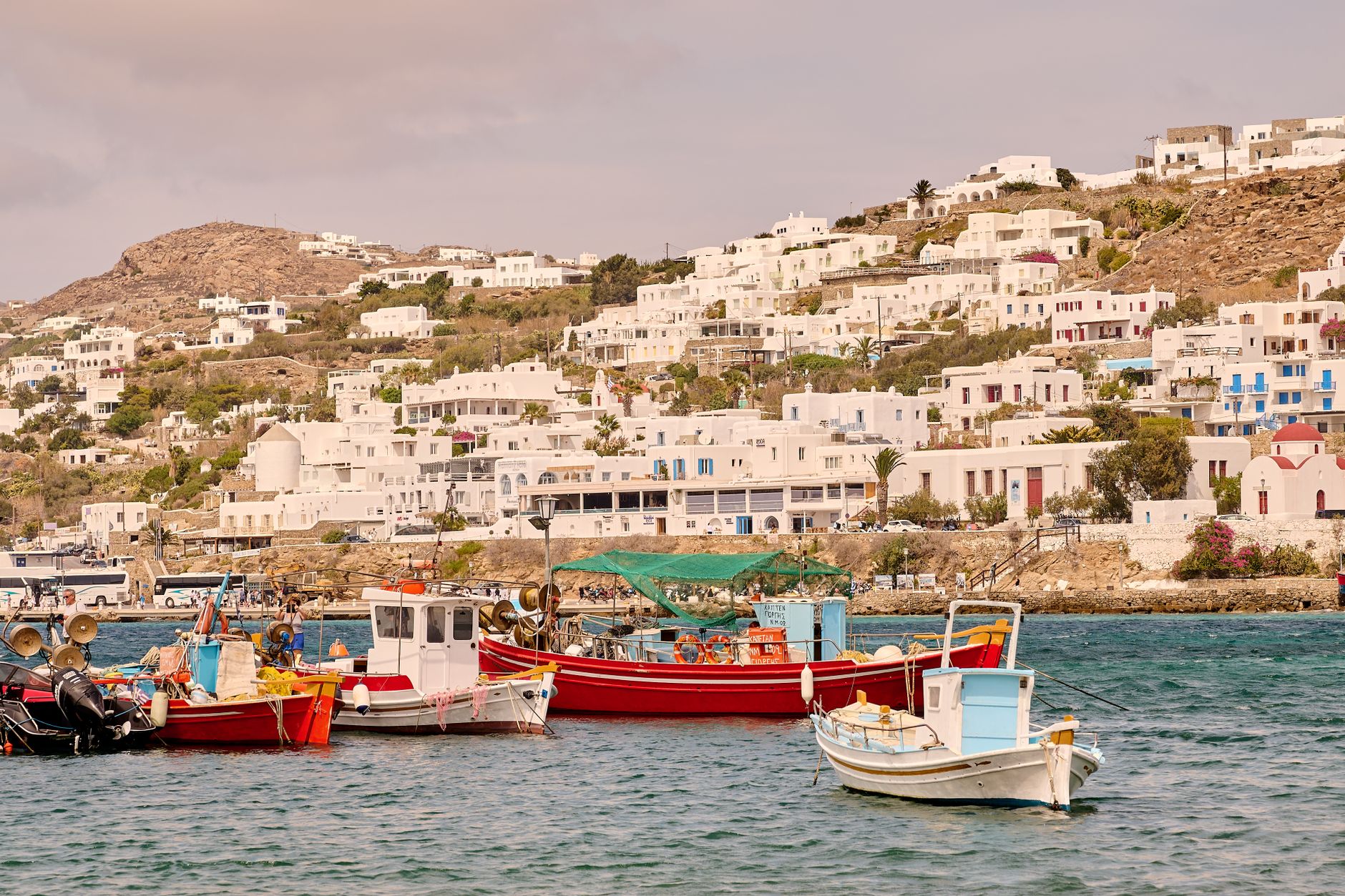


Located ten minutes by bus from Mykonos Airport and the Tourlos ferry port, Mykonos Town is the island's whitewashed capital, built as a seaside labyrinth to deter pirate raids and long known for its harbourfront trade. Windmills from the sixteenth century still frame the skyline above Little Venice. Mykonos Town is worth visiting if you want to navigate dense Cycladic alleyways on foot and eat peppered kopanisti cheese beside the sea. Look elsewhere if you want an inexpensive island escape free of evening crowds.
Last updated 19 Oct 2026
Build a Mykonos Town itinerary.
Choose up to 4 threads that pull you in. Your plan arrives organised around them.
The Bed
Where to stay in Mykonos Town
Which part of town to book, and what each one costs you in walking, noise or quiet.
The Comparison
Mykonos Town, or somewhere near it
The places you are realistically choosing between, and the honest case for each.
The Local Record
Where to read more about Mykonos Town
The blogs, boards, guides and operators worth bookmarking.
What to do in Mykonos Town South Aegean Greece
Chora is a pedestrian maze of blue-trimmed alleys, whitewashed sugar-cube houses, and waterfront plazas. Days begin slowly with Greek coffee along the harbour before shifting into backstreet strolling and late-afternoon swims. By evening, life concentrates around the tavernas of Little Venice and Matogianni Street. It suits independent walkers, history enthusiasts, and diners who value authentic island produce amidst lively evening energy.
24 hours in Mykonos Town South Aegean Greece
Spend your morning wandering the quiet lanes of Kastro before visiting the Panagia Paraportiani church. Grab lunch at a backstreet spot for fresh red mullet and louza pork. In the late afternoon, walk five minutes up to the Kato Mili windmills for the sunset, then finish with seafood pasta by the water in Little Venice. Select 1 Day above to see it.
2 days in Mykonos Town South Aegean Greece
Devote your second morning to the Aegean Maritime Museum and Gioras Wood Bakery for warm rusks. In the afternoon, take a brief local bus ride inland to the quiet village of Ano Mera to tour the sixteenth-century Panagia Tourliani monastery, followed by a slow rustic lunch of roast goat and sharp kopanisti cheese. Choose 2 Days to expand the plan.
3 days in Mykonos Town South Aegean Greece
A third day allows an unhurried morning boat crossing to ancient Delos to walk the Terrace of the Lions and Doric temples. Return to Mykonos Town by mid-afternoon to explore the Old Port fish market, then enjoy a relaxed dinner of grilled cuttlefish and crisp Assyrtiko wine away from the central thoroughfares.
Mykonos Town South Aegean Greece itineraries by interest
Local Seafood in Mykonos Town South Aegean Greece
Taste grilled barbouni, octopus hanging dry along the Old Port harbour, and sea urchin salads drizzled with local olive oil at waterside tavernas.
Sacred Architecture in Mykonos Town South Aegean Greece
Walk to the whitewashed Panagia Paraportiani in Kastro, an asymmetrical complex of five merged chapels built from the fifteenth to seventeenth centuries.
Maritime History in Mykonos Town South Aegean Greece
Visit the Aegean Maritime Museum on Enoplon Dynameon Street to inspect ancient nautical maps, ship models, and an intact nineteenth-century lighthouse.
Traditional Baking in Mykonos Town South Aegean Greece
Stop at Gioras Wood Bakery in Chora, operating since the eighteenth century, for sourdough loaves and paximadia rusks baked in an old stone oven.
Artisan Cheeses in Mykonos Town South Aegean Greece
Sample spicy kopanisti, a peppery fermented cow and sheep milk cheese cured in terracotta pots, paired with sweet louza cured pork and local wine.
Day Trips in Mykonos Town South Aegean Greece
Board the morning ferry from the Old Port for the thirty-minute crossing to Delos, the sacred sanctuary and uninhabited archaeological park.
Historic Windmills in Mykonos Town South Aegean Greece
Climb the low ridge above Alefkandra to inspect the Kato Mili, sixteenth-century stone wheat mills built by the Venetians to harness Aegean gales.
Cured Meats in Mykonos Town South Aegean Greece
Seek out louza, spice-cured pork loin seasoned with savoury winter thyme and allspice, sliced paper-thin and served across traditional meze bars.
Coastal Walks in Mykonos Town South Aegean Greece
Stroll the flagstone edge of Little Venice where eighteenth-century sea captains built houses with balconies suspended directly over breaking waves.
Local Tavernas in Mykonos Town South Aegean Greece
Settle into unpretentious backstreet spots like Taverna Kounelas for whole sea bream cooked simply over charcoal with lemon and wild greens.
Island Viticulture in Mykonos Town South Aegean Greece
Drink glasses of dry Assyrtiko and Mandilaria at wine bars near Matogianni Street, paired with local barley rusks and green olives.
Archaeological Sights in Mykonos Town South Aegean Greece
Examine the Archaeological Museum of Mykonos near the harbour for seventh-century BC pithos burial jars depicting the Trojan Horse in relief.