

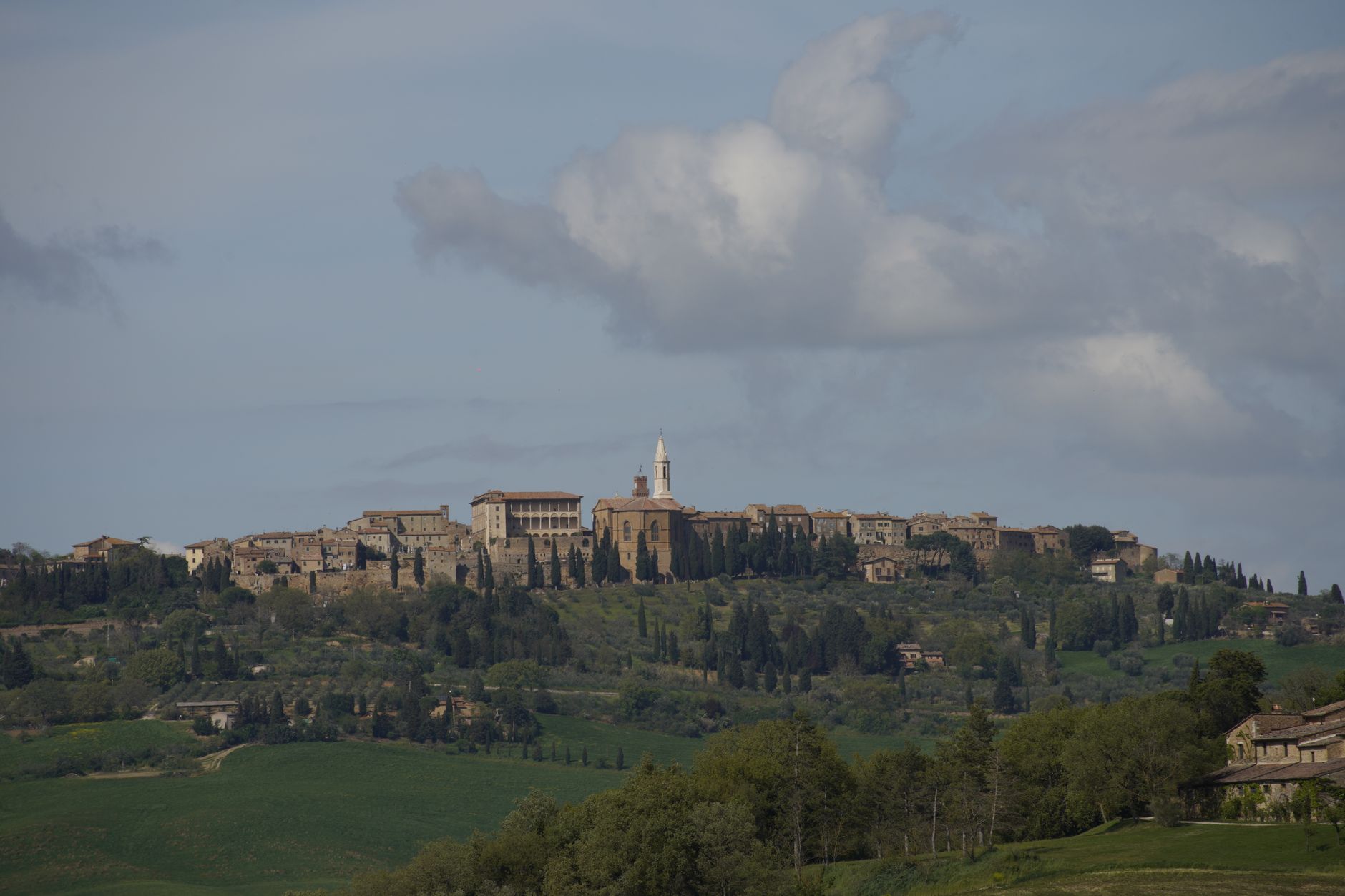


The wind off the Val d'Orcia hits the south wall first, cold even in late spring, carrying the dry scent of cut wheat up to Corso Rossellino. In 1459, Pope Pius II ordered his dusty birth village bulldozed and rebuilt as the ideal humanist city, and remarkably, the stone grid held. Today you walk between travertine palazzi and wedge after wedge of sheep's milk pecorino, aged in ash or walnut leaves. It takes twenty minutes to cross on foot, and every alley ends in open sky.
Last updated 28 Aug 2026
Build a Pienza itinerary.
Choose up to 4 threads that pull you in. Your plan arrives organised around them.
The Bed
Where to stay in Pienza
Which part of town to book, and what each one costs you in walking, noise or quiet.
Places to stay
Central, well-rated and easy to find again. Distances are from the middle of town.
These links go to Booking.com and earn us a commission. They cost you nothing extra.
The Comparison
Pienza, or somewhere near it
The places you are realistically choosing between, and the honest case for each.
The Local Record
Where to read more about Pienza
The blogs, boards, guides and operators worth bookmarking.
What to do in Pienza Tuscany Italy
Pienza is compact enough to grasp in an afternoon, perched high above the clay hills of southern Tuscany. Life runs along Corso Rossellino, anchored by the central piazza and quiet residential alleys with poetic street names. Days here revolve around architectural study, tasting wheels of sheep cheese, and leaning over the stone parapets with a glass of local wine. It suits travellers who appreciate slow pacing, good design, and rural hospitality.
24 hours in Pienza Tuscany Italy
Start early on Piazza Pio II before day-trippers arrive. Visit Palazzo Piccolomini’s loggia garden, then grab a bench on Via del Bacio. For lunch, order hand-rolled pici with cinghiale at a backstreet trattoria. Spend the afternoon sampling aged pecorino in local cellars, then finish with a sunset walk along the southern walls as the valley turns gold. Select 1 Day above to see it.
2 days in Pienza Tuscany Italy
A second day gives you time to hike down the dirt track to the 11th-century Pieve di Corsignano. Afterwards, take the short ten-minute drive to the fortified hamlet of Monticchiello for lunch, ordering sliced cinta senese and local beans. Return to Pienza by evening to drink Orcia DOC wine on quiet tavern terraces after the tour buses depart. Choose 2 Days to expand the plan.
3 days in Pienza Tuscany Italy
With three days, venture deeper into the Val d'Orcia. Spend a morning bathing in the thermal springs of Bagno Vignoni, followed by wine tastings in the vineyards around Montalcino or Montepulciano. Reserve late afternoons for unhurried farm visits around Pienza, watching cheese makers turn raw sheep's milk into fresh wheels before a relaxed dinner in town.
Pienza Tuscany Italy itineraries by interest
Artisan Cheese in Pienza Tuscany Italy
Taste pecorino di Pienza aged in ash, walnut leaves, or oak casks at family-run botteghe along Corso Rossellino, paired with chestnut honey.
Renaissance Architecture in Pienza Tuscany Italy
Tour Bernardo Rossellino’s 15th-century Piazza Pio II, connecting the travertine cathedral, Palazzo Piccolomini, and the Palazzo Vescovile.
Panoramic Walks in Pienza Tuscany Italy
Walk the southern town walls along Via del Casello for unbroken views of Mount Amiata and the clay knolls of the Val d'Orcia.
Pasta Traditions in Pienza Tuscany Italy
Order thick, hand-rolled pici tossed with rich wild boar ragù or simple garlic and tomato aglione at rustic trattorias off Piazza di Spagna.
Regional Wine in Pienza Tuscany Italy
Sample bright Rosso di Montalcino and structured Orcia DOC reds poured by the glass at small enoteche tucked into stone vaulted cellars.
Sacred Art in Pienza Tuscany Italy
Inspect the painted 15th-century altarpieces inside the Duomo and the rare cope of Pius II preserved in the Museo Diocesano.
Countryside Cycling in Pienza Tuscany Italy
Rent an e-bike to navigate the unpaved gravel strata of the white roads linking Pienza to the cypress lined chapel of Vitaleta.
Thermal Baths in Pienza Tuscany Italy
Drive twenty minutes south to the travertine pools of Bagno Vignoni or the natural sulphur springs steaming at Bagni San Filippo.
Palace Gardens in Pienza Tuscany Italy
Step onto the suspended hanging garden behind Palazzo Piccolomini to see Renaissance landscaping framed against the open valley.
Historic Villages in Pienza Tuscany Italy
Take short morning drives to nearby fortified hilltop settlements like Monticchiello, Castiglione d'Orcia, and San Quirico.
Local Olive Oil in Pienza Tuscany Italy
Drizzle peppery Terre di Siena DOP extra virgin olive oil over toasted sourdough fettunta at quiet neighborhood osterie.
Pottery & Craft in Pienza Tuscany Italy
Browse handmade Tuscan ceramics, terracotta planters, and turned olive wood boards crafted in small workshops along Via dell'Amore.