Amiens.


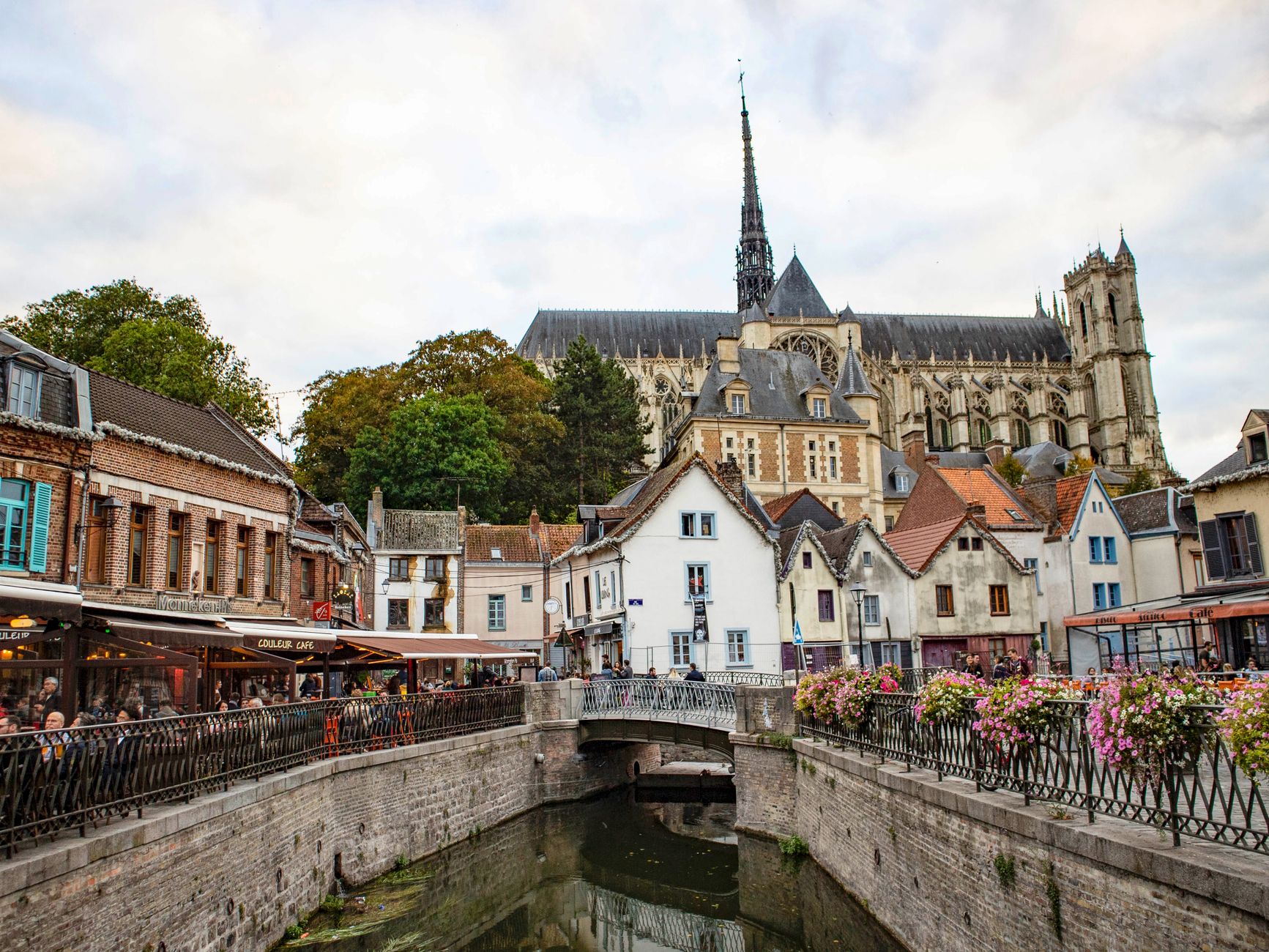


Amiens sits seventy-five minutes north of Paris by direct TER train from Gare du Nord, anchored by the Somme River. It is known for its thirteenth-century Gothic cathedral and the hortillonnages, a mosaic of market gardens worked from flat-bottomed wooden boats. Amiens is worth visiting if you want monumental medieval masonry, peaceful canal walking, and rich Picard cooking in a compact provincial city. Look elsewhere if you want late-night clubbing or sunny Mediterranean weather.
Last updated 25 Sept 2026
Build a Amiens itinerary.
Choose up to 4 threads that pull you in. Your plan arrives organised around them.
The Bed
Where to stay in Amiens
Which part of town to book, and what each one costs you in walking, noise or quiet.
The Comparison
Amiens, or somewhere near it
The places you are realistically choosing between, and the honest case for each.
The Local Record
Where to read more about Amiens
The blogs, boards, guides and operators worth bookmarking.
What to do in Amiens Hauts-de-France France
Amiens revolves around the Somme and its vast cathedral. The city is flat, tidy, and built for walking, splitting naturally between the stately nineteenth-century town centre, the waterborne gardens of the hortillonnages, and the Saint-Leu quarter where mill races run past low brick houses. It suits travellers who prefer unhurried mornings, architectural scale, and straightforward Northern hospitality over crowded metropolitan rush.
24 hours in Amiens Hauts-de-France France
Start early under the soaring nave of the cathedral before crossing to Place Parmentier for lunch of ficelle picarde on Quai Bélu. Spend the afternoon drifting through the hortillonnages by electric boat, then walk Saint-Leu at dusk for a local craft cider. Everything sits within a twenty-minute radius on foot. Select 1 Day above to see it.
2 days in Amiens Hauts-de-France France
A second day lets you explore Jules Verne’s turreted house on rue Charles Dubois and the newly restored Musée de Picardie. For dinner, head away from the river into the city centre for roasted duck pâté en croûte and a slice of gâteau battu, the rich regional egg-yolk brioche. Choose 2 Days to expand the plan.
3 days in Amiens Hauts-de-France France
With three days, venture beyond the urban ring to the chalk cliffs and salt marshes of the Baie de Somme, or take a quiet morning train to the First World War memorials and reconstructed villages of the Upper Somme valley, returning in time for dinner.
Amiens Hauts-de-France France itineraries by interest
Sacred Architecture in Amiens Hauts-de-France France
Notre-Dame d'Amiens is double the volume of Notre-Dame de Paris, filled with carved stalls and light that catches high thirteenth-century vaults.
Canal Walks in Amiens Hauts-de-France France
Paths follow the Somme through the Saint-Leu district, past timber houses, footbridges, and flat-bottomed boats moored against weeping willows.
Regional Cooking in Amiens Hauts-de-France France
Look for ficelle picarde, a savoury crêpe baked with ham, mushrooms, and heavy cream, alongside tartes au maroilles at Saint-Leu bistros.
Local Baking in Amiens Hauts-de-France France
Macarons d'Amiens rely on almond paste, honey, and bitter almond oil, baked into dense chewy rounds at century-old confectioners like Jean Trogneux.
Urban Greenery in Amiens Hauts-de-France France
The hortillonnages span 300 hectares of waterlogged alluvial plots, cultivated since Roman times and visited by electric barque from boulevard Beauvillé.
Modern Literature in Amiens Hauts-de-France France
Maison de Jules Verne on rue Charles Dubois preserves the writer's globe-filled study, observation tower, and personal library from the late 1800s.
Art Collections in Amiens Hauts-de-France France
Musée de Picardie displays second-century Gallo-Roman archaeology and nineteenth-century French canvases inside an imposing Second Empire palace.
Markets & Produce in Amiens Hauts-de-France France
The Saturday morning market on Place Parmentier sells leeks, cabbages, and watercress brought directly to the river quays by local growers.
Riverside Dining in Amiens Hauts-de-France France
Quai Bélu is lined with outdoor tables serving cider, pork terrines, and local beer, with straight views across the water to the cathedral.
Day Trips in Amiens Hauts-de-France France
Take a 45-minute bus north to the Somme battlefields and Thiepval Memorial, or head west to the Baie de Somme for seals and marshland walking.
Craft Traditions in Amiens Hauts-de-France France
Workshops around Saint-Leu still produce traditional velvet cutting, stained glass restoration, and bespoke wooden barques à cornet for market gardeners.
War History in Amiens Hauts-de-France France
Centipedes of trenches, underground shelters at Naours, and the Franco-Australian Museum in Villers-Bretonneux sit an easy half-hour drive away.