

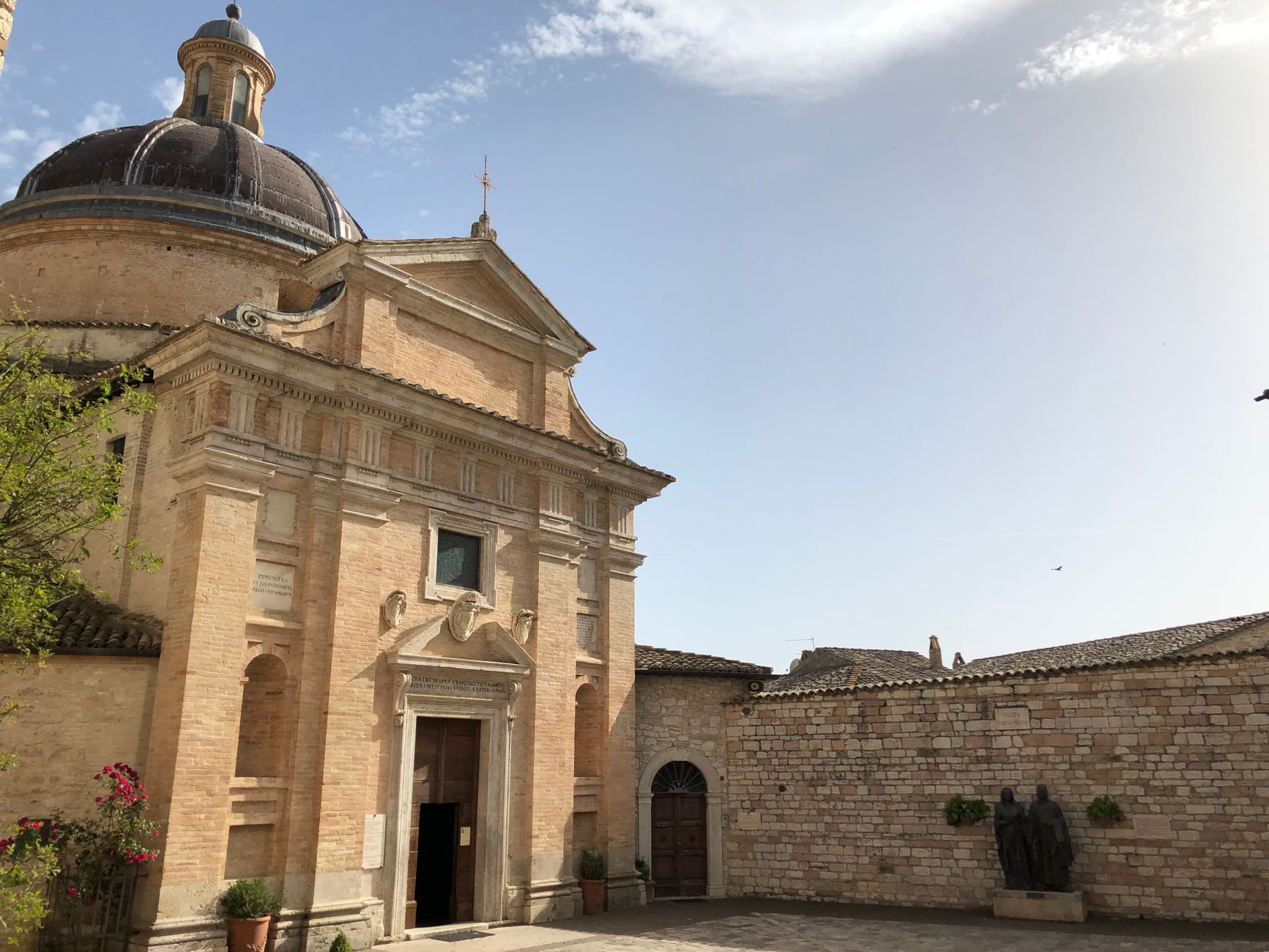
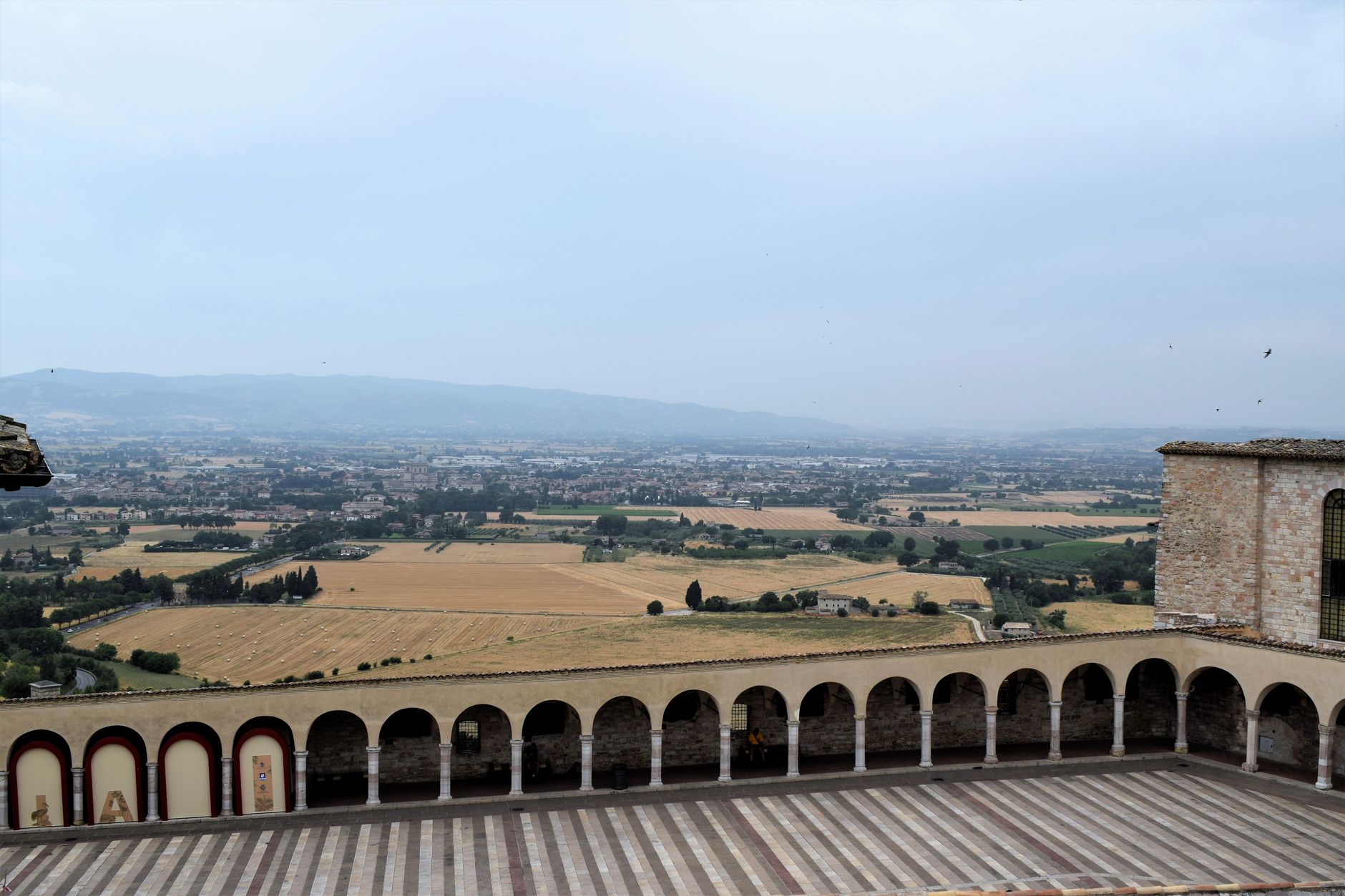


Pink limestone quarried from Mount Subasio gives these alleys a pale glow that turns copper by late afternoon. The town climbs a steep spur over the Valle Umbra, where pilgrims and walkers share pavement with tradesmen hauling crates up via San Francesco. You come for Giotto’s revolutionary frescoes in the double-decker basilica, but you stay for the quiet evening lanes and the smell of woodsmoke and roasting wild boar drifting from tiny vaulted cellars.
Last updated 28 Aug 2026
Build a Assisi itinerary.
Choose up to 4 threads that pull you in. Your plan arrives organised around them.
We'll craft a 4-lens plan for Assisi, one collapsible strand per lens.
Nature Trails
Walk the shaded paths through the Bosco di San Francesco down to the 13th-century Santa Croce complex and the Tescio river.
Nature Trails
Walk the shaded paths through the Bosco di San Francesco down to the 13th-century Santa Croce complex and the Tescio river.
Hiking the Roman Aqueduct Trail
Sentiero dell'Acquedotto Romano
Follow the five-kilometer path tracing ancient stone water channels from Spello to Collepino. Wear sturdy boots and bring water; allow two hours for the gentle uphill walk.
Editor TipBuilt in the first century BC, this conduit once carried mountain spring water down to Roman Hispellum, slicing through terraced olive groves that have framed these limestone ridges for two millennia. Start before nine to beat both the heat and the weekend walkers who attempt the gravel in smooth loafers.
Hilltop Walks
Climb the steep stone staircase to the 14th-century Rocca Maggiore fortress for wide panoramas across the Spoleto valley.
Hilltop Walks
Climb the steep stone staircase to the 14th-century Rocca Maggiore fortress for wide panoramas across the Spoleto valley.
Ridge Walk to Rocca Maggiore
Rocca Maggiore
Hike up the stone path from Porta Perlici for twenty minutes. Entrance to the castle grounds is seven euros, giving you access to the defensive ramparts and sweeping views across the Spoleto valley.
Editor TipRebuilt by Cardinal Albornoz in 1367 over ancient imperial fortifications, this hilltop stronghold dominated the valley below and provided strategic refuge during centuries of feudal conflict. The wind off Mount Subasio bites hard at the summit. Catch your breath on the lower stone bench before ascending the tower.
Walking Roman Amphitheatre Alleys
Anfiteatro Romano di Assisi
Free to wander any hour. Enter off Via Anfiteatro to trace the first-century travertine ring, now supporting quiet residential houses and kitchen gardens. Allow forty-five minutes.
Editor TipBuilt under Emperor Augustus, the arena once held over five thousand citizens. Rather than quarrying it away, medieval families built their homes directly on the Roman foundations. Early light cuts across the travertine arches before delivery vans rumble in. Wear shoes with genuine tread.
Local Wine
Taste mineral-driven Grechetto and robust Sagrantino di Montefalco paired with aged pecorino at enotecas tucked along Via Portica.
Local Wine
Taste mineral-driven Grechetto and robust Sagrantino di Montefalco paired with aged pecorino at enotecas tucked along Via Portica.
Sagrantino Wine and Handmade Pasta
Trattoria Pallotta
Reserve two days ahead for an indoor table under the vaulted arches. Order the strangozzi with black truffle and a carafe of dry Montefalco Sagrantino.
Editor TipMontefalco Sagrantino is Umbria's powerhouse red grape, thick-skinned and tannic, built specifically to balance the region's rich, earthy pastas and cured pork. Do not rush through the first pour before the food arrives. The tannins will politely remind you who is in charge.
Tasting Native Grechetto Whites
Bibenda Assisi
Step into this quiet vaulted cellar on Vicolo Nepis. Order a glass of crisp Grechetto dei Colli Martani with aged caciotta for around eight euros. No reservations needed before noon.
Editor TipUmbria's white wine identity centres on Grechetto, an ancient grape vinified here for centuries. It carries a distinctive chalky minerality drawn straight from the limestone hills. Ask for local Trebbiano Spoletino if they have an open bottle. Do not swirl it like a pretender; just drink.
Tasting Sagrantino and Grechetto
Cantina Scacciadiavoli
Book the morning cellar walk and tasting online for twenty-five euros. You will taste mineral Grechetto whites alongside the formidable, deeply tannic Sagrantino di Montefalco.
Editor TipFounded in 1884 by Prince Ugo Boncompagni Ludovisi, this estate pioneered gravity-fed vinification to tame the thick-skinned Sagrantino grape, a variety native solely to these clay hills. Give the Sagrantino time in the glass; drinking it immediately after pouring feels like chewing on raw oak timber.
Tasting Native Sagrantino
Enoteca Properzio
Reserve a table in the 15th-century palazzo for a flight of aged Montefalco reds paired with local pecorino and cured pork. Plan on two hours and roughly 45 euros per person.
Editor TipSagrantino is Umbria's fiercely tannic native grape, traditionally dried by Franciscan monks for sacramental wine and now transformed into one of central Italy's most muscular reds. Ask for a glass of crisp Grechetto to start while you study the list. It cuts through the afternoon heat.
Ancient Ruins
Step beneath Piazza del Comune into the Roman Forum and inspect the intact Corinthian columns of the 1st-century Tempio di Minerva.
Ancient Ruins
Step beneath Piazza del Comune into the Roman Forum and inspect the intact Corinthian columns of the 1st-century Tempio di Minerva.
Exploring the Roman Forum
Museo Civico e Foro Romano
Buy a combined ticket at the entrance on Via Portica for five euros. Spend forty-five minutes walking the glass walkways over the first-century paving stones and ancient temple plinths.
Editor TipCenturies before Francis, Asisium was a bustling Roman municipality. The forum lies directly beneath the medieval Piazza del Comune, preserving monumental inscriptions and the original temple base. The air down here is cool year-round. Bring a light layer even on warm summer mornings.
Roman Amphitheatre Quarter Walk
Anfiteatro Romano
Wander the elliptical lane of Via Anfiteatro, where medieval cottages sit on first-century Roman stonework. Free to explore; spend forty minutes walking the quiet residential curve.
Editor TipFirst-century Assisium staged gladiatorial games here until medieval families built their houses straight into the travertine arches, preserving the ancient oval street grid. Look closely at the garden walls near the northern archway to spot original Roman brickwork fused with medieval mortar.
Note from the Editor
“Beat the tour buses to Piazza del Comune before nine o'clock. The stone alleys are steep, so wear proper walking shoes, and buy your combined museum ticket at the first desk to skip later queues.”
The Bed
Where to stay in Assisi
Which part of town to book, and what each one costs you in walking, noise or quiet.
The Comparison
Assisi, or somewhere near it
The places you are realistically choosing between, and the honest case for each.
The Local Record
Where to read more about Assisi
The blogs, boards, guides and operators worth bookmarking.
What to do in Assisi Umbria Italy
Assisi stretches along the spine of Mount Subasio, layered with medieval stonework and Roman foundations. Days naturally follow the rise and fall of the topography, starting at the western Basilica di San Francesco and ending uphill near the cathedral of San Rufino. It suits walkers who appreciate early Italian art, peaceful stone cloisters, and rustic trattorias serving wood-roasted meats, truffles, and hearty central Italian wines.
24 hours in Assisi Umbria Italy
Enter the Basilica di San Francesco at opening time at 8:30 to see Giotto’s frescoes without the tour groups. Head uphill along Via San Francesco for a lunch of strangozzi with truffles, browse the Roman Forum beneath Piazza del Comune, and finish at Rocca Maggiore as the sun drops behind the plain. Select 1 Day above to see it.
2 days in Assisi Umbria Italy
Spend morning two in the quiet upper district around San Rufino and the Roman amphitheatre. In the afternoon, hike down through olive terraces to the peaceful cloisters of San Damiano, followed by a dinner of roasted pork shank and a bottle of Sagrantino di Montefalco. Choose 2 Days to expand the plan.
3 days in Assisi Umbria Italy
Drive or take the local bus out to the oak forests of Eremo delle Carceri on Mount Subasio for genuine quiet. Afterwards, make the ten-minute trip south to nearby Spello to wander flower-lined Roman alleyways and eat wild boar ragu at a village osteria.
Assisi Umbria Italy itineraries by interest
Sacred Architecture in Assisi Umbria Italy
Study Giotto's frescoes in the upper Basilica di San Francesco, then visit the austere lower crypt and Romanesque Santa Maria Maggiore.
Local Wine in Assisi Umbria Italy
Taste mineral-driven Grechetto and robust Sagrantino di Montefalco paired with aged pecorino at enotecas tucked along Via Portica.
Regional Cured Meats in Assisi Umbria Italy
Order plates of Norcia prosciutto, wild boar salumi, and warm torta al testo flatbread split open and stuffed with local sausage.
Hilltop Walks in Assisi Umbria Italy
Climb the steep stone staircase to the 14th-century Rocca Maggiore fortress for wide panoramas across the Spoleto valley.
Nature Trails in Assisi Umbria Italy
Walk the shaded paths through the Bosco di San Francesco down to the 13th-century Santa Croce complex and the Tescio river.
Ancient Ruins in Assisi Umbria Italy
Step beneath Piazza del Comune into the Roman Forum and inspect the intact Corinthian columns of the 1st-century Tempio di Minerva.
Pasta Traditions in Assisi Umbria Italy
Look for thick handmade strangozzi noodles tossed with local black truffles, garlic, wild mushrooms, and pecorino stagionato.
Olive Oil in Assisi Umbria Italy
Sample peppery extra virgin Moraiolo olive oil pressed from groves flanking Mount Subasio, drizzled over toasted bruschetta.
Monastic Sanctuaries in Assisi Umbria Italy
Walk two miles through oak woods to the Eremo delle Carceri, a silent hermitage perched in the ravines of Mount Subasio.
Ceramics & Craft in Assisi Umbria Italy
Browse hand-painted majolica pottery and traditional woven linens in workshops along Via Fontebella and Via San Rufino.
Historic Squares in Assisi Umbria Italy
Sit outside at Piazza del Comune beside the fountain of the lions to watch evening passeggiata with a glass of Trebbiano Spoletino.
Day Trips in Assisi Umbria Italy
Take a twenty-minute drive to Spello for Roman stone gates and Pinturicchio frescoes, or head south to the ramparts of Bevagna.