.jpg)
.jpg)
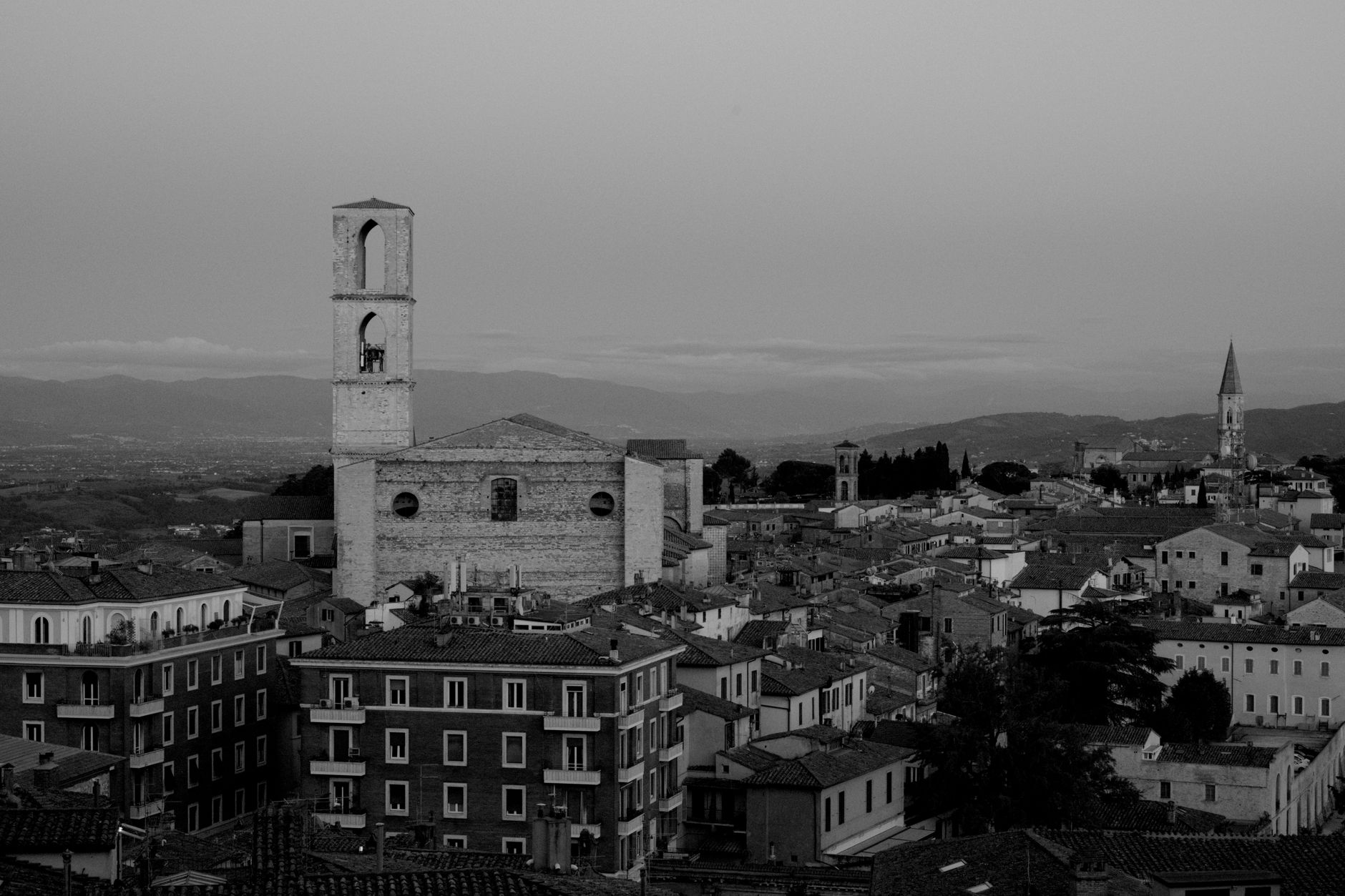


Escalators cut directly through the vaulted underbelly of Rocca Paolina, depositing you from the lower car parks straight into the thirteenth century. Perugia sits high and fortified above the Tiber plain, a dark-stone labyrinth of Etruscan arches, university chatter, and steep stairways that test your calves. It is a working university town that smells faintly of roasting porchetta, famous for dark chocolate, fierce local pride, and panoramic terraces where students and pensioners share the same sunset.
Last updated 28 Aug 2026
Build a Perugia itinerary.
Choose up to 4 threads that pull you in. Your plan arrives organised around them.
The Bed
Where to stay in Perugia
Which part of town to book, and what each one costs you in walking, noise or quiet.
The Comparison
Perugia, or somewhere near it
The places you are realistically choosing between, and the honest case for each.
The Local Record
Where to read more about Perugia
The blogs, boards, guides and operators worth bookmarking.
What to do in Perugia Umbria Italy
Perugia revolves around the pedestrian spine of Corso Vannucci, where the evening passeggiata brings locals, students, and visitors together between Piazza IV Novembre and the scenic overlook at Giardini Carducci. The historic centre requires good walking shoes for the stepped alleys of Borgo Bello and Porta Sant'Angelo, rewarding visitors who appreciate layered history, rustic Umbrian cooking, and lively piazza culture without tourist crowds.
24 hours in Perugia Umbria Italy
Arrive early via the Minimetrò, then start at the Fontana Maggiore and the Galleria Nazionale dell'Umbria. For lunch, order strangozzi with truffles near Piazza Morlacchi. Spend the afternoon wandering Rocca Paolina before grabbing a glass of Grechetto at Giardini Carducci as the valley darkens. Select 1 Day above to see it.
2 days in Perugia Umbria Italy
A second day lets you descend into Borgo Sant'Angelo to visit the circular fifth-century Tempio di San Michele Arcangelo. Head to a traditional norcineria for a porchetta roll, then explore the Etruscan well near Piazza Danti before a relaxed dinner of roasted pigeon in Borgo XX Giugno. Choose 2 Days to expand the plan.
3 days in Perugia Umbria Italy
With three days, take a thirty-minute drive to Castiglione del Lago on Lake Trasimeno for grilled perch, or tour the Sagrantino vineyards surrounding Montefalco. Back in town, reserve a morning visit to the historic Brozzetti weaving workshop in the church of San Francesco delle Donne.
Perugia Umbria Italy itineraries by interest
Subterranean Ruins in Perugia Umbria Italy
Walk the vaulted underground streets of Rocca Paolina, a papal fortress built directly over confiscated medieval houses and alleys.
Fresh Pasta in Perugia Umbria Italy
Order strangozzi or umbricelli tossed with shaved Norcia black truffles, wild boar ragù, or sausage and pecorino at a neighbourhood trattoria.
Etruscan Heritage in Perugia Umbria Italy
Inspect massive third-century BC travertine blocks at the Arco Etrusco and explore the subterranean chambers of the Ipogeo dei Volumni.
Sacred Architecture in Perugia Umbria Italy
Visit the round fifth-century church of Tempio di San Michele Arcangelo and the carved marble facade of the Oratorio di San Bernardino.
Regional Wine in Perugia Umbria Italy
Taste tannic Sagrantino di Montefalco and crisp Grechetto dei Colli Martani poured by the glass along Corso Vannucci.
Renaissance Art in Perugia Umbria Italy
Study masterworks by Perugino and Pinturicchio inside the Galleria Nazionale dell'Umbria within the sprawling Palazzo dei Priori.
Chocolate & Sweets in Perugia Umbria Italy
Sample dark Baci confections and historic spiced torcolo di San Costanzo cake baked with aniseed, raisins, and candied peel.
Cured Meats in Perugia Umbria Italy
Pick up crusty panino rolls stuffed with porchetta, cured capocollo, and aged salame di cinghiale from traditional norcinerie.
City Views in Perugia Umbria Italy
Find a bench at Giardini Carducci or Porta Sole to look over the patchwork farms and rolling hills of the Tiber valley.
Craft Traditions in Perugia Umbria Italy
Visit the active nineteenth-century jacquard looms at the Brozzetti textile workshop housed in the fourteenth-century church of San Francesco.
Medieval Squares in Perugia Umbria Italy
Linger beside the Fontana Maggiore in Piazza IV Novembre, sculpted by Nicola and Giovanni Pisano between 1275 and 1278.
Day Trips in Perugia Umbria Italy
Ride thirty minutes west to the tranquil shores of Lake Trasimeno or south into the hilltop wine cellars of Montefalco and Bevagna.