Bordeaux.
.jpg)

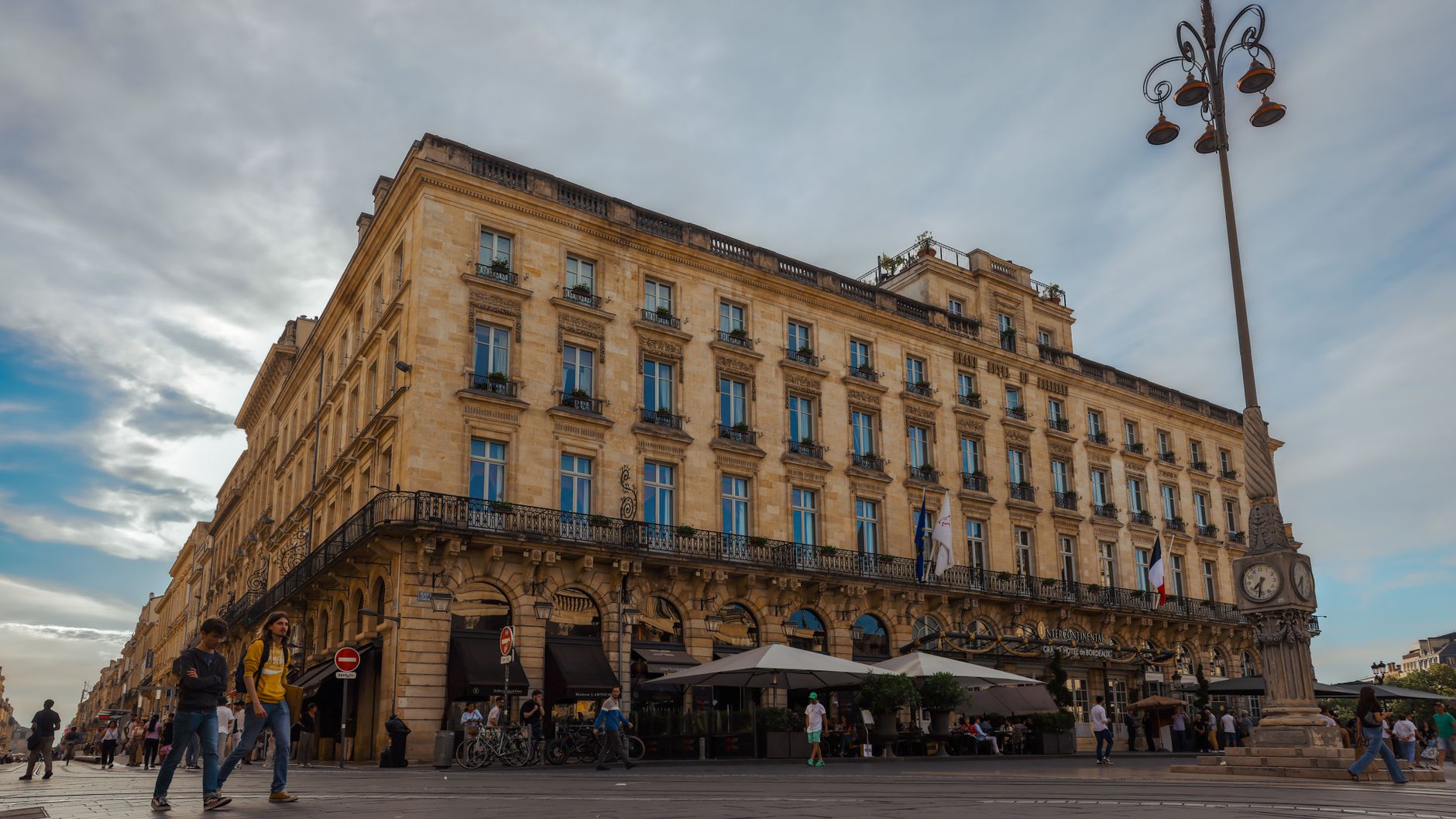


Bordeaux sits two hours southwest of Paris by high-speed TGV, anchored on a wide curve of the Garonne River. It is celebrated for its sweeping eighteenth-century neoclassical limestone façades and its centuries-old role as the global capital of the wine trade. Bordeaux is worth visiting if you want grand walkable urban riverfronts, historic cellar tastings, and classic regional cuisine like entrecôte bordelaise. Look elsewhere if you want dramatic mountain hikes or warm Mediterranean beaches right outside your door.
Last updated 29 Sept 2026
Build a Bordeaux itinerary.
Choose up to 4 threads that pull you in. Your plan arrives organised around them.
The Bed
Where to stay in Bordeaux
Which part of town to book, and what each one costs you in walking, noise or quiet.
The Comparison
Bordeaux, or somewhere near it
The places you are realistically choosing between, and the honest case for each.
The Local Record
Where to read more about Bordeaux
The blogs, boards, guides and operators worth bookmarking.
What to do in Bordeaux Nouvelle-Aquitaine France
Bordeaux is a flat, exceptionally walkable city shaped by the curve of the Garonne. Days revolve around market counters in Saint-Michel, strolls through the historic wine merchant district of Chartrons, and long evenings outside on Place du Parlement with a glass of Graves. It suits curious eaters, architectural walkers, and independent travellers who appreciate a relaxed urban rhythm without frantic sightseeing checklists.
24 hours in Bordeaux Nouvelle-Aquitaine France
Start early at Marché des Capucins with fresh oysters and white wine. Walk through the medieval Grosse Cloche into Saint-Pierre for lunch, then follow the river quays to Place de la Bourse and its reflecting pool. Finish with entrecôte bordelaise in Chartrons, all connected by an easy twenty-minute tram ride. Select 1 Day above to see it.
2 days in Bordeaux Nouvelle-Aquitaine France
Dedicate your second day to the wine cellars and antique shops of Chartrons. Catch the river shuttle north to the Cité du Vin for an unhurried tasting on the top floor, then head to the old submarine pens at Bassins des Lumières before a dinner of duck magret along Rue Notre-Dame. Choose 2 Days to expand the plan.
3 days in Bordeaux Nouvelle-Aquitaine France
A third day allows an effortless thirty-minute regional train ride east to Saint-Émilion to explore underground limestone monolithic churches and hillside vineyards. Alternatively, catch the morning train to Arcachon for coastal pine forests and the massive Dune du Pilat.
Bordeaux Nouvelle-Aquitaine France itineraries by interest
Wine & Vineyards in Bordeaux Nouvelle-Aquitaine France
Taste Cabernet Sauvignon and Merlot blends across Saint-Émilion and the Médoc, or sip by the glass along Rue Parlement Saint-Pierre.
Local Seafood in Bordeaux Nouvelle-Aquitaine France
Slurp briny Arcachon Bay oysters served raw on crushed ice with spicy crépinette sausages and a chilled glass of dry white Graves.
Markets & Produce in Bordeaux Nouvelle-Aquitaine France
Browse Marché des Capucins for Pyrenean sheep cheeses, duck confit, fresh ceps, and warm canelés crusty with beeswax and dark rum.
Sacred Architecture in Bordeaux Nouvelle-Aquitaine France
Climb the freestanding bell tower of Basilique Saint-Michel or inspect the thirteenth-century carved portals of Cathédrale Saint-André.
Rivers & Waterways in Bordeaux Nouvelle-Aquitaine France
Board a Garonne ferry from Pont de Pierre to the modern Cité du Vin, watching restored limestone quays drift past in the afternoon light.
Regional Meat & Game in Bordeaux Nouvelle-Aquitaine France
Order entrecôte cooked over dried vine cuttings, layered with shallots, bone marrow, and rich red wine reductions in classic bistros.
Urban Walking in Bordeaux Nouvelle-Aquitaine France
Navigate the cobbled Chartrons quarter, weaving between antique shops on Rue Notre-Dame and grand squares like Place de la Bourse.
Day Trips in Bordeaux Nouvelle-Aquitaine France
Ride local trains to the medieval stone village of Saint-Émilion or head west to climb the towering sand crest of Dune du Pilat.
Baking & Pastry in Bordeaux Nouvelle-Aquitaine France
Pick up fluted canelés fresh from copper molds at Baillardran or La Toque Cuivrée, crackling with caramelized sugar outside.
Modern Art in Bordeaux Nouvelle-Aquitaine France
Step inside the massive concrete submarine pens at Bassins des Lumières for vast digital projections cast over indoor water basins.
Historic Monuments in Bordeaux Nouvelle-Aquitaine France
Walk through the fifteenth-century defensive arch of Porte Cailhau and the imposing belfry at Grosse Cloche along Rue Saint-James.
Parks & Gardens in Bordeaux Nouvelle-Aquitaine France
Rest weary feet on painted benches beneath ancient trees in Jardin Public, laid out in 1746 along classical English landscape lines.