Bourges.


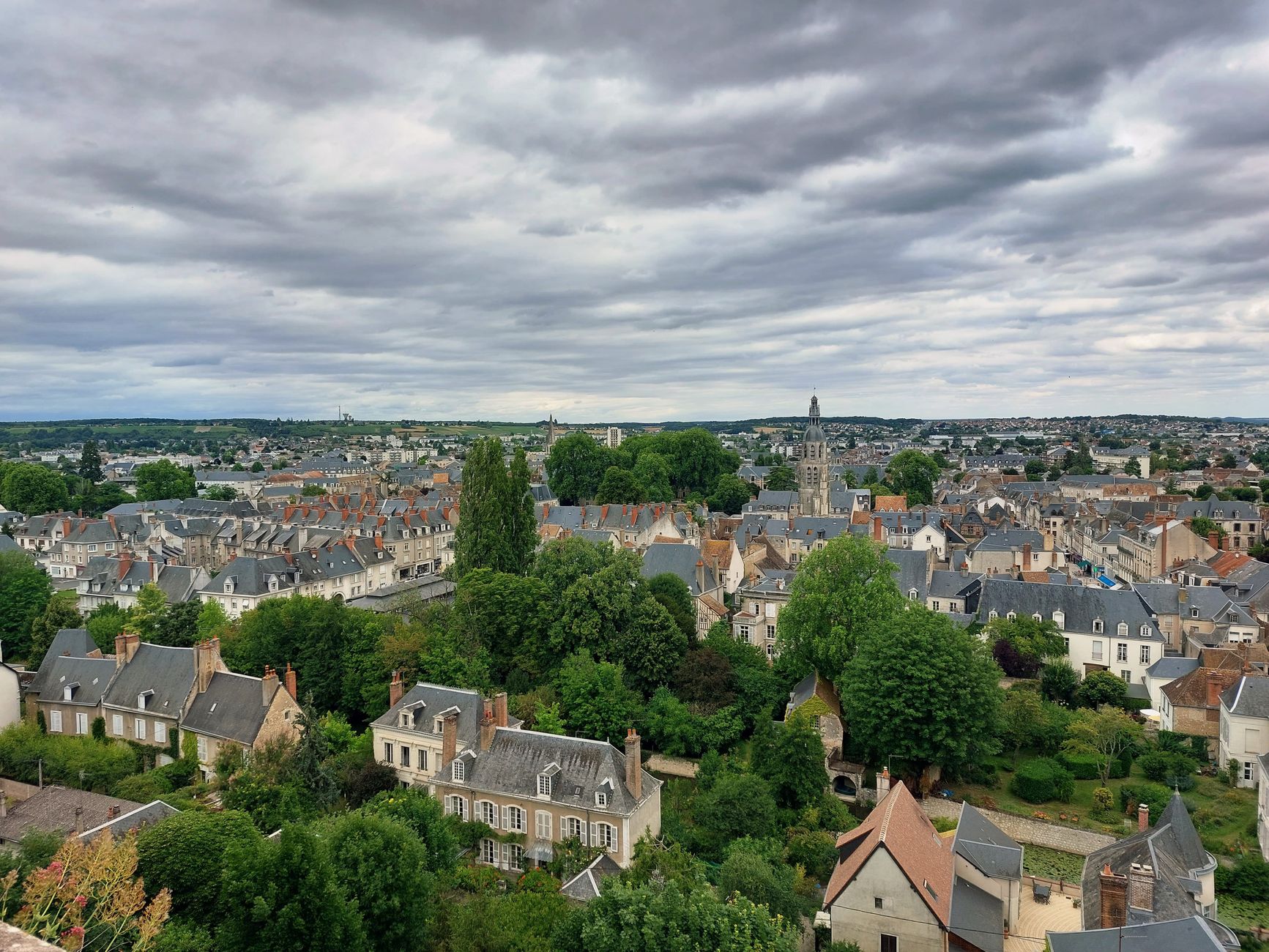


Bourges sits two hours south of Paris by direct train from Gare d'Austerlitz, anchored by its twelfth-century cathedral and the palace of merchant Jacques Cœur. The centre holds timbered medieval lanes bordered by cultivated marsh gardens. Bourges is worth visiting if you want towering Gothic architecture and quiet walks through medieval allotment canals. Look elsewhere if you want late-night clubbing, coastal terrain, or high-end shopping strips.
Last updated 13 Nov 2026
Build a Bourges itinerary.
Choose up to 4 threads that pull you in. Your plan arrives organised around them.
The Bed
Where to stay in Bourges
Which part of town to book, and what each one costs you in walking, noise or quiet.
The Comparison
Bourges, or somewhere near it
The places you are realistically choosing between, and the honest case for each.
The Local Record
Where to read more about Bourges
The blogs, boards, guides and operators worth bookmarking.
What to do in Bourges Centre-Val de Loire France
Bourges revolves around its upper limestone plateau where Saint-Étienne cathedral looks over red-tile roofs and medieval alleys. Life moves at a steady provincial pace, anchored by morning bakeries, lunchtime carafes of Menetou-Salon, and afternoon circuits around the marshland canals. It suits travellers who appreciate layered French architectural history, easy walking on gentle gradients, and unhurried regional dining.
24 hours in Bourges Centre-Val de Loire France
Start early at Cathédrale Saint-Étienne before climbing the Tour de Beurre for rooftop views. Walk down Rue Bourbonnoux for lunch of galette aux pommes de terre at a local bistro, then spend the afternoon touring Palais Jacques Cœur. Finish with dinner near Place Gordaine. Select 1 Day above to see it.
2 days in Bourges Centre-Val de Loire France
Devote your second morning to the Halle Saint-Bonnet market and a quiet stroll through the Marais de Bourges. In the afternoon, explore the timbered houses along Rue Mirebeau and Musée du Berry, followed by grilled river fish and dry Quincy wine at an evening table. Choose 2 Days to expand the plan.
3 days in Bourges Centre-Val de Loire France
A third day allows an easy excursion into the Cher countryside. Head north to Sancerre for hillside goat cheese and vineyard cellars, or take a twenty-minute drive south to Château de Meillant before returning for a final evening walk along the illuminated ramparts.
Bourges Centre-Val de Loire France itineraries by interest
Sacred Architecture in Bourges Centre-Val de Loire France
Step into Cathédrale Saint-Étienne to study thirteenth-century stained glass, five distinct portals, and soaring rib vaults without the Paris crowds.
Historic Palaces in Bourges Centre-Val de Loire France
Tour Palais Jacques Cœur, a flamboyant fifteenth-century private mansion featuring carved spiral staircases, vaulted loggias, and vaulted ceilings.
Urban Nature in Bourges Centre-Val de Loire France
Wander the Marais de Bourges, a 135-hectare maze of family allotment plots and peaceful waterways tended by flat-bottomed punt boats.
Wine & Vineyards in Bourges Centre-Val de Loire France
Taste crisp Sauvignon Blanc and light Pinot Noir from nearby AOC Menetou-Salon and Quincy cellars poured alongside regional goat cheeses.
Regional Cheeses in Bourges Centre-Val de Loire France
Sample nutty Crottin de Chavignol goat cheese at city fromageries, served cold on bread or baked warm over local country salads.
Markets & Produce in Bourges Centre-Val de Loire France
Browse the Halle Saint-Bonnet on Saturday morning for Berry green lentils, fresh chard from the marshes, and seasonal Loire fruit.
Confectionery in Bourges Centre-Val de Loire France
Pick up Forestines at Maison Georges Roussel, crisp sugar pralines filled with chocolate and hazelnut invented here in 1879.
Historic Quarters in Bourges Centre-Val de Loire France
Walk Rue Bourbonnoux and Rue Coursarlon to inspect over four hundred preserved half-timbered facades dating from the fifteenth and sixteenth centuries.
Comfort Food in Bourges Centre-Val de Loire France
Eat warm galette aux pommes de terre, a flaky potato puff pastry baked with local butter and cream served across neighbourhood bakeries.
Medieval Art in Bourges Centre-Val de Loire France
Visit Musée du Berry inside Hôtel Cujas to see fifteenth-century alabaster mourners carved for the tomb of Duke Jean de Berry.
Day Trips in Bourges Centre-Val de Loire France
Drive thirty minutes to Sancerre for hilltop vineyard tastings, or explore Château de Meillant with its ornate Gothic stone carvings.
Night Walks in Bourges Centre-Val de Loire France
Follow Les Nuits Lumières, a self-guided evening lantern walk tracing blue-lit projections across medieval masonry and Renaissance towers.